Developer fighting to keep Liberty Utilities’ Douglas County solar plant proposal alive

By Anne Knowles

The developer of a solar project rejected by Douglas County last month is contesting the county’s ruling.

Greenstone Renewables LLC filed a petition for judicial review of the Douglas County Commissioners’ decision to uphold an appeal of the special use permit allowing Greenstone to build a 20-megawatt, 260-acre solar plant on Muller Lane in Minden.

The permit had been granted by the Douglas County Planning Commission in May and then appealed by Steve and Mary Walker, whose residential parcel borders the planned facility’s site.

During a long and contentious public meeting on July 2, the commissioners upheld the appeal, effectively killing the solar project.

Greenstone’s petition alleges that by supporting the appeal the county acted “capriciously and arbitrarily” and that in the process Greenstone was denied “substantive and procedural due process rights” resulting in “real and significant damages.”

The 34-page petition outlines the project’s history, including the county staff’s recommendation to the Planning Commission to approve, and the Walkers’ subsequent appeal.

The petition alleges county commissioners and the Walkers, which it repeatedly describes as long-time lobbyists for the county, had opportunity to discuss the solar project on an ex parte basis — that is, without Greenstone present.

Specifically, the developer claims that in a meeting with Vice Chairwoman Nancy McDermid, the commissioner said she considered the solar project a “visual blight” and would be sure to submit into the record two aspirational documents — the Open Space Plan and the Valley Vision Plan — even though neither plan, unlike the county’s master plan, has legal status and had not been included in the Walkers’ appeal.

The petition then claims the Walkers were allowed to submit additional material after the appeal deadline, including a reference to the two vision plans, which were cited by commissioners during the decision to uphold the appeal.

The Walkers disagree.

“The record of the Douglas County Board of County Commissioners was very clear. It was a 5-0 vote which was firmly grounded in the fact the Greenstone solar industrial plant application did not meet the requirements of the Douglas County Master Plan,” Mary Walker told Lake Tahoe News.

The petition contends Greenstone’s project met all the requirements set out by the county, including disclosure of a possible, on-site battery storage facility, which became a bone of contention during the July 2 commission meeting when commissioners said they were unaware of it.

Douglas County District Court Judge Tod Young will be conducting the review, which should take between six and nine months, according to Cynthea Gregory, deputy district attorney for the county.

The next step is for Greenstone, with the coordination of the county, to submit to the court the entire record, including commissions’ meeting minutes, email and other documents, and for the county to file its opposition to the petition.

The judge will then decide if there is “substantial evidence” to support the commissioners’ decision, said Gregory.

Greenstone did not respond to a request for comment on the suit.

 

A crew from Liberty Energy replaces a transformer in Tahoe City, Calif., on June 5th, 2014.

Liberty Utilities would like to use more power from renewable sources. Photo/Provided

Meanwhile, Liberty Utilities, which had signed a preliminary power purchase agreement with Greenstone, is looking elsewhere for solar power in order to meet its next compliance goal set by California’s renewable energy portfolio.

“At this time, Liberty Utilities is not pursuing the Minden solar project,” Travis Johnson, Liberty’s director of utility planning and business development, told Lake Tahoe News.

The power company, which serves customers in Truckee, Alpine County and the California side of Lake Tahoe, is hoping to bump up the power generated by a second project its pursuing.

In April, Liberty applied to the California Public Utilities Commission to operate two solar projects, the 20 MW facility in Minden and a 40 MW plant in Luning, an unincorporated, small town about 140 miles southeast of Minden and 80 miles northwest of Tonopah.

The Luning project process has gone more smoothly. The operation is to be built entirely on Bureau of Land Management land in a much more remote area of Nevada. (The town has 38 registered voters, according to Mineral County, where Luning is located.)

In late July, the BLM approved the 560-acre project. Mineral County had already granted it a special use permit in 2014 and was able to review and comment during the BLM approval process, according to Laura Miner, business development manager, at Invenergy LLC, the project developer. (Liberty plans to purchase the facility from Invenergy once it is built.)

After the Minden plant was nixed, Liberty amended its application with the CPUC to increase the Luning plant capacity from 40 MW to 50 MW.

Johnson said the plant was originally designed for 50 MW but the company was shooting for a combined total between the two projects of 60 MW to meet the RPS.

“We sized our solar projects at 60 megawatts to get us close to compliance,” said Johnson. “Luning can’t do 60 megawatts on its own, it can only do 50 megawatts. We’re hoping for a CPUC decision by the fourth quarter.”

Johnson said he’s optimistic the project will be approved. The filing was protested by the CPUC’s Office of Ratepayer Advocates in a routine procedure to guarantee ratepayers are represented.

“ORA thoroughly reviewed Liberty’s application, and entered into settlement negotiations with Liberty Utilities to resolve our concerns.  The Motion for Settlement will be filed this week,” Lisa-Marie Salvacion with ORA told Lake Tahoe News in an email.

If the Luning project is approved, construction will start in early 2016 and Liberty should be producing power by the end of the year.

That will bring Liberty’s portfolio to 25 percent renewable, up from 22 percent currently, but the RPS requires the company to use 27 percent by 2017.

So, assuming no other projects go online before then, Liberty will acquire the other 2 percent from NV Energy.

Liberty and NV Energy have a new power purchase agreement that goes into effect January 2016. The new PPA, if approved by the CPUC, eliminates all coal-fired energy from Liberty’s portfolio.

The new PPA will save Liberty $2.34 million through a reduction in demand charges, improvements in system transmission, solar credits and drop in costs due to elimination of coal, according to Rich Salgo, Liberty Utilities vice president of operations.

Liberty is also awaiting CPUC approval for a 17.34 percent rate increase. The increase would go into effect in January 2016 and raise $13.6 million to cover costs associated with the distribution of power to its 49,000 customers.



Poll: Californians want policing reforms

By Conor Friedersdorf, Atlantic

On Wednesday, the ACLU of Southern California released the results of a statewide survey that it commissioned to gauge the attitudes of likely voters toward policing reforms.

The results were overwhelming:

  • 84 percent favor requiring police officers to wear body cameras.
  • 74 percent of survey respondents believe the public should have access to footage from those body cameras any time that a police officer stands accused of misconduct. A narrow majority believes that the public should have access to allfootage.

As for investigations into misconduct by police officers, 79 percent believe the public should have access to the findings if there has been wrongdoing, and 64 percent believe the public should have that same access anytime a cop is even accused.

Read the whole story


Donner down, but not being tapped by Reno water supplier

By Paul Nelson, KTVN-TV

The water level at Donner Lake is at its lowest since 1994, but hydrologists say the reservoir is not being used for water supply.

The lake is about 65 percent full as a result of four years of exceptional drought. Last winter simply did not offer enough snow to fill the lake.

The Truckee Meadows Water Authority has been using drought reserves for most of the summer, but they say that water is coming exclusively from Boca and Stampede Reservoirs.


TMWA owns the top 12 feet of water in the reservoir, used for drought reserves. They say the lower levels are not a result of customer use.

Read the whole story


Calif. congressional Dems push for state climate bills

By Devin Henry, The Hill

Democrats in the California congressional delegation are urging state lawmakers to pass two sweeping environmental bills this legislative session.

Sens. Dianne Feinstein and Barbara Boxer sent a letter to members of the California Assembly on Wednesday urging them to pass the bills before their legislative session ends next month.

House Democratic Leader Nancy Pelosi and 25 other congressional Democrats endorsed the measures on Friday, as well. Lawmakers are considering a bill that would codify Gov. Jerry Brown’s climate goals into law and another to cut the state’s oil consumption over the next 15 years.

Read the whole story


Big month for water conservation in Calif.

By Bettina Boxall and Rosanna Xia, Los Angeles Times

After Gov. Jerry Brown ordered a 25 percent reduction in urban water use statewide, regulators spent much of the spring chastising water districts for not conserving enough during California’s stubborn drought.

Data released Thursday suggest the message is getting through.

Californians cut back their urban water use last month by nearly a third compared with July 2013, aided by rare summer storms and stepped-up local enforcement. And the number of water districts deemed to be severely out of step with the state’s demands — those falling 15 percentage points or more short of their conservation goal — dropped sharply.

The 31 percent statewide reduction is even better than the 27 percent recorded in June, the first month the targets were in effect. And so far state officials have not needed to carry out their threat of stiff fines to get the attention of local agencies.

Read the whole story


7 SLT residents arrested on drug charges

Narcotics officers arrested several people in South Lake Tahoe this week on drug charges, and confiscated meth and heroin they said was scattered about the residence.

Members of the South Lake El Dorado Narcotics Enforcement Team searched the house on Tallac Avenue on Aug. 24 at 3pm where they arrested seven people.

Officer also said they found packaging and scales, spoons commonly used to reduce heroin into a liquid form by heating them, small cotton pieces commonly used to filter drugs before injection, and hypodermic needles and syringes. Glass pipes commonly used to smoke methamphetamine were also recovered.

The following are the names of the people arrested and the charges they face:

·       Richard Martin: Maintaining a residence for sale of narcotics, possession of narcotics paraphernalia.

·       Joshua Martin: Possession of a controlled substance, maintaining a residence for sale of narcotics, possession of narcotics paraphernalia, violation of probation.

·       Marty Beaman: Possession of methamphetamine with intent to sale, possession of heroin with intent to sale, maintaining a residence for sale of narcotics, possession of narcotics paraphernalia.

·       Shawn McGrath: Maintaining a residence for sale of narcotics, possession of false compartment to conceal narcotics, possession of heroin with intent to sale, possession of narcotics paraphernalia.

·       Gabrielle Cooley: Possession of heroin with intent to sale, possession of methamphetamine with intent to sale, maintaining a residence for sale of narcotics, possession of narcotics paraphernalia.

·       Rachel Neill: Maintaining a residence for sale of narcotics, possession of false compartment to conceal narcotics, possession of heroin with intent to sale, possession of narcotics paraphernalia.

·       Angela Zimmerman: Loiter for the purpose of narcotics activity.

— Lake Tahoe News staff report


Stateline casino revenue declines in July

Stateline casino revenue dropped 7 percent in July compared to the previous year, while statewide the decline was less than 1 percent.

The Nevada Gaming Control Board released the figures Aug. 28. July revenue on the South Shore was at $23 million; throughout Nevada it was at $922.8 million.

Most of Northern Nevada saw year-over-year gains, with Washoe County gaming revenue up 4.8 percent. In just Reno, the revenues increased 6 percent. The Carson Valley saw gains of 10.3 percent.

— Lake Tahoe News staff report


Native American name for SLT lodging project

Zalanta will break ground this summer in South Lake Tahoe.

Zalanta will break ground this summer in South Lake Tahoe.

Zalanta – meaning spiritual mountain – is the name of the first hotel project that will be built at what has been known as the Chateau project.

Zalanta Resort at the Village has replaced the name Chateau at the Village.

Construction will begin any day on the 32 condos. This full ownership lodging facility will give owners the opportunity to put their units into a rental pool; so the property will also be operated like a hotel. Sales of the condos will begin after the permit from the state Bureau of Real Estate is in hand.

This is one of two hotels – per the original TRPA permit – to be built in South Lake Tahoe on the 11-plus-acre site near the state line.

Tahoe Stateline Ventures, a subsidiary of Owens Financial, is owner and financier of the project that includes a pool; 19,477-square-feet of retail; upgrades to the streetscape; and public fire pits on 3.4 acres.

This segment of the development should be finished by spring 2017.

— Lake Tahoe News staff report


Hotel taxes bright spot in SLT budget

By Kathryn Reed

An unexpected spike in the cost of retiree pension benefits and a continual declining value of some redevelopment properties is being offset by a substantial increase in transient occupancy taxes in South Lake Tahoe.

All of this means the 2015-16 budget that takes effect Oct. 1 is balanced. And while legally the city has to have a balanced budget, it is being done so without borrowing from other funds.

The City Council on Sept. 1 will hear a presentation on the budget, with adoption likely two weeks later.

CalPERS has rejiggered how it calculates what public agencies must contribute. Just to make the police and fire department retiree costs South Lake Tahoe has to come up with another $1.2 million.

“They don’t have to have a good return on their investments. They just send us a bill,” City Manager Nancy Kerry said of how CalPERS operates.

Earlier this week CalPERS announced a 2.4 percent return on its investments, which is much lower than what most entities are posting. Because these are defined benefits, retirees are guaranteed a set dollar amount no matter what CalPERS has in the bank. This means the entities where the retirees worked must make up the difference. This is unlike the private sector, which mostly has 401(k) plans where workers deal with market volatility, not the business.

The other big thing throwing a wrench into the city’s coffers is the value of condos at the Marriott Grand Residence. The price per condo is $183,776. This compares to the Timber Lodge condos across the sidewalk that are selling for $502,836. Grand Residence has 199 units, while Timber Cove has 264. At the former, they are sold as 13-week intervals, with 940 parcels on the tax rolls. Timber Lodge is mostly weekly timeshares, with 11,703 taxable parcels.

While every place else in the city limits the assessed value is going up, that is not the case for the Marriott properties that anchor the Heavenly Village. There has been a 43 percent drop in value from fiscal year 2009-10 to FY 14-15. Half of the decline in property value in the redevelopment area – which runs from Ski Run Boulevard to the state line – is from the Marriott properties.

There is a $100 million difference between the assessed values of the two Marriotts. Part of this has to do with there being a number of foreclosures at the Grand Residence as well as the ownership criteria. Plus, Marriott has restructured the value of the properties with a point system that is helping to keep the value down.

City officials are in talks with the assessors’ office to see if anything can be done to have the numbers be more reflective of the true value.

Kerry does not anticipate the same thing happening when the Chateau hotel-condos open in 2017. For now, that site is all one parcel and therefore is assessed as one property. With the project calling for a 32-room hotel-condo with full ownership, the developer would have to seek separate parcel numbers after build out.

While the city always wants more money in the bank, a big concern with any decreased value in the redevelopment is that $180 million is still owed in bond debt. This includes principal and interest. It should be paid off in 2038. Property taxes pay for the debt as well as TOT.

Even though the city is not reaping as much in property taxes from these parcels, throughout the jurisdiction the transient occupancy tax collection has been well above what was anticipated. TOT is up 20 percent – or more than $2 million – from what was forecasted.

Much of that will be reinvested in fields as a joint project with Lake Tahoe Community College and Lake Tahoe Unified School District.

The other big piece in this budget and those going forward is how the city revamped it’s health care costs in the last year.

“Were it not for the changes in the health care program, we’d be facing deficits today. Decisions to completely revamp the health care benefit structure reduced annual costs by over $1 million and reduced our unfunded liabilities by 73 percent,” Kerry said. “Without these changes, regardless of TOT increases, regardless of growth in the economy, etc., we’d be in deficits today.”

One thing Kerry plans to stress at Tuesday’s meeting is that if the city is to continue in its quest to be a recreation destination that it will take more money beyond current revenues to upgrade facilities. This may mean going to the voters in 2016 for a tax – be it increasing the hotel tax or a new amusement-recreation tax. The goal would be to dedicate that revenue stream to recreation, with the tourist bearing the burden.

Kerry’s presentation will also include a note of caution as the city looks to the future. Monetary issues run in cycles, with many forecasting 2017 as when the next recession may hit – though not necessarily like the Great Recession.

“The value of looking ahead is to mitigate the risks,” Kerry told Lake Tahoe News.

This means being conservative with spending, while also looking at how to generate sustainable revenue. The latter, the city believes, is through offering quality recreation facilities for locals and tourists.

—–

Note:

  • The council meeting starts at 9am Sept. 1 at Lake Tahoe Airport.


Home invasion defendant arrested in Tahoe in court

By KTVU-TV

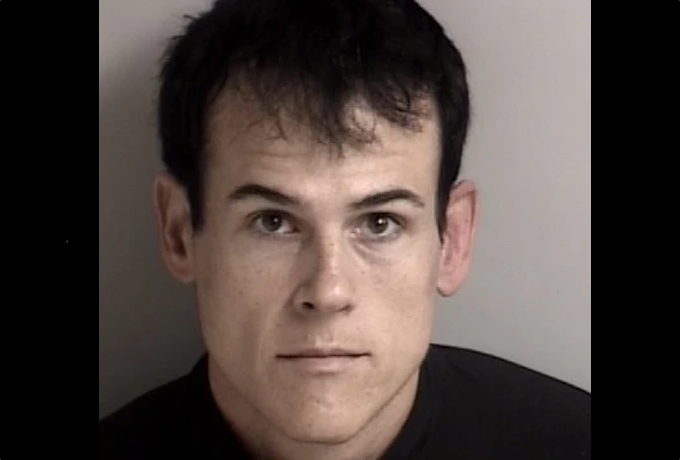
A man accused of a home invasion crime in Dublin and linked to a bizarre kidnapping case in Vallejo from March appeared in an East Bay courtroom Thursday.

Matthew Muller

Matthew Muller

According to court documents, an emergency 911 call was placed from the lock screen of the cell phone, which revealed the telephone number and ultimately led to Muller’s arrest at a home in South Lake Tahoe.

Thomas Johnson, Muller’s attorney, believes the cell phone was initially accessed without a warrant. He has filed a motion to suppress the cell phone as evidence.

Read the whole story