Climate-change bills in Calif. go down to the wire

By Jessica Calefati, San Jose Mercury News

SACRAMENTO — With the deadline for lawmakers to finish their work less than two weeks away, Gov. Jerry Brown and state Senate leader Kevin de León are working feverishly to pass what they call the year’s most important legislation — measures that both men believe will enhance their political legacies.

The bills, which would dramatically reduce the state’s reliance on oil and help to combat climate change, have been praised by everyone from Pope Francis to President Obama to the world’s leading scientists. If enacted, the legislation would set international precedent and cement California’s reputation as a leader in the fight against global warming.

But standing in the way is one of Sacramento’s most powerful lobbies, the oil and gas industry, which has spent millions of dollars on advertising that paints a dystopian vision of the future: an out-of-control bureaucracy that would have the power to ration gasoline, punish SUV owners and limit the number of miles Californians drive.

Read the whole story


SLT cops apprehend suspect at 7-Eleven

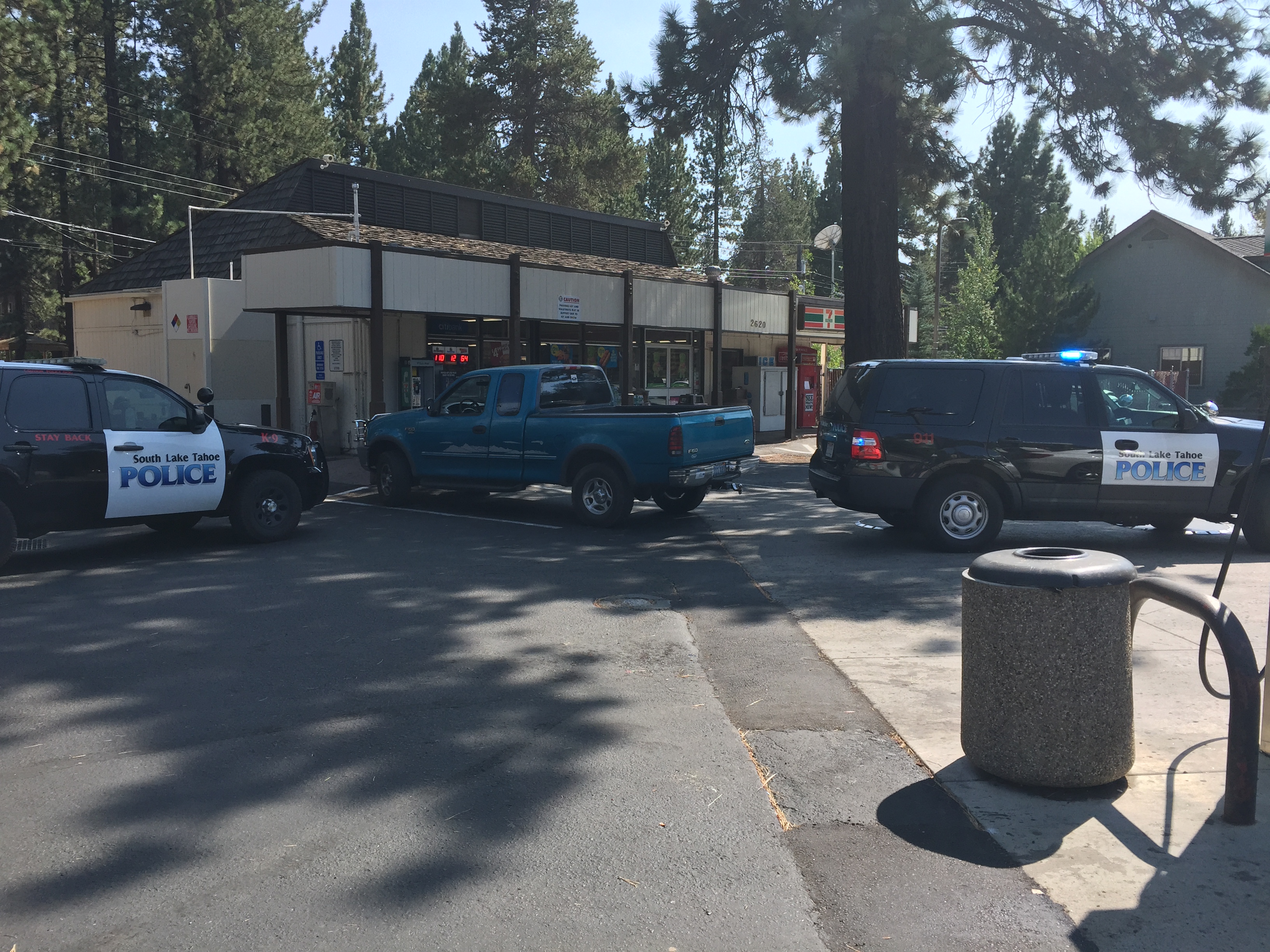
Four police cars surround the 7-Eleven in mid-South Lake Tahoe on Aug. 30. Photo/Brad Perry

Four police cars surround the 7-Eleven in mid-South Lake Tahoe on Aug. 30. Photo/Brad Perry

People were still able to buy Slurpees while officers cornered a man in the bathroom at the 7-Eleven near the Sierra tract neighborhood in South Lake Tahoe on Sunday.

A K-9 unit was called in to assist the officers just after 3pm Aug. 30.

Officers were called to the convenience store on a report of a domestic violence altercation.

They ended up arresting a man on charges of violation of probation, outside warrants and drugs.

The name of the suspect and hometown were not immediately available.

— Lake Tahoe News staff report


Study: Renewable energy requirement creates jobs

By Chris Megerian, Los Angeles Times

As lawmakers consider new measures to combat climate change, researchers at UC Berkeley released a study saying stronger renewable energy requirements would lead to new jobs.

California law requires the state to get 33 percent of its electricity from renewable sources, such as solar and wind, by 2020. A bill by Sen. Kevin de León, D-Los Angeles, would increase that standard to 50 percent by 2030.

Because building renewable energy facilities is a temporary gig, the study uses measurements in “job years” to estimate how much work would be created. One “job year” equals enough work to employ somebody full time for a year.

Read the whole story


CalPERS looks to cut financial risk

By Melody Petersen, Los Angeles Times

California taxpayers have never paid more for public worker pensions, but it’s still not enough to cover the rising number of retirement checks written by the state’s largest pension plan.

Even before the stock market’s recent fall, staffers at the California Public Employees’ Retirement System were worried about what they call “negative cash flows.”

The shortfalls — which totaled $5 billion last year — are created when contributions from taxpayers and public employees who are still working aren’t enough to cover monthly checks sent to retirees.

To make up the difference, CalPERS must liquidate investments.


Because the more conservative investments are expected to reduce CalPERS’ future financial returns, taxpayers would have to pick up even more of the cost of workers’ pensions.

Read the whole story


El Dorado County adopts Laura’s Law

The El Dorado County Board of Supervisors last week unanimously voted to implement an assisted outpatient pilot program, also known as Laura’s Law.

This will help give those who are mentally ill an avenue to get help. It gives county mentally health officials, as well as courts, family members and probation officers the right to mandate mental health treatment in certain circumstances.

A maximum of $500,000 will be spent over three years. The money comes from state Mental Health Services Act Funds, Community Corrections Partnership funding; and Medi-Cal funding if applicable.

It has been a 10-year endeavor by advocates to get El Dorado County to take this action.

Placer County implemented Laura’s Law in 2014.

— Lake Tahoe News staff report


Sandoval to put 3-week trade mission to work

By Michelle Rindels, AP

CARSON CITY —  Gov. Brian Sandoval and more than 60 business, government and education officials recently returned from a three-week trade mission to England, Ireland, Germany, Poland and Italy. The visit included meetings with dignitaries, tours of car factories and receptions bringing together Nevada and European tourism officials.

As a result of their visit, state officials vow to put some things in place:

Exchange programs

Sandoval signed three separate agreements calling for worker exchange programs between Nevadan and German advanced manufacturing companies in Leipzig, the state of Saxony, and Saxony Anhelt. Steve Hill of the Governor’s Office of Economic Development said experienced workers from German companies would spend a year working in similar Nevada companies and vice versa.

The participating companies would pay workers a salary, but Nevada might pay for their airfare to and from Germany.

Hill said he hopes to kick off the program by the end of this year at companies such as aircraft parts manufacturers and companies in the medical industry. He estimates it will start with about five participants and grow over time to facilitate an exchange of best practices between companies in the two countries.

“We also think it would help create a stronger bond between Nevada and Germany over time,” Hill said. “If we were doing this on a fairly regular basis with a few handfuls of people, you’d have a communication and a cultural connection. You’d end up with 100 people who had lived in Germany for a year.”

Water management partnership

Managing scarce water resources was a key discussion topic during the trade mission, especially in Dublin, Ireland, which is home to IBM’s Smarter Cities initiative.

Hill said IBM and the Water Center for Excellence — a Nevada entity that connects the state’s water researchers with businesses that can use their expertise — are partnering to create an energy management service.

Water agencies are huge electricity consumers because they must use power to maintain pressure in their water lines and circulate the water to prevent stagnation. The partnership will explore more efficient ways to use energy, drawing on massive amounts of raw data about electricity use and water pressure collected by the Southern Nevada Water Authority.

Hill said the collaboration could lead to a commercial software and data analytics service that could help other water authorities optimize their electricity use.

If successful, the project could be lucrative for the water authority and bring royalties to the research institutions working on it. It’s unclear when the software might be ready for market, Hill said.

Better workforce development

Sandoval praised the workforce training initiatives he saw in Germany and among automakers there.

He said the trip inspired him to move Nevada state Superintendent Dale Erquiaga into a newly created job as the governor’s Chief Strategy Officer. Erquiaga’s role will be implementing legislation passed in the spring and ensuring that Nevada’s K-12 education programs and workforce development efforts align to meet the needs of companies moving to the state.

“For a governor to take a state superintendent of schools directly into the office, that should send a very strong message about how much K-12 education and workforce development … is a priority for me,” Sandoval said.

More Polish connections

Trade mission attendees say they were impressed by Poland, which has become aggressive in developing its economy since the fall of Communism.

“Their appreciation and enthusiasm for capitalism and entrepreneurism is contagious,” Hill said.

An agreement Sandoval signed clears the way for Poland to open a trade office at the University of Nevada, Reno’s Innovation Center. The partnership aims to help Polish businesses break into the American market and vice versa.

“They feel they have a lot of companies in Poland that would want to move here, but it’s hard for them to go in cold,” Hill said.

The Polish American Chamber of Commerce also announced it will move its annual conference to Las Vegas from Chicago.

Another trade mission to Poland is in the works. The Governor’s Office of Economic Development recently received a $300,000 grant from the U.S. Small Business Administration that will use to help business representatives visit Poland in May 2016. There will be a trip to China in March 2016.


AP suing FBI for impersonating reporter

By Michael Biescker, AP

The Associated Press sued the U.S. Department of Justice Thursday over the FBI’s failure to provide public records related to the creation of a fake news story used to plant surveillance software on a suspect’s computer.

AP joined with the Reporters Committee for Freedom of the Press to file the lawsuit in U.S. District Court for the District of Columbia.

At issue is a 2014 Freedom of Information request seeking documents related to the FBI’s decision to send a web link to the fake article to a 15-year-old boy suspected of making bomb threats to a high school near Olympia, Washington. The link enabled the FBI to infect the suspect’s computer with software that revealed its location and Internet address.

AP strongly objected to the ruse, which was uncovered last year in documents obtained through a separate FOIA request made by the Electronic Frontier Foundation.

“The FBI both misappropriated the trusted name of the Associated Press and created a situation where our credibility could have been undermined on a large scale,” AP General Counsel Karen Kaiser said in a 2014 letter to then-Attorney General Eric Holder.

“It is improper and inconsistent with a free press for government personnel to masquerade as The Associated Press or any other news organization,” Kaiser wrote. “The FBI may have intended this false story as a trap for only one person. However, the individual could easily have reposted this story to social networks, distributing to thousands of people, under our name, what was essentially a piece of government disinformation.”

In a November opinion piece in the New York Times, FBI Director James Comey revealed that an undercover FBI agent had also impersonated an AP reporter, asking the suspect if he would be willing to review a draft article about the bomb threats.

Comey described the tactic as “proper and appropriate” under Justice Department guidelines in place at the time. He said such a ruse would likely require higher-level approvals now than it did in 2007, but that it would still be lawful “and, in a rare case, appropriate.”

In a meeting with reporters the following month, Comey left open the possibility that an agent might again pose as a journalist, though he said such a tactic ought to be rare and “done carefully with significant supervision, if it’s going to be done.”

AP’s records request also seeks an accounting of how many times since 2000 the FBI has impersonated media organizations to deliver malicious software.

In a response to AP, the FBI indicated it might take nearly two years to find and copy the requested records. AP’s lawsuit asks a federal judge to order the FBI to hand over the records.

Thursday’s filing marked the second time this year that AP has sued the federal government. In March, the news organization sued the State Department to force the release of email correspondence and government documents from Hillary Rodham Clinton’s tenure as secretary of state. The case, involving unfulfilled FOIA requests dating back as long as five years, is ongoing.


Experts: Calif. sea levels will rise

By Matt Hamilton, Los Angeles Times

Here’s one trend California is behind on: rising sea levels.

For the last 23 years, ocean levels around the world have climbed by about 3 inches on average, and NASA scientists say the sea will continue to rise as warming temperatures cause ice sheets in Greenland and Antarctica to melt.

But California, and the rest of the western United States, has actually seen ocean levels fall. That’s about to change, thanks to a shift in weather patterns, and scientists are sounding the alarm.

Read the whole story


Dams may be answer to future droughts

By Carolyn Lochhead, San Francisco Chronicle

Driven by drought, California stands ready to build a water system for the 21st century. Ideas are flowing: conservation, recycling, desalination, aquifer recharge, floodplain restoration, storm water capture.

But the biggest, most expensive, most popular item of all is the foundation of the 20th century water system — dams. Even if El Niño rains bring a bounty of water to the state this winter, the momentum for dam building is unlikely to fade.

Farmers stand to benefit. So do many urban users. The losers would be people like Anita Lodge.

Lodge, 58, clings to the last remnant of a Gold Rush homestead deep in the San Joaquin River Gorge 33 miles north of Fresno, where her ancestors mined ore by wheelbarrow and her mother hung laundry on the willows. Now the 7-acre spread is surrounded by a federal preserve alive with bears and bobcats, herons and eagles, and in spring, a profusion of wildflowers.

Behind a bend downstream lies a linchpin of California’s water system: Friant Dam, snaring the river on its path from the Sierra foothills to Fresno and the San Joaquin Valley. Completed in 1942, Friant can hold 520,500 acre-feet of water for farmers and cities in the southern San Joaquin Valley. That’s almost twice what the 2.6 million customers of the Hetch Hetchy system used in a year, even before drought-prompted conservation measures kicked in.

Read the whole story


Crews use sensors, cameras to track fire’s behavior

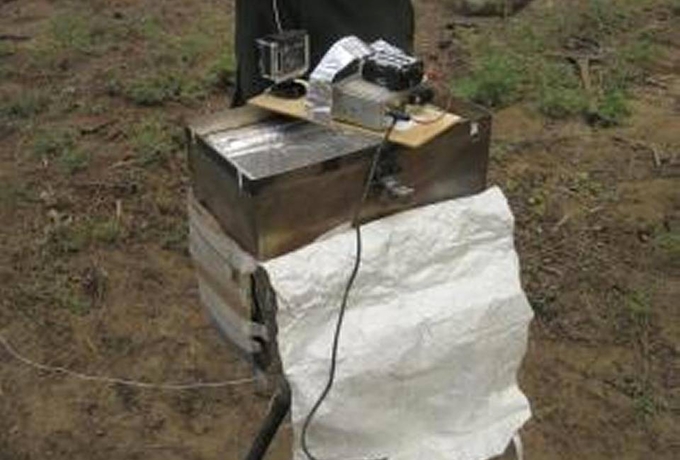
Some of the equipment used by the Fire Behavior Assessment Team in and around the Rough fire, near Kings Canyon National Park. Data recorded by the equipment may help prevent future wildfires. U.S. Forest Service Read more here: http://www.fresnobee.com/news/local/article32600712.html#storylink=cpy

Equipment used by the Fire Behavior Assessment Team. Photo/U.S. Forest Service

By Rory Appleton, Fresno Bee

A special firefighting team with the Sierra National Forest hiked into the mouth of the 56,900-acre Rough Fire on Thursday to drop special equipment in the blaze’s path, and data recorded by the equipment may help prevent future wildfires.

Rough Fire public information officer Shawn Lenske hiked alongside the 10-man Fire Behavior Assessment Team as the firefighters made their way to within a mile of the wildfire, which is now the second largest currently burning in California. The team placed sensors that monitor temperature and wind conditions as well as GoPro cameras at several locations in the Rough Fire’s path.

Lenske, who also works as a firefighter in Los Angeles, said the team members dropped one set of sensors and cameras in an area that had recently burned and another in an area that has never burned.

Firefighters hope to learn just how effective proscribed burns and brush clearing are in slowing the path of a large wildfire and use that information to adjust recommended preventive measures for community members in areas at risk of fire.

Read the whole story