Vallejo kidnap suspect arrested in Tahoe pleads to other charges

By Dan Lawton, Bay Area News Group

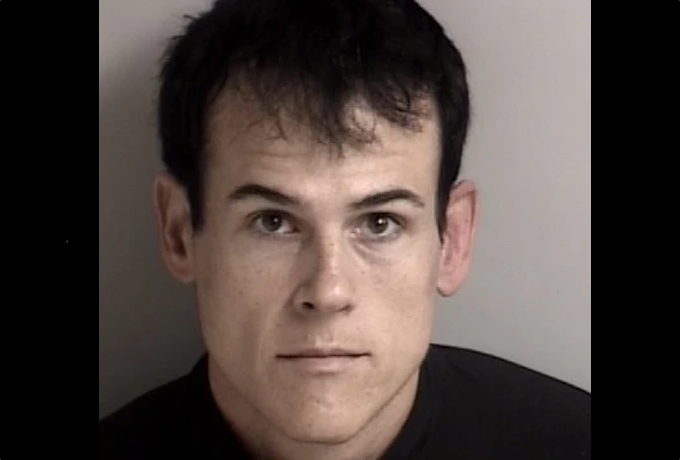
HAYWARD — A Harvard-trained lawyer and former Marine, alleged to have been the mastermind behind a cinematic kidnapping in Vallejo last spring, pleaded no contest on Friday to charges stemming from an unrelated Dublin home invasion, after first collapsing in court.

Matthew Muller

Matthew Muller

Matthew Muller, 38, sat behind a dark-glass partition as Judge Joseph Hurley accepted his plea and found him guilty on charges of attempted robbery, burglary and assault with a deadly weapon. He faces a maximum of 11 years in prison.

Minutes earlier, Muller had been splayed on the ground, his gray socks and brown sandals sticking out from behind the partition as medics rushed in to assist him.

When executing a search warrant at the South Lake Tahoe cabin where they arrested Muller, investigators found zip ties and gloves similar to those left at the Dublin house, as well as three sets of swim goggles with black duct tape covering the lenses.

Read the whole story


Truckee being proactive about climate change


Truckee is taking a proactive approach to climate change. Photo/LTN file

Truckee is taking steps to get a handle on climate change. Photo/LTN file

By Linda Fine Conaboy

TRUCKEE –Truckee Town Manager Tony Lashbrook last week said it is imperative the town starts acting on climate change.

This comes two months after he said that because of its location Truckee is not required to do climate action planning, but that big monetary incentives make it desirable to do so.

Lashbrook and others representing invested entities presented a second workshop, this time to Truckee Donner Chamber of Commerce members and guests, on Sept. 15. As this issue has heated up in the last two months with climate change being a factor in the drought and wildfires, so has the town’s knowledge base.

The consensus was to get a handle on climate change now. Judging by questions and comments, this audience has gone beyond questioning the reality of climate change, and is anxious to move forward.

People at the meeting not only endorse things like charging stations for electric cars (eight are planned), one man said he’s ready to purchase a hydrogen-powered vehicle. It just so happens that one of the two Shell gas stations in town is in the process of installing a hydrogen fuel pump. Hydrogen emits only water from a vehicle’s tailpipe, not carbon dioxide and other nasty elements.

This Nevada County town is a part of the state’s “fishhook,” Steve Frisch, president of Sierra Business Council explained. As such, it is not required to have formal plans to address a changing climate. These counties are more rural with not enough population to become part of a metropolitan planning organization, and, consequently, not able to apply for some of the grants from the pots of funding available through California’s MPO program. Because Truckee is outside the Tahoe basin is cannot be part of the Tahoe MPO established through the Tahoe Regional Planning Agency.

However, according to Greg Jones, vice president of the Sierra Business Council, and Frisch, this pot, funded by federal cap and trade regulation, is large, more than $2 billion in 2013-15, and guaranteed to grow in coming years. And it’s worth going after Truckee’s share.

To do this, Truckee has developed a process to address climate action planning, focusing on those activities that can be achieved in a cost effective manner. This includes, among other things, a greenhouse gas inventory, and maybe even more important, public engagement, Jones said.

In fact, in his presentation, public engagement is mentioned many times, along with conducting a greenhouse gas inventory, establishing attainable greenhouse gas reduction targets, and creating a process to implement reductions and monitoring and track results.

He added that some of the benefits of a climate action plan include: saving taxpayers money, enhancing the economy, and job creation.

Since time was short and there were several speakers, each presented a pared-down version of what their organizations are doing in the pursuit of decreasing greenhouse gas emissions.

Steve Poncelet, public information officer and conservation manager at Truckee Donner Public Utilities District, said Truckee Donner PUD hasn’t had a rate increase in years, while generating more than $800,000 annually as a cap and trade seller.

He also said TDPUD’s water conservation programs are strong and that according to data, the use of charging stations is up. The question now is where to locate them. According to Poncelet, it costs $1 per hour to charge a vehicle.

Greg Sorenson, the president of Liberty Utilities, took a turn at the podium explaining his company has 49,000 customers locally who make use of Liberty’s clean and renewable power generation, for the time being purchased from NV Energy. He added that 23 percent of the company’s energy comes from renewable sources and that by 2016 that number will increase to 25 percent.

Liberty energy efficiency programs include: in-home energy audits, free CFL bulbs, refrigerator and freezer recycling and incentives for public schools to save energy. Additionally, the residential carbon credit program allows customers to generate their own power — net metering.

In 2016, pending approval, the company will offer a solar incentive program available to residential and commercial customers and will establish a 50-megawatt power generating plant in Luning, Nev.

“People are generating their own energy,” Sorenson said. “But they’re not on the grid. The argument is, when a customer needs the grid, how do they pay?”

To his way of thinking, there is no good solution to this problem yet. “How much contribution from solar customers should there be?” he asked. “There are still lots of questions to be answered. For example, what happens on cloudy days? How do you plan for intermittent outages? It’s coming down to storage and distribution.”

The path to sustainable energy and corralling greenhouse emissions remains somewhat bumpy, but Truckee is taking the challenge.

“We’re committed to moving forward with our greenhouse gas inventory,” Lashbrook said. “Once we scope that, we’re looking for money, several hundred thousand dollars. Even though we don’t have a plan yet, there’s a lot of good, effective work being done.”



Report: Aging voting machines could cause election meltdown

By Zachary Roth, MSNBC

America’s voting machines are reaching the end of their lifespans, and many states appear unwilling to spend the money to replace them, a detailed new report warns. The impasse raises the threat of a catastrophic meltdown in next year’s presidential election.

The report, released Tuesday by the Brennan Center for Justice, paints an alarming picture. Experts say today’s machines have an expected lifespan of 10 to 20 years—closer to 10. But in most states, a majority of jurisdictions have at least some machines that were bought in 2006 or earlier, while in 11 states—including presidential battlegrounds like Nevada and New Hampshire—every jurisdiction uses such machines. Fourteen states will use some machines that were bought over 15 years ago.

Election officials are increasingly sounding the alarm. “We’re just really concerned,” one county election official in Missouri told the Kansas City Star recently. “Going into a presidential election year with old equipment – we don’t want to be another Florida.”

Read the whole story


Nevada 3-day drought summit starts Monday

By Sandra Chereb, Las Vegas Review-Journal 

CARSON CITY — Water, the lack of it and how the driest state in the nation can best stretch every last drop will be the focus of a three-day drought summit that convenes Monday in Carson City.

It’s the penultimate event before a panel convened by Gov. Brian Sandoval meets Sept. 28 to narrow down the voluminous testimony gathered over the past several months and identify priorities and recommendations to be included in a report due Nov. 1.

Sandoval, a second-term Republican, established the Nevada Drought Forum in April. Speaking at the time on a dusty, dried-up lakebed in Washoe Valley just north of the capital city, the governor said the goal is to develop best practices for water use and conservation.

Read the whole story


Truckee progressing on tunnel project

Truckee and Caltrans have finished the tunnel phase of the Highway 89 Undercrossing Improvement Project, nicknamed the Mousehole Project. The tunnel structure is now completely through the Union Pacific railroad embankment.

The concrete tunnel structure and retaining walls were built on the south side of the Union Pacific railroad using over 1,500 cubic yards of concrete. Then the jacking began to insert the tunnel structure into the hole dug into the railroad embankment by a road header machine, which removed over 900 cubic yards of soil and rock. On Monday,

While the tunnel is through the embankment, much work needs to be done before it is safe for the public to travel through. Over the next months, portal wall construction and finish work will continue on this $14 million project that will provide a safer route for pedestrians and bicyclists along the heavily traveled Highway 89 between Truckee and Tahoe City.

Full completion is expected next spring.


U.S. has growing love affair with bottled water

By Tara Lohan, AlterNet

This spring, as California withered in its fourth year of drought and mandatory water restrictions were enacted for the first time in the state’s history, a news story broke revealing that Nestlé Waters North America was tapping springs in the San Bernardino National Forest in Southern California using a permit that expired 27 years ago.

And when the company’s CEO Tim Brown was asked on a radio program if Nestlé would stop bottling water in the Golden State, he replied, “Absolutely not. In fact, if I could increase it, I would.” That’s because bottled water is big business, even in a country where most people have clean, safe tap water readily and cheaply available. (Although it should be noted that Starbucks agreed to stop sourcing and manufacturing their Ethos brand water in California after being drought-shamed.)


In 2014 bottled water companies spent more than $84 million on advertising to compete with each other and to convince consumers that bottled water is healthier than soda and safer than tap. And it seems to be paying off: Americans have an increasing love of bottled water, particularly those half-liter-sized single-use bottles that are ubiquitous at every check-out stand and in every vending machine. According to Beverage Marketing Corporation, a data and consulting firm, in the last 14 years consumption of bottled water in the U.S. has risen steadily, with the only exception being a quick dip during the 2008-09 recession.

Read the whole story


Family missing following West Slope fire

By Vallejo Times-Herald

A Benicia family is missing following a fire in El Dorado County, according to a press release Friday.

Adam Buchanan, his 7-year-old son Gavin and Gavin’s mother Molly McAfee have been reported missing after a fire gutted Buchanan’s cabin near Georgetown in El Dorado County “last weekend,” according to the release.

The actual date of the fire was not immediately available.

Read the whole story


Calif. school bond may be on 2016 ballot

By Jim Miller, Sacramento Bee

Proponents of a $9 billion school-construction bond have turned in enough valid voter signatures to qualify for the November 2016 ballot, Secretary of State Alex Padilla announced Friday. The school borrowing measure would be the first since 2006.

Voters have approved about $45 billion in K-12 and higher education borrowing since 1998. All of the measures – totaling $9.3 billion in 1998, $13.05 billion in 2002, $12.3 billion in 2004 and $10.4 billion in 2006 – were placed on the ballot by the Legislature.

The pot of bond money is almost tapped out, and the state faces an estimated $20 billion backlog of applications.

Read the whole story


Ag secretary on quest to cut food waste

By Karen Matthews, AP

Agriculture Secretary Tom Vilsack announced a goal this week to cut the amount of food that Americans waste by 50 percent by 2030.

“The United States enjoys the most productive and abundant food supply on Earth, so too much of this food goes to waste,” Vilsack said in New York City, where he was joined by food-industry representatives and officials from the Environmental Protection Agency.

Vilsack likened the effort to reduce food waste to the anti-littering campaigns of the 1960s and ’70s that shamed Americans for tossing trash out car windows. “This is the logical extension,” he said. “This is the next litter campaign.”

The U.S. Department of Agriculture estimates that Americans waste 133 billion pounds of food every year, or 31 percent of their overall food supply.

Vilsack said other nations waste similar amounts and the U.S. must lead a global effort to use food more efficiently. “This is an opportunity for us to make a statement and provide leadership,” he said.

EPA officials said the massive waste is a problem not just because the food could feed the hungry but also because it ends up in landfills and affects the environment.

“Twenty-one percent of all the waste in landfills is food,” EPA Deputy Administrator Stan Meiburg said. “Once it’s there, it produces methane, which is a greenhouse gas.”

Leslie Sarasin, president and CEO of the Food Marketing Institute, a food retailers’ trade association, said the industry supports cutting food waste because it operates on a “razor-thin” margin of 1 or 2 percent.

“Reducing food waste at all levels in the food chain — farm, factory, store and home — is certainly one of those issues with economic and emotional appeal,” she said.

The officials spoke at a facility in Long Island City, Queens, operated by the nonprofit City Harvest, which started in 1982 as an effort to salvage excess food from restaurants. City Harvest now takes donations from businesses and farmers and delivers it to 500 food banks and soup kitchens.

Vilsack toured the warehouse packed with donated produce like carrots that were too big to sell and called it “truly inspiring.”

He said the campaign to cut food waste includes educating consumers about how long to keep food before it must be thrown out.

He said he recently used the USDA’s new mobile FoodKeeper app to determine whether chicken salad in his refrigerator was still good.

It was, and he ate it.


Placer SPCA to receive dogs rescued from meat farm

By Cathy Locke, Sacramento Bee

Dogs rescued from South Korea, where they had been raised for meat, will soon be available for adoption in Placer County.

Staff members from the Placer Society for the Prevention of Cruelty to Animals will travel to San Francisco International Airport today to receive five or six dogs. The Humane Society International has shut down multiple dog meat farms to give these animal a second chance at life, according to a Placer SPCA news release.

Read the whole story