Poor students lose ground with Common Core

By Diana Lambert and Phillip Reese, Sacramento Bee

Despite longtime efforts to reduce the achievement gap between rich and poor students in California, the divide grew much wider under the state’s new testing system, according to a Sacramento Bee review of state data released this month. About 21 percent of economically disadvantaged students in California met state math standards under the new Smarter Balanced Assessment System, compared with 53 percent of all other students.

That means the percentage of wealthier students meeting state standards is about 2.5 times higher than the percentage of economically disadvantaged students. By comparison, under the previous testing system used in 2012, the percentage of students scoring “proficient” was about 1.5 times higher for wealthier students than for poor students.

The new statewide exam is based on Common Core standards, a national set of guidelines intended to promote critical thinking, analytical writing and problem-solving skills. Students often must combine several skills to correctly answer questions, and memorization is less valuable. Students, regardless of income level, fared worse than under the previous testing system, but low-income schools suffered the steepest performance declines.

Read the whole story


Darted bear drowns in Nevada

By Jeff DeLong, Reno Gazette-Journal

A black bear drowned Monday after it was tranquilized by wildlife officials and then ran into a pond in Dayton and slipped beneath the water, according to the Nevada Department of Wildlife.

The bear, an 8-year-old, 300-pound male, was reported to be wandering through the Dayton Valley Golf Club Monday evening, department spokesman Chris Healy said.

Read the whole story


Science: Controlled burns help prevent larger fires

A controlled burn on Spooner Summit in 2014. Photo/Carolyn E. Wright/Copyright

A controlled burn on Spooner Summit in 2014. Photo/Carolyn E. Wright/Copyright

By Francie Diep, Pacific Standard

In the right forests, one important way to prevent large fires is to let small ones burn. That’s the conclusion of recent research into wildfires, which has found that small, controlled fires remove dry brush that would serve as fuel to mega-fires if allowed to build up.

In addition, moderate fires can nourish the soil and germinate the seeds of plants evolved to work with wildfire. (Lodgepole pinecones = real-life dragon eggs.)

If you’re from California, or live in another region that’s prone to wildfires, you may already know this. Researchers and forest managers know it too. A quick search finds a number of official documents that talk about the importance of removing brush, setting off controlled “prescribed fires,” and letting small wildfires burn far away from buildings. This is a major departure from the common practice of the recent past, when nobody cleared brush and firefighters put out all forest fires. researchers now acknowledge such habits set the stage for the large, out-of-control fires of today.

Read the whole story


Plan designed to reduce highway fatalities

California launched the next phase in its plan to further reduce fatalities and severe injuries from collisions on public roadways.

Strategic Highway Safety Plan is a national blueprint created for states by the American Association of State Highway Transportation Officials in partnership with the Federal Highway Administration to develop strategies that save lives and reduce severe injuries. It helps states identify their specific safety challenges, and guides investment decisions toward strategies with the most potential to save lives and prevent severe injuries.

Under the original SHSP developed in 2005 California experienced a 30.4 percent reduction in roadway fatalities from 2005 to 2012, and a 17.5 percent reduction in severe injuries. The new plan, just like the original, is largely data-driven, where safety and other significant data is used to help define problems, develop solutions and measure progress.

This SHSP update also comes as a result of requirements under the federal Moving Ahead for Progress in the 21st Century Act. The act not only asked all states to update their SHSPs but to expand the scope beyond highways to include all public roads and to put a greater focus on safety for users of all forms of transportation, including bicyclists and pedestrians.


Rep. Santini, leader in mining and tourism, dies

By Ray Hagar, Reno Gazette-Journal

Former Rep. Jim Santini, the last man to represent the entire state of Nevada in the House of Representatives, died Tuesday at a hospice center in Rockville, Md., after being diagnosed with advanced-stage esophageal cancer.

Santini was a graduate of Bishop Manogue High School, the UNR and the University of California Hastings College of Law in San Francisco. He was 78.

“Today, Nevada lost a historic figure,” Senate Minority Leader Harry Reid, D-Nev., said on the floor of the Senate Sept. 22. “Early this morning, former Congressman James Santini of Nevada died. He was a remarkably good person, a tremendous person who understood Nevada so well.”

Santini, who was born in Reno in 1937, served as Nevada’s lone U.S. representative in Congress as a Democrat from 1974 until 1983. He left politics after losing a close battle with Reid for a U.S. Senate seat in 1986.

Read the whole story


Pesticide protester making rounds at council meetings

By Anjeanette Damon, Reno Gazette-Journal

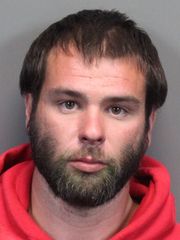
The agitated man wearing a red sweat shirt who rushed into the Washoe County Commission chambers on Monday and began pacing in the lobby was already familiar to Reno City Council members.

Ross Tisevich

Ross Tisevich

After the man pulled a Roundup bottle out of his shirt and started to drink from it during public comment, police tackled him, handcuffed him and led him out of building.

“It’s a joke! It’s a joke,” he shouted. “It’s just water.”

Ross Tisevich, who goes by Ross Tisarich on social media, had been to Reno City Council meetings before to protest the city’s pesticide use. He was at the South Lake Tahoe City Council meeting last week doing the same.


Read the whole story


SLT councilwoman banned from talking to staff

By Kathryn Reed

South Lake Tahoe City Councilwoman JoAnn Conner is no longer allowed to speak to city staff.

This edict came about last week after a closed session meeting in which the agenda item was the city manager’s review.

JoAnn Conner

JoAnn Conner

City Manager Nancy Kerry told Lake Tahoe News on Monday that as a result of the review Conner is to have no interaction with staff and staff is not to engage Conner.

Kerry would not say why this occurred or why Conner is being singled out.

City Attorney Tom Watson, who met with department heads and had meetings with other staff about the new protocol, passed down the directive. All communication involving Conner is to go through him.

Watson deferred comment to the City Council.

Mayor Hal Cole and Councilman Tom Davis said it was a personnel matter and therefore they could not talk about it. Councilmember Wendy David told Lake Tahoe News, “Council is committed to running a professional organization where we can move our city forward in the best way possible.” Councilman Austin Sass could not be reached.

Conner, who has one year left on her four-year term, acted like she wasn’t aware of the communication ban when Lake Tahoe News called Sept. 21.

“I have to make some phone calls to find out what is going on,” she said.

About 30 minutes later she emailed saying, “It is unfortunate internal issues have been made public. I generally deny any allegations and look forward to working with my colleagues to resolve any issues and move forward with positive accomplishments.”

However, 30 minutes before she was to attend the Sept. 21 Waste Management JPA meeting as the city’s representative Conner lined up alternate Davis to fill in.

Conner is known to have a short temper, and use profanity and derogatory words verbally and in writing. Her targets have been staff, elected officials and community members.

Duane Wallace, who is a member of the chamber Conner used to be president of, said, “She can be very caustic to people who disagree with her. I think I’m just one of a bunch.”

During the paid parking brouhaha Conner verbally berated people outside Grocery Outlet who were against the measure.

Former City Councilwoman Brooke Laine told Lake Tahoe News, “She would use colorful words to refer to me when she was talking to other people in the city.”

Instead of using Laine’s name, Conner’s favorite two words for her were “f—ing b—-.”

Laine had multiple examples of how Conner acted as a bully toward her beyond the name-calling.

Conner has been a bully for much of her tenure on the council. This was first documented in a column on Lake Tahoe News in October 2013.

While Conner has the right to be a bully and say what she wants, as a city councilmember she is an employer. She and the other councilmembers are the employers of Kerry and Watson.

Kerry and Watson, and the city as a whole, could be held liable if they don’t take action to protect the rest of the staff. A handful of employees have approached the city attorney asking for guidance in how to deal with Conner’s abuse. No communication is one way staff can be protected.

Aside from the verbal and written abuse, there are staff members who are leery of crossing Conner in any manner because she has a concealed weapon permit and often has her gun in her purse at meetings.

Small brush fire at Northstar contained

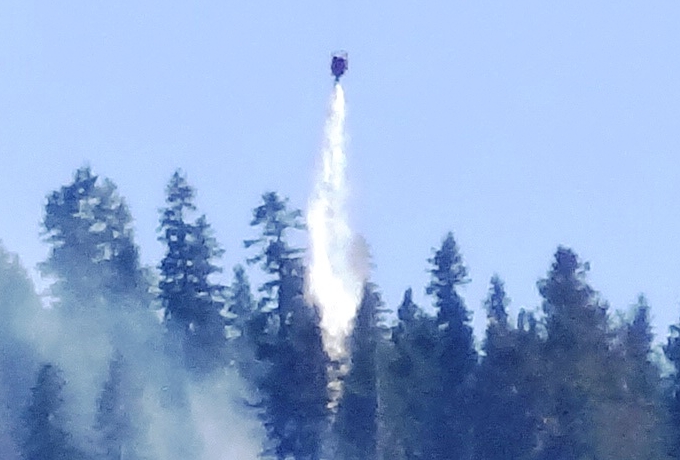
Crews drop water on a fire in Truckee on Sept. 21. Photo/Ellie Waller

Crews drop water on a fire in Truckee on Sept. 21. Photo/Ellie Waller

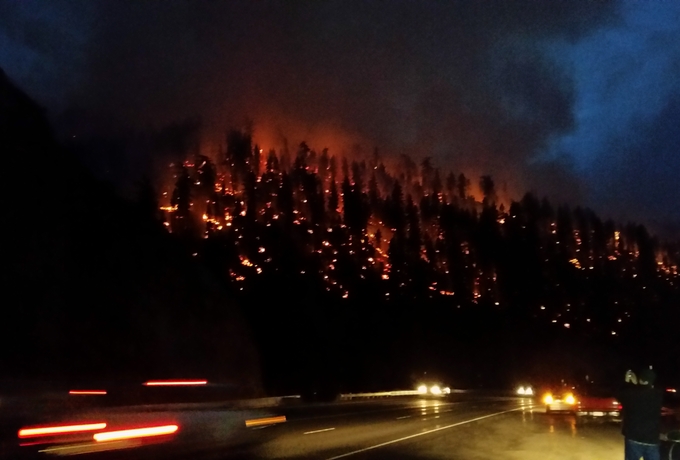
Firefighters were able to contain a blaze at Northstar to one-quarter of an acre this afternoon.

The cause of the Sept. 21 fire is under investigation. Lack of wind and a quick response from several agencies kept it from spreading.

It burned an area between Highway 267 and Sawmill Reservoir. There was no threat to the community of Northstar or the ski resort, according to officials.

North Tahoe Fire Protection District on its Facebook page said, “Today was a ‘high’ dispatch which included two chief officers, four engines, air attack, two air tankers, a helicopter, hand crews and a bulldozer. Aircraft placed retardant drops on the fire. This held the fire until ground resources made access.”

— Lake Tahoe News staff report


Nevada missed worst of West’s wildfire season

By Sean Whaley, Las Vegas Review-Journal 

CARSON CITY — Wildland fires don’t discriminate by geography, but due in part to some help from Mother Nature and just plain old luck Nevada has so far avoided the carnage seen elsewhere out West this summer.

For the season to date there have been 501 fires that have burned 42,153 acres in the Silver State, said Mike Klug with the Nevada Division of Forestry. Lightning caused 326 of the blazes while human activities accounted for the remainder.

The state saw 59,252 acres burned in 2014 and 162,841 acres burned in 2013, which was significant for Southern Nevada because of the Carpenter 1 fire. Nearly 30,000 acres of the Mount Charleston area burned in that fire in July 2013.

By comparison, nearly 1.9 million acres burned in Nevada in 1999, a record year for wildfires.

Read the whole story


Sandoval seeks new direction for state prisons

By Sandra Chereb, Las Vegas Review-Journal 

CARSON CITY — The ouster of the Nevada Department of Corrections director signals changes are coming to the beleaguered agency at the insistence of Gov. Brian Sandoval.

The Republican governor on Sept. 14 abruptly called for the resignation of Greg Cox, saying a “change in leadership” was necessary to move the department forward.

Sandoval did not hide his annoyance when he found out, the day before it was promised, that a report from an outside agency on use of force at state prisons would be late and unavailable for discussion at the Sept. 15 meeting of the Board of Prison Commissioners.

That report, being conducted by the Association of State Correctional Administrators, was commissioned earlier this year after a string of incidents at Nevada prisons, beginning in November when officers at High Desert State Prison outside Las Vegas shot and killed one inmate and wounded another. Lawyers say both were handcuffed behind their backs.

The death was not disclosed until four months later when the Clark County coroner ruled it a homicide.

Read the whole story