Nev. drought talks could bring legislative showdown

By Sandra Chereb, Las Vegas Review-Journal 

CARSON CITY — Everyone and every living thing needs water. The challenge in Nevada is how best to prepare and share when Mother Nature turns off the taps.

An unprecedented statewide discussion in late September about drought and water rights in Nevada could signal a looming showdown in the 2017 Legislature over water management.

The three-day drought summit and public workshops held around the state left some people nervous and others hopeful that Nevada can broker water solutions that meet the needs of urbanites while sustaining rural economies, wildlife and the ecological health of a vast and diverse landscape.

Read the whole story


EPA sets stricter standard for ozone

By Amy Harder, Wall Street Journal

WASHINGTON—Environmental regulators significantly lowered a national limit for a smog-causing pollutant Thursday, in an attempted compromise that left some businesses relieved and environmental and health leaders upset the initiative wasn’t stronger.

The Environmental Protection Agency set a limit of 70 parts per billion for ground-level ozone, which is created by emissions released into the air by manufacturing plants, utilities and vehicles, down from the current level of 75 parts per billion. In a draft released in 2014, the agency proposed a standard between 65 and 70 parts per billion.

Still, the move prompted criticism from business executives who didn’t want the EPA to change the limit at all, and from environmental and health groups that said it wasn’t tough enough.

Read the wholes story


Tax increases likely in Douglas County’s future

Douglas County wants to increase revenues so it can improve infrastructure. Photo/LTN

Douglas County wants to increase revenues so it can improve infrastructure. Photo/LTN

By Kathryn Reed

Douglas County commissioners will be faced with three tax related issues at a special meeting next week.

Sales and excise fuel taxes are likely to increase as well as the fee various utility companies pay. The county believes these tax increases will allow it to pursue state and federal dollars for projects – namely transportation – that require matching funds.

“As surrounding communities such as Carson City invest in their future, we need to plan for Douglas County’s future as well. It is imperative we ensure the safety of our residents for generations to come, while maintaining a financially stable, highly livable community for all of us to enjoy,” Jim Nichols, county manager, said in regards to why the hikes are necessary.

Commissioners can make the decision Oct. 5 without going to the voters. This is because Nevada statutes allow county commissioners to impose some of these taxes. The sales tax is proposed to go from 7.1 percent to 7.35 percent. That rate would exist indefinitely or until commissioners vote for a different percentage.

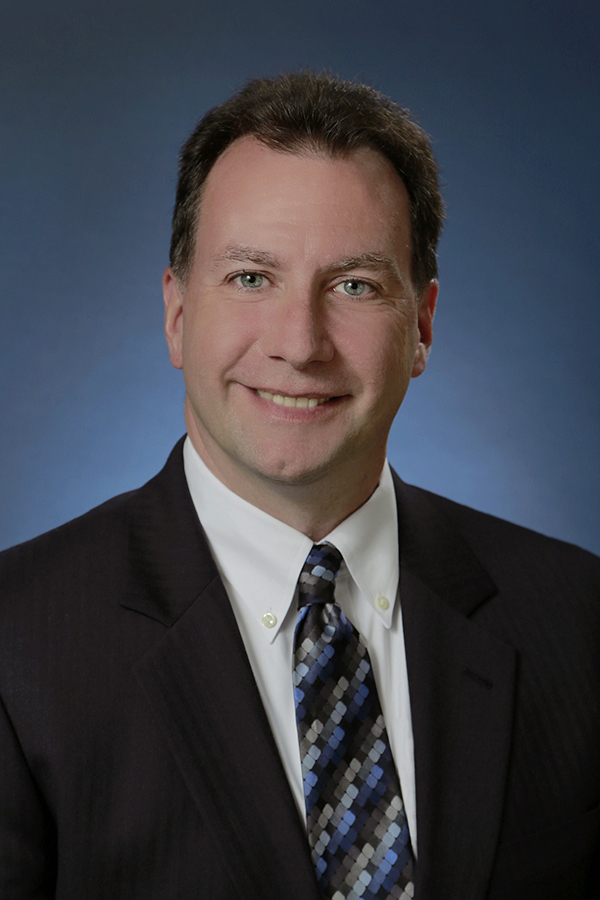
Douglas County Manager Jim Nichols believes increased taxes will keep the county solvent.

Douglas County Manager Jim Nichols believes increased taxes will keep the county solvent.

Projections are this will bring in $1.5 million to county coffers. The additional sales tax revenue would be earmarked for street and highway construction, and maintenance, as well as pedestrian amenities that would include trails.

“The proposed new sales tax will be treated similar to our PALS tax, it is a separate tax component in our property tax rate. What the county receives will be based on the actual collections in the county. The other component of the sales taxes we receive, and the biggest, is consolidated at the state level and then distributed. Douglas County is called a receiving county, which means we receive more from the state than we contribute of the consolidated funds,” Nichols explained.

Sales tax represents about 21 percent of this year’s general fund revenues.

Douglas County voters in 2018 will be asked to approve an additional one-half percent sales tax increase.

“The voters are being asked to consider a 0.5 percent increase to aid in addressing some of the connectivity projects identified for implementation. This tax increase would be in lieu of the 2.5 percent utility operator fee increase,” Nichols told Lake Tahoe News. Per Nevada statutes this particular tax has to go to voters.

It’s estimated to bring in $3 million per year. Some of that money could go toward public transit, whereas the first sales tax increase cannot be used for that per state law.

The 2.5 percent fee on utility operators is also on Monday’s agenda. The surcharge will be 0.5 percent on natural gas, 2.5 percent on electricity and 2.5 percent on telecommunications. These utility operators are already paying a 2.5 percent tax to the county.

“It is important to note that this fee increase would only go into effect if the proposed 0.5 percent sales tax is not approved by the voters (in 2018). If the utility operator fee increase is enacted, it could be used to leverage additional funds for regional transit and various transportation construction projects,” Nichols said. The county expects the utility fee to generate $1.6 million per year.

The utility fee does not alter the franchise agreements the county has with the various entities.

Currently, the county has 4 cents per gallon excise tax on fuel that was implemented by commissioners in 2001. What is on next week’s agenda is an additional 5 cents gas tax. The projected $900,000 it would generate is designated for road maintenance and to leverage funds for transportation construction projects.

While the state of Nevada prides itself on being tax friendly, counties are being faced with less revenue flowing from Carson City to their coffers and therefore need a way to pay the bills.

“Douglas County has an opportunity to address many of the transportation issues in the county, some of which are safety hazards to our children, bicyclists, pedestrians and drivers. In addition we can implement many of the projects identified in our Master Plan, Transportation Plan, the Valley Vision, South Shore Vision and other related documents. We can do this by leveraging grant funds if we have a match to make us competitive,” Nichols said. “We can also achieve full funding for regional road maintenance. We would be joining many of our surrounding communities that already have these and higher taxes in place and yet they are still considered tax friendly.”

—–

Notes:

·       The meeting is Oct. 5 at 1pm at the Douglas County Historic Courthouse, 1616 8th St., Minden.


Why the U.S. is No. 1 in mass shootings

By Melissa Healy, Los Angeles Times

The United States is, by a long shot, the global leader in mass shootings, claiming just 5 percent of the global population but an outsized share — 31 percent — of the world’s mass shooters since 1966, a new study finds.

The Philippines, Russia, Yemen and France — all countries that can claim a substantial share of the 291 documented mass shootings between 1966 and 2012 — collectively didn’t even come close to the United States.

And what makes the United States such a fertile incubator for mass shooters? A comprehensive analysis of the perpetrators, their motives and the national contexts for their actions suggests that several factors have conspired to create in the United States a potent medium for fostering large-scale murder.

Those factors include a chronic and widespread gap between Americans’ expectations for themselves and their actual achievement, Americans’ adulation of fame, and the extent of gun ownership in the United States.

Read the whole story


Judge throws out petition to repeal Nev. tax package

By Michelle Rindels, AP

CARSON CITY — A Carson City judge tossed out a petition Thursday that seeks a ballot question repealing the entire $1.1 billion tax package that Nevada lawmakers passed this spring.

Judge James Todd Russell dismissed the measure brought forth by Las Vegas anti-tax activist Chuck Muth, who did not show up to the hearing and has been trying to move the matter from state to federal court. Russell ruled against efforts to take it out of his jurisdiction and did not excuse Muth’s absence.

“We’re pleased with the determination and the actions of the court today,” said Matt Griffin, a lawyer with the Coalition for Nevada’s Future PAC, which is defending the tax package. “There are rules that govern the petition process and rules that govern the judicial process, and Judge Russell applied both fairly and correctly today.”

Muth wants to circulate a petition and ultimately create a ballot question that would repeal the taxes. He says lawmakers passed the measure, which is worth more than $1 billion over the next two years, against the will of voters who overwhelmingly rejected a 2014 ballot question to impose a margins tax.

The Coalition for Nevada’s Future challenged the petition in court, saying it violates the Nevada requirement that ballot measures deal with only a single subject and did not properly explain the consequences of repealing the new law.

Muth, who said he thought the court date would be postponed, said he was surprised the hearing proceeded but is not surprised by opposition to his repeal efforts.

“This is par for the course,” Muth said about the ruling, noting that he’s exploring his options for next steps. “They were going to do everything in their power to prevent the people from voting on this.”

Muth said he didn’t find out that the hearing was still on until Tuesday, and sent the judge a letter through overnight mail saying he couldn’t come to northern Nevada on such short notice. He said he thought all state court proceedings were on hold because he filed a motion Sept. 11 to move the matter to federal court.

Thursday’s hearing is not expected to be the end of the battle over the taxes, which were backed by Gov. Brian Sandoval and passed the Legislature with more than two-thirds approval after extensive debate.

Other tax opponents are seeking to repeal just one portion of the three-part package — the new Commerce Tax based on gross revenue. That petition has not been filed.

Sandoval has spoken out against the efforts, saying they would create a deep hole in the state budget and reverse initiatives to improve schools.

“I strongly oppose the petition. Its passage will destroy a generational opportunity to finally modernize and improve an underperforming education system,” he said in August. “If our schools don’t improve, businesses won’t come here. The time is now to build the workforce of the future.”


Bid to repeal Calif. school vaccination law falters

By Sharon Bernstein, Reuters

A plan to ask voters to repeal a new California law tightening vaccination requirements for school-age children may falter due to a shortfall in signatures needed to put the referendum on the ballot.

The effort is part of a backlash against a bill signed into law this summer by Democratic Gov. Jerry Brown that requires pupils to be vaccinated against childhood diseases unless they have a medical reason to refuse. It was passed after a measles outbreak among unvaccinated people at Disneyland last year.

That law, which goes into effect next year, makes California the third state to eliminate religious and other personal exemptions to vaccinations. It generated strong opposition from some parents, many who feared a now-debunked link between childhood vaccinations and autism and others who feared intrusion on the religious exemption.

Supporters of the referendum had until Monday to turn in 365,880 valid signatures from registered voters in California in order for the measure to appear on the November 2016 ballot.


Youth arrested in deaths of 3 found in burned EDC cabin

By Associated Press

PLACERVILLE — A 16-year-old boy has been arrested in the killings of his father, the father’s fiance and their 7-year-old son, whose burned bodies were found in a cabin on the West Slope.

El Dorado County Sheriff John D’Agostini said at a news conference that 16-year-old Nolan Buchanan was arrested at his high school Thursday. District Attorney Vern Pierson said at the news conference that Buchanan will be charged with murder as an adult.

Authorities found the bodies in the aftermath of the fire on Sept. 13 at the family’s cabin in Greenwood.

The remains were identified as 37-year-old Benicia resident Adam Buchanan, his fiance Molly McAfee, and their son, Gavin.

It wasn’t clear whether Nolan Buchanan has an attorney yet who could comment on his case.


Customers can expect to pay more for water

By Associated Press

With all the questions surrounding the nation’s water supplies and systems, one thing seems certain: Customers will be paying more to keep their taps flowing.

Rates have been shooting up nationwide in drought-stricken states and in cities trying to upgrade their aging infrastructure. Experts say the trend is sure to accelerate as the cost of water, treatment and delivery comes into line with how essential water is to our daily lives.

The price for tap water still amounts to about a half-cent per gallon. Elected leaders have long fought to maintain cheap rates, but those prices don’t cover the full expense of finding and treating new water sources or upgrading old pumps and pipes.

“The fact of the matter is, water rates are going to have to increase to reflect the cost of having this system that delivers it to every faucet in your house,” said Greg DiLoreto, past president of the American Society of Civil Engineers.

The Government Accountability Office said in a report last year that current rates were not enough to pay for the total cost of supplying water, let alone making needed upgrades.

“The fact of the matter is, water rates are going to have to increase to reflect the cost of having this system that delivers it to every faucet in your house.”

A year ago, the average monthly household water bill was just over $34 based on an average usage of 7,480 gallons, according to a survey conducted by the American Water Works Association. That’s up more than 40 percent since 2008, or $10 per month.

“Compare that to your cellphone bill or cable television bill or power bill or gas bill,” DiLoreto said.

Rates have been rising across the country:

• Baltimore this summer saw the last of three annual rate increases that pushed bills up by about 40 percent so the city could upgrade its sewer and water systems. The city has begun shutting off service to users with long-overdue bills, which total an estimated $40 million.

• New Orleans residents will pay an average of $115 a month for water and sewer in 2020 after eight years of rate increases that will more than double their bills to reconstruct the city’s water-delivery network, which was already aging when Hurricane Katrina flooded the city. As word of the rate increase spreads, more people are asking for assistance through a municipal program that helps pay their water bills. The number of applicants has increased from about 80 per month five years ago to 250 per month this year.

• In Northern California, water rates are scheduled to double in the neighboring towns of Woodland and Davis. The towns decided to build a pipeline to draw drinking water from the Sacramento River because minerals, salts, nitrates and other contaminants have degraded the groundwater.

Water managers say it was clear the cities needed another drinking source.

Davis resident John Munn said he worries that larger water bills on top of the need for money to improve the city’s sewer system and repair its roads will make it tough to live there on a middle-class income.

“When you add them all up, I think it’s going to hit people pretty hard,” he said.

Many cities in drought-stricken California, including San Diego and San Francisco, also are looking at raising water rates The reason is a bit of an odd twist: Residents are conserving more water because of the governor’s statewide conservation mandate, and that means less revenue is coming into the water districts.

So far, rate increases don’t seem to be generating widespread outrage — or even much notice — in the communities that have enacted them.

Bill Stowe, general manager of Des Moines Water Works in Iowa, said he was surprised by the lack of pushback when the utility raised its rates by 7 percent this year. What concerns him is the impact on low-income residents.

“We’ve got some customers that when you talk about a 10 percent rate increase, that’s maybe a decision about whether they can keep their cat or whether they turn up their air conditioning the way it should be turned up,” he said. “Those are tough decisions.”

California water conservation slows slightly

By Matt Stevens, Los Angeles Times

Californians cut back their urban water use in August by 27 percent compared with the same month in 2013, state regulators announced Thursday.

The reduction was slightly less than the 31 percent decline recorded in July, but on par with a 27 percent effort in June.

It was also enough to remain in compliance with Gov. Jerry Brown’s restrictions for the third consecutive month. Earlier this year, Brown ordered cities and towns across California to slash their water consumption by 25 percent to help combat the effects of a four-year drought.

Read the whole story


S. Tahoe man indicted in Vallejo kidnapping

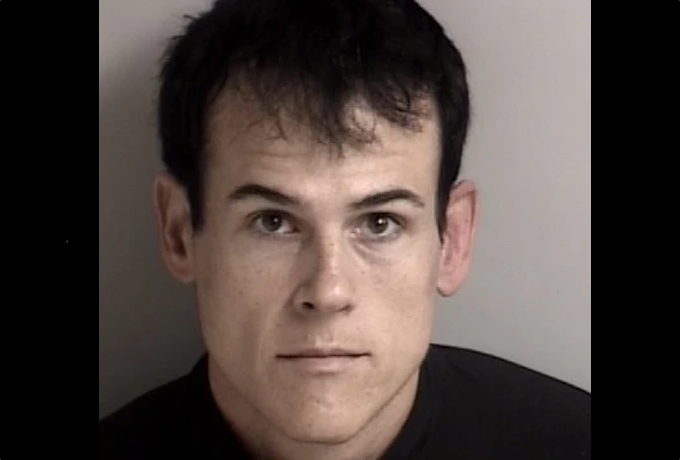
A South Lake Tahoe man was indicted today by a federal grand jury in the Vallejo kidnapping case that police officers there once called a hoax.

Matthew D. Muller, 38, faces one count of kidnapping.

Matthew Muller

Matthew Muller

Last month Muller pleaded no contest to charges stemming from an unrelated Dublin home invasion. He faces 11 years in prison for that crime.

According to court documents, Muller on March 23 broke into a residence in Vallejo, restrained the male occupant and kidnapped the female occupant. He allegedly demanded $15,000 in ransom, and kept the woman for two days before releasing her in Huntington Beach.

“The bizarre circumstances of the events in Vallejo in March complicated the investigation of this matter,” U.S. Attorney Benjamin Wagner said Oct. 1 in a statement. “But the Vallejo Police Department, the FBI, and our law enforcement allies in Alameda County have done excellent work in recent months to bring this investigation to a conclusion.”

Muller is being held in the Sacramento County Jail. He is scheduled to be arraigned Oct. 5.

If convicted, Muller could face life in prison and a $250,000 fine.

— Lake Tahoe News staff report