Sign issues dominate SLT council meeting

South Lake Tahoe councilmembers want to spend the winter crafting law to allow this sign to remain in town. Photo/Provided

South Lake Tahoe councilmembers want to craft law to allow this sign to remain in town. Photo/Provided

By Kathryn Reed

Signs – the fee for a permit and one that doesn’t meet the letter of the law – were hot topics at the Tuesday South Lake Tahoe City Council meeting.

A unanimous vote by the South Lake Tahoe City Council on Oct. 20 immediately reduced the fee for sign permits.

It’s an issue that arose after the council earlier this year changed the entire fee schedule. The goal in doing so was to have the fees reflect what it costs staff to deal with the particular issue. (Recreation is the main area the council agreed should be subsidized and not meet the true cost standard.)

What was approved earlier this year was a sign permit fee of $878. All councilmembers voted for that rate. It was reduced Tuesday to be $120 for a minor sign and up to $300 for a sign permit that is more involved.

No one councilmember championed the cause for the reduction, but instead they all agreed from the get-go when it was pointed out to them that it was excessive.

Work began in July for the fee to be changed. It went to the Planning Commission in September.

Other changes make the sign ordinance more like TRPA’s policy.

Also discussed at the meeting was the possibility of allowing Tahoe Trout Farm to keep its seasonal sign on the American Legion property on Highway 50. It is there when the farm is open, which this year was April 28-Oct. 1. The farm has been operating since 1946 – 19 years before the city was incorporated.

It does not meet city or Tahoe Regional Planning Agency regulations; neither allows off-site signs. The issue went to the Planning Commission. But there is nothing in city code to allow the sign.

The council agreed to uphold the Planning Commission’s decision to not allow the sign, but also directed staff to come back before spring with a proposal that would allow the sign to stay.

This is even though owner Jim Vallier admitted social media is what is driving people to his business, which he has owned for four years. He boasted to the council that the trout farm has gone from 60th to 12th place on TripAdvisor for things to do in South Lake Tahoe.

Kathy Vaughan, who lives across from the farm, wants the sign to stay, too.

“Let’s not eliminate old Tahoe. Keep that sign out there,” she told the council.

The city does allow for directional signs and local unique signs. The latter is more historical in nature, but the word “historical” is not used because it would trigger state involvement.

Councilwoman JoAnnConner said put an arrow on the sign and make it directional. It’s not that simple. After all, the sign already has an arrow on it.

The council wants to make other changes to the sign ordinance. At a future meeting the electeds will consider changing when sandwich boards can be put on the sidewalk. The Oct. 20 vote changed it to 5pm on Fridays. Councilmembers Tom Davis and Conner advocated to bump that to 2pm. The other three had no appetite to change it at this week’s meeting, and voted down the motion. Still, Davis and Conner only needed each other’s OK to have it brought back as a separate item down the road.

Also coming back will be whether businesses may use umbrellas with logos on them. Conforming to Tahoe Regional Planning Agency regs will be necessary. Graphic elements and the like will also have to be considered.

—–

In other action:

·      The council agreed to bring back the plastic bag ordinance that took effect Oct. 15 as it pertains to retail establishments.

·      Councilwoman Wendy David announced the Cal-Tahoe JPA that handles ambulance service for South Lake Tahoe and Lake Valley fire departments voted not to renew the contract with El Dorado County when it expires in 2019. Solutions are still being worked on.

·      Councilman Austin Sass noted the Tahoe Transportation District staff will be presenting updates on the loop road to Douglas County and South Lake Tahoe officials later this fall.

·      The council voted 4-1 to establish the Community Play Consortium Joint Powers Authority with Lake Tahoe Community College and Lake Tahoe Unified School District. Councilwoman Conner abstained. She and David, the two on the subcommittee, went back and forth as though they had not been at the same meetings at which the agreements were crafted.


Lawyer: Reno journalists were victims of Tesla guards

By Daniel Rothberg, Las Vegas Sun

Security personnel at Tesla’s Northern Nevada battery manufacturing plant engaged in a violent skirmish with two employees of the Reno Gazette-Journal earlier this month and rammed their vehicle with an ATV, according to a letter from the newspaper’s counsel.

According to the attorney’s letter, the alleged assailants, apparently security personnel working at the construction site for the $5 billion Tesla Gigafactory, shattered the driver’s window with a rock, slit the driver’s side seatbelt, aggressively removed the RGJ journalist from the vehicle and secured him in a position face-first in the dirt.

The letter, released on Monday, provides a depiction of events that calls into question the narrative Tesla released about the Oct. 9 incident in a post last week. In that post, Tesla said the Reno journalists struck two security guards and hit Tesla’s ATV with their Jeep as the journalists attempted to flee the construction site.

Read the whole story


Drought-stressed Calif. forests face a radical shift

By Thomas Curwen, Los Angeles Times

Biologist Greg Asner first heard the numbers in April, but they did little to prepare him for what he saw.

The Forest Service had estimated that nearly 12.5 million trees in the state’s southern and central forests were dead. But as Asner peered down upon the same forests from his airplane at 6,000 feet, he saw something far worse.

California’s drought-parched landscape was poised for a radical transformation. Much of the low-elevation forests near Mt. Pinos in the Los Padres National Forest and in Pinnacles National Park were going to disappear if trends continued.

A scientist with the Carnegie Institution for Science, Asner has a practiced eye for forest health, and with instruments aboard his plane that give him X-ray eyes into the foliage, he is able to assess not just dead trees but trees so stressed by the drought that their death is likely.

Read the whole story


South Lake Tahoe councilmember censured

By Kathryn Reed

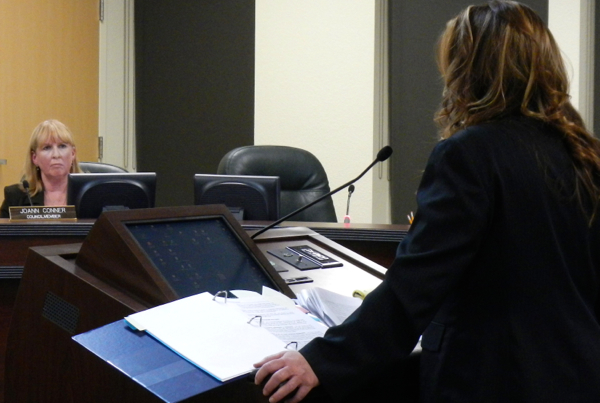
On identical 4-1 votes Monday the South Lake Tahoe City Council ratified the city manager’s decision to ban Councilmember JoAnn Conner from interacting with staff and agreed to censure her. Conner was the dissenting vote on both measures.

It took nearly 3½ hours to reach those conclusions Oct. 19.

Some in the city say the issues involving Conner started immediately after she was elected three years ago this November. Members of this council and previous ones have reached out to her individually and collectively to express their displeasure with her words and actions.

“I have witnessed her conduct for many years,” Mayor Hal Cole said, intimating a pattern of negative behavior.

“I have personally seen Ms. Conner treat staff in a disrespectful manner. I have personally seen Ms. Conner treat citizens in a disrespectful manner during city council. I have personally seen Ms. Conner lose emotional control to the extent that I thought that she was not speaking in a logical or professional manner,” Sass said. “I believe members of this City Council, including myself, are hesitant and uncomfortable working with Ms. Conner. It’s my opinion that Ms. Conner poses a financial risk to our city as a result of potential litigation from city staff.”

Councilmember Wendy David said, “The hostile environment you have created and cited has not only damaged our city, the city you were elected to serve, but has created fear, real fear of you and your potential retaliation and behavior.”

South Tahoe Councilmember JoAnn Conner listens has her attorney Jacqueline Mittelstadt makes a point Oct. 19. Photo/Kathryn Reed

South Tahoe Councilmember JoAnn Conner listens as her attorney Jacqueline Mittelstadt makes a point Oct. 19. Photo/Kathryn Reed

Lake Tahoe Community College President Kindred Murillo wrote a letter that referenced the hostility she incurred when giving a talk to the council. El Dorado County Supervisor Sue Novasel also wrote a letter. Neither she nor her assistant, Judi McCallum, will speak directly to Conner because of her language and demeanor.

City Manager Nancy Kerry said the only way Conner would speak of former Councilwoman Brooke Laine was to call her a c-u-n-t. F bombs, Kerry said, are standard from Conner.

It has gotten to the point that employees are scared of Conner, fearing for their jobs and that she will pull the funding for projects they are working on or ax money from their departments. This in turn impedes their ability to do their jobs.

Kerry early last month made the decision to ban Conner from talking to staff after at least six complaints were levied against the councilmember by staff to the city attorney.

Cole said in the weeks since that action was taken Conner’s behavior – mostly through social media – borders on harassment and retaliation. That is what led him to seek censure.

Censure is not punishment, according to City Attorney Tom Watson, but instead is a statement saying certain behavior is not being condoned.

What wasn’t agreed to between Watson and Jacqueline Mittelstadt, who represented Conner, is whether evidence needed to be presented to substantiate the censure and to what degree this was a judicial hearing. Watson said no evidence had to be given, that councilmembers need not answer questions and that it was not a judicial hearing in any sense. Mittelstadt disagreed.

When it comes to censure the city’s protocols say, “A decision to censure requires the adoption of a resolution making findings with regard to the specific charges, based on substantial evidence, and approved by the affirmative vote of at least three council members.”

What the attorneys vehemently disagreed about is whether that evidence had to be presented to Conner.

(Mittelstadt had been the city’s attorney, having quit in 2010 after a brief, contentious tenure.)

City Councilman Tom Davis in particular said Conner was violating protocols of conduct. Such a protocol is not posted on the city’s website.

“I find it ironic that in the very same hearing, the city councilmembers failed and refused to comply with the requirements of the very protocols they proceeded to censure another council member for allegedly violating,” Mittelstadt told Lake Tahoe News.

Seven letters were read into the record, with one supporting Conner and six favoring the city’s actions. Thirteen people spoke at the meeting – 11 for Conner, one for the city, and one person didn’t take a side. About 60 people attended the meeting.

Many who spoke said the hearing should not be done in public. Legally it had to be. Many expressed support of Conner, saying she was the only councilmember who helped them. Some said the actions are violations of Conner’s free speech rights.

At Monday’s meeting Conner did not say a word publicly, but instead consulted with her attorney who was allowed to sit next to her. This pushed City Attorney Watson to a lower level sitting area.

Kerry told Lake Tahoe News it is the city’s policy that Conner is entitled to have her attorney’s fees for the censure process be paid for by the taxpayers. Any further legal fees would be her burden. It remains to be seen if Conner will sue the city.

“I believe that the action of the council (Oct. 19) is not legally defensible,” Mittelstadt told Lake Tahoe News after the meeting. “I have to talk to Councilmember Conner as to what she wants to do.”

Mittelstadt started the afternoon by saying she was seeking to have the entire matter delayed and for both sides to sit down to reach an agreement. The council didn’t even vote on that proposal. Mittelstadt said she is still willing to get her client and city officials in a room to hash things out.


Retailers speeding up deliveries in time for holidays

By Anne D’Innocenzio, AP

Christmas won’t come early this year, but the gifts might.

Just in time for the winter holiday shopping season, Amazon, Walmart, Macy’s and other retailers are working behind the scenes to make sure they can deliver online orders to shoppers faster.

Retailers are building bigger warehouses — some the size of 20 football fields — to handle shipments. They’re also sending orders to shoppers directly from their stores and using sophisticated software that tells them the quickest, cheapest way to get orders shipped.

And Amazon is cutting the time it takes to process an order from hours to minutes by using robots to pull items for shipment in its warehouses.

It’s a race for time by retailers as more people shop online. U.S. online sales are expected to increase 12 percent to $371 billion this year, accounting for 10 percent of overall retail sales, says Forrester Research. As online shopping grows, so does the impatience of shoppers who want their orders fast.

Traditional brick-and-mortar stores are trying to catch up to Amazon.com, which set the standard for speed with its two-day delivery for members of its Prime loyalty program who pay $99 a year. Even Amazon feels pressure to please customers who have little tolerance for lengthy delivery waits.

For many retailers, the goal to meet the demands of shoppers for speedy service is to make two-day delivery standard.

That’s half the average for standard delivery for the top 40 online retailers, according to data company StellaService. But most are stopping short of guaranteeing customers faster deliveries.

Walmart says it aims to get packages to shoppers who get standard shipping within two days for a majority of the U.S. this holiday season. The retailer now uses 83 of its more than 4,500 U.S. stores to ship to customers.


Experts: Climate change-wildfire link unsupported

By Paige St. John, Los Angeles Times

The ash of the Rocky Fire was still hot when Gov. Jerry Brown strode to a bank of television cameras beside a blackened ridge and, flanked by firefighters, delivered a battle cry against climate change.

The wilderness fire was “a real wake-up call” to reduce the carbon pollution “that is in many respects driving all of this,” he said.

Brown had political reasons for his declaration.

He had just challenged Republican presidential candidates to state their agendas on global warming. He was embroiled in a fight with the oil industry over legislation to slash gasoline use in California. And he is seeking to make a mark on international negotiations on climate change that culminate in Paris in December.

But scientists who study climate change and fire behavior say their work does not show a link between this year’s wildfires and global warming, or support Brown’s assertion that fires are now unpredictable and unprecedented. There is not enough evidence, they say.

Read the whole story


Lake Tahoe Hard Rock sues ex-management firm

Lake Tahoe Hard Rock owners are suing the original management firm. Photo/LTN file

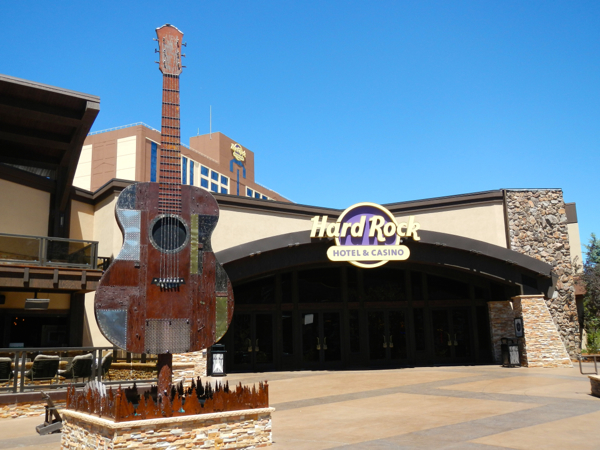
Lake Tahoe Hard Rock owners are seeking damages against the former management team. Photo/LTN file

By Kathryn Reed  

The Park brothers are going after the former management company of Lake Tahoe Hard Rock for damages, contending Warner Hospitality is responsible for cost overruns at the remodeled Stateline property and mismanagement.

“In particular, Warner has failed to manage the property properly, resulting in customer dissatisfaction, bad publicity, employee turnover, and revenue well below Warner’s projections,” a complaint filed Oct. 15 says. “Warner has acted with gross negligence and committed willful misconduct in connection with its management of the property.”

The complaint was filed in Washoe County District Court. Neva One is the company David and Jon Park formed to operate the Hard Rock. They had planned to spend $60 million to renovate what was the old Horizon hotel-casino, which open as the Hard Rock in late January.

The Park brothers last week fired Warner Hospitality and turned management over to two veteran gaming consultants. This came after SMC Contracting filed a lawsuit seeking millions of dollars in cost overruns that were not paid, the pool had to be closed because of a leak, and employees were either being fired or driven off because of what they said was Warner’s fault.

SMC and Neva One will be back in court Oct. 26 for a hearing. A settlement has not been reached, but talks are ongoing. Mike Springer, attorney for SMC, has not returned multiple calls. SMC claims it is owed nearly $19 million – about double the original contract.

SMC was hired to do the casino floor work.

The lawsuit goes on to say, “Warner failed to properly manage and oversee the completion of the hotel towers of the property, with floors still incomplete.”

The lawsuit says Warner was to oversee the design, construction and opening. Any expenses that were more than $10,000 beyond the original price or had a cumulative total in excess of $200,000 were to be approved by Neva One, according to the lawsuit. This reportedly didn’t happen, which is how SMC wound up not getting paid what it claims it is due.

“We are taking all actions that we consider appropriate to strengthen the property,” David Park said in a statement. “We believe the changes at the Hard Rock Hotel & Casino Lake Tahoe will help us be in a better position to resolve issues that came about during the renovation project. We are eager to move forward in a positive direction for the property, our valuable employees and the community.”


SLTPD officer and 2 others killed in auto wreck

South Lake Tahoe Police  Officer Mark Hounsell and Argo in 2011. Photo/LTN file

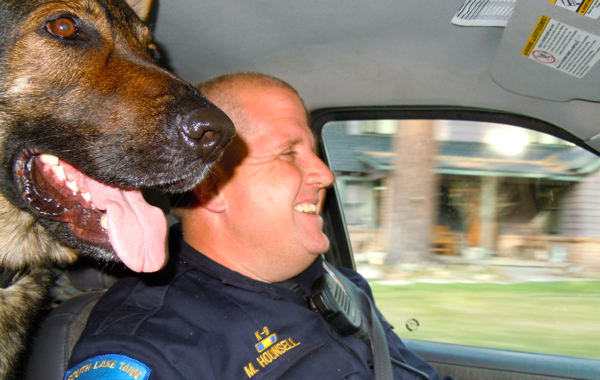
South Lake Tahoe Police Officer Mark Hounsell and Argo in 2011. Photo/LTN file

By Kathryn Reed

An eight-year veteran with the South Lake Tahoe Police Department died Oct. 17 in a single-vehicle rollover accident near Fallon.

Officer Mark Hounsell, 42, was driving to their home in Minden when the Chevrolet Suburban for unknown reasons left the road and rolled several times. The accident occurred about 5pm, approximately 20 miles east of Fallon.

Also killed in the crash were Hounsell’s wife, Jeanne, 34, and their friend Laura Fisher, 33, of Washington, Ill. Seat belts were worn by all, according to the Nevada Highway Patrol.

In the vehicle were the Hounsells four children who are between the ages of 4 and 14. The injuries they sustained are not life threatening.

Hounsell was a K9 officer for part of his tenure with South Tahoe, most of his time was spent on patrol. Prior to being hired in May 2007 by SLTPD he had worked for the Douglas County Sheriff’s Department.

“One of the things I appreciated about Mark was the thoroughness of his work,” Police Chief Brian Uhler told Lake Tahoe News. “He loved what he was doing. It’s not uncommon for our patrol officers to do deeper work than normal. Mark took it to another level.”

When tourists were arriving in town to find their vacation rental they booked was bogus and they had no lodging, it was Hounsell who traced the origins of the criminals to foreign countries and then back to Colorado.

“You could sense from him that he really didn’t like people being victims of criminal acts and he would go the distance to find the suspects,” Uhler said.

Mark Hounsell’s parents, who are from Southern California, arrived in Northern Nevada on Sunday and met with Uhler. He said they conveyed to him how proud their son was to be working for SLTPD and how much he enjoyed his job.

They will be meeting with members of the department and LifePoint Church clergy on Monday to plan the services.

“Our police officers and unsworn staff all feel like they want to help in some way shape and form. It’s a difficult time because there is not a lot that can be done. There is a certain feeling of helplessness and a great sense of loss,” Uhler said.

Flags at the city’s police and fire stations are being flown at half staff.


Tribal nations may become pot industry’s bankers

By Jennifer Kaplan, BloombergBusiness

Shaun Gindi brought a duffel bag stuffed with 1,000 twenty-dollar bills to open a checking account at his local Chase branch. He was successful. Until the branch closed the account a week later.

As the owner of two marijuana shops and a weed warehouse in Colorado, where the drug is legal, Gindi is a pariah to banks, which face expensive compliance hurdles and uncertain legal consequences because ganja still violates federal law. Of the more than7,600 banks and credit unions in the U.S., only 220 accept cannabis cash, according to the U.S. Treasury Department.

Anthony Rivera says he has a solution: an American Indian banking system.

Rivera, a Harvard Business School graduate who led the 1,940 members of the Acjachemen Nation in Southern California for nearly a decade, says native governments could legalize marijuana. His organization, CannaNative, is trying to link tribal leaders from the 566 sovereign American Indian nations with finance professionals and legal-marijuana businesses to use the expertise gained from decades of managing casinos. That way, he said, they can go where big institutions such as JPMorgan Chase & Co. and Wells Fargo & Co. fear to tread — banking the legal-pot industry’s estimated $3 billion in annual revenue.

Read the whole story


LTWC’s permanent home coming to life

The first phase of Lake Tahoe Wildlife Care's new home is coming to life. Photos/LTN

The first phase of Lake Tahoe Wildlife Care’s new home is coming to life. Photos/LTN

By Kathryn Reed

Building cages for animals takes more than just putting up four walls. In some ways, the amount of infrastructure needed is the same as a house.

The sites for the 12 cages on the 27-acre home of what will be Lake Tahoe Wildlife Care are equipped with water, sewer and a ton of cables to provide webcam access to all the critters. Enough infrastructure is being put with the idea is will sustain the animal rehabilitation center as it grows.

Tom and Cheryl Millham, who started LTWC in 1978, are building their dream rehab facility on the corner of Al Tahoe Boulevard and Pioneer Trail.

Hal Cole, who is the general contractor for the project, called it “Cherry Hills on steroids” – a reference to the Millhams’ current location.

“We are designing each cage specifically for each animal,” Cole told Lake Tahoe News.

Predators can’t be next to prey, bears need a substantive enclosure, and birds need netting.

Underground utilities are in place at the animal cages.

Underground utilities are in place at the animal cages.

While the new LTWC will be in the center of South Lake Tahoe the site feels very much like it is in in the middle of the forest. As many trees as possible have been saved.

“Even when the building is done, unless you really look for it you won’t know it’s here,” Cole said as he walked the property.

The site did not have any utilities so all of that work has taken place in the last few months. The foundation for the caretaker’s unit is poured.

However, not enough money is in the coffers to continue work past the Oct. 15 grading deadline that Tahoe Regional Planning Agency mandates.

“We are happy to get the rehabilitation center done and move things away from our house and to the new location,” Tom Millham told Lake Tahoe News.

The property is owned by Marjorie Springmeyer. A lease with an option to buy was signed last year.

LTWC is on a fundraising campaign to secure the $3.5 million needed to complete the caretaker’s unit and cages. The goal is to have those facilities done by 2017.

Denise Upton, a longtime volunteer and current director of animal care, will be the initial caretaker. Her quarters will be about one-third of the nearly 10,000-square-foot building that is under way. Another third will be used for LTWC equipment, a generator, as well as for a mini animal hospital. Veterinarian Kevin Willits is slated to continue his work for the center. The remaining third of the structure will be upstairs housing for college interns.

The front of the building will be where people can drop off sick or injured animals. That will be the only public access.

The cages are being built on a loop road. Just like today the public can’t interact with the animals. This is because the whole goal is to keep the animals wild so they can return to their natural environment.

Down the road the plans are to build an education center that will have classrooms, gift shop and other amenities. That part of the project is a long ways off because of funding. Plus, it will require environmental review, which will cost more than $1 million and will take at least 18 months. This in part is because the property is not zoned for that type of facility.

Everyone working on the project is trying to keep costs to a minimum – including Cole, Jim Ferguson (excavator), Chuy Caro (masonry) and Ed Cook (trees).

—–

Notes:

·      More information about Lake Tahoe Wildlife Care may be found online. There is a button on the website that will accept donations.

·      LTWC has taken in more than 24,000 animals, returned 15,000-plus to the wild, and has trained more than 2,000 people to help care for these animals.

·      LTWC is California’s only rehab facility for bear cubs.