
EDC superintendent arrested on DUI — again

By Kathryn Reed

Jeremy Meyers, El Dorado County superintendent of schools, was arrested Nov. 5 on charges of driving under the influence.

This is the second time in five months that the 45-year-old has been arrested on these same charges by the California Highway Patrol. Both times were in the middle of a workday.

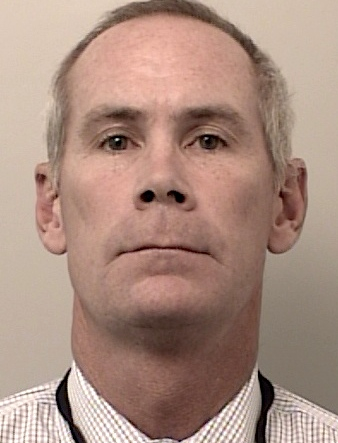
Jeremy Meyers when he was booked Aug. 22.

Jeremy Meyers when he was booked this summer.

He was arrested about 2:50pm after being involved in a single-vehicle accident. The CHP would provide no information Thursday night.

Meyers was booked into the El Dorado County Jail in Placerville about 5pm after first having been taken to Marshall Hospital in Placerville. Meyers as of Thursday evening had not posted the $17,500 bail.

The first incident on June 9 occurred about the same time of day. A California Highway Patrol officer found Meyers asleep in a construction zone on Highway 49 at 2:45pm. He had attended a board meeting earlier that Tuesday that lasted about 15 minutes and ended at 11:59am. People who were at the meeting said he did not appear to be impaired.

Meyers’ blood alcohol level, according the CHP report, was 0.15 percent – nearly twice the legal limit. Instead of being taken directly to jail, Meyers was released to the custody of his wife. He was sentenced to five days on house arrest. During that time he was earning all of his nearly $200,000 salary.

Because Meyers is an elected official the board of education does not have a great deal of say in what can happen to him. However, the county office of ed could be liable if Meyers were to hurt someone or cause property damage. If the board were to discuss Meyers’ latest run-in with the law, the soonest a special meeting could be called would be this weekend.


Nev. grappling with severe teacher shortage

By Neal Morton, Las Vegas Review-Journal

A formidable list of who’s who in Nevada education circles soon will start meeting with state lawmakers and business leaders in an attempt to solve the chronic shortage of public school teachers in the Silver State.

Starting in January, more than three dozen officials from the state’s largest school districts, labor unions, Nevada Legislature, gaming industry and nonprofit sector will spend five months drafting solutions to the alarming number of classrooms vacancies in schools across Clark County and Nevada.

The independent group plans to present the proposals publicly in May, with a focus on drafting legislation before lawmakers return to Carson City in 2017. The group also will recommend regulations that state agencies can adopt sooner and changes that school districts could make before the next school year starts in August.

Read the whole story


Hilton Hotels investigated for blocking Wi-Fi

By David Goldman, CNN Money

The Federal Communications Commission has fined Hilton Hotels for stonewalling an investigation into whether it blocked customers’ personal Wi-Fi hotspots.

In August 2014, Hilton guests began complaining to the FCC that the hotel was blocking their ability to use their own Wi-Fi hotspots unless they paid a $500 fee.

In order to avoid pricey hotel Wi-Fi charges, many guests opt to use hotspot devices, which transform 4G data from their cell phone provider into Wi-Fi signals. Some smartphones are also able to beam out Wi-Fi.

Read the whole story


Senate blocks bill to undercut EPA clean water rules

By Mary Clare Jalonick, AP

WASHINGTON — Democrats have blocked a Senate bill that would have forced the Obama administration to withdraw new federal rules to protect smaller streams, tributaries and wetlands from development and pollution.

Supporters of the legislation — and opponents of the rules — did not get the 60 votes needed Tuesday to stop debate and consider the bill. The vote was 57-41, meaning Democrats have blocked the bill, for now.

Most Democrats argue that the Obama administration rules will safeguard drinking water for 117 million Americans and say they should remain in place. The White House threatened a veto of the bill, saying the regulations are “essential to ensure clean water for future generations.”

Republicans and a handful of Democrats from rural states say they fear a steady uptick in federal regulation of every stream and ditch. Senate Majority Leader Mitch McConnell, R-Ky., said on the Senate floor that the regulations are “a cynical and overbearing power grab dressed awkwardly as some clean water measure.”

The Senate bill, similar to legislation passed by the House earlier this year, would force the Environmental Protection Agency to withdraw and rewrite the rules. Four Democrats voted with Republicans on the measure — Sens. Heidi Heitkamp of North Dakota, Claire McCaskill of Missouri, Joe Manchin of West Virginia and Joe Donnelly of Indiana.

Opponents of the rules said they would continue to fight them. Shortly after Democrats blocked the bill, the Senate voted to proceed to a so-called “resolution of disapproval” sponsored by Iowa Sen. Joni Ernst that would scrap the rules if signed into law. Only a simple majority is needed to pass the resolution.

The White House issued a second veto threat against that resolution, saying it would “sow confusion and invite conflict at a time when our communities and businesses need clarity and certainty around clean water regulation.”

Federal courts have already put the rules on hold as they consider a number of lawsuits that were filed immediately after the EPA and the U.S. Army Corps of Engineers issued the regulations in May.

The rules clarify which smaller waterways fall under federal protection after two Supreme Court rulings left the reach of the Clean Water Act uncertain. Those decisions in 2001 and 2006 left 60 percent of the nation’s streams and millions of acres of wetlands without clear federal protection, according to the EPA, causing confusion for landowners and government officials.

The EPA says the new rules would force a permitting process only if a business or landowner took steps that would pollute or destroy the affected waters — those with a “direct and significant” connection to larger bodies of water downstream that are already protected. For example, that could include tributaries that show evidence of flowing water.

Farm and business groups are among the rules’ chief opponents, and more than half the states have sued the government in an attempt to block them. Officials from states such as Georgia, New Mexico and Wisconsin have suggested the regulations could be harmful to farmers and landowners who might have to pay for extra permits or redesign their property to manage small bodies of water on their private land.

The EPA has argued the criticism is overblown. Since the rules were originally proposed last year, the agency has been working to clear up some misconceptions, like some critics’ assertions that average backyard puddles would be regulated. Current exemptions from the Clean Water Act for farming practices, including plowing, seeding and the movement of livestock, among other things, will continue.

Republicans and landowners concerned about the rules’ reach say they believe they won’t eventually go into effect.

“While we may have fallen short today, this is not the end of this issue,” said Wyoming Sen. John Barrasso, the GOP sponsor of the bill. “One way or another, Republicans won’t stop until this rule is withdrawn or the courts ultimately strike it down for good.”


Health officials: Don’t eat Dungeness crab

By Nanette Asimov and Paolo Lucchesi, San Francisco Chronicle

Do not — repeat, not — eat crab caught along much of the California coast until further notice. That’s the stunning message issued Tuesday by health officials just days before Saturday’s start of the recreational crab season, which may be delayed.

The California Department of Public Health is warning that potentially deadly levels of domoic acid have been found in Dungeness crab and rock crab caught along the coastline between Oregon and the southern border of Santa Barbara County.

As a result, the state Office of Environmental Health Hazard Assessment is recommending the Dungeness season be delayed and the rock crab fishery be closed.

Read the whole story


Heroin near epidemic status in S. Lake Tahoe

SLEDNET agents confiscated this gun and at the same bust found a syringe in warm water to keep the heroin from solidifying.

SLEDNET agents confiscated this gun and at the same bust found a syringe in warm water to keep the heroin from solidifying.

By Kathryn Reed

Heroin is the No. 1 drug problem in South Lake Tahoe.

“It’s the biggest issue of law enforcement,” Russell Liles, a detective with South Lake El Dorado Narcotics Enforcement Team, said. “Once you do it, your biggest goal is to get more.”

It’s that initial rush that people want to keep reliving. The side effects and coming off the high are physically wrenching. It’s why people keep reaching for the next needle. Even if the user started by snorting, eventually they seem to go for an injection because reaching the state of euphoria is faster that way.

Liles on Nov. 3 spoke to the local drug coalition about the growing epidemic.

Black tar heroin is mostly what is found locally. Users are predominantly men between the ages of 18 and 25 who started the habit by first becoming addicted to prescription medication. They are doing five to 10 points a day at a cost of more $100/day.

Seldom do they have jobs because it’s near impossible to function at a coherent level being that high. Committing crime is how they pay for their heroin habit, Liles said.

But this issue isn’t new to the South Shore. Lake Tahoe News ran a two-part series about heroin in February 2012. It was the same story then – prescription opiate leads to addiction that leads to heroin. Heroin is an opiate coming from the poppy plant.

“Nearly 50 percent of young people who are injecting heroin reported abusing prescription opiates before using it,” Liles said.

Prescriptions run out, heroin is easier to get and it can be cheaper.

Liles said the people using might surprise people. Some come from good families. They had other plans for their lives. The addiction, though, became too strong.

In the last four years what Liles has noticed is more users are people one year out of high school.

The National Institutes of Health says, “Our data show that the demographic composition of heroin users entering treatment has shifted over the last 50 years such that heroin use has changed from an inner-city, minority-centered problem to one that has a more widespread geographical distribution, involving primarily white men and women in their late 20s living outside of large urban areas.”

And more people are dying from overdosing on heroin. In 2013, 8,260 people died, which is four times the number in 2000.

The local drug coalition has been focused on getting unused and expired prescription drugs out of homes. A drop off location is at the South Lake Tahoe Police Department.

The annual Drug Store Project is an all-day reality based drug education workshop for sixth-graders on the South Shore. Prescription drug use is the main component of the event.

Liles said the best thing people can do is educate young people to the dangers.

President Obama is proposing spending $133 million to increase access to drug treatment and prevention programs.

New drug laws aren’t helping the guys with the badges. Proposition 47 was passed last year by California voters. It made possession of heroin, cocaine, illegal prescriptions, concentrated cannabis, and methamphetamine all misdemeanors. Officers have the choice to arrest the person or cite him, like a traffic infraction.

If the District Attorney’s Office chooses to prosecute the case, the defendant is often out on bail or on his own recognizance until a deal is reached or the trial starts. If convicted, the person faces at most a year in county jail and even then people are often let out for good behavior.

South Lake Tahoe Police Chief Brian Uhler was an opponent to Proposition 47 before it was passed and continues to be. He has written about how it puts more criminals on the streets, which has increased some criminal activity in town.

California is not alone in rejiggering penalty guidelines. Penalties for nonviolent drug crimes were reduced by the U.S. Sentencing Commission in April 2014. Because that change could be applied retroactively, last month it was announced that the Justice Department would be releasing about 6,000 federal prison inmates who were serving time for being nonviolent drug dealers.

Liles said the reason SLEDNET doesn’t want the names used in heroin arrests is because it negatively impacts ongoing investigations.

Heroin users are a close-knit group. They don’t readily welcome others into the circle. That is why it is hard for narcotics officers to penetrate the inner sanctums, and therefore difficult to arrest the dealers.

Local heroin dealers tend to be white men between 25 and 35 years old who are able move an ounce of heroin every few days. They get their supply from Stockton, Modesto or Reno. Mexican drug cartels are turning to heroin from pot because the profit is greater. Plus, now it’s so easy to get marijuana in the U.S. without importing it and a lot of users prefer the weed that is grown indoors to outdoor cultivation.

Local heroin dealers are also unemployed. And they are often armed.

A heroin ounce is considered 25 grams, which is about 250 doses. This costs about $1,800. Dealers can turn that into about $3,750 on the street. Why they aren’t rolling in money is that they are also users. It’s not like the heyday of cocaine where dealers were flush with cash because they didn’t use the product they were peddling.



Efficiency of buildings key to meeting climate goals

By Stephanie Pincetl

In energy, we are learning how to make the invisible visible.

We now know that cities are responsible for 70 percent of the globe’s green house gas emissions (GHG). We know that 60 percent of those urban GHG emissions comes from cars, trucks, and other forms of transportation, with the remaining 40 percent coming from building energy use – electricity and natural gas to heat and cool.

But we don’t know many of the particulars about energy use in buildings. How much do different types of buildings, or different aged buildings, or various other social and demographic factors contribute to energy use? How much does each building, and how much do different parts of the building, use energy? Even with modeling to give us some data, we don’t know energy use down to the meter-by-meter, building-by-building level. While we know that car emissions reporting has been fraudulent, we at least have a sense of emissions by make and by year. That’s not so for buildings, and that leaves a gaping hole in what we know; it’s like not knowing the difference between the emissions of a diesel truck compared to a hybrid car.

The county of Los Angeles and UCLA’s California Center for Sustainable Communities Institute of the Environment and Sustainability, which I direct, are determined to fill this void. We need to understand building energy use so we can make the right investments to reduce building energy use, and the emissions. After four years of technical, scientific, and legal efforts, and after participating in California Public Utility Commission proceedings to enable greater data access, UCLA obtained address-level data under a non-disclosure agreement with the PUC.  UCLA and the county have developed an interactive web energy atlas as a result .

It’s the first such interactive atlas in the country. (New York City built a map prototype at the ZIP code level in 2012.) Our atlas provides an innovative platform to build and share knowledge of the actual energy use of buildings by neighborhood, city, building type, use, age, size, and demographics of residents.

Such an atlas was overdue. About $13 billion in investments in energy conservation and efficiency have been made in California since 2002, paid for by private utility ratepayers through their bills. Taxpayers, utilities, and the government need to know what efforts have been effective in changing the amount of energy used in buildings, and what has not worked; local governments also needed a way to account for Green House Gas emissions in a precise manner – which buildings are the most significant in energy use? The website has a contact address where users can send in their own discoveries in investigating the website – patterns across the landscape, some unexpected correlations or other insights.

In assembling, analyzing and aggregating all the data, we came up with a number of surprising findings.

For example: Malibu residents use 10 times more energy per capita than residents of Bell, in southeast LA County. But the buildings in Bell are far less energy-efficient, using more energy per square foot than those in Malibu. And Compton actually has the highest median per square foot consumption in the region. The atlas also shows energy use by building-age categories. The highest energy-using buildings were uniformly built before 1950, and the lowest from 1990 onward, perhaps proof that our building standards are working.

Those findings have major implications for interventions at a building and neighborhood level that could generate big and rapid energy efficiency gains.  Knowing the specifics of buildings makes it possible to target investments where and when they will make the most impact. The atlas also points out that existing efforts to improve efficiency – like smart meters with time-of-use pricing that changes depending on the time and season — might be useless if your building has massive structural inefficiencies.

But the implications are still broader. Why, for instance, should we force individuals to decide between turning off their refrigerator or their air conditioner when their buildings themselves are energy hogs?

Buildings are becoming more important in reaching climate targets, and should be included in December’s Paris climate change talks. And Gov. Jerry Brown has just signed, a new law that requires California to reduce greenhouse gas emissions 40 percent below 1990 levels by 2030. The only way we’ll get to that goal is by looking more closely at individual buildings. It will also greatly improve the wellbeing of people who live, work, learn, and play in them.

Stephanie Pincetl is director of the California Center for Sustainable Communities Institute of the Environment and Sustainability at UCLA.


San Francisco says yes to Airbnb

By Associated Press

SAN FRANCISCO — San Francisco voters have rejected a proposal to restrict Airbnb and a second ballot measure prompted by the city’s housing crisis.

Tuesday’s vote went against restrictions on Airbnb and a ballot measure to freeze construction of luxury housing in the Mission District.

Airbnb, by far the world’s largest home-share platform, spent more than $8 million to defeat the measure.

Proposition F would have limited home-shares to 75 nights and required Airbnb and other hosting platforms to pull listings that exceed the limit.

With more than 90,000 votes counted, 58 percent of the voters rejected the measure.

A proposal to freeze development of luxury housing in the city’s trendy Mission District also lost with 60 percent of the votes against it.

Mayor Ed Lee who swept through election victory had opposed both measures.


Metastatic breast cancer breakthrough highlights need for funding

By Amy Westervelt, KUNR

Iain Buxton has cured breast cancer — in mice. The doctor says his isn’t the only team to have made such strides, but a lot of promising research is getting stuck in labs due to a lack of research funding.

“Not enough grants are funded. Seven out of a hundred about — that’s Draconian. Because we’re not talking about 93 of those grants coming from schlock scientists. Every one of them comes from a highly qualified place and person. So we’re talking about the best of the best and we’re not supporting them. This is a major problem.”

Still, Buxton and his team, at the UNR Department of Pharmacology, believe they’ve cracked the code of metastasis.

The lab has patented its findings, and now it’s just a matter of – you guessed it – funding.

Read the whole story


Breckenridge to tax lift tickets

By Associated Press

BRECKENRIDGE, Colo. — Breckenridge voters have approved Colorado’s first local tax on ski lift tickets.

The city asked voters to approve a 4.5 percent sales tax on single-day and multiday Breckenridge Ski Resort tickets.

It’s expected to generate $3.5 million a year for transit and parking improvements in the resort town.

The tax will be collected by Vail Resorts, which operates the Breckenridge resort. Vail Resorts originally opposed the tax but relented when season passes, multi-resort lift-tickets and summer activities were excluded.