Black Friday could be Bleak Friday for retailers

By Paul R. La Monica, CNN Money

Cue the Elvis. It may be a blue Christmas for America’s retailers.

Gap, Macy’s, Nordstrom and Fossil all reported lousy results last week.

JC Penney actually bucked the trend with decent sales growth, but it’s still losing money.

The only major retailer to have unabashedly good news was Kohl’s (KSS), which topped analysts’ forecasts thanks to strong back-to-school shopping.

So will Black Friday wind up being more like Bleak Friday?

Read the whole story


EDC schools superintendent resigns

By Kathryn Reed

PLACERVILLE – The El Dorado County board of education today unanimously accepted Superintendent Jeremy Meyers’ resignation.

Meyers had not been to work since his last driving under the influence arrest on Nov. 5.

He oversees education in a county that for the students and staff there is a zero tolerance policy for drugs, which includes alcohol.

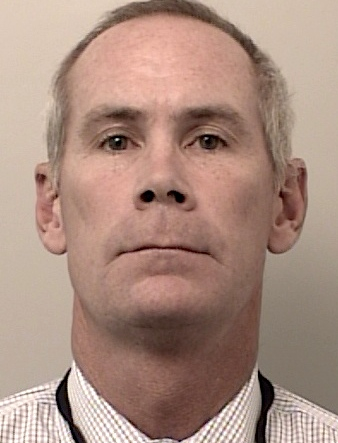
Jeremy Meyers when he was booked Aug. 22.

Jeremy Meyers when he was booked Aug. 22.

Meyers’ DUI arrest this month was the second in a five-month span. According to the California Highway Patrol his blood alcohol level was 0.19 percent. He was arrested in the middle of a workday after crashing his truck.

The first incident was June 5; also in the middle of a weekday. The 45-year-old pleaded no contest to misdemeanor charges that resulted in a sentence of five days on home arrest. He collected his nearly $200,000 during that time and still was until today.

Deputy Superintendents Ed Manansala and Robbie Montalbano issued this statement, “This resignation allows the county office of education, the staff and board, to move forward.”

Details about the separation agreement have not been released.

It is up to the board to replace Meyers. Because Meyers is an elected official the board could not just remove him.

This was the second meeting the board convened to discuss Meyers. No action was taken at the Nov. 7 meeting. Meyers did not attend either meeting.

Three of the about 30 people at the Nov. 16 meeting spoke before the board went into closed session; all wanting Meyers to be removed from office in some manner.

Harry Norris, who was on the board for 10 years, suggested the board make Meyers’ salary $1 a year if he does not leave voluntarily.

Steven and Jackie Neau who live on the West Slope said their needs to be consequences for Meyers’ actions.

“I think he should be asked to resign. If that doesn’t happen, I’m willing to start a recall,” Steven Neau told the board.

Meyers was appointed by the school board to the position effective July 1, 2013. He was taking over for Vicki Barber who retired. At the time Meyers was the deputy superintendent. In June 2014 he ran unopposed for a four-year term.


Parents upset BlueGo won’t stop at WHS

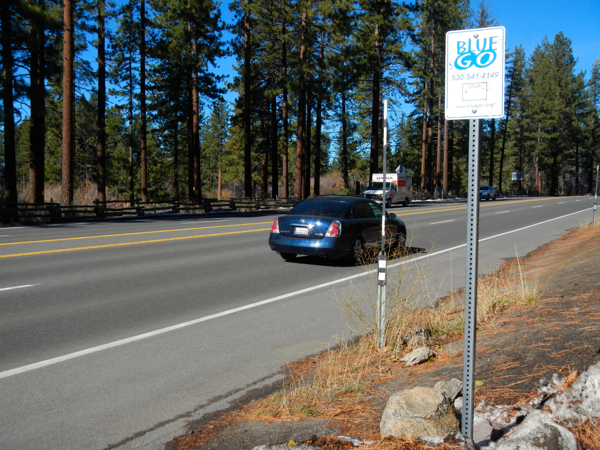
The nearest BlueGo stop to Whittell High is along Highway 50 near the senior center. Photo/LTN

The nearest BlueGo stop to Whittell High is on Highway 50 by the senior center. Photo/LTN

By Kathryn Reed

INCLINE VILLAGE – For the last five years BlueGo bus drivers have dropped off Whittell High School students at the school. That ended recently and the parents of these students are not happy.

“Complaints from commuters prompted staff to review the stop. It was determined the stop only generated ridership four days a week, less than 10 months a year, and that the ridership was often nonexistent,” Carl Hasty, Tahoe Transportation District executive director, wrote in the Nov. 13 staff report.

The four days a week and 10 months reflect how often WHS is in session.

Three parents showed up to the Friday board meeting at Sierra Nevada College in Incline Village asking for the district to keep trying to find a solution. They believe moving the stop to the senior center along Highway 50 is too dangerous. Plus, they don’t understand what the big deal is to take the students less than one mile to school, especially when the BlueGo bus is already crossing the highway to stop at the senior center.

TTD is not allowed to do specialized school bus transportation. An express route only services this section of Douglas County and the route is Highway 50 – not any offshoots.

The fact that WHS has been serviced in the past was a mistake, according to Hasty.

It is students who live in the Carson Valley who are using BlueGo as a means to get to school. The parents estimated about 11 students make the commute, though not all desire to ride BlueGo.

The parents don’t believe the senior center stop is safe. The bus sign is extremely close to the highway and had snow near it days after the storm last week. When people stand under the breezeway of the senior center bus drivers don’t see them.

“We would pay a monthly fee whether our children ride the bus or not,” parent Tara Burke told the board.

A school bus won’t transport the kids from the senior center to the school because it is Douglas County School District policy for those less than 1.5 miles away to have to walk.

DCSD does not charge any of its students to ride the bus.

What hasn’t been looked at is if the valley students could be dropped off by BlueGo at a designated school bus stop and ride from there – for free or a fee.

“I’m not opposed to working something out,” DCSD Superintendent Teri White told Lake Tahoe News. But at the same she said, “I’m not hearing from the school that it is an issue.”

Principal Crespin Esquivel has communicated with TTD, saying the senior center stop is not safe and asking for students to be brought to and from the Zephyr Cove school.

Parents also brought up that these students should be treated like any other member of the public and that there is no difference if they commute for school while other riders commute for work.

The fact that students are going between DCSD, Lake Tahoe Unified School District and Lake Tahoe Community College was also broached, pointing to the need to perhaps look at how all students are getting to and from and between the educational facilities.

The TTD board, staff and parents agreed to keep talking.


How proposed trade alliance would impact Nevada

By Megan Messerly, Las Vegas Sun

The Trans-Pacific Partnership — a major trade accord struck by President Obama with 11 Pacific Rim nations in October — is far from a done deal, but it could have a major economic impact on Nevada.

To highlight the economic advantages of the trade alliance, U.S. Secretary of Commerce Penny Pritzker released a series of reports Thursday detailing how the accord would impact each state’s economy.

It would be months before the deal could be approved. The president notified Congress he intends to sign the agreement within 90 days. But the deal still needs congressional approval, and Congress could take additional time to vote on the agreement.

Read the whole story


Calif. water cutbacks likely to be extended

By Dale Kasler and Phillip Reese, Sacramento Bee

Despite forecasts of a wet winter, Californians can expect another year of water conservation in 2016 under an executive order issued Friday by Gov. Jerry Brown.

Californian are currently under orders to reduce consumption by an average of 25 percent, as compared with 2013. Brown’s order would extend the cutbacks through next Oct. 31 “if drought conditions persist through January 2016.”

Many experts and state officials said it’s almost a certainty the conservation order will continue through next fall. While El Niño is expected to drench the state this winter, many forecasters believe it won’t create enough precipitation to repair water supply problems created by four years of drought.

Read the whole story


Loop road, redevelopment ideas shaping up

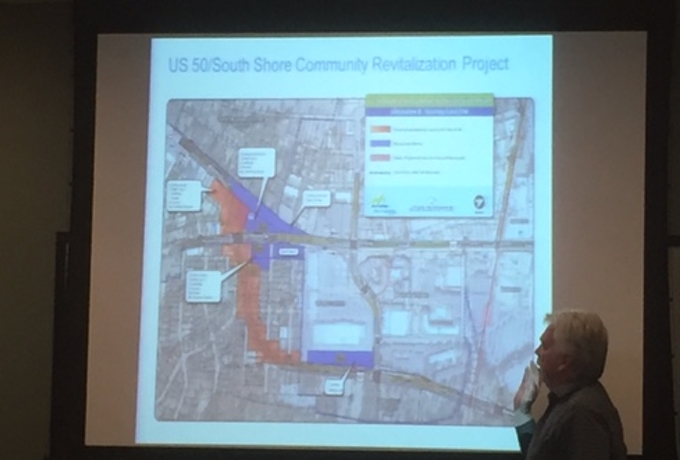
TTD Executive Director Carl Hasty explains how the portion in red is land that needs to be acquired, while the blue are would be repurposed if the loop road goes through. Photo/LTN

TTD Executive Director Carl Hasty explains how the portion in red is land that needs to be acquired, while the blue area would be repurposed if the loop road goes through. Photo/LTN

By Kathryn Reed

INCLINE VILLAGE — Douglas County is all-in when it comes to the loop road on the South Shore. A portion of the recently approved gas tax will be going toward the Highway 50 realignment.

Tahoe Transportation District officials are tweaking some of the five alternatives to be studied in the environmental impact statement. The first draft is expected out the first quarter of 2016.

Carl Hasty, TTD executive director, told his board on Nov. 13 that meetings have been taking place with property owners that would be affected by changing the alignment of Highway 50 in the state line area.

Three of the five alternatives call for a four-lane highway behind Harrah’s-MontBleu, with the current highway from about Pioneer Trail to Lake Parkway becoming a city-county street.

Housing is being proposed in the area for the residents who would be displaced.

“We are fine-tuning what is in the development,” Hasty said.

He said with tourist accommodation units being able to be converted to commercial floor area and residential units this opens up opportunities.

Money is in hand to get through the environmental studies. Construction dollars are easier to get once the EIS is done.

Douglas County commissioners heard the presentation earlier this month and South Lake Tahoe City Council will next month.

“We want to do it. We are putting in a redevelopment area there too,” Nancy McDermid said. She is the Douglas County commissioner who sits on the TTD board. “We just hope the city comes through because they are the key to this happening.”

—–

Notes:

·      On Dec. 1 at 5:30pm there will be a public workshop regarding the loop road at Lake Tahoe Resort Hotel in South Lake Tahoe.

·      South Lake Tahoe City Council will hear a presentation on the loop road status on Dec. 7. The meeting starts at 9am at Lake Tahoe Airport.


Medical marijuana cards growing in Nev.

By Chanelle Bessette, Reno Gazette-Journal

As the medical marijuana industry booms in Nevada so does the demand for patient cards.

Medical cannabis was legalized in Nevada in 2000, but it took 15 years for storefronts to open, with the first Nevada dispensary opening in Sparks in July. Now, with more dispensaries open in Reno and Las Vegas, the Division of Public and Behavioral Health has seen a spike in the number of applications throughout the state.

In October 2014, Nevada had 6,541 active patient cards. As of last month, that number has nearly doubled to 12,091, with 549 additional applications pending.

The application process for a card in Nevada is completely on paper, so potential patients have to request an application either via mail or in person in Carson City.

Read the whole story


Fatal fire ruled accidental, started in kitchen

The mobile home fire that ended with the death of a Stateline woman on Nov. 13 started in the kitchen, according to investigators.

The Ponderosa Avenue fire has been ruled an accident. The origin was the stove-range, Tahoe Douglas Fire Marshal Eric Guevin told Lake Tahoe News.

The name of the woman who died has not been released. Firefighters pulled her from the burning structure, tried to resuscitate her, but she died at the scene.

— Lake Tahoe News staff report


Small towns face rising suicide rates

By Laura Beil, New York Times

After her family moved from suburban New Hampshire to the wind-whipped plains of southeastern Wyoming, Monica Morin embraced small-town life, forging lasting friendships and celebrating her own quirky style.

Dark-haired, with hipster glasses and a disarming sense of humor, Monica was a “why-not kind of kid,” her mother, Kim Morin, said. The kind who would wear a giraffe costume to the grocery store, just because.

Last year, during Monica’s sophomore year of high school, her mood began to darken. She turned to alcohol and marijuana, and some days withdrew from the close relationship she had always had with her parents, who, although long divorced, remained friends and partners in raising their only child. After her descent into drinking, she started cutting herself.

Morin was alarmed, aware that family history was not in her daughter’s favor. Her sister had developed bipolar disorder in her teens, eventually drinking herself to death. Her father had taken his own life when Morin was 19.

Monica’s parents sought help for their daughter’s despair, driving her two and a half hours to Casper for inpatient treatment. As the year drew to a close, Monica seemed to be improving, clinging to a fragile stability with twice-weekly counseling. On the afternoon of Feb. 4, after Monica and her mother returned to their apartment from a doctor’s appointment, Monica said she needed to finish homework in her room.

Some time later, she took a shower and asked her mother if they could snuggle on the sofa and watch a movie before going to bed.

“I love you, Mom,” she said, as Morin stroked her hair.

Not long into the film, Monica suffered a seizure. The paramedics who responded to Morin’s frantic call searched Monica’s room and discovered an empty bottle of over-the-counter allergy pills pilfered from her mother’s medicine cabinet. She died at Ivinson Memorial Hospital that night.

“You replay everything in your head,” Morin said in her living room recently, her voice shaking. “Wondering what else you could have done.”

Stories like Monica’s unfold with disturbing frequency across small-town America. Rural adolescents commit suicide at roughly twice the rate of their urban peers, according to a study published in the May issue of the journal JAMA Pediatrics.


Bill would limit for-profit colleges’ access to federal funds

By Bobby Caina Calvan, Reveal

The White House this week put its weight behind legislation seeking to rein in for-profit schools siphoning hundreds of millions of taxpayer dollars annually by preying on veterans and military personnel eligible for the GI Bill and military tuition assistance programs.

Using Veterans Day as a backdrop, the Obama administration announced its support for a Democratic bill dubbed the Protecting Our Students and Taxpayers Act of 2015. The proposal would close loopholes and reinstate tougher eligibility rules for federal education money.

In remarks at Arlington National Cemetery, President Obama noted the importance of the GI Bill in fulfilling the country’s promise to repay the sacrifice of veterans.

“That’s why we’ve helped more than 1.5 million veterans and their families pursue an education under the Post-9/11 GI bill,” he said. ”That’s why we worked to make sure that every state now provides veterans and their families with in-state tuition. … And today, the veterans’ unemployment rate is down to 3.9 percent – even lower than the national average.”

The legislation seeks to transform the so-called 90/10 rule into an 85-to-15 split, forcing schools to rely less on federal funds if they want to continue participating in federal student aid programs. Under existing law, a for-profit college must get at least 10 percent of its revenue from nonfederal student aid funds to qualify for the Department of Education’s loan and grant programs.

But the GI Bill and military tuition assistance programs are not counted as part of that 90 percent, a loophole the proposed legislation seeks to close.

“This loophole has created a perverse incentive for some for-profit colleges to seek out and aggressively – and, sometimes, deceptively – enroll service members and veterans to skirt the law,” Ted Mitchell, the Obama administration’s undersecretary for education, said in statement.

“The intent of the law is simple: Quality for-profit programs should be able to secure funding that is not solely from the federal government,” he said.

In addition, the White House announced that it has an agreement in place with the Department of Veterans Affairs and the Federal Trade Commission for measures that “strengthen enforcement against schools that engage in deceptive or misleading advertising, sales, or enrollment practices towards Veterans.”

A Reveal investigation published in June showed how the University of Phoenix, for one, sidestepped an executive order by Obama meant to prevent for-profit colleges from gaining preferential access to military bases.

Since taking effect in 2009, the Post-9/11 GI Bill has served more than 1.5 million veterans and provided $57 billion for tuition, books and other education-related expenses.

This money has become an important source of revenue for many for-profit schools. The country’s largest for-profit school, the University of Phoenix, has reaped more than $1.2 billion in GI Bill money since 2009. Last year alone, it received $345 million to educate Iraq and Afghanistan veterans, along with $20 million in tuition assistance from the Pentagon.

Last month, the Department of Defense barred university officials from recruiting at military installations and placed the school on probation. Until that probation is lifted, the university is forbidden from enrolling new students under the Pentagon’s tuition assistance program.

The switch from 10 to 15 percent would not be new. Congress instituted the 85/15 standard in 1992 after investigations uncovered evidence of fraud and abuse. Six years later, that rule was relaxed to the current 90/10 standard.

“This high threshold allows far too much federal money to funnel to an industry that often provides a greater return on taxpayer investment to its administrators and investors than it does to its students,” said Sen. Dick Durbin of Illinois, who joined three other Senate Democrats in sponsoring the bill.

It may seem like a small change. But last year, a Reveal investigation found that nearly 300 schools reportedly fall in the gap between 85 and 90 percent.

Another 133 for-profit schools would violate the 90/10 cap if the GI Bill loophole were closed. These schools were almost completely subsidized by taxpayers, receiving more than 90 percent of their revenue from a combination of Pell Grants, Stafford Loans, GI Bill funds for veterans and Department of Defense tuition assistance to active duty military.

“It is imperative that we remove the dollar sign from the backs of veterans and servicemembers by closing this egregious loophole,” said Walter Ochinko, policy director for the nonprofit organization Veterans Education Success.

The proposed legislation faces a near-certain death if its sponsors and the White House cannot get some Republicans to sign on.

“We haven’t had any in the past, and no indication that will change. However, we are always hopeful and Senator Durbin thinks that this is an issue both parties should be able to get behind,” Durbin’s spokeswoman, Christina Mulka, said in an email.

Similar House measures have failed.

The Senate Bill, co-sponsored by Sen. Jack Reed of Rhode Island, Sen. Richard Blumenthal of Connecticut and Sen. Elizabeth Warren of Massachusetts, would:

  • Kick off for-profit schools after a year of noncompliance with the 85/15 formula, instead of allowing them two years under the current 90/10 law.
  • Bar schools from what the senators consider accounting tricks that calculate unpaid school-sponsored student loans as revenues, even if the loan goes unpaid. Only actual payments would be counted as revenue.

As part of its educational initiatives for veterans, the Obama administration also announced today that veterans and their dependents are now eligible for in-state tuition in all 50 states, as well as in the District of Columbia and Puerto Rico.

It also said the Department of Veterans Affairs is launching a redesigned website providing information on graduation rates and other factors to make it easier for veterans to compare schools.

In addition to his call for reinstating the 85/15 rule, Obama urged Congress to approve legislation that would require schools receiving GI Bill money to meet accreditation standards for certain programs, including law, teaching, nursing, criminal justice, psychology and health fields.

And the president pressed for passage of a bill that would reinstate GI Bill benefits to veterans enrolled in schools that shut down. The proposal followed the implosion of Corinthian Colleges, which filed for bankruptcy protection earlier this year. Once one of the country’s largest for-profit schools, it left about 16,000 students looking for other options when it shuttered its 30 remaining campuses.