Billions depend on water from shrinking snowpacks

By Sindya N. Bhanoo, New York Times

Snowpacks are a vital source of water for humans, but they may shrink in some regions as the climate warms. A study estimates how changes in showfall will affect water supplies.

Justin S. Mankin, an earth scientist at Columbia University, and his colleagues analyzed 421 drainage basins in the Northern Hemisphere that depend on rainfall and snowmelt, and then combined the data with several different climate models.

They found that 97 basins, currently serving 2 billion people, depend heavily on snowmelt. The scientists calculated that the likelihood the basins would receive less snow in the coming century was 67 percent.

Read the whole story


1 person hurt in Hwy. 50 collision

A two-vehicle accident this morning closed Highway 50 in both directions near Round Hills Pines Beach.

One person was transported to Barton Memorial Hospital with non-life threatening injuries.

One of the vehicles involved in the crash was an Apple vehicle collecting data for maps. The roof apparatus with the cameras was sitting in the middle of the road.

A black Dodge pickup ran into the silver Dodge van that was attempting to make a U-turn, NHP Trooper Dan Lopez told Lake Tahoe News.

The driver of the truck, a man in his mid-40s, was injured. The two male occupants in their mid-30s in the van were not injured.

Traffic started moving about 10am Nov. 19.

— Lake Tahoe News staff report


Integrated transit in Tahoe far from reality

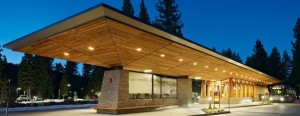
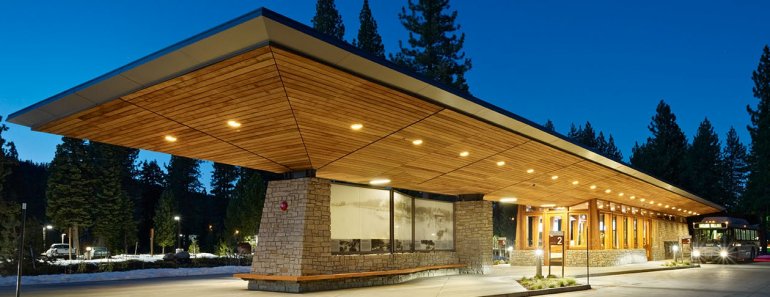
Tahoe City's transit center   is an integral component of the North Shore bus system. Photo/Provided

Tahoe City’s transit center is an integral component of the North Shore bus system. Photo/Provided

By Kathryn Reed

Free, integrated regional transit in the Lake Tahoe Basin is the ultimate goal of those who are in the business of getting people out of their vehicles and those who are involved with tourism.

Money is the hurdle that still needs to be cleared in order for that dream to become a reality.

That was the message from a panel of four who spoke Nov. 18 during the monthly Tahoe Talks Brown Bag Lunch Series at Lake Tahoe Community College. George Fink with Tahoe Transportation District, Sandy Evans-Hall of North Lake Tahoe Visitors Authority, Tom Fortune from Heavenly Mountain Resort and Jaime Wright with the Truckee-North Tahoe Transit Management Association touched on a range of transit issues during the discussion.

Heavenly provides free transit for skiers and employees when they are working. The bus is also free to anyone who gets on those particular buses.

Fortune said a future goal is to use the 1,200 spaces at California Lodge in the summer as a park and ride, with buses then going to Heavenly Village where guests would take the gondola up to the resort’s rope courses and other amenities.

The North Shore and Truckee are combining their resources. TART now stands for Truckee Tahoe Area Regional Transit. Buses are painted the same for the most part, with the Truckee ones having a little more green to embrace the town’s green initiative and Tahoe buses having blue to recognize keeping the lake blue. One phone number will be used.

This all eliminates confusion for riders who don’t understand the geographic boundaries of towns and states.

Panelists reiterated the need for a seamless system.

Joanne Marchetta, executive director of the Tahoe Regional Planning Agency, said that will be hard to do with one city, five counties and two states. It was pointed out how ski resorts can’t even figure out how to cooperate to get riders to the various resorts using shared transit.

Evans-Hall said it is time to look at transit as an amenity. She said that is what other resort destinations are doing – and it’s paying off. People are parking once and not getting in their vehicles until their vacation is over.

South Lake Tahoe City Councilman Austin Sass, who is also on the TTD board, said, “We are a parking deficient town. The long-term solution to get people out of their cars is to have parking.”

To pay for free transit in places like Park City, Vail and Steamboat a variety of taxes have been put in place. They range from hotel to recreation to lift ticket to sales taxes.

Placer County is looking at raising its transient occupancy and sales taxes.

When TOT is raised it can be done so with 50 percent plus one voter passing it. If the funds were to be earmarked for something specific, like transit, it then requires a two-thirds majority. How some jurisdictions are getting around this is to put the TOT to a vote and having a secondary question asking voters to prioritize where the money goes.

North Shore did a study that says it would cost $7.2 million to run a free transit system with buses stopping every 30 minutes. The bus system today has a budget of $4.5 million. The consultants said it is likely the difference would be made up in the first year based on the increase of people coming to the area and spending money.

Evans-Hall and her people are moving in that direction, with the goal of having free bus service in five years.

The South Shore isn’t anywhere close to doing the same.

Fink said the goals on this end of the lake with BlueGo are to have buses go to Meyers and into neighborhoods.


FCC chairman suggests expanded wiretap laws in response to the Paris attacks

By Brian Fung and Andrea Peterson, Washington Post

The nation’s top telecom regulator recommended broadening America’s wiretapping laws Tuesday, in response to the recent attacks in Paris by the Islamic State that left more than 120 people dead.

While the Federal Communications Commission cannot take direct actionagainst the Islamic State, such as shutting down its Web sites or social media accounts, Congress could do “specific things” allowing the FCC to assist law enforcement more effectively, agency Chairman Tom Wheeler told a House subcommittee.

That includes revisiting the wiretap legislation, said Wheeler. The 1994 law, known as the Communications Assistance for Law Enforcement Act, or CALEA, provides for the “lawful intercept” of a suspect’s telephone and online communications. It requires telecom companies and Internet providers, not to mention some online voice services, to build their networks in ways that grant authorities easier access to those communications.

Read the whole story


Nevada riding shotgun in self-driving car industry

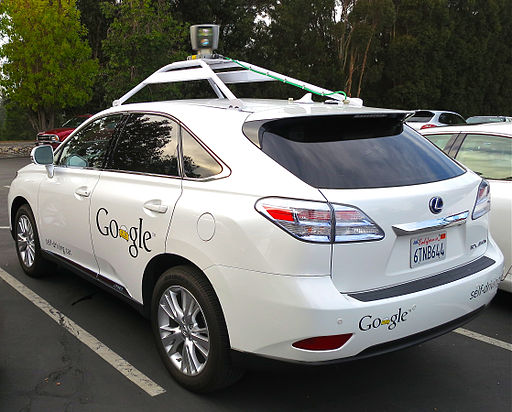
Nevada wants to keep its lead in the driverless car  Photo/Steve Jurvetson

Nevada wants to be the leader in the driverless car industry.
Photo/Steve Jurvetson

By Daniel Rothberg, Las Vegas Sun

In 2011, at the behest of Google, Nevada became the first state to legalize autonomous vehicle road-testing.

Seeing the potential economic benefits, several states followed, including California, Michigan and Florida. At least 15 more now are considering legislation related to the cars.

With more states embracing autonomous cars and the hype surrounding next-stage vehicles increasing exponentially, Nevada wants to protect its lead on autonomous testing.

Read the whole story


IRS impersonators targeting Washoe County

The Washoe County Sheriff’s Office has received dozens of calls from the public reporting telephone scams involving aggressive and threatening criminals impersonating IRS agents.

According to the IRS, there are five things scammers often do, but the IRS will never do:

The IRS will never:

  • Call to demand immediate payment, nor will the agency call about taxes owed without first having mailed you a bill
    Demand that you pay taxes without giving you the opportunity to question or appeal the amount they say you owe.
  • Require you to use a specific payment method for your taxes, such as a prepaid debit card.
  • Ask for credit or debit card numbers over the phone.
  • Threaten to bring in local police or other law enforcement groups to have you arrested for not paying.

According to the IRS, fraudulent callers often alter caller ID numbers to make it look like the IRS is calling and will identify themselves by using fake names and bogus IRS badge numbers. The caller may sound convincing and know the victim’s name, address, or other identifying information that is often easily obtainable through resources available to the public.

Anyone who receives a scam telephone call is encouraged by the IRS to report the incident to the U.S. Treasury Inspector General for Tax Administration at 800.366.4484.


RadioShack moves Black Friday to Wednesday

By Hadley Malcolm, USA Today

RadioShack is on the comeback trail, and its first appeal to holiday shoppers comes Nov. 25, when the electronics retailer plans to run its Black Friday deals a day before any other major chain.

Stores will feature nearly 100 different deals, and stay open an hour later than normal on Wednesday. On Thanksgiving, stores will be open from 8am to 1pm only, giving shoppers a chance to finish their hunt for savings hours before most other retailers plan to open their doors.

Read the whole story


Travelers expected to hit the road for Turkey Day

By Scott Mayerowitz, AP

A stronger economy and lower gas prices mean Thanksgiving travelers can expect more congested highways this year.

During the long holiday weekend, 46.9 million Americans are expected to go 50 miles or more from home, the highest number since 2007, according to travel agency and car lobbying group AAA. That would be a 0.6 percent increase over last year and the seventh straight year of growth.

While promising for the travel industry, the figure is still 7.3 percent short of the 50.6 million high point reached in 2007, just before the recession.

Like on every other holiday, the overwhelming majority of travelers — almost 90 percent — will be driving. And they will be paying much less at the pump.

AAA says the average retail price for gasoline is now $2.15 per gallon, 74 cents cheaper than the same time last year. With the average car getting 18.5 miles per gallon, that means a family driving 300 miles will save $12 in fuel this holiday.

Airlines for America, the lobbying group for several major airlines, forecasts 25.3 million passengers will fly on U.S. airlines, up 3 percent from last year. (AAA’s forecast shows fewer numbers of fliers because it looks at a five-day period while the airline group looks at the 12 days surrounding Thanksgiving.)

Airfare is basically flat compared to last year, with a mere 0.3 percent or 69 cent average increase, according to the Airlines Reporting Corp., which processes ticket transactions for airlines and travel agencies.

Traveler counts are little fuzzier when it comes to other forms of transport.

Bus use will continue to grow, according to the Chaddick Institute for Metropolitan Development at DePaul University. The school expects 1.2 million to take buses, up 1 percent to 2 percent from last year. However, AAA says travel by cruises, trains and buses, will decrease 1.4 percent this Thanksgiving, to 1.4 million travelers.

Since flying can often cause the most disruptions and leave travelers feeling helpless, here are some tips to cope with any delays. Flights are packed around the holidays and if there is any hiccup, the difference between getting home and not can come down to asking the right questions and acting fast.


CalPERS may lower investment expectations, costing taxpayers billions

By Melody Petersen, Los Angeles Times

Experts have warned for years that the state’s largest public pension plan has overestimated how much its investments will earn, leaving taxpayers to pay billions of dollars more than expected.

Now the board of the California Public Employees’ Retirement System is reconsidering. As soon as today, the fund’s board could approve a plan that would slowly reduce to 6.5 percent the current 7.5 percent it says it expects to earn on its investments.

For taxpayers, that seemingly small change is significant.

Read the whole story


NV Energy seeks to lower rates

NV Energy customers can expect their rates to go down starting Jan. 1.

The company, which provides electricity to people on the Nevada side of the Lake Tahoe Bain, filed a request with the Public Utilities Commission of Nevada on Nov. 13 to reduce rates.

Residential customers using 758 kilowatt-hours a month will see a decrease of about 4.2 percent or $3.61. The overall decrease for Northern Nevada customers will be 4.97 percent.

NV Energy said what it costs to buy fuel and power from other places has gone down.


— Lake Tahoe News staff report