Pot advocates settle on 2016 initiative

By Steven Greenhut, San Diego Union Tribune

SACRAMENTO — The Attorney General’s Office has been so inundated with marijuana legalization measures that it’s been hard to separate the wheat from the chaff – or the stems from the buds, to use a more appropriate analogy. It costs less than the average price of an ounce of the stuff to file a statewide initiative, so it’s been unclear which ones might emerge with enough financial backing to get on the ballot and maybe even win approval.

That has all changed. In November, former Facebook President Sean Parker backed something called the Adult Use of Marijuana Act. Parker is a billionaire who has said he will dedicate millions to the effort. The proposal also earned the backing of Lt. Gov. Gavin Newsom, the 2018 gubernatorial candidate who headed the state’s blue-ribbon commission on marijuana.

The basics, per California NORML (National Organization for the Reform of Marijuana Laws): “(1) allow adults 21 years and older to possess up to one ounce of marijuana and cultivate up to six plants for personal use; (2) regulate and tax the production, manufacture, and sale of marijuana for adult use; and (3) rewrite criminal penalties so as to reduce the most common marijuana felonies to misdemeanors and allow prior offenders to petition for reduced charges.”

South Lake Tahoe resident Steve Kubby, a Proposition 215 activist, recently stated in an email that he will “hold my nose and support this initiative” provided it eliminates the warrantless-search provision, a provision that treats open containers of marijuana in the same way that open containers of alcohol are treated, jail time for possessing more than an ounce of marijuana or more than six plans, and a requirement that those convicted of marijuana offenses register for five years as drug offenders.

Read the whole story


Homewood resort’s makeover delayed — again

By Kathryn Reed

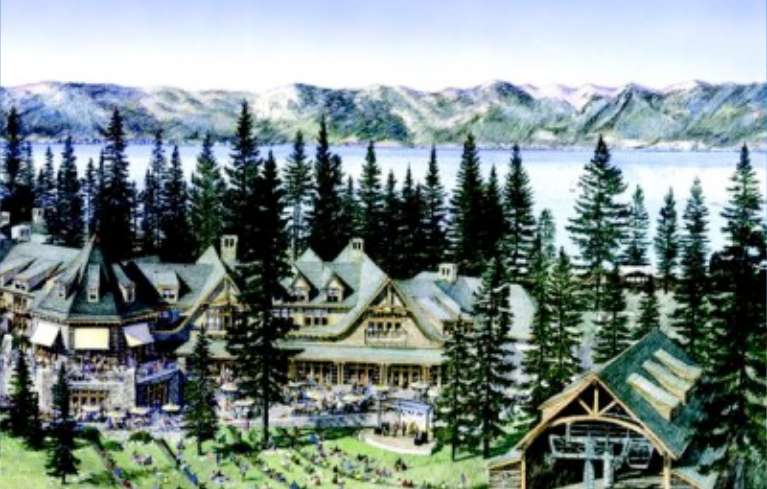
A court decision this month most likely will delay for a year the ground breaking of Homewood Mountain Resort’s slopeside hotel. Owners were slated to begin construction in summer 2016 on the hotel that is almost a replica of the old Tahoe Tavern.

San Francisco-based JMA Ventures owns the West Shore ski area. For years it has wanted to turn the area into a destination that would welcome guests year round.

When the Tahoe Regional Planning Agency approved the project in 2011, JMA expected to spend about $500 million to build a boutique hotel, condos, townhomes, grocery store, restaurant, retail spa and pool. The latter being on-mountain and open to the public.

Ongoing litigation keeps stalling the project.

Homewood owners remain committed to developing the West Shore resort.

Homewood owners remain committed to developing the West Shore resort.

“What surprised us, quite candidly, is the court focused on this particular issue. It’s not a straightforward issue. The question is what impact does Homewood have on an evacuation by adding a couple hundred units,” Art Chapman, principal of JMA, told Lake Tahoe News. “You would think on the surface it would be easy to analyze, but there are so many variables.”

Among other things the factors to consider include the size of the wildfire, if it occurs on a weekday in shoulder season or a holiday, and which way the wind is blowing.

In the next few weeks Chapman expects his team to decide whether to comply with the court order or to appeal it.

It was California Clean Energy Committee that appealed the decision allowing Homewood to move forward. The Third District Court of Appeals on Dec. 22 ruled in favor of Homewood in five of the six issues. Most had something to do with energy consumption. The evacuation challenge was a couple sentences in the appeal.

This energy committee is based in Davis. Attorney Eugene Wilson appears to be the sole member of the committee.

The three judges sent the case back to Placer County Superior Court. If JMA wants to comply with the appellate court, it would mean getting Placer County to create an addendum to the environment impact report regarding evacuation plans, there would be a 30-day comment period and then the court would need to sign off on it. This would likely be a faster course of action than appealing the decision.

The evacuation issue involves CEQA, which would not affect any of the Tahoe Regional Planning Agency permits. However, until the current matter is resolved it is impossible for Placer County to issue building permits.

Chapman called the decision ironic because he said the project has components in it to make the area safer in regards to fire. Those don’t happen until the project is built. They include facilities at the base that would allow people to shelter in place, snowmaking guns turned into fire hoses, and water shuttles at the West Shore Café (which JMA owns) to get people to safety.

A different lawsuit was settled a while ago that reduced the number of units by 13 to a total of just less than 300. The overall square footage, though, on the 1,200-acre parcel will remain the same. That settlement also calls for monitoring traffic for 20 years – twice as long as originally proposed, and notifying neighbors when snowmaking will occur because of the sound involved.


Studying climate change through the sounds of nature

By Leath Tonino, Outside

Soundscape ecologist Bernie Krause has recorded jaguars in the Amazon, ice in Antarctica, insects in Zimbabwe, rainstorms in Borneo, and orcas in the Pacific. The 77-year-old began studying nature’s sounds at age 30, later earning a Ph.D. in creative arts. (This was after two successful decades as a musician and producer.)

He has since traveled to the world’s most remote areas to create an audio library that began as an inventory of the intricate symphonies unique to each ecosystem but has become a way to document biodiversity and, most recently, loss.

Krause’s archive now consists of 5,000-plus hours of what he calls “whole habitat” field recordings. To get them, he sets up a wind-protected microphone on a tripod, plugs it into a handheld recorder, and captures everything that occurs. More than half of the 3,700 habitats represented in the archive—from Yellowstone to Australia to his own backyard in Glen Ellen—are now either totally silent or severely diminished because of human activities like mining, logging, poaching, real estate development, airplane traffic, warfare, and climate change.

Read the whole story


South Tahoe man dies in Pennsylvania car crash

Erik Detweiler, 25, of South Lake Tahoe formerly of Quakertown, Pa., died Dec. 27 of injuries he received in an auto accident.

Erik Detweiler

Erik Detweiler

Born in Abington, Pa., he was the son of Royden Detweiler of Quakertown and Mary Ellen (Kasmer) of Red Hill, Pa.. He was a 2008 graduate of Quakertown High School and received his bachelor’s degree in economics from the University of Pittsburgh.

Detweiler was currently working in food service as a waiter/bartender. He was quite the adventurer and lived to ski. He also enjoyed rock climbing, mountain biking, hiking, hang gliding, and travel.

Surviving with his parents are a sister, Keri Detweiler-Mayers, husband Daniel; step-mother Kelly Detweiler; aunt Sue Killeen, husband Uncle Dennis; maternal grandmother Helen Kasmer; and numerous aunts, uncles, and cousins; and his beloved dog, Luna.

A sharing of memories in celebration of Detweiler’s life will be 2pm Dec. 30 in the Jeffrey A. Naugle Funeral & Cremation Service in Quakertown. Memorials in Detweiler’s name may be made to Lily’s Hope Foundation, 5145 Applebutter Hill Road, Center Valley, PA 18034 or Logan’s Heroes Animal Rescue, 7404 Chestnut Hill Church Road, Coopersburg, PA 18036.


Era of dam building may not be over in Calif.

By Bettina Boxall, Los Angeles Times

This tranquil ranching valley lies 15 miles west of the Sacramento River. A one-lane bridge spans a dried-up creek at the valley entrance. But when Jeff Sutton stands there, he imagines water, lots of it.

Never mind that talk of flooding the Antelope Valley north of Sacramento and turning it into a reservoir is older than Sutton. The time has finally come, he says. “It’s the right project at the right place.”

Drought, climate change and environmental curbs on water deliveries are fueling campaigns for more water storage in California. Sites Reservoir — as it would be called after the tiny settlement it would wipe off the map — is one of a handful of resurgent proposals challenging the notion that the era of big dam building is over.

Central Valley growers especially are pushing dam projects as their salvation, despite multibillion dollar price tags and studies that show the new reservoirs would do little to boost the state’s overall water supplies.

Read the whole story


DCSO prepping for New Year’s Eve at Stateline

Expect Highway 50 in the casino corridor at Stateline to close at some point on New Year’s Eve.

Sheriff’s deputies shutdown the road as people fill the street.

Traffic will then be diverted to upper and lower Lake Parkway Drive.

Deputies of the Douglas County Sheriff’s Office will be present in the Stateline casino-core area throughout the evening, supplemented by officers and representatives of numerous other law enforcement agencies, including Nevada Highway Patrol,  Nevada Department of Corrections,  South Lake Tahoe Police Department, El Dorado County Sheriff’s Office, California Highway Patrol, and the FBI. Supporting agencies include the Douglas County Sheriff’s Search and Rescue, Douglas County Communications Center, Tahoe-Douglas Fire Department, Caltrans and Nevada Department of Transportation.


Incidents that will most likely result in an arrest include acts that place celebrants or law enforcement officers in jeopardy; including acts of rowdy behavior, fighting, throwing projectiles, vandalism, theft, narcotic violations, severe public drunkenness, possession of or discharge of fireworks, minors consuming or possessing alcohol, or any other act that disrupts the goal of achieving a peaceful and safe environment for all in attendance.

Glass or metal containers, regardless of contents, are prohibited in the casino core area on New Year’s Eve.

The curfew in Douglas County is midnight on Dec. 31. Anyone under the age of 18 is subject to citation for being in violation of this ordinance.


Drought report could map Nevada water policy

By Michelle Rindels, AP

CARSON CITY – A panel of water experts that spent almost a year analyzing Nevada’s persistent drought has issued recommendations that could shape Gov. Brian Sandoval’s policy agenda in the coming year.

The eight-member Nevada Drought Forum, which Sandoval commissioned in April, included water, agriculture, climate and emergency management officials who gathered information in a series of public meetings over the past year.

“I think there’s stuff in there that can be done fairly quickly, and a variety of stuff that is going to take a fair amount of planning and prioritization,” said forum chairman Leo Drozdoff, director of Nevada’s Department of Conservation and Natural Resources, about the 20-page report wrapped up in mid-December.

Here are some of the panel’s recommendations:

• RAMP UP CONSERVATION: While agencies such as the Southern Nevada Water Authority testified about their aggressive water-saving measures, the forum wants conservation efforts elevated statewide and even in smaller municipalities. Forum members want water meters on all connections, water efficiency standards for new development, tiered rate structures to promoted water conservation and time-of-day and time-of-week watering restrictions.

They also recommend giving the state water engineer power to enforce water conservation plans if agencies aren’t sticking to them.

•TWEAK WATER LAW: The forum wants incremental changes in Nevada law that strengthen the state water engineer’s ability to manage the state’s driest areas. Members want clarification in law that would preserve indoor water use even amid cutbacks in domestic well users’ outdoor watering.

They also want to change the law to allow the small-scale capture of rainwater, as long as it doesn’t interfere with others’ water rights.

•CLOSE GAPS IN RESEARCH: The state bases many of its water policy decisions on the U.S. Drought Monitor, a map that’s updated weekly to reflect conditions on the ground throughout the U.S. and Puerto Rico. But Drought Forum members say there are gaps in the data.

They recommend improving the map by developing a statewide monitoring network that uses a variety of information sources and makes real-time data centrally available. They also want to coordinate with other western governors to ensure western states have more of a say in the national map, and that it’s measuring both hydrological conditions underground and the vegetation conditions above ground — which can sometimes give different signals about the state of the drought.

•FIND NEEDED MONEY: Forum members noted that incentive and rebate programs can be effective at encouraging consumers to conserve, but they can be prohibitively expensive. The group wants state agencies to come up with budget proposals that could help pay for high-priority incentive programs.

They also noted that some of their recommendations, such as better drought monitoring, could require extra staff. The forum wants to identify and prioritize the resources needed to implement its plan.

•PLAN LONG-TERM: The forum wants to support the work of Nevada’s Water Reuse Steering Committee to explore regulatory changes that could allow water recycling and stretch supplies.

They also want to keep an eye on technology advances in water desalination — a process that’s expensive now but could be a viable option for boosting Nevada’s supply when it gets cheaper.

•EDUCATE THE PUBLIC: The forum wants to keep the conservation message going to everyday Nevada residents, even during wetter years when drought isn’t top-of-mind. They also want state staff dedicated to public outreach, including people focused on educating elected and appointed officials about Nevada’s water issues.

•REWORK WARNING SYSTEMS: Forum members recommend the state’s Drought Response Committee refine its warning system. Nevada issues Drought Alerts, Drought Warnings, a Governor Drought Declaration and a water emergency declaration, but the forum wants more clarity on the difference between them.


Sierra, Northstar among resorts up for sale

By David Sharp, AP

PORTLAND, Maine — A real estate investment trust that’s selling more than a dozen ski resorts from Maine to California won’t meet its deadline of completing the transaction by year’s end.

CNL Lifestyle Properties, which is based in Orlando, Fla., has sold its senior housing portfolio, a dozen marinas, four attractions, and the Mount Washington Hotel and Bretton Woods ski area in New Hampshire.

But it continues to seek buyers for 15 additional ski resorts — including Northstar and Sierra-at-Tahoe, remaining attractions and marinas, and says it will update shareholders in the first quarter of the new year.

The real estate investment trust “continues to evaluate strategic options for the remainder of its ski and mountain properties as it seeks to provide liquidity to its shareholders,” CNL Financial Group senior managing director Steve Rice said in a statement.

REITs are an investment vehicle for a variety of properties including hotels, office buildings and malls. The trust owns the property and makes money from leases and rent.

CNL Lifestyle Properties is trying to sell ski resorts including Sunday River and Sugarloaf in Maine, Loon Mountain and Mount Sunapee in New Hampshire, Okemo Mountain in Vermont, Crested Butte in Colorado, and Brighton in Utah.

Skiers won’t see a big impact from the sale. Long-term leases will remain in place, so mountain operators will remain unchanged once the property changes owners.

“CNL has had the profile for sale for a while, Booth Creek Report Properties owns the management contract with them. I work for Booth Creek and nothing will change for Sierra when and if the REIT sells. Northstar is owned by CNL as well, and Vail holds the management contract,” John Rice, general manager of Sierra, told Lake Tahoe News. “Each ski property in their profile has continued to operate under their management contracts as they did prior to CNL purchasing the ownership. It is correct nothing will change with resorts like Sierra who are under long-term management contracts.”

CNL Lifestyle Properties was valued at as much as $3 billion in 2012 with ownership of more than 100 water parks, ski resorts, marinas and senior housing developments. But the value has dropped in the aftermath of a real estate downturn.

The drought in the West hasn’t helped. CNL told shareholders that its ski holdings last season were “negatively impacted by adverse conditions,” particularly in California, which saw its third straight season of record-breaking drought.

The improving weather out west — which has seen snow this month — may set investors and potential buyers at ease, said Michael Krongel from Mirus Resort Capital in Burlington, Mass., who’s been involved in buying, selling and developing ski resorts for 45 years.

But investors don’t tend to get overly worried about a short-term trend, said Michael Berry of the National Ski Areas Association. “The industry has a pretty strong financial performance history when looked at over a 10-year period,” he said.

If CNL sells the remaining ski resorts as a package, then it would be the largest single ski resort transaction in the history of the sport. But it appears that CNL is willing to entertain breaking them apart, since Bretton Woods was sold separately.

Lake Tahoe News contributed to this report.


Community colleges double number of transfer-to-CSU degrees

By Josh Dulaney, Long Beach Press Telegram

Community college students are earning specialized transfer degrees at a blistering pace.

The number of associate degrees for transfer nearly doubled in 2014-15 from the previous year, with 20,644 students earning the honor, according to figures released earlier this month by the Chancellor’s Office of California Community Colleges.

The ADT program is a partnership between the state’s 113 community colleges and the 23-campus California State University system.

Then-Gov. Arnold Schwarzenegger signed legislation in 2010 to allow students to obtain the one-size-fits-all transfer degree for all CSU campuses.

Read the whole story


Caltrans gears up for more Highway 50 work

By Kathryn Reed

When Caltrans returns in 2017 to do the Y to Trout Creek project South Lake Tahoe officials do not want a repeat of what happened this summer.

“This project this summer caused so much disruption,” City Manager Nancy Kerry told Clark Peri.

Peri is the project manager for the Caltrans district that encompasses the basin. He got an earful earlier this month about how unresponsive the contractor as well as his office was when it came to trying to get crews to better manage the project in terms of traffic, safety and flow.

Southwest Gas was working on this section to put in its infrastructure ahead of the transportation department doing its work. They will be back in 2016 to do more work.

Peri said things will improve at least in 2017. In large part this will be because Caltrans will have oversight of the contractors doing the work.

But he said if there is no daytime work the next project will take four years to complete instead of the scheduled three.

 Work on Highway 50 in South Lake Tahoe will continue through at least 2019. Photo/LTN file

Work on Highway 50 in South Lake Tahoe will continue through at least 2019. Photo/LTN file

This next two-mile stretch of Highway 50 is designed to improve the road and water quality by repaving and adding drainage inlets.

Sidewalks will be 4 to 7½ feet wide, curb ramps will meet ADA requirements, the shoulder will be widened to a minimum of 6 feet to accommodate cyclists, and bus pullouts will be expanded.

What Councilman Tom Davis is frustrated about is that lighting is not part of the plans.

“Trout Creek to the Y is dark, especially in winter,” Davis lamented. “We need a complete, safe street.”

The funding source doesn’t allow for that amenity, Peri said. However, the city could pay for it.

Electrical conduits will be installed so lights could be added after the fact.

This will be a $56.7 million project.

It will be broken up into three phases, with each phase taking a season. They are the Y to Winnemucca Avenue, Winnemucca to Sierra Boulevard, and Sierra to Trout Creek. From there the project is further broken down into four segments, each of which will take four to six weeks to complete.