King, Sand fire restoration efforts require collaboration

By Joann Eisenbrandt

PLACERVILLE – “It’s not a sprint, it’s a marathon,” El Dorado County Board of Supervisors Chairman Ron Mikulaco told those assembled in the board chambers Jan. 12 for updated presentations by representatives of the El Dorado County and Georgetown Divide Resource Conservation Districts, Eldorado National Forest and the CalFire Amador-El Dorado Unit on the status of post-King Fire and Sand Fire cleanup and restoration efforts.

In summer and early fall of 2014, these two devastating fires ripped through the foothills and forests of El Dorado County. In July and August, the Sand Fire burned 4,240 acres east of Highway 49 near Plymouth, destroying 20 homes and 47 outbuildings and in September and October, the King Fire, which began near Pollock Pines, scorched 97,717 acres, threatening 12,000 homes and eventually destroying 12 houses plus 68 outbuildings and important infrastructure including facilities, roads, bridges and electrical transmission and distribution lines. More than 100 Native American archaeological sites dating back hundreds and thousands of years were also irreversibly damaged.

Once all the flames were extinguished, the fires were out, but their lingering effects on El Dorado County were just beginning. What also was just starting was a coordinated effort by a broad coalition of local, state and federal government agencies as well as local stakeholders to find a cohesive strategy to not only deal with the immediate aftermath of these two catastrophic fires, but to find solutions to prevent the reoccurrence of such fires in El Dorado County in the future.

Mark Egbert, district manager of the El Dorado County and Georgetown Divide Resource Conservation District, told the board that the RCD had received funding from CalFire for the Sand Fire Restoration and Reforestation Project in the amount of $793,551 and for the King Fire Restoration and Reforestation Project in the amount of $1,893,956.50. These projects are aimed at reversing the ecological, environmental, aesthetic and social impacts of the fires. They include such things as removing accumulated debris and dead trees and selling what timber is still viable, replanting and restoring the affected lands to increase potential carbon sequestration and reduce greenhouse gas emissions, protecting watersheds and water quality for domestic water sources and educating the public about wild fire response.
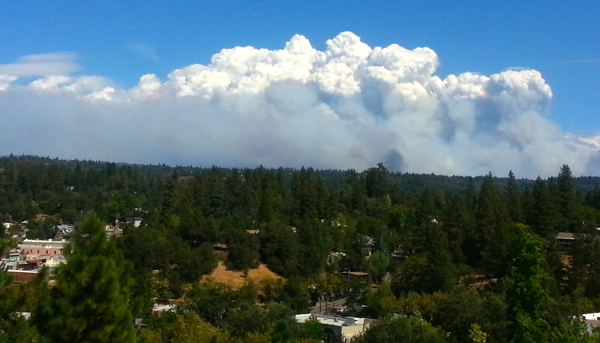
The 2014 King Fire burned for days, destroying thousands of acres in the Eldorado National Forest. Photo/Joann Eisenbrandt

The 2014 King Fire destroyed thousands of acres in the Eldorado National Forest. Photo/Joann Eisenbrandt

Egbert noted that their post-fire efforts were part of an unprecedented interagency collaboration in the county that included not just the RCDs, but the U.S. Forest Service, CalFire, El Dorado County Fire Safe Council, El Dorado County, Caltrans and private stakeholders such as PG&E, Sacramento Municipal Utility District and Sierra Pacific Industries.

Meetings were conducted with private landowners as well to assess their needs, since unlike the King Fire, the majority of impacted land in the Sand Fire was privately owned. They are also seeking additional grant funding, including a potential grant from the Sierra Nevada Conservancy under its Healthy Forest Initiatives program as well as several federal grants. District 5 Supervisor Sue Novasel asked Egbert if he could estimate in an ideal world were the funds were available, what it would cost to make the county’s forests and foothills fire safe. “I can’t even project that. It’s an unlimited amount of money,” Egbert responded. “The answer is really how much money do you have?”

Laurence Crabtree, Eldorado National Forest supervisor, followed Egbert, giving a presentation on the King Fire Restoration Fire Adapted 50 Cohesive Strategy. This was one of two projects selected for funding in California as part of the federal Cohesive Wildland Fire Management Strategy put into place in 2009 as part of the FLAME Act. Projects must reflect a holistic view of the landscape and include collaboration between federal, state and local agencies, Native American tribes and other local stakeholders. The Eldorado National Forest received $625,000 for the project. An environmental impact statement was prepared under National Environmental Policy Act, which analyzed five alternatives for the project. The alternative selected by Crabtree as the preferred one will treat approximately 17,000 acres, which is 26 percent of the National Forest System lands burned in the King Fire. It includes salvage and fuel treatment, roadside hazard tree removal, erosion control and rehabilitation on watershed sensitive areas and reforestation.

Not everyone was happy with Crabtree’s decision. At the meeting Tuesday, he noted at the beginning of his remarks, “We know there are lots of dead trees in the forest and there will be more dead trees in the forest.”

While everyone agrees that recovery and reforestation is vital, not everyone agrees on the best way to accomplish that. In their comments on the EIS, some wanted more logging, some wanted less, some wanted to “let nature take its course” and do nothing, some expressed concerns for disturbances logging could cause to the habitat of the spotted owl, the federally threatened red-legged frog, the endangered Sierra Nevada yellow-legged frog and other area wildlife. In the written record of decision by Crabtree in September 2015, he noted, “I know that my decision will not satisfy every competing interest or solve every problem conveyed to me. However, I believe my decision provides an appropriate balance … that achieves the broadest range of goals to best serve the public interest in the long term recovery for this area.”

District 4 Supervisor Michael Ranalli, who had requested these presentations to the board, asked Crabtree how the logging efforts were progressing. Initial logging efforts have begun, Crabtree responded, but the current wet winter has stopped them. He noted that all the timber offered for sale has been purchased with more sales pending, with the actual removal of this timber to lumber mills to occur in the spring. A half million seedlings have been ordered, with planting to begin in spring 2017.

Because of the closing of the SPI mill in Camino and the lack of other mills in the local area, most of the logs will go to the SPI mill in Lincoln for processing.

Division Chief Mike Webb of the CalFire Amador-El Dorado Unit also spoke about the Adapted 50 project. “We are on track. We have all come together with a single focus and strategy.” Calling the project an, “all lands, all hands” approach, he said he was happy to report that what was once just a strategy is now a real project. He noted the important contributions of all parties, including those of the individual fire safe councils which are part of the umbrella nonprofit El Dorado County Fire Safe Council. “We all must come together where geographic lines have no meaning because they have no meaning to fire.”

One of the strategies is the creation of “shaded fuel breaks” that can be maintained over time. In the Sly Park phase of the project they will add to an existing forest management plan by expanding existing fuel breaks up the Highway 50 corridor to Fresh Pond, adding more protection for Pollock Pines.

Dale Pierce, a director for the El Dorado County and Georgetown Divide Resource Conservation Districts, explained to after the meeting exactly what a shaded fuel break is. When dead trees are cleared out, he explained, they will grow back as brush which serves as a volatile ladder fuel for future fires. When a shaded fuel break is created, all the brush is cleared out, leaving spaced large trees. These trees create enough shade so that less brush can regrow because of the lack of sunlight. These breaks need to be maintained with a re-burning of the brush every few years.

Webb also noted work being done alongside Highway 50 to clear brush back from the roadway shoulders to prevent fires from jumping the road. Novasel said she drove that corridor often and has seen the effects of these efforts already.

“We recognize that corridor,” Webb responded, “and its importance to your community.”

“If 50 closes,” Novasel confirmed, “our entire town closes down.”

All the presenters at the Jan. 12 meeting agreed that old forest management plans have to be revised so that fires and fuel loads are the driving force. With the effects of bark beetles moving north from Southern California and into El Dorado County, the drought, and the expectation of continued longer fire seasons, creating fire adapted communities is vital to preventing fires before they start.

District 3 Supervisor Brian Veerkamp agreed, “We have to shift to fuel reduction and modification. It will pay much bigger dividends than trying to catch fires from the rear.”

The public was then asked to comment, with several speakers emphasizing the need to keep a real sense of urgency in fire preparedness. Katherine Smith warned about returning to “business as usual” as it was done for the last hundred years. “We didn’t take care of fuel reduction and we got the King Fire.”

Heather Campbell, chairperson of the Camino/Pollock Pines Fire Safe Council, said her group is planning on distributing a brochure to residents in her area explaining the elements needed to create fire-adapted communities, including the building of “ember resistant” homes which won’t ignite from embers landing miles ahead of actual fires.

Sue Taylor of Camino wanted to be sure that with so many commissions and funding sources that the money gets to “the right place.” Taylor added to what others had said about the impacts of bark beetles on stands of trees and also about the difficulty for agencies and private landowners to clear their land when there are no mills in the area to purchase and process the timber. “We need to get a mill back in this county.”

Ray Nutting, former El Dorado County supervisor, told the board, “I try not to come to Board of Supervisors meetings but I was compelled to come to this one because the No. 1 issue is catastrophic crown fires.” Adding that, “Mother Nature knows how to deal with fuels,” he wondered about what his great-grandfather would have thought about current fire suppression efforts. “In 1935, he knew that a fire at the bottom of a canyon would run up the hill. He had fires on his property in winter, in the snow, and they ran up the hill and they were ‘good fires.’ Now, you’d go to jail.”


Douglas County manager leaves after 16 months

By Kathryn Reed

Jim Nichols is no longer at the helm of Douglas County.

He has been out on paid leave since Jan. 12 and it goes through Jan. 29. After that time he will no longer be affiliated with the county.

Jim Nichols has left Douglas  County after 16 months as the manager. Photo/Provided

Jim Nichols has left Douglas County after 16 months as the manager. Photo/Provided

“It was a mutual agreement,” Commissioner Nancy McDermid told Lake Tahoe News. “We are in good shape. This is in the best interest of everybody.”

What led to the agreed upon separation is not being disclosed by county officials, and with Nichols gone he can’t speak for himself.

Nichols had been the county manager since September 2014. He was one of 72 applicants for the job that was vacated by Steve Mokrohisky. Prior to the Douglas job Nichols was assistant city manager for Midland, Texas.

Melissa Blosser, spokeswoman for the county, told Lake Tahoe News she did not believe Nichols had another job lined up.

When he started he was making $172,000 a year. The separation agreement has not been released.

The commissioners at the Jan. 21 meeting at Stateline are expected to finalize the agreement. At that meeting the board will also discuss an interim replacement. For now Christine Vuletich, assistant county manager, is in charge.


Self-driving cars being tested in snow

By Mark Bergen, Re/Code

Silicon Valley has California sun, but Detroit has snow. And Ford wants to use that climate as an asset in the critical race to develop self-driving cars.

On Sunday evening, Ford said that it will be “conducting the industry’s first” self-driving car tests in winter weather, including snow, taking on a major obstacle for autonomous vehicle technology.

That said, Ford’s robot cars won’t be on public roads. And Google, a maybe friend and maybe foe, has started to put its robot cars in snow as well.

Read the whole story


Massive boulder blocks Hwy. 50

There is no estimated time when the boulder that fell on Highway 50 will be removed. Photo/Theresa Valdez

There is no estimated time when the boulder that fell on Highway 50 will be removed. Photo/Theresa Valdez

Updated 7:43pm:

The road is clear and open. Snow is the only obstacle now.

Updated 4:47pm:

A boulder the size of a motor home is blocking Highway 50 east of Wrights Lake.

“They’ll need dynamite or an explosive to move it,” California Highway Patrol Officer Quinn Cuthbertson told Lake Tahoe News.

The boulder was split in half a little before 4:30pm Wednesday. The debris is being cleared.

For now traffic is down to one lane, with delays in both directions.

The boulder landed in the westbound lane about 10:30am Jan. 13. It struck two vehicles, however there were no injuries.

It has been raining and hailing in the area today. Chain controls went up about 1pm between Twin Bridges and Meyers.

Cuthbertson said this area is prone to rock and mud slides, as well as avalanches.

–Lake Tahoe News staff report


Expect delays on Highway 28

Traffic lanes on Highway 28 will be temporarily reduced in the areas of Country Club Drive and Northwood Boulevard in Incline Village. The road will periodically be reduced to a single lane, with flaggers alternating directions of traffic, between approximately 10am and 3:30pm through Jan. 15.

The lane reductions are part of a Nevada Department of Transportation project to install pedestrian and safety enhancements on the road. Pedestrian crossing warning signs equipped with rapid flashing beacons activated when pedestrians push the crossing button are being added to crosswalks in the area. Street lighting and sidewalk ramps are also being added, along with enhanced pedestrian crossing signs in advance of the crosswalks.

The project also relocates a crosswalk on Highway 28 west of Village Boulevard closer to existing bus stop and pedestrian crossing points and adds left turn lanes from Country Club Drive to Highway 28 with new traffic detection systems to help drivers most efficiently and safely get through the intersection.


Flood insurance not always a sure bet

By Matt Stevens, Los Angeles Times

For the last several months, officials from the Federal Emergency Management Agency have sounded a lot more like salesmen than bureaucrats. And their sales pitch for flood insurance — which harps on the dangers of El Niño while espousing the benefits of protecting your property — has largely worked.

Last week, as long-awaited rains arrived in California, FEMA announced a recent 12 percent increase in the number of flood insurance policies written statewide — a rise the agency said was the “first of its kind in recent history.”

But officials remain worried that people still mistakenly assume they are covered for floods under their standard homeowner policies. That might explain why only 9% of homeowners in the West have flood insurance, according to industry estimates.

Read the whole story


West Slope fire chief accused of domestic violence

An El Dorado County fire chief is back behind bars — this time on domestic violence charges.

William Dekker

William Dekker

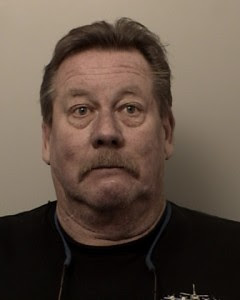
Garden Valley Fire Chief William Dekker was arrested early Jan. 13. Bail was set at $7,500.

Dekker, 60, was arrested in December on driving under the influence charges. On Dec. 22 the district announced that Dekker had resigned and the board appointed Linda Szczepanik as interim chief.

The problem is Dekker never turned in any paperwork to officially resign so he has been getting paid to not work.

Financial details of the resignation have not been released.

— Lake Tahoe News staff report


Stalled luxury housing complex in Stateline set to break ground at mobile home park site

By Kathryn Reed

Luxurious, high-end housing on the shores of Lake Tahoe designed to be second or third homes for the wealthy – presumably from the Bay Area – is set to break ground in summer 2016.

The project isn’t new. It’s been stalled because of the economy and the inability of the developers to secure financing.

Tahoe Beach Club, when it is built out, will include 143 units, a private 40,000-square-foot beach club on the water, restaurant, spa, workout area and facilities for banquets-parties-weddings. The club will offer memberships to the public.

It will be built in three phases, with occupancy expected to be ready in 2017. This will include 46 units, the clubhouse and gatehouse. Completion of the project will depend on how sales go as well as loans. If all goes according to plan, Tahoe Beach Club could be built out in 40 to 44 months once construction starts.

All of this will be built at the end of Kahle Drive in Stateline. By summer the remaining trailers at Tahoe Shores Mobile Home Park will be gone. The remaining residents have been given notice.

The project has been controversial since 2002 when the trailer park changed hands and the owners made it known the current residents would have to move.

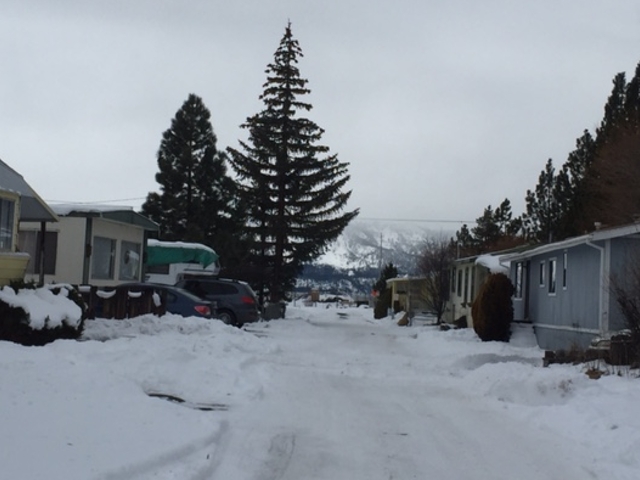
Mobile home residents will need to have different lodging in spring 2016. Photo/LTN

Mobile home residents will need to have different lodging in spring 2016. Photo/LTN

“On the human side we want to do the best we can,” Tom Castaneda told Lake Tahoe News. He and Bob Mecay are the principles of Tahoe Beach Club. “We’ve met with every single one and told them the good news. I can give them some direction, which they have been looking for for 15 years.”

The developers will be responsible for helping with relocating the remaining 11 coach owners. There are also about 30 trailers that are being rented.

Part of the approved plans call for turning apartments on the street into deed restricted low income housing in which many of these people would qualify.

Castaneda would not put a price on the units, but mentioned how new high-end construction not on the lake is going for between $900 and $1,000 per square foot. These units are expected to be between 1,250- and 3,500-square-feet. On the low end that is $1.125 million. All will be whole ownership.

The duo doesn’t regret delaying the project.

“If we had gone into the market in 2009 when it was first approved, it would have been a disaster. I think it would have been extremely difficult to get construction financing. If we had gotten it, it would have been hard money and leveraged strongly,” Castaneda said.

During this time there has been some work done on the property. A nearly 160-foot pier, part of which is floating, has been installed.

More recently the Kingsbury General Improvement District pump house that was near the beach has been moved to the far southwest section of the property near where the current entrance to the trailer park is. A larger building had to be built to meet certain codes and regulations. Tahoe Beach Club gave KGID an easement on the property for the new structure.

Another advantage to the delay is being able to keep with contemporary design and interior features. While neither the footprint of the property nor the height of the buildings is allowed to change per the Tahoe Regional Planning Agency permit, the look and interiors can. There can also be fewer units, just not more.

“We can decide what the market is calling for,” Castaneda said.

Final architectural renderings are not complete.

IMI has been hired to be the sales team – the same company that sold Martis Camp and Lahontan in the Truckee area. Presales are likely to begin in the spring.


Time Warner pushes for binge-watching rights to combat Netflix

By Gerry Smith, BlombergNews

Time Warner Inc.’s strategy against Netflix is taking shape.

Hoping to keep viewers who are dropping cable subscriptions for online streaming services, Time Warner is negotiating to make full seasons of more shows available to pay-TV customers on demand, according to Time Warner Chief Financial Officer Howard Averill.

Time Warner’s cable networks, which include TNT and TBS, have “made it clear” to Hollywood studios that they want so-called “stacking rights,” or the ability to air full seasons of shows they buy, Averill said.

Read the whole story


End of drought not an easy thing to know

By Paul Rogers, San Jose Mercury News

Now that 2016 has gotten off to a wet start, with a series of El Niño storms drenching California in recent days, the question is turning up with increasing frequency at dinner parties and coffee shops:

“How will we know when the drought is over?”

The answer, water experts say, is more complicated than you’d think.

Simply put: The drought could end this year, according to state water officials. But for that to happen, as California enters the fifth year of the worst drought in the state’s history, rains will have to continue arriving in pounding, relentless waves through April to fill depleted reservoirs and dry rivers and push the Sierra snowpack to at least 150 percent of normal.

Read the whole story