EDC faces lawsuit over general plan/zoning update

By Joann Eisenbrandt

PLACERVILLE – Rural Communities United, an El Dorado County unincorporated citizens group, filed a lawsuit Jan. 13 in El Dorado County Superior Court asking the court to void the Board of Supervisors’ Dec. 15 approval of the Targeted General Plan Amendment/Zoning Ordinance update and certification of its environmental impact report.

The base of the lawsuit is because of “violations of zoning law, general plan law, the California Environmental Quality Act (CEQA), and constitutional protections for procedural due process, substantive due process, and equal protection.”

This is not a surprise to those involved.

RCU’s attorney, Tom Infusino, had threatened as much at the board’s Nov. 10 meeting where the plan’s components were laid out and discussed.

The TGPA/ZOU is the product of more than a decade of planning and includes amendments to the county’s 2004 General Plan as well as a comprehensive revision of the Zoning Ordinance that implements that plan’s land use policies. Views on where it will lead the county have varied widely throughout the process, with some seeing it as embodying changes needed to accommodate El Dorado County’s inevitable growth and others seeing it as a “developer-driven” roadmap to a proliferation of high density land uses that will destroy the county’s rural character.

District 2 Supervisor Shiva Frentzen was the only board member to vote against approval of the plan’s major components.

RCU believes its concerns, written comments, and input at public meetings during the TGPA/ZOU process have been largely ignored. The lawsuit contends that the group has “met the requirement that it exhaust administrative remedies prior to filing this action,” as is required by CEQA law.

The lawsuit alleges that the TGPA/ZOU EIR does not adequately describe the project or properly examine its adverse environmental impacts as required by CEQA, does not adequately analyze the other alternatives to the project outlined in the EIR, offers insufficient or unclear mitigation measures to these impacts, was approved by the board with inadequate notice to many of the property owners of the 37,000 parcels rezoned under the zoning ordinance update, is inconsistent with provisions of the 2004 General Plan and the El Dorado Hills Specific Plan, does not adequately address the plan’s cumulative impacts or account for the regional impacts on traffic congestion, fire danger and wildlife habitat. RCU contends in the lawsuit that the EIR was not an objective document, but was conceived and engineered, “to promote a project rather than to inform the decision-making process.”

The county board clerk’s office confirmed that the lawsuit was served on the board this week. Lake Tahoe News reached out to individual supervisors for comments, but did not receive any response. Creighton Avila, a principal analyst in the CAO’s office, responded on behalf of the county, saying, “We are aware of it, but we do not comment on ongoing litigation.”

The board and then-County Counsel Robyn Truitt Drivon clearly indicated the county’s view of the adequacy of the TGPA/ZOU and its accompanying EIR during the Nov. 10 board meeting at which it was presented. At that time, Drivon told the board, “I have been reviewing this for the last year. I have talked to staff and consultants and I am confident in the product being brought forward. It meets legal sufficiency …. Everything brought to you at this point is as thorough and vetted as possible.”

District 1 Supervisor Ron Mikulaco, now chairman of the board, responded at that same meeting to concerns from RCU members and other members of the public by saying, “Our General Plan says we are a rural county but along with that certain things have to occur like growth and infrastructure and policies to deal with them. I met with RCU … their attorney says they’re going to sue us (but) I don’t comment on litigation. … The California Supreme Court says local governments have an implied duty to keep their General Plans current. I’ve heard comments from the public that we’re doing this as a conspiracy, some nefarious thing, but this is required.”

Ellen Van D yke of Rural Communities United told Lake Tahoe News after the lawsuit had been filed, “We have been participating in the planning process for this project for the last three years. Some of us remained hopeful up until that very last day when the supervisors gave their final approval. This lawsuit was truly a last resort for us. The process is completely and utterly broken when well-informed well-intentioned citizenry can be so entirely disregarded by their elected officials. We’re confident we are on the right side of this issue, but just sorry we have to go there.”


Comments sought on Tahoe transportation plan

In its capacity as the Tahoe Metropolitan Planning Organization, the Tahoe Regional Planning Agency this week released a draft active transportation plan for public review and comment.

The plan is designed to help local, state, and federal agencies continue to develop multiple-benefit projects to improve transportation options for bicyclists and pedestrians in the Lake Tahoe Basin.

The Linking Tahoe: Active Transportation Plan identifies high-priority locations for transportation infrastructure upgrades, discusses challenges to project implementation and potential solutions, highlights best practices for roadway design and maintenance, and offers an assortment of actions communities can take to enhance bicycle and pedestrian mobility.

The goal is to build a multi-modal transportation network around Lake Tahoe, connecting trails, sidewalks, bike lanes, and public transit routes so people can safely and efficiently get to school, work, shopping centers, and recreation sites without having to drive a motor vehicle.


This draft is online. TRPA will accept comments about the plan until Feb. 16. Send comments to Morgan Beryl by mberyl@trpa.org.

There will also be public hearings:

·         TRPA Advisory Planning Commission, Feb. 10, 9:30am at TRPA offices in Stateline, 128 Market St.

·         North Tahoe Regional Advisory Council, Feb. 11, 6pm at the North Tahoe Event Center in Kings Beach, 8318 North Lake Blvd.

·         Tahoe Transportation Commission, Feb. 12, 9:30am at the TRPA offices in Stateline, 128 Market St.


Foreclosure filings climbed in Nev., fell across U.S.

Nevada has been a leader in foreclosures for years. Photo/Brendel

Nevada has been a leader in foreclosures for years. Photo/Brendel

By Eli Segall, Las Vegas Sun

Nevada homeowners were slapped with a rising tally of foreclosure filings last year, bucking a nationwide drop as the state remained among the hardest hit in the country.

A total of 16,533 properties, or 1.4 percent of homes statewide, received a foreclosure-related filing in 2015. That’s up 6.6 percent from 2014’s tally, according to a new report from RealtyTrac.

The housing-data firm counts default notices, scheduled auctions and bank repossessions.

Read the whole story


Ski instructor missing at Sugar Bowl

An off duty ski school instructor at Sugar Bowl Mountain Resort has been missing for nearly 24 hours.

Carson May, 23, was last seen at the resort on Thursday afternoon.

Resort officials were notified about 10am Jan. 15 that May was missing.

John Monsoon with the resort off Interstate 80 told Lake Tahoe News the Placer County sheriff’s search and rescue team as well as Tahoe Nordic Team has been scouring the area. The focus of the search is on the backside of the mountain.

The sheriff’s department said May’s belongings were still in his locker at the resort.

— Lake Tahoe News staff report


Yosemite: Famed hotel name to change

By Scott Smith, AP

The names of iconic hotels and other landmarks in the world-famous Yosemite National Park will soon change in an ongoing battle over who owns the intellectual property, park officials said Thursday.

The luxurious Ahwahnee Hotel will become the Majestic Yosemite Hotel, and Curry Village will become Half Dome Village, said park spokesman Scott Gediman.

The move comes in an ongoing dispute with Delaware North, the company that recently lost a $2 billion bid — the National Park Services largest single contract — to run Yosemite’s hotels, restaurants and outdoor activities.

Delaware North demands to be paid $51 million for the names and other intellectual property. The New York-based firm filed a lawsuit last year, saying that when it won the contract in 1993, the park service required the company to buy the former concessionaire’s assets.

Park officials are making the name changes to avoid any disruptions to visitors with hotel reservations during the transition to a new concessionaire on March 1, when they go into effect, Gediman said. He said the park service is fighting for the rights to the original names.

“We’re clearly in disagreement with Delaware North,” he said. “We’re taking this action to ensure the seamless transition.”

The Yosemite Lodge at the Falls will turn into Yosemite Valley Lodge; Wawona Hotel will become Big Trees Lodge; and Badger Pass Ski Area will be called Yosemite Ski & Snowboard Area.

Yosemite National Park — another name which is also claimed by Delaware North and remains in dispute — will stay put, Gediman said.

National Park Service says the names and other intellectual property are worth about $3.5 million, according to the government’s response to a lawsuit that Delaware North filed with the U.S. Court of Federal Claims.

DNC Parks & Resorts at Yosemite Inc., a subsidiary of Delaware North, said in a written statement that it was “shocked and disappointed” that the park service is using the beloved names as a “bargaining chip.”

The company defended its demands, saying that it hopes Yosemite and the new concessionaire decide not to change the names. “All we want in this is fair and just treatment,” the company said.

Justice Department attorney John Robertson wrote in court papers that the company “wildly inflated” the value of the trademark names. He added that Delaware North has “breached its duty of good faith and fair dealing,” a claim the company denies.

The trademark dispute at Yosemite is similar to disputes at Hot Springs National Park in Arkansas and the Grand Canyon in Arizona and with other iconic pieces of Americana owned by the U.S. government, such the Space Shuttle Atlantis.

The park service says it belatedly learned of the trademark issue when it prepared to open bids for the concessionary operation. Yosemite awarded a 15-year contract to Aramark last year.

Delaware North also runs concessions at the Kennedy Space Center and has a trademark application for “Space Shuttle Atlantis,” government court papers say.

Delaware North “apparently embarked on a business model where by it collects trademarks to the names of iconic property owned by the United States,” Robertson wrote.

The name changes don’t sit well with park admirers like John Lenau, an amateur historian and president of the Conference of California Historical Societies.

Now 76, he’s visited Yosemite since childhood and says when somebody mentions Curry Village he can picture it in his head. That will be lost with the change, he said.

He also worries about stripping away the Native American heritage by turning the Ahwahnee to the Majestic Yosemite Hotel and the Wawona Hotel to Big Trees Lodge.

“I don’t see the advantage of dong that,” Lenau said, speaking for himself rather than the society. “I’m just a little bit against changing something that has been around for so many years.”


Conner case stalled until judge situation resolved

The future of the Joann Conner vs. city of South Lake Tahoe case remains in limbo.

Conner wants someone other than El Dorado County Superior Court Judge Steve Bailey to hear the case. However, Bailey has said he is capable of making an unbiased ruling.

Now it will be up to a judge in neighboring Placer County to decide if Bailey is to hear the case or if someone else will. When she will make that decision is not known. It is likely she will do so without the need for a hearing.

Conner, a city councilwoman in South Lake Tahoe, last fall sued the city and City Manager Nancy Kerry because she believes she had been unfairly censured and should not have been banned from speaking with city staff.

— Lake Tahoe News staff report


Foot of snow overnight closes some Tahoe schools


Residents in Meyers on Jan. 15 are blowing more than a foot of snow from driveways. Photo/Provided

Residents in Meyers on Jan. 15 are blowing more than a foot of snow from driveways. Photo/Provided

With 18 inches of white stuff dropping overnight on parts of the Tahoe basin, Lake Tahoe Unified School District and Incline Village schools are closed today.

However, the Friday night performance of “Cinderella” is still going on.

Zephyr Cove Elementary and Whittell High schools are on a one-hour delay and buses will run main stops only.

Sierra Nevada College is starting at 10am.

Lake Tahoe Community College and Tahoe Truckee Unified schools are open.

Areas of Meyers and Christmas Valley are snowed in. Reports are that no plows came through these areas of El Dorado County. At least one foot fell since 7pm Wednesday to 7am Friday.

Plows in South Lake Tahoe have been running much of the night, with main streets being cleared before side streets per normal operations.

The Sierra Avalanche Center is reporting “considerable” danger of avalanche in the backcountry.

There is a chance of rain or snow in the basin through next Thursday. The warmer storms are dropping Sierra cement.

Highs will be in the high 30s to low 40s, with lows hovering around freezing.

Roads are mess. For highway conditions, click on the state icons on the home page of Lake Tahoe News.

— Lake Tahoe News staff report


Truckee on road to enhanced revitalization

By Linda Fine Conaboy

TRUCKEE – It’s always better to deliver good tidings to an enthusiastic crowd, and judging from the attendance (standing room only) and the attitude of the recent Good Morning Truckee crowd, they were ready to hear what’s new in Truckee.

Rick Holliday, owner of Holliday Development headquartered in Emeryville, easily captured the positive vibe as he delivered the inside scoop on his company’s efforts to expand and streamline the historic downtown core with a project called the Truckee Railyard.

The Railyard will sit on the city’s historic but long-vacant railyard, a 75-acre site just east of downtown’s Commercial Row. It has been vacant since a lumber mill closed in the 1980s. In the works for a number of years, the project suffered a blow in 2010 when its redevelopment money became unavailable due Gov. Jerry Brown eliminating redevelopment agencies statewide.

Truckee is making a concerted effort to . Photo/Linda Fine Conaboy

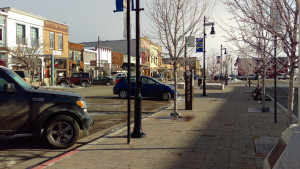
Truckee is making a concerted effort to redevelop properties to enhance the experience for locals and visitor. Photo/Linda Fine Conaboy

Holliday said the project is back on track with secure infrastructure funding, which will allow an immediate construction start.

“The most important thing people told me is don’t leave the old town behind,” Holliday said.

Working in partnership with the railroad, plans are to change the traffic pattern, add a new maintenance facility and move the balloon track, among several other things.

Amid the many amenities to be included in the first phase of the project is a grocery store; in fact, Holliday reported, they recently signed a letter of intent with upscale Nugget Markets, a family-owned and operated grocery based in Northern California and named one of Fortune magazine’s top 100 companies to work for.

Additionally, there will be the Truckee Railhouse Theater, a mixed-development project to include a second-floor, six-screen movie theater, a performing arts space, 27 owner-occupied residential units and a ground floor retail area. The four-story building even calls for a dog wash.

“There won’t be zillions of square feet of retail,” Holliday said. “But enough to enhance downtown.”

And the 700 new parking spaces will go a long way toward alleviating Truckee’s parking woes. Holliday calls this “a huge reservoir of parking.”

Also slated for the first phase is rented, affordable housing, a roof deck, courtyard and brew pub coming late in 2016-17. Buildout, according to the master plan, should occur by the end of 2018, with three districts on tap. They are: the Downtown Extension District, Industrial Heritage District and Trout Creek District.

Cassie Hebel, the executive director of Truckee’s Downtown Merchants Association touted her organization’s past achievements and gave a brief overview of things to come in 2016.

She said there’s a big push now to increase the area’s visibility via social media with the goal being more pedestrian visits.

“We want to bring people downtown; we like foot traffic,” she said, citing a few of the special events that make Truckee a memorable experience for locals and tourists. Activities such as the Halloween Parade, Downtown Holiday Event and the Truckee Follies are must-attend, according to Hebel.

The railroad is an integral part of Truckee. Photo/Linda Fine Conaboy

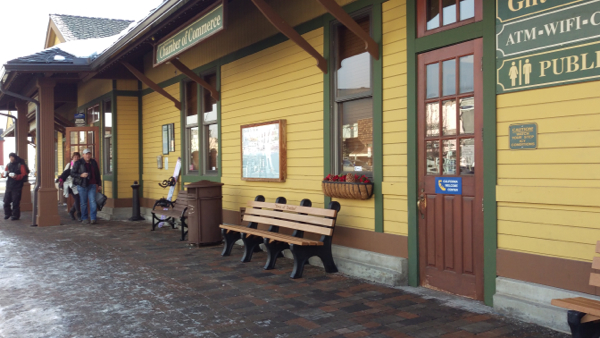
The railroad is an integral part of Truckee. Photo/Linda Fine Conaboy

In summer 2016, the goal is to lure at least 30,000 folks to Truckee Thursdays.

Like any downtown, a zesty and flourishing core is a goal worth aiming for. And with this in mind, the third and last presenter on Jan. 12, Becky Bucor, Truckee’s engineering manager, discussed the work completed in the past as well as the ongoing efforts to make the west end of Truckee as vital as mid-town.

An all-out effort there, called Brickelltown, consumed many engineering and construction hours in 2015, resulting in new sidewalks connecting both town segments and eliminating the previous sea of asphalt and winter mud that could make the west-end trek uncomfortable.

In addition, a new intersection at Spring Street and Donner Pass Road enhances visual appeal.

Bucor said the goal of Phase 2 is to extend Brickelltown even farther west to what is known as the McIver Roundabout. Bike lanes, guardrails and retaining walls are in the offing, all to be constructed with as little traffic disruption as possible, while increasing customer visits to the western outpost.

“So far, so good,” said Jessica Thompson, senior engineer. “Seems like there are a lot more people in the west end of town, especially at the new intersection. We want to make downtown Truckee a much more pedestrian-friendly area,” she told Lake Tahoe News.


Visits, spending up at Vail Resorts’ ski areas

The addition is of Park City is helping Vail Resorts' bottom line. Photo/Kathryn Reed

The addition is of Park City is helping Vail Resorts’ bottom line. Photo/Kathryn Reed

By Jason Blevins, Denver Post

Vail Resorts on Wednesday reported climbing visits,and increased season pass sales and visitor spending at its resort network across Colorado, Utah and California.

North America’s largest resort operator said lift ticket revenue for the season through Jan. 10 — including season pass sales — was up 19.4 percent over the same period last season. The company said visitor spending at its eight ski areas was increasing as well, with dining revenue up 14.3 percent, ski school revenue up 6.7 percent and retail sales at its resort stores up 9.1 percent.

Vail Resorts chief Rob Katz said the big snow in Tahoe after three seasons of drought is fueling the bounce, alongside “solid revenue growth” in Colorado and “double-digit revenue growth at Park City.”

Read the whole story


Will the U.S. Supreme Court gut public-employee unions?

By Garrett Epps, Atlantic

The most important fact about Monday’s oral argument before the U.S. Supreme Court in Friedrichs v. California Teachers Association is that this case—one of the most important of the term—will be decided on the basis of no facts at all.

The petitioners in Friedrichs are asking the Court to hobble unions that represent more than 9 million public employees in 23 states and the District of Columbia. That decision will have large consequences for those employees, for the states that employ them, and for the political system. But the Court will decide the case without, apparently, serious consideration of those effects.

Representing the challengers, the conservative lawyer Michael Carvin described a public-employee union as a purely political group that “advocates an ideological viewpoint” his clients “do not approve of.” Every single thing a public-employee union does, he said, is a matter of public concern; contract negotiations with teachers’ unions, for example, affect class size, teacher promotion policies, and overall state funding—every one of them a hotly contested political issue. In contrast, the union lawyer David Frederick told the Court that many of the union’s activities are “mundane matters” without political content.

Read the whole story