LTCC president calling it quits

By Kathryn Reed

Unable to hold back the tears, Kindred Murillo has mixed emotions about having tendered her resignation as president of Lake Tahoe Community College.

While she will be leaving behind an extensive list of accomplishments, it is the people she will miss the most. She only had good things to say about the boards she has worked for since talking the helm in July 2011, the faculty and classified staff.

What comes next for the 61-year-old remains to be seen. Whatever it is, it will have to be in a region without pine trees or at least with more humidity. Murillo is allergic to pine trees, which leads to colds and respiratory issues. Throughout the meeting Tuesday night she was dabbing at her eyes and blowing her nose – which at that time wasn’t about the sadness of her impending departure.

“I can retire, but I really like what I do,” Murillo told Lake Tahoe News after the special closed session. “I may look at select opportunities. I had a great experience here.”
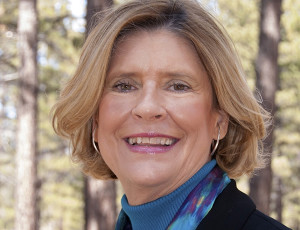
Kindred Murillo is Lake Tahoe Community College's fourth president, having been hired in 2011. Jim Duke served form 1974-90; Guy lease 1990-2007, and Paul Kilpatrick 2008-10.

Kindred Murillo is Lake Tahoe Community College’s fourth president, having been hired in 2011.
Jim Duke served from 1974-90; Guy lease 1990-2007, and Paul Killpatrick 2008-10.

She doesn’t have a solid end date, which gives the board flexibility and the potential for the college to transition from one president to the next with some overlap. At the earliest she will leave June 30, the latest is Feb. 1, 2017.

If the board doesn’t have someone on board by then, an interim president will be hired from outside the college, board President Fritz Wenck said.

The college board spent 90 minutes Jan. 19 discussing what happens next in finding the 42-year-old institution’s fifth president. A search firm will be hired and from there a nationwide search will begin.

What exactly the board wants in the next leader will be discussed in greater detail in closed session at the Jan. 26 meeting. The next president will oversee the spending of the bulk of the bond money that voters approved in 2014 as well as the upcoming accreditation process.

“We are buckling up to try to do the best we can with a situation that is very unhappy for us,” Wenck told Lake Tahoe News. “She is an outstanding president and none of us wants to see her go.” But he recognizes that her health must come first.

For Murillo, she is most proud of having brought the college to a point of fiscal solvency, with a plan for the college’s future. This includes having identified issues with the facilities, as well as technological shortfalls.

“My hallmark is the fiscal plan so the college is here for the community and the future,” Murillo said.

She spearheaded the $55 million facilities bond. Wenck gave her a ton of credit for that, admitting it’s something he didn’t think would come to fruition.

Murillo does have one major goal left – the one set for herself and the college at the onset of her tenure here – to have LTCC be a four-year college.

With local resident Lisa Maloff donating more than $5 million for a university center, Murillo’s goal is on the path to completion.

“To make sure there is four-year education in South Lake Tahoe is the last thing to complete,” Murillo said. She is working hard to have one or two universities lined up by the end of this fiscal year.



Search for missing ski instructor suspended

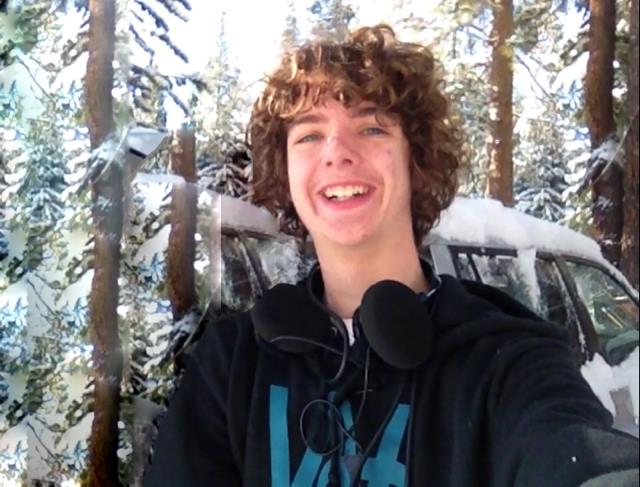
The search for missing Sugar Bowl ski instructor Carson May will not continue beyond Jan. 19.

The 23-year-old from Davis was last seen Jan. 15 skiing in white-out conditions on the back side of the resort. He was not working at the time. He was reported missing the next day.

Carson May

Carson May

This was May’s third year working at Sugar Bowl; he had been a season pass holder prior to that.

“Conditions during the five days of searching have been treacherous due to frequent heavy snow and the associated risks that high avalanche danger poses to the many search and rescue volunteers,” Placer County sheriff’s deputies said in a release.

It was noted if any new information becomes available and conditions allow, additional searches are possible.

— Lake Tahoe News staff report


Passenger dies after accident near Glenbrook

A Los Angeles man died from injuries he sustained Jan. 16 in a two-vehicle accident near Glenbrook.

Aquiles Molero, 36, was a passenger in a vehicle that drifted across the center lane of Highway 50 and was then struck by oncoming traffic.

Nevada Highway Patrol officers said a 2009 Toyota Corolla driven by Mexican national Carlos Ortega Gomez was going east on the highway about 9:40pm, crossed the centerline and began to rotate. It spun into the path of a Subaru Impreza heading west. The Subaru, driven by Virgilio Ballesteros, 59, of Carson City, struck the right side of the Corolla.

Neither driver was injured. All occupants were wearing seat belts.

The highway was wet and icy at the time of the collision.

— Lake Tahoe News staff report


Calif. farmers brace for water shortage despite El Niño

By Scott Smith, AP

FRESNO — Farmers in the fertile San Joaquin Valley are bracing to receive no irrigation water from a federal system of reservoirs and canals for a third consecutive year and looking to El Nino to produce the very wet winter they need.

The year kicked off with heavy rains and an above-average snowpack in the Sierra Nevada. The El Nino — a global weather system associated with wet winters in California — may play out nationwide through late spring or beyond, officials at the National Oceanic and Atmospheric Administration say.

While many are celebrating a break to the long dry spell, however, the four driest years on record for California have left their mark, and experts say it will take time for the parched state to recover.

“We need a wet winter this winter and next and the following winter probably to get us anywhere close to equilibrium,” said Dave Kranz, a spokesman for the California Farm Bureau Federation.

State water managers say California’s snowpack needs to be at 150 percent of normal on April 1 to signal an end to drought. Friday it was at 110 percent, according to the Department of Water Resources’ statewide electronic reading.

Lake Shasta, the state’s largest reservoir, remains at half of its historical average for this time of year. Other major reservoirs in Oroville and Folsom that collect and store rain and snowmelt had reached or came close to historical low levels before the winter storms hit.

The lack of surface water supplies for irrigation during the drought has forced many farmers to use groundwater to keep their crops alive, drawing down wells and leading many to run dry.

Westlands Water District, which relies on water from the U.S. Bureau of Reclamation, has warned hundreds of farms it serves in the San Joaquin Valley that they may not be receiving any irrigation water yet again this year, said district spokeswoman Gayle Holman.

Westlands is the nation’s largest supplier of irrigation water, and for the last two years, the bureau’s initial allocation was for zero percent of the district’s contracted amount. It remained at zero throughout both years.

Holman said that this stormy winter has raised hope that in the spring they’ll receive some federal water, even if officials at first announce that there’s none available. Holman said that by that time it may be too late.

“The need for that water is now,” she said, adding that any federal water sent to them early in the year would be stored in reservoirs for use when the weather warms and the growing seasons begins. “That’s why the timing is so critical.”

Federal officials say it is too early now to know how much water will be available. California’s wet season is just underway. The bureau is monitoring the snowpack, rainfall, reservoir levels and other factors before saying how much water it will release to farmers and other users.

That announcement typically comes in late February, said bureau spokesman Louis Moore.

The Water Resources Department, which also manages part of California’s vast water system, said in early December that it anticipated releasing 10 percent of expected supplies this year — half of the last year’s allocation.

The state’s figure could also change, depending on the amount of precipitation that falls in the next several months, officials said.

San Joaquin Valley farmer Shawn Coburn, who grows 1,500 acres of almonds, pistachios and tomatoes along the San Joaquin River near Firebaugh, said the rain has become an exciting event.

On a recent stormy night, Coburn was up at 3am watching satellite images of clouds moving over California. He exchanged text messages with another farmer on the other side of the valley, alerting each other when raindrops started falling.

But Coburn relies in part on federal water supplies, and he said officials have repeatedly warned farmers like him that they should expect no irrigation water. He may leave his tomato fields unplanted this year, saving his limited water to keep his trees alive.

“We may never recover,” said Coburn, who also blames environmental regulations designed to protect endangered fish for depriving farmers of water. “This may be the long death spiral.”

Lester Snow, executive director of the California Water Foundation, said the drought has exposed a weakness in the state’s water management system built 60 or more years ago.

The amount of land farmers now cultivate and the number of people living in the state have both dramatically increased since state and federal officials built California’s massive water system.

Yet Snow said the state hasn’t adequately invested in modernizing it, such as finding ways to capture storm water runoff, recycle water, store and recharge depleted groundwater.

“We’re not going back to the good old days,” said Snow, a former secretary of the California Natural Resources Agency. “We’ve reached a new normal in volatility, and we need to adapt to that.”


2015 wildfires burned a record 10.1 mil. acres

By Gloria Dickie, High Country News

The summer of 2015 was unlike anything most career firefighters had ever seen. Across the United States, fires erupted not only in dry woodlands, but also in grasslands, rainforests, and tundra, ignited by lightning strikes and careless campers.

Flames dripped from lichen-covered trees in the Pacific Northwest, and in Alaska, ate into permafrost. U.S. military personnel were called in to battle the ferocious blazes across the West — as were Canadians, Australians, and New Zealanders.

By year’s end, wildfires would consume more than 10.1 million acres of land in the U.S., destroying 4,500 homes and taking the lives of 13 wildland firefighters. Fighting the blazes cost an unprecedented $2.6 billion, the majority spent in the West.

“While the news that more than 10 million acres burned is terrible, it’s not shocking, and it is probable that records will continue to be broken,” said Secretary of Agriculture Tom Vilsack in a press release.

Read the whole story 


Mistaken EDSO Facebook post has family fearful

By Steve Large, CBS-13

An El Dorado County father says he was just trying to do what any good dad would do, but instead he was treated like a common criminal.

What bothers Vincent Gatica more is his license plate was posted on Facebook by law enforcement as if he were a common criminal.

Gatica says he has a great deal of respect for law enforcement, but says the El Dorado County Sheriff’s Department may have put his family in danger when it posted his license plate as part of an alert in a reported attempted abduction.

A sheriff’s department spokesperson offered no apologies for the Facebook post, writing, “Priority one of the El Dorado County Sheriff’s Office is the protection of our citizens and our community. When dealing with the circumstances we were faced with this past Friday, we will always error (sic) on the side of caution for the potential victim.”

Read the whole story


LT Hard Rock making inroads to be viable

Lake Tahoe Hard Rock introduced outdoor music on New Year's Eve. Photo/LTN

Lake Tahoe Hard Rock introduced outdoor music on New Year’s Eve. Photo/LTN

By Kathryn Reed

A year ago this time the hype surrounding the opening of Lake Tahoe Hard Rock was palpable. The chaos inside was under wraps. It was quite a feat to actually have the doors open to the public on Jan. 28. Finishing touches were still taking place right up until the last minute.

It certainly has not been the year owners Jon and David Park envisioned. The brothers borrowed $60 million to turn the dilapidated, outdated Horizon hotel-casino into what they believed would be the premier property in Stateline. They hired Warner Hospitality to handle the day-to-day operations, which included Don Marrandino as the general manager.

Marrandino was gone by early March and Warner was fired in October.

Lawsuits are lingering. One is between the Parks and SMC Contracting, the firm that did much of the remodel. The other is between the Parks and Warner.

The pool at the Hard Rock is an issue still to be resolved. Photo/LTN file

The pool at the Hard Rock is an issue still to be resolved. Photo/LTN file

It wasn’t long before the employees were jumping ship or being forced out. The property was in shambles last summer.

Fast-forward to today and things still aren’t perfect, but they are a lot better.

An employee who spoke with Lake Tahoe News last summer about how horrible the place was is still at Hard Rock. “Things are going much better,” he said, but he still wanted to remain anonymous. “We are transitioning. Warner leaving was a blessing. That is where I had most of my complaints and issues. Things didn’t get like this overnight. Warner dug quite a hole.”

Since October it has been up to casino veterans Jim Roets and Rick Stevens to provide stability, order and a sense of leadership. Their 90-day agreement is nearing the end.

What the future holds remains to be seen. Management companies have been on property assessing the Hard Rock. Paragon Gaming is believed to be at the top of the list of contenders. They, like Warner, are based in Las Vegas.

Hiring a general manager and human resources director were two of the things Roets and Stevens were tasked with. Originally the plan was to get a GM who understood the Tahoe market and not have an outside company like before. No one would speak to why there has been a change in philosophy.

The casino has been busier of late compared to August when this picture was taken at the height of the turmoil. Photo/LTN file

The casino has been busier of late compared to August when this picture was taken at the height of the turmoil. Photo/LTN file

An HR director has been hired as well as others for that department.

“They are handling all of human relations in a much more effective manner than ever before. We’ve augmented some of our food and beverage staff,” Roets told Lake Tahoe News. “I find in general the employees here are feeling good about being here and have some optimism that we are doing things right.”

A key position – director of non-gaming operations – is now vacant. Corinna Osborne has taken a job with Park Heritage, the parent company of the Park brothers based in Minden. She is vice president of business development and special projects.

Until her job is filled in Tahoe she will remain an integral part of the hotel-casino.

“When we made the shift back in October it was a positive move for the property and community,” Osborne told Lake Tahoe News. “I’m definitely not touting the company line. It’s something I believe.”

She noted, though, that it takes time to make all the necessary changes.

Some of those changes may not be able to be made soon because it is 50-year-old building. It has an old heating and air conditioning system. Employees and guests have noticed this. The casino floor often runs hot, though there was a short span when it was cold and employees wanted to be wearing more clothing, but were denied.

When rooms are warm this time of year it’s not possible to kick in the A/C.

There were issues over the holidays with the hot water in some rooms. Hotel officials believe that has been resolved permanently.

A good sign is weekend nights are filling up. And when the gaming numbers came out for November it was the first time in months that the Stateline casinos posted year-over-year gains. It’s too soon to know if this is a trend or an anomaly.

The ski season, Roets said, has been good for the hotel-casino. Hard Rock partnered with Powderhouse ski shop, which opened a retail location on property for hotel guests to easily access equipment.

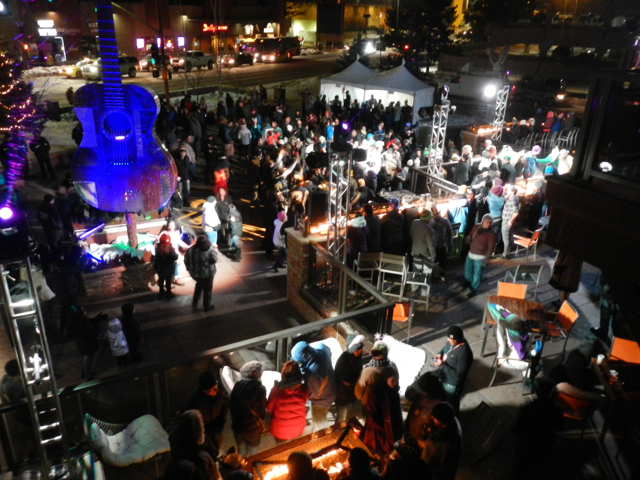
On New Year’s Eve the casino had music out front, with crowds dancing to stay warm.

“People want and expect a countdown. We added that. It was received better than we could have imagined,” Roets said.


Colo. pot legalization appears to be a good thing

By Art Way, AlterNet

More than three years have passed since Colorado residents voted to legalize marijuana, which immediately allowed adults to possess and cultivate limited amounts of marijuana. This past New Year’s Day marked the two year anniversary of adults being able to legally buy marijuana in Colorado.

The policy is still in its formative stage, but the first year after marijuana sales started in Colorado went very well and we continue to see the good shape of things to come.

The destruction imagined by opponents of legalization in 2012 never came true and is unlikely to materialize.  Public safety benchmarks are under scrutiny in a manner never seen under prohibition and there is no real cause for panic in the foreseeable future.

In short, the current state of legalization is more reflective of the world imagined by proponents – legalization works.

Read the whole story


Eagles co-founder Glenn Frey dies

By Hillel Italie, AP

NEW YORK — Glenn Frey, who co-founded the Eagles and with Don Henley became one of history’s most successful songwriting teams with such hits as “Hotel California” and “Life in the Fast Lane,” has died.

Frey, who was 67, died of complications from rheumatoid arthritis, acute ulcerative colitis and pneumonia, the band said on its website. He died on Monday in New York. He had fought the ailments for the past several weeks, the band said.

“The Frey family would like to thank everyone who joined Glenn to fight this fight and hoped and prayed for his recovery,” a statement on the band’s website said.

Glenn Frey with the Eagles at Stateline in 2014. Photo/LTN file

Glenn Frey with the Eagles at Stateline in 2014. Photo/LTN file

Guitarist Frey and drummer Henley formed the Eagles in Los Angeles in the early 1970s, along with guitarist Bernie Leadon and bassist Randy Meisner. They would become a top act over the next decade, embodying the melodic California sound.

The Eagles last played in Lake Tahoe in summer 2014 as part of the Harveys Outdoor Concert Series. They played two sold-out shows.

An Eagles greatest hits collection from the mid-1970s and “Hotel California” are among the best-selling albums in history.

Frey was born in Detroit and was raised in its suburbs. His solo hits include “The Heat Is On” and “Smuggler’s Blues.”

Frey was lead vocalist on the Eagles’ breakthrough hit, “Take It Easy,” a song mostly written by Jackson Browne that came out in 1972. His other showcases included “Peaceful Easy Feeling,” ”Already Gone” and “New Kid in Town.”

The Eagles split up in 1980 but reunited in 1994 and were one of the world’s most popular concert acts. The band, which for years was made up of Frey, Henley, Joe Walsh and Timothy B. Schmit, was supposed to have been honored at the Kennedy Center last month. But the appearance was postponed because of Frey’s health problems.

Frey, known for his oversized jaw, big grin and blunt personality, loved music, girls and the rock ‘n’ roll life. He would meet up with Henley, Meisner and Leadon while all were trying to catch on in the Los Angeles music scene, and for a time the four backed Linda Ronstadt. They also befriended such other Los Angeles-based musicians as Browne and J.D. Souther, who would collaborate on “New Kid in Town” and other Eagles songs.

They harmonized memorably on stage and on record but fought often otherwise. Leadon and Meisner departed after run-ins with Frey, and guitarist Don Felder, who had joined the group in 1974, ended up in legal action with the Eagles.

Frey and Henley also became estranged for years, their breach a key reason the band stayed apart in the 1980s. Henley had vowed the Eagles would reunite only when “hell freezes over,” which became the name of the 1994 album they never imagined making.

Here’s a look at some of Frey’s most memorable Eagles songs:

  • “Take It Easy”: With its glittering guitar opening and touch of country twang, “Take It Easy” was the Eagles’ first single in 1972 and became one of the band’s signature songs. It was mostly written by Jackson Browne, but Frey added a line and sings lead vocals.
  • “Tequila Sunrise”: Co-written with Henley and sang by Frey, this heartbreaking song was the first single off the band’s 1973 album, “Desperado.”
  • “One of These Nights”: Another hit written with Henley, Frey said in 2003 that “One of These Nights” was his favorite Eagles tune, calling it “a breakthrough song.” It was the title track of the band’s 1975 album and its second single.
  • “New Kid in Town:” The first single off of 1976’s “Hotel California,” ”New Kid in Town” features Frey’s lead vocals and Henley’s harmonies. They co-wrote the song with frequent collaborator J.D. Souther.
  • “Heartache Tonight”: A late ’70s-early ’80s anthem, “Heartache Tonight” appeared on the 1979 album “The Long Run” and won a Grammy Award for best rock vocal performance by a duo or group. Frey, Henley and Souther wrote the track with Bob Seger. Frey sang lead vocals.


Nev. school choice case pits GOP law against GOP law

By Sandra Chereb, Las Vegas Review-Journal 

CARSON CITY — Call it an ironic political twist of fate.

A constitutional amendment spearheaded more than a decade ago by a conservative Republican to take politics out of Nevada education funding is now at the heart of a legal battle that could upend a conservative GOP ideal — public funding for school choice.

The Education First Initiative was launched by then-Rep. Jim Gibbons, R-Nev., and Dawn Gibbons, his wife and state assemblywoman at the time, following the debacle of the 2003 Legislature and epic fight over school funding.

Passed overwhelmingly by voters in 2004 and 2006, the amendment requires the state Legislature to fund K-12 public education before any other part of the state budget.

Fast forward 10 years to this month: Carson City District Judge James Wilson cited a key provision of that amendment when he issued an injunction temporarily blocking Nevada’s new education savings accounts intended to allow parents to use state money to pay for tuition at private or religious schools.

Read the whole storynevada