By Joann Eisenbrandt
PLACERVILLE – Accountability. Integrity. Service excellence. Collaboration. These are the four organization core values that form the foundation of the three-year strategic plan El Dorado County is in the process of developing.
Work on the plan began in September 2014, when the Board of Supervisors had its first special workshop to discuss the county’s mission, vision and value statements, and establish a framework for a county strategic plan. The county had attempted to craft strategic plans in the past, most recently in 2007 and 2010, but they were never fully implemented.
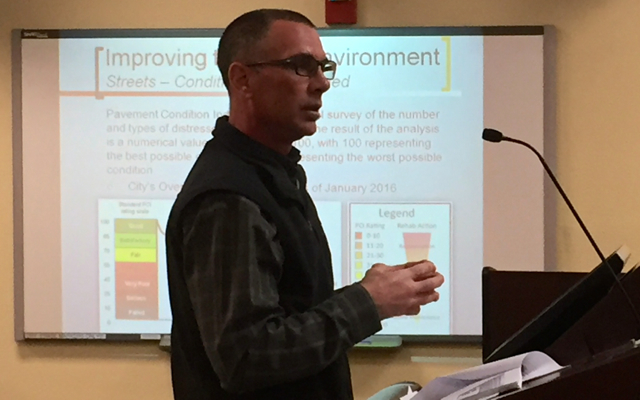
Sherman Fox, the county’s training and organizational development specialist, has been facilitating the strategic plan process since December 2014. He told Lake Tahoe News, “My role is the process. I’m the keeper of the document. But this wouldn’t have happened unless the board all wanted this. I believe we can have the change that everybody wants. This county wants to go in a different direction. We just have to develop the process to get there.”
Since then, the strategic plan has been taking shape. The county’s vision statement and mission statement were reviewed and revised, and strategic plan goals were developed and adopted by the board in March 2015. Five “goal-setting” groups were formed, comprised of members of the board, county department heads and other staff, members of other community organizations and members of the public. No one was assigned to a specific group, but all chose the group they wanted to serve on. Each group focused on one of the five defined county strategic goals: healthy communities, economic development, public safety, infrastructure, and good county governance. The groups then began developing objectives and measures to achieve these goals. So far, they have focused on “macro” measures at the board level, but eventually “micro” measures will follow from these with specific strategies and implementation plans at the department and staff levels.
Fox sees a difference between the current process and past failed attempts. “The county has attempted to develop a strategic plan other times, but this is the first time where we have the majority of the county leadership and public engaged in the process. It’s important to have as many major stakeholders involved as possible. It’s hard to implement a plan if you don’t have majority buy-in.”
But defining “majority buy-in” can be tricky. The views of government officials and prominent community leaders on key county issues are well known. They are visibly and vocally involved in the decision-making process, whether as proponents or opponents. Finding out what the “ordinary” El Dorado County resident believes can be more elusive.
In mid-summer 2015, Fox explained, the strategic plan process came to a halt for this very reason. In order to gain broad-based input from residents on where they thought El Dorado County should go from here the county conducted a citizen engagement survey. An outside consultant, the Kiely Group, was hired to create the survey and then tabulate the results. It was posted on the county website, the city of Placerville website, in local newspapers and as a link from Facebook sites of relevant community groups. Town hall meetings were conducted by each supervisor to discuss the survey. Hard copies of the survey were also distributed throughout county communities.
Four focus groups were created and met in late 2015 in Placerville, Cameron Park and South Lake Tahoe. The goal was to get more insight into some key questions such as, “What is meant by rural when citizens refer to ‘keeping the county rural?’” “How will we know El Dorado isn’t run by a ‘Good Ol’ Boy’ network?” “What evidence is needed to show that the Tahoe basin is included in county government planning/decisions/services?” Focus group findings were included in the final survey report.
Of El Dorado County’s 183,087 residents as measured by the 2010 census, 2,228 responded to the survey. The 99-page final report includes quantitative data on the demographics of who responded, where they lived, their age, employment status and so on. It also included qualitative or narrative data where comments reflecting priorities and concerns of respondents in each of the five goal areas were recorded as well as their overall view of service priorities, how much and where they wanted the county to grow, and how well they felt county government reflected their values.
At the Jan 26, Board of Supervisors meeting, Kiely Group CEO Laree Kiely presented an overview of the survey’s purpose and results. As the survey’s executive summary states, the objective was to gather information about citizens’ thoughts and priorities to include in the strategic plan, as well as to test the most effective ways to reach out and engage citizens. “We did accomplish this,” Kiely told the board.
Kiely said the survey response rate “was impressive,” and explained that this was a representative sample, where the percentage of respondents in each category, such as age, match the actual percentage of that same category as shown in county census data. Random sampling, she noted, is not used because there is a bias in who answers and it is not a representative sample of the population demographics. The survey, Kiely told the board, has a confidence level of 95-99 percent with a 3 percent margin of error.
Ninety-five percent of respondents lived in El Dorado County full time, 62 percent were female, more than 68 percent were over the age of 50, most respondents were from Placerville and El Dorado Hills, a little more than half worked within county boundaries, and 7.33 percent considered themselves “actively” involved with county issues.
At the meeting, several questions about the validity of the survey’s results were brought up. First, was what some termed a disproportionate amount of responses from government employees. Of the 2,228 respondents, 435 were government employees. While Kiely said the survey didn’t ask respondents whether they were county, city, or federal government employees, the county had sent out two emails to its employees with a direct link to the survey. District 3 Supervisor Brian Veerkamp reminded the board, “Remember, all those government workers live here and the issues are relevant to them too.” Kiely said her group would pull out that data to check and see if it “skewed” the survey in any way.
Another concern was the fact that some people took the survey more than once, getting around the built-in IP address filtering by responding from different computers. Kiely said this would have had to have happened in very large numbers to affect the validity of the results. She added that they will go back and address this issue, but added it may also indicate the surfacing of another issue—a trust issue. District 5 Supervisor Sue Novasel agreed, “There is a general lack of trust in the county and it needs to be addressed at a very high level.”
Survey results appear to bear this out. When asked how El Dorado County government reflects their values with regard to accountability, accessibility, transparency, integrity and trustworthiness, respondents generally gave the county low marks. They were asked to “grade” the degree to which the county lived up to these values on a scale ranging from “strongly agree” to “strongly disagree.” The number of survey takers who together answered either “disagree” or “strongly disagree” for each category was: Accountability 548; Accessibility 396; Transparency 462; Integrity 611; and Trustworthiness 645. For each of the five categories, approximately 500 respondents indicated they were “neutral.”
Kiely noted that narrative data may be more important than the demographics. The survey included more than 40 pages of verbatim responses to questions. District 2 Supervisor Shiva Frentzen said she had read all of the comments, but also wanted to know what county districts they were coming from. This connection does not appear in the survey report. Kiely noted that the raw data belongs to the county and this can be pulled out.
District 4 Supervisor Michael Ranalli added, “There is much more to this exercise than science … it’s our willingness to reach out to the public and ask them … it’s about our willingness to learn what they want.”
Respondents identified the county’s top challenges as growth/development and roads/traffic, followed by water/drought, business development and jobs. Across all age groups, the majority wanted “moderate growth” in new housing and business development, with more growth preferred by the younger age groups. As the survey noted, “The people appear to be accepting to some growth as long as it is done in alignment with the resources and values of the county.” Very few respondents knew what supervisorial district they lived in or all the services the county provides. Only 200 respondents self-identified their district, with the rest being identified by the consultant from the communities they said they lived in.
Novasel spoke with Lake Tahoe News about the importance to residents in the Tahoe basin that they are included in county decision-making. “I did a town hall meeting,” she said, “and we went over the survey and I think the biggest thing that struck me is how difficult it is because the county seat is so far away for the county to be responsive to the needs of Tahoe residents. It’s my job to make sure they are responsive. The basin has special needs and they are often different than those of the West Slope. For example, we have TRPA and that changes the dynamics. We need better two-way communication. My hope is that the county will consider hiring a public information officer during the next round of budget talks.”
When asked in a survey question what the county would look like if it functioned at its most effective and efficient levels, representative responses included:
“Ask the residents their opinions and then follow them.” “Easy to contact for information, questions and requests.” “More money spent on roads and replacing narrow bridges.” “A better flow of information and more transparency.” “A richly diverse community that is healthy, sustainable, economically viable, resource-rich with a highly engaged population that is aware of and involved with making these things happen.” “Good health services to meet the needs of youth, general population and the elderly.”
“El Dorado County needs a balanced, well-thought-out long range plan that acknowledges constraints (water, jobs); preservation of a rural lifestyle is important. El Dorado County is on the brink of making decisions that will shape the face of the county; it’s important to get this right.” “The vocal minority should not be considered more in decisions than the silent majority.”
The entire Citizen Engagement Survey including all the verbatim responses can be found online. www.edcgov.us.
On Feb. 2, the board had a workshop where each of the five “goal-setting” teams gave a presentation on their work to date on their specific strategic goal and explained the objectives and macro measures identified for reaching it. The discussion emphasized that none of these goals could be reached in isolation and that there were many overlapping areas where cooperation and coordination among county departments and community organizations will be key.
Sherman Fox coordinated the discussion and asked those present, “What does it take for El Dorado County to adopt a strategic plan and live by it and allow it to provide guidance?” Everyone agreed that previous strategic plans had failed because there was no firm commitment to follow-through. Veerkamp pointed to the fact that, “In the past, the county hasn’t used the strategic plan document as an accountability document.” Supervisor Ranalli added, “We are accountable by asking how what we consider relates to the priorities of the strategic plan … (it) also says what things are not a priority, so we don’t get distracted and get into the weeds.”
Kris Payne, a retired county engineer and member of the Infrastructure team, said he hadn’t, “seen this level of team building in my 30 years of county employment.”
The next step in the strategic plan process will occur in March or early April. There will be an all-day event at the county government center in Placerville. The five goal-setting teams will be assembled in individual rooms and each supervisor will have a 45-minute session with each team to ask questions and get information. Members of the public will also be invited to attend. A second day will be set aside for the board to meet in a workshop format and discuss what they’ve learned, and go over any additional information provided. If the board is fully satisfied with the plan’s final design, it will then be formally adopted. The goal is to have an adopted strategic plan in place before the county begins budget talks later in the spring so that the plan’s priorities can be transferred over into actual budget allocations.
None of the participants at Tuesday’s workshop expects change to happen overnight. They see it as a longer, five- to 10-year process. This latest strategic plan could meet the fate of previous ones and gather dust on some obscure county shelf. Or it could be the starting point for improved internal county communication, increased citizen input and an enhanced level of confidence that El Dorado County is moving forward in the direction desired by those who live here.