Lawmakers: Calif. should help pay for earthquake early warnings

By Rosanna Xia and Rong-Gong Lin II, Los Angeles Times

Hours after a magnitude 6.4 earthquake destroyed buildings and took lives in Taiwan, four state lawmakers said they want California to help fund an earthquake early warning system that has been stalled by a lack of money.

“There’s no valid reason not to make this relatively small investment in an early warning system that has the potential to save the lives of Californians,” state Sen. Jerry Hill (D-San Mateo) said in a statement. “I urge my colleagues and the governor to join us in fulfilling our primary responsibility of protecting the public.”

The voices of support that emerged for the warning system Friday mark a change in tone at the state Capitol, where outspoken backers of the system have been few in recent years. On Tuesday, H.D. Palmer, deputy director for the Department of Finance, said that California’s policy is to not use money from the general fund for the early warning system.

Read the whole story


Legislators call for overhaul of Calif.’s utility regulator

By Melanie Mason and Jeff McDonald, Los Angeles Times

State legislators are calling for a major overhaul of California’s utilities regulator by striking it from the state Constitution and reassigning its sprawling portfolio in the wake of a series of controversies, including the natural gas leak in Aliso Canyon.

Assemblyman Mike Gatto, D-Los Angeles, said his measure would decentralize the California Public Utilities Commission’s oversight of myriad utilities, including electricity, railroad safety and ride-sharing companies such as Uber and Lyft.

“After hearing about how the clear warnings of the impending Aliso Canyon gas leak were lost in the shuffle, I concluded that we need to rethink the way we regulate utilities in the state,” Gatto said at a news conference Wednesday in Sacramento. “It’s the opposite of too big to fail. Our concern is that the CPUC is too big to succeed.”

Read the whole story


Middle class no longer dominates in the U.S.

By Tami Luhby, CNN

The once-strong middle class no longer dominates America.

Middle class Americans now comprise less than half, or 49.9 percent, of the nation’s population, down from 61 percent in 1971, according to a Pew Research Center report. For Pew, middle class Americans live in households earning between two-thirds to two times the nation’s median income. In 2014, that ranged from $41,900 to $125,600 for a three-person household.

For decades, the middle class had been the core of the country. A healthy middle class kept America strong, experts and politicians said.

But more recently, these residents have struggled under stagnating wages and soaring costs. Presidential candidates on both sides of the political aisle are campaigning on ways to bolster the nation’s middle class and increase opportunities to climb the economic ladder.

Read the whole story


Lawsuit filed in SLT police officer shooting

By Kathryn Reed

After months of threatening to sue the city of South Lake Tahoe, the parents of the man who was fatally shot by a police officer have done so.

Attorney Alan Laskin filed the wrongful death and civil rights lawsuit in federal court in Sacramento. His office closes at 3pm on Fridays, so he was not available for comment.

Kris Jackson

Kris Jackson

A single bullet fired by Officer Josh Klinge killed Kris Jackson, 22, of Sacramento. Jackson was not armed. Officers were called to the Tahoe Hacienda Motel on Lake Tahoe Boulevard at 2:40am June 15, 2015, because of reports of a woman who was screaming and crying.

Klinge remains on paid administrative leave.

El Dorado County District Attorney’s Office is in charge of the investigation. The report was expected months ago.

The lawsuit contends the city does not properly train its officers, therefore the killing was wrongful.

City Manager Nancy Kerry told Lake Tahoe News, “The city makes no comment on any pending litigation.”


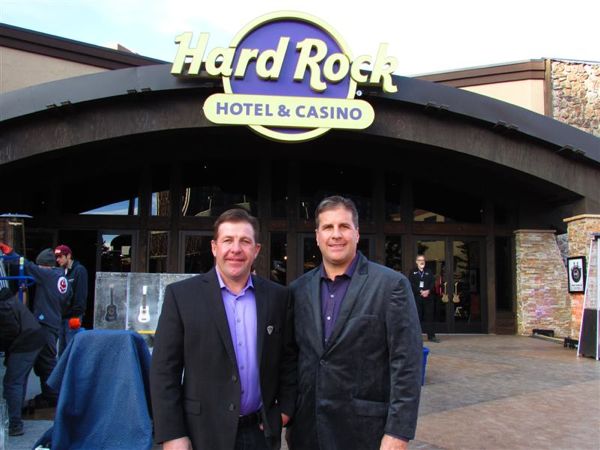
LT Hard Rock owners selling 50% stake

By Kathryn Reed

Lake Tahoe Hard Rock owners are selling half of their interest in the Stateline property to an organization out of Las Vegas.

Representatives were before the Gaming Control Board this week regarding money issues, which comes days after having another lawsuit filed against the troubled Stateline casino.

Brothers David and Jon Park are struggling to make Lake Tahoe Hard Rock a viable entity. Photo/Denise Haerr

Brothers David and Jon Park are struggling to make Lake Tahoe Hard Rock a viable entity. Photo/Denise Haerr

Tentative approval was given to Neva One, the parent company of the local Hard Rock, for a waiver on the escrow account and to enter an agreement with Paragon HRLT to manage the property. The final decision is expected Feb. 18 when the Gaming Commission meets in Las Vegas.

Neva One was formed by brothers Jon and David Park with the sole purpose of being the parent company of the Lake Tahoe Hard Rock. Park Heritage is Neva One’s parent company. After a $60 million renovation, the old Horizon hotel-casino reopened Jan. 28, 2015, as the Hard Rock. There have only been troubles since then.

The escrow item pertains to the Parks selling 50 percent of the Hard Rock to an affiliate of Paragon. The exact name of the affiliate was never stated at the Feb. 3 meeting. A Gaming Control Board official told Lake Tahoe News the entity has been licensed before.

Only percentages were discussed, not dollar amounts at the hearing.

The Gaming Control Board requires escrow accounts when there is a transfer of interest and the board or commission has not yet acted. Neva One was granted a waiver for this because of the board’s familiarity with the new partner.

During Wednesday’s discussion, which lasted about 30 minutes, it was noted that Park Heritage has infused more cash to keep the hotel-casino afloat. The exact amount was not stated. The money from Paragon will assist with paying down the debt and resolving outstanding litigation issues.

The pool is has not had water since last summer. Photo/LTN

The pool is has not had water since last summer. Photo/LTN

It was also brought up at the hearing that the leak in the 200,000-gallon pool must be resolved because that water would be used by Tahoe Douglas firefighters if there were a fire. Without the water, permits could be revoked and the hotel-casino shutdown.

A condition of approval was made at the Feb. 3 meeting stating Neva One and Paragon HRLT must have a management agreement in place within 10 days.

The change in management comes in the wake of Warner Hospitality having been fired last year by the brothers. The Parks have since filed a lawsuit against Warner.

Neither brother returned a call, nor did Jim Roets who with Rick Stevens were tasked with bringing stability to the property after Warner was shown the door.

The latest lawsuit filed against the Park brothers is from Tahoe Specialty Flooring & Window Design of Tahoe City. The lawsuit filed in Douglas County District Court in Minden, where Neva One is based out of, alleges the flooring company is owed more than $68,000. Owner Coreen Serrano was not available for comment.

Still to be resolved is the $6.4 million lawsuit filed by SMC Contracting against the hotel-casino owners for failure to pay for most of the overruns associated with construction costs for the remodel. Savage & Sons, which did the plumbing at the property, has filed a lawsuit trying to recover $820,000 from Neva One.


Nevada awards $620,000 for STEM

By Jason Hidalgo, Reno Gazette-Journal

Nevada doubled down on diversification as the state awarded more than $620,000 dollars for workforce training that targets key industries, including jobs for Tesla Motors’ Gigafactory.

The Governor’s Office of Science, Innovation and Technology announced the second round of its challenge grants on Thursday, awarding six recipients a total of $626,206 for workforce training in industries geared toward science, technology, engineering and mathematics.

It’s a concept that’s also known as STEM, which is sometimes expanded as STEAM by including a focus in the arts as well. Nevada STEM industries include advanced manufacturing, energy, information technology, cyber security and agriculture. The jobs require less time for training than a four-year degree but their average wage of $50,000 is about 50 percent higher than other jobs with comparable education requirements, according to the Office of Science, Innovation and Technology.

Read the whole story


Heavenly chairlifts back in operation

By Kathryn Reed

Investigators determined that the chair that fell off the North Bowl chairlift at Heavenly Mountain Resort was the result of collar screws that attach the chair to the cable splitting and shearing in half.

“There was nothing found that pointed to why the screws failed,” Lisa Herron with the U.S. Forest Service told Lake Tahoe News.

Because the same system is used on the Boulder lift, that chair was also taken out of service to be inspected. Both lifts are now operating.

On Jan. 3 a chair on the downhill side fell from the North Bowl lift. No one was injured, but about 60 people had to be evacuated.

Resort officials would not answer whether this could have been prevented.

“At Heavenly, the safety of our guests and employees is our No. 1 priority and we maintain the highest standards of quality in terms of equipment and maintenance,” is all spokesman Coop Cooper told Lake Tahoe News.

The incident was reviewed by the Forest Service, Heavenly and two third-party inspectors – Tram Support Inc., and Gmuender Engineering, which are an engineer and a parts supplier that services these types of lifts.

They could not find a reason why the screws sheered.

The Forest Service wrote a letter to Heavenly saying bimonthly inspections of the clip and hanger head are required, as well as set other inspection time lines for the collar.


STPUD close to meeting state water cutbacks

By Kathryn Reed

Customers in South Tahoe Public Utility District have done a good job in conserving water, but cumulatively have not met the state’s 20 percent reduction goal.

This week officials announced that the restrictions would remain in effect through October. In April 2015, Gov. Jerry Brown said combined water districts in the state must reduce consumption by 25 percent from 2013, with the individual district cuts ranging from 4 to 36 percent.

STPUD started water rationing in 2007, so it was harder to make substantive inroads last year. Customers were already limited to three days a week for outdoor watering. This initially led to a usage reduction of 25 percent.

From June through December 2015 the district reduced water use by 18.4 percent from 2013 numbers. It was easier to make cuts in the summer via irrigation, whereas in the winter in Tahoe it is harder to find ways to lessen what comes out of the spigot.

The change announced Feb. 2 gives the district a 3 percent credit for a drier climate than the coastal areas during the summer. This in turns lowers the target water use reduction compared to 2013 to 17 percent for 2016 instead of 20 percent.

Statewide, consumers have reduced water use by 25.5 percent since June. This equates to almost 1.1 million acre-feet of water saved. The goal was to save 1.2 million acre-feet through the end of this month.

In December, the statewide conservation rate was 18.3 percent, down from 20.4 percent in November, compared to the same months in 2013.

Districts can face fines if they don’t meet the state rules. To date, South Tahoe PUD has not been fined, but a warning letter has been received from the state.

“Since cumulatively we’re within a couple percent, the letter was more of an urging to step up our efforts. Since most of the suggestions had to do with outside watering, for us, it was rather meaningless,” Richard Solbrig, STPUD general manager, told Lake Tahoe News. “Since we’re trying, the next letter may require us to provide more detail on exactly what conservation efforts we have been pursuing.”

Removing sod is one way South Tahoe PUD customers are saving water. Photo/LTN

Removing sod is one way South Tahoe PUD customers are saving water. Photo/LTN

Month-by-month STPUD data from 2015 compared to 2013:

·      June – 24.6 percent reduction

·      July – 27. 5 percent reduction

·      August – 21 percent reduction

·      September – 15.8 percent reduction

·      October – 7.3 percent reduction

·      November – 3.5 percent increase

·      December – 14.4 percent reduction.

The increased use in water in November was from Heavenly Mountain Resort’s snowmaking, according to Solbrig. December tapered off because of the cold temps not requiring as much of the fake stuff.

The district also has the authority to fine residential and commercial customers. In 2015, STPUD fined Safeway and Shell gas station for excessive water use.



Free tuition proposed at Calif. community colleges

By Mike Luery, KCRA-TV

There’s a big push in California to offer free tuition to all community college students in the state.

But offering free tuition for California’s more than 1 million full-time community college students is expensive.

California community college tuition fees are in the $1,100 range per year — among the lowest in the nation. But, adding in housing, transportation and books can bring the bill to $18,000 or more.

Read the whole story


Group wants to break NV Energy’s monopoly

By Daniel Rothberg, Las Vegas Sun

A group filed a ballot measure Feb. 3 that would create a competitive electricity market in Nevada to effectively end NV Energy’s monopoly through a constitutional amendment.

The amendment would require the Legislature to create an open market for purchasing electricity and prohibit monopolies, according to language released by the Secretary of State’s Office. Under the current structure, NV Energy operates as a regulated monopoly.

The measure is being supported by a newly formed political action committee, Nevadans for Affordable, Clean Energy Choices. Its backers have not yet identified themselves.

Read the whole story