Tesla urges Nev. regulators to nix solar rate hike

By Daniel Rothberg, Las Vegas Sun

An executive for Tesla Motors is calling on the Public Utilities Commission of Nevada to reconsider a decision that increased the fixed service fee solar customers pay NV Energy.

Tesla’s statement comes at a sensitive time, with the three-member regulatory commission scheduled on Friday to revisit a controversial decision to increase bills for solar customers.

In a letter filed with the commission Tuesday, the company’s vice president of business development said the higher fee was an impediment to developing an electricity grid that used on-site generation technologies, such as rooftop solar panels and home storage.

Read the whole story


TRPA attempting to get handle on commodities to foster redevelopment throughout basin

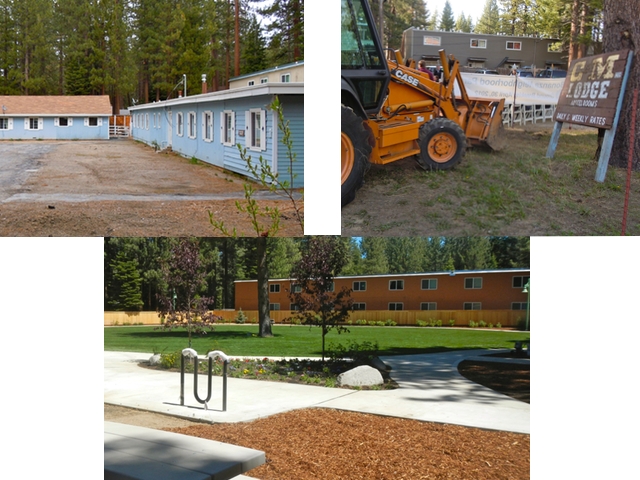
In order for the Edgewood Lodge to have enough tourist accommodation units the company bought an old hotel in South Lake Tahoe. A stipulation was for Edgewood Companies to turn the property into a park. Photos/LTN

In order for the Lodge at Edgewood to have enough tourist accommodation units the company bought an old hotel in South Lake Tahoe. A stipulation was for Edgewood Companies to turn the property into a park. Photos/LTN

By Kathryn Reed

A 30-year-old policy that is unique to Lake Tahoe is proving its ineffectiveness by having a pronounced detrimental impact in the basin.

The Tahoe Regional Planning Agency created a policy where commercial floor area (CFA) and tourist accommodation units (TAUs) have a value unto themselves. The purpose was to curtail development. It worked. Some might say a little too well because it also curbed redevelopment that might bring environmental and economic gains.

With hotel units essentially having a price tag, it means a lodging property owner wants more for the parcel than the appraised value. Perspective buyers aren’t likely going to pay that added cost. That leaves many dilapidated hotels scattered about the basin, but mostly in South Lake Tahoe. And with there being a limited number of TAUs allowed, it means places like Placer County that has so few hotels in the basin is scrambling to acquire them.

It would be up to the Governing Board to abolish this policy that stifles the free market, creates an inflated value for properties and doesn’t allow zoning to regulate development.

For now the bi-state regulatory agency is loosening the rules a bit by creating a three-year pilot program involving these commodities. The Regional Plan update that was adopted in December 2012 created bonus units based on certain criteria, mostly having to do with moving development out of sensitive areas like stream environmental zones and into town centers.

The pilot program has 80,000-square-feet of commercial floor area and 61 tourist bonus units. This means only a couple projects will likely come to fruition during the pilot. Interested parties have until March 28 to apply. The Governing Board will rank them and then decide who gets to participate in the pilot.

The program will be evaluated on an annual basis to assess its effectiveness.

“We plan to do quite a bit of monitoring to evaluate the program. We have a proposed monitoring plan that includes looking at how much SEZ is restored and how much coverage was reduced,” Jennifer Cannon, TRPA senior planner, told Lake Tahoe News. She said other criteria would also be used to assess the effectiveness of the pilot.

In 2008, the TRPA tried a different plan called the Community Enhancement Program to try to spur redevelopment. Nothing got built, though the Homewood Mountain Resort and Boulder Bay projects are still on the table. TRPA officials say the recession had a lot to do with the CEP’s not being effective. A difference with the pilot program is that there is an end date.

One of the agency’s strategic initiatives also involves looking at the commodities program to see if more substantive, long-term changes should be made.

Tom Lotshaw, spokesman for TRPA, said the initiative is designed to look at “what some of the strengths are and what some of the weaknesses are and how it can be improved so it protects the lake and facilitates the kind of redevelopment we need in our community.”

At today’s TRPA Advisory Planning Commission meeting a presentation will be made about what the findings have been from interviewing more than 50 stakeholders. The themes coming out of those discussions are: people don’t understand the system, the system needs reviewing, it doesn’t adequately support redevelopment, access to the commodities is constrained, and that it is impacting housing.

—–

Notes:

·      The APC meets Feb. 10 at 9:30am, 128 Market St., Stateline.


Vegas newspaper staff feels casino giant’s tightening grip

By Nigel Duara, Los Angeles Times

When casino mogul Sheldon Adelson quietly bought Nevada’s largest newspaper, reporters made it their mission to break the story of their new owner.

Newly energized after years of turnover and turmoil, the news staff at the Las Vegas Review-Journal furiously reported on the sale and — in a front-page editorial — promised readers that they would stand sentry to make sure the paper’s stories were fair, balanced and stripped of any possible influence from Adelson’s political and business connections.

But that full-tilt burst of self-reporting has now slowed amid a heavier hand from Adelson’s appointed leadership, and some suggest, so has the vow of being transparent.

Read the whole story


Incorporate Olympic Valley backers face state fine

Incorporate Olympic Valley PAC faces a $2,500 fine from the California Fair Political Practices Commission.

The PAC is accused of failing to file timely monthly campaign statements from July 15, 2013, to July 15, 2014.

According to legal documents, “Under the Political Reform Act, a committee that is primarily formed to support or oppose a LAFCO proposal is required to file monthly campaign statements by the 15th of each calendar month from the time of circulation of the petition begins to the time the measure is placed on the ballot, or, if not placed on the ballot, until termination.”

The full commission will hear the matter on Feb. 18. However, the settlement has been agreed to by all parties. The group could have faced a $5,000 fine.

The money will be paid to the state’s general fund.

The PAC was formed to support the incorporation of Olympic Valley, which was started in a effort to have more control over development matters in the region and to fight what they considered overdevelopment by the owners of Squaw Valley ski resort. That incorporation effort has since been disbanded.


— Lake Tahoe News staff report


Study: Public land is good for rural areas

By Krista Langlois, High Country News

For many parts of the rural West — like Oregon’s Harney County, where timber jobs dropped 70 percent between 1998 and 2013 — large swaths of public land can feel like a burden. Counties rich in public land are often at the mercy of federal land managers, so when logging, mining or ranching dries up — either because of management decisions or shifts in the market — loggers, miners and ranchers can feel powerless. Watching young people flee to cities, it’s easy to conclude that federally managed lands impede economic growth.

A study by Montana nonprofit Headwaters Economics shows that’s not necessarily the case. Overall, rural Western counties with more federal land performed noticeably better by four key economic indicators than counties with less public land.

Though economic growth in rural areas is still far surpassed by urban growth, Western rural counties with the highest share of federal lands had on average faster population, employment, personal income and per capita income growth between 1970 and 2014 than those with less public land.

Read the whole story


Panel explores why gas is so expensive in Calif.

By Alison Noon, AP

SACRAMENTO — Gouging by oil companies could be one reason California drivers pay about 76 cents more for a gallon of regular gas than motorists elsewhere in the nation, a state government panel was told Monday.

Fuel experts and consumer advocates also told the Petroleum Market Advisory Committee that a high state gas tax and more rigorous regulations have kept prices relatively high as oil prices have plunged across the nation in recent months.

Drivers in California pay more partly because of stiffer fuel blend standards to meet the state’s unique air-quality rules, speakers said at the hearing.

The panel, appointed by the California Energy Commission, is studying whether changes in state policies and laws could rein in the prices.

The average price in California for a gallon of regular gasoline was $2.50 on Monday — 76.5 cents higher than the national average, according to Gordon Schremp, a fuels adviser at the CEC Energy Assessment Division.

Committee Chairman Severin Borenstein said taxes and cleaner-burning fuel account for about 40 cents of the price difference. Witnesses split over whether the additional cost stems from price gouging by providers.

Bob van der Valk, senior editor of the Bakken Oil Business Journal, said a lack of active oil traders has opened the door to price gouging.

“We have an ill-equipped market, so it is prime to be manipulated and it is being manipulated,” van der Valk said.

Dolores Santos of the Oil Price Information Service noted that a number of fuels advisers and gas companies have left California or deactivated their businesses — increasing pricing fluctuations — since a regulatory provision of Assembly Bill 32 took effect a year ago.

Jamie Court, president of the advocacy group Consumer Watchdog, argued that oil refiners have been intentionally importing less oil and increasing exports, thereby tightening supplies in California.

Two industry associations were invited to the meeting. Their representatives did not comment during the discussion.

The committee also considered how the state could feasibly and legally require oil companies to disclose more information. The members agreed to focus on making transaction prices more transparent and publishing information more quickly at their next meeting.

Lawmakers last year held hearings on gas prices after one of the largest price swings in recent history.

State energy officials said two refineries that make up 17 percent of the state’s processing capacity went offline after a plant explosion and a labor dispute, limiting supply and driving up prices.


Vacation rental scams on the rise in Tahoe

By Ali Wolf-Fox 40

Beautiful South Lake Tahoe. With the snow-covered mountains, the panoramic views and the peace and quiet — it’s no wonder rentals are in high demand.

This season, property manager Kathy Liebhardt is busy placing tourists into homes.

Her most popular property is a multi-million dollar home near Heavenly Mountain Resort.  It rents for about $2,000 a night, and it’s rarely empty.

But Liebhardt has run into a big problem: scam artists, ripping off her business and leaving travelers high and dry.

Read the whole story


Ex-narcotics officer faces 10 years in prison

A former El Dorado County drug agent will be going to prison for at least 10 years after pleading guilty to one count of drug trafficking.

Mark Zlendick

Mark Zlendick

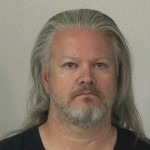
Mark Zlendick, 48, was arrested last May in Gardnerville. The initial reason deputies went to his house was for an alleged domestic dispute. He was subsequently arrested on charges of possession of a controlled substance, trafficking methamphetamine, conspiracy, and possession of paraphernalia.

He got the drugs from the evidence locker in South Lake Tahoe. At the time Zlendick was El Dorado County Sheriff’s Office’s representative on the South Lake El Dorado Narcotics Enforcement Team.

He will be sentenced April 11. According to the plea agreement, Zlendick faces 10 to 25 years in prison and a $500,000 fine.

— Lake Tahoe News staff report


Nevada caucus is easier than you think

By Brian Duggan, Reno Gazette-Journal

The Nevada Caucuses are a crucial part of the 2016 election cycle, but to some, the process can seem confusing and arcane compared to the simplicity of a paper ballot primary.

Most states use a secret ballot primary similar to the general election during the presidential nomination process, but a handful use a caucus – a system similar to a neighborhood meeting that allows voters a chance to publicly discuss the candidates and sway supporters to their side.

Nevada first gained early-state status in the 2008 cycle. The national parties wanted to expand on the Iowa Caucus and New Hampshire Primary to include a Southern and Western state. South Carolina was chosen for the South and Nevada – largely by lobbying from then-Sen. Majority Leader Harry Reid, D-Nev. – was chosen for the West.

Read the whole story


Unknown source contaminating water in SLT

Danny and Jen Lukins listen to water officials talk about PCE in the groundwater near the Y in South Lake Tahoe. Photo/LT>

Danny and Jenn Lukins of Lukins Brothers Water Co. listen to water officials talk about PCE in the groundwater near the Y in South Lake Tahoe. Photo/LTN

By Kathryn Reed

Two underground plumes of a highly toxic chemical are inching their way toward Lake Tahoe. Even though tetrachloroethylene, or PCE, was first detected in South Lake Tahoe near the Y in 1989, the source of these plumes remains a mystery.

To no avail Lahontan Regional Water Quality Control Board through a $69,000 grant from the state tried to find the source. The results were released last week at a meeting hosted by Lahontan.

The area that was tested was between Patricia Lane on the north, Fifth Street on the east, Roger Avenue on the south and 11th Street on the west. This area was chosen because it is adjacent to the affected wells. The PCE was found in the Lukins’ wells in 2014.

“There is no connection between the two plumes. This tells us the source of the PCE is farther up gradient,” said Chani Hutto, with URS, the company that did the testing. “PCE could still be in the site boundary, but deeper.”

Lahontan plans to drill deeper the next go round. Last year the 22 borings went down between 22 and 40 feet.

“No new sources of contamination were determined. That is why we are going to go deeper,” Jenn Lukins, who runs Lukins Brothers Water Co., told Lake Tahoe News.

If the source is located, the responsible party will be liable for paying for the cleanup.

“This is a communitywide issue,” Lukins said. “The next step is to plan for remediation. We need to remediate the plume out of the aquifer.”

Lukins has had to shut two of its wells down because of the contamination. In the meantime, South Tahoe Public Utility District is supplying the private company with water to make up for what it can’t produce on its own.

A Tahoe Keys well is also affected by PCE.

Lukins and the Keys water systems are building filtration units to treat their water so the inactive wells can be put back into service. Lukins hopes to put in two 3,000-foot long granulated carbon filters this year. The proposal is before the California Public Utilities Commission.

Who will pay for this remains to be seen – local ratepayers or everyone via a state grant.

California in 2008 banned new PCE machines. And all such machines are to be out of commission by 2023. However, PCE will still be able to be used.

PCE was a commonly used chemical in dry cleaning and automotive businesses. Lake Tahoe Laundry Works used to be at Y in the Raley’s center. That is a known source for PCE contamination right there and had originally been thought to be the source of the plumes below TJ Maxx and Classic Cue. In 2010 company officials said it could clean up the groundwater in four years and then monitor the situation for one. That did not happen. And while there is improvement at that site, PCE is still detected there.

A draft remediation plan is out on the street for comment, with the deadline to do so being Feb. 11. The plan is expected to be adopted in April. An advisory team at Lahontan will decide what the next steps are for the former laundry facility.