Clinton edges out Sanders to win Nev. caucuses

Precinct No. 35, representing Glenbrook, caucuses on Feb. 20 at Whittell High School. Photo/LTN

Precinct No. 35, representing Glenbrook, caucuses on Feb. 20 at Whittell High School. Photo/LTN

By Lisa Lerer and Ken Thomas, AP

Hillary Clinton edged out Bernie Sanders on Saturday in Nevada’s caucuses, capitalizing on a more diverse Democratic electorate to propel her to a crucial win in her presidential bid.

In Nevada, thousands packed schools, casinos and hotels to vote, including scores of first-time caucus-goers who favored Sanders. The state party said more than 31,000 registered online to participate.

A Whittell High School in Stateline more than 200 people showed up to caucus. They were then broken up into precincts.

“It was especially crazy because they didn’t have a computer system to check in,” one Tahoe participant told Lake Tahoe News. “We had 21 people in our precinct No. 36 that is Skyland, Cave Rock, Hidden Woods. Bernie supporters needed at least six to be viable in our group, but there were only four or five supporters after the first alignment, so our two precinct votes went for Hillary.”

Clinton on Twitter said, “To everyone who turned out in every corner of Nevada with determination and heart: This is your win. Thank you.”

Sanders, who called to congratulate Clinton, said he was proud of his campaign, which turned a 25-point polling deficit into a close election.

“I am also proud of the fact that we have brought many working people and young people into the political process and believe that we have the wind at our back as we head toward Super Tuesday,” he said.

Clinton prevailed in the third contest of the primary campaign with the backing of women, union workers, minorities, moderates and voters who are certain that the former secretary of state will have a better shot at winning in November, according to entrance polls.

Marvin Teske, a 53-year-old security guard at a Reno casino, said he worried that Sanders would have trouble beating the Republican nominee in the fall. The Vermont senator largely appeals to white liberals, a relatively narrow swath of the Democratic Party.

“As far as being too far left, I agree with a lot of the stuff he has to say. But the problem I have is that all the stuff he is promising is never going to happen,” Teske said. “I’ve always liked Hillary.”

The Clinton victory in Nevada underscored the challenge for Sanders as the campaign shifts to Southern states, including South Carolina on Feb. 27. Polling shows minority voters, a crucial bloc of the Democratic electorate, heavily favoring Clinton.

After three contests, Clinton has a narrow win in Iowa, a double-digit loss in New Hampshire and now momentum from Nevada that should attract the support of many of the Democratic superdelegates. She has won over a number of the 714 superdelegates as both candidates push toward the 2,383 needed to win the party nod.

Clinton’s win in Nevada means she will pick up most of the state’s delegates. With 35 at stake, Clinton will gain at least 18. Sanders will pick up at least 14.

Three delegates remain to be allocated, based on votes in the congressional districts.

Clinton installed staff on the ground last spring, but Sanders’ message of combating income inequality appeared to resonate in a state where many voters are still struggling to rebound after years of double-digit unemployment.

Entrance polls of voters found that a third said the economy was their major concern, while a quarter cited income inequality — the centerpiece of the Sanders’ campaign.

“If Ronald Reagan can smash the American Dream from right field, then Bernie can build it back up from left field,” said Dale Quale, a 60-year-old unemployed former slot machine technician who estimated that he had made 800 phones calls for the Vermont senator before the caucus.

Whites were split between the two candidates. Sanders did well with self-identified independents and two-thirds of those participating in a caucus for the first time.

The candidates spent their final hours before the caucuses furiously trying to drive up turnout among their supporters.

Clinton almost crossed paths with Sanders at Harrah’s casino Saturday morning less than an hour before the caucuses began. Sanders slipped into an employee cafeteria to shake hands with workers. About 10 minutes later, Clinton came in to do the same.

The polling survey was conducted for AP and the television networks by Edison Research.

Lake Tahoe News contributed to this report as did Associated Press writer Nicholas Riccardi.


Vehicle of missing Zephyr Cove woman found

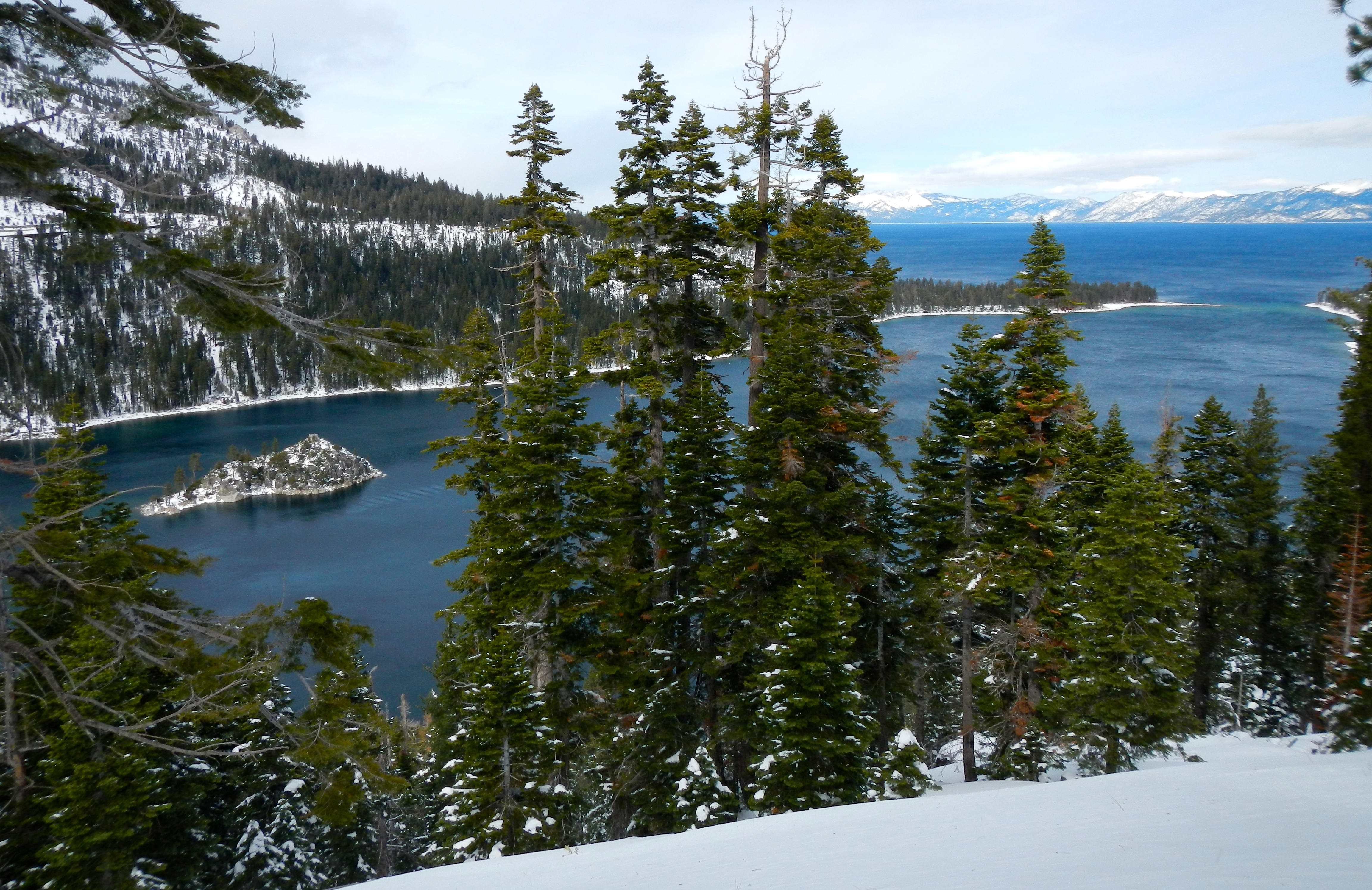
Search and rescue crews are working in the Inspiration Point area by Emerald Bay looking for a woman from Zephyr Cove who has been missing since Feb. 15.

The vehicle belonging to Carolyn Batchelor was found by the California Highway Patrol on Friday. No one was in the vehicle.

Highway 89 was closed for a few hours on Saturday during the search.

“It was closed because we were running K-9s in there. We didn’t want a lot of scent disruption,” Greg Almos, who heads the El Dorado County sheriff’s search and rescue, told Lake Tahoe News.

The dogs, their handlers and others were continuing to search the area the afternoon of Feb. 20.

The vehicle was parked right on the highway and was in full view of Caltrans crews working in the area and people walking up there.

— Lake Tahoe News staff report


Hwy. 89 closure a good thing for sightseers

Emerald Bay appears even more dazzling when not whizzing by in a car. Photo/Kathryn Reed

Emerald Bay appears even more dazzling when not whizzing by in a car. Photo/Kathryn Reed

By Kathryn Reed

For more than 100 years automobiles have been subjected to the whims of Mother Nature when it comes to being able to drive around Emerald Bay on Highway 89.

For the past few winters the closures have been minimal because the snow was close to nonexistent. This year, though, it seems like every storm brings multiple days of impassable roadway.

“I’m told from our maintenance supervisor and superintendent up there that this is actually quite normal for an active winter season like we’re having. They’ve both been working up there going on 30 years,” Steve Nelson, spokesman for Caltrans, told Lake Tahoe News.

Snow on the afternoon of Feb. 19 covers Highway 89 north of Bayview Campground. Photo/Kathryn Reed

Snow on the afternoon of Feb. 19 covers Highway 89 north of Bayview Campground. Photo/Kathryn Reed

On Friday, most of the pavement from the gate at Emerald Bay Campground to the lookout at the Vista Point across from the Bayview Trailhead was clear of snow. But instead of vehicles on the road, a couple dozen people were out walking on it.

Being able to walk – or snowshoe and cross country ski – this stretch of highway is rare. That’s why when the opportunity presents itself it’s worth doing. It’s not a long trek, but is one with such incredible views.

Normally eyes are focused on driving that narrow stretch where the private Cascade Lake is on one side and Emerald Bay is on the other. On foot it’s even more impressive – both the natural beauty and the engineering feat to build the road.

Other than the two sanctioned bike rides around the lake and the marathon events, being on the road without a vehicle can be dangerous.

xxx

It’s rare to be able to safely walk on Highway 89. Photo/Kathryn Reed

A dirt road was first built in 1913 around Emerald Bay. It was a tourist attraction at the time for steamers to bring people into the bay to watch as dynamite blew up giant granite boulders that would fly more than 100 feet into the air. For decades the road was never opened in the winter.

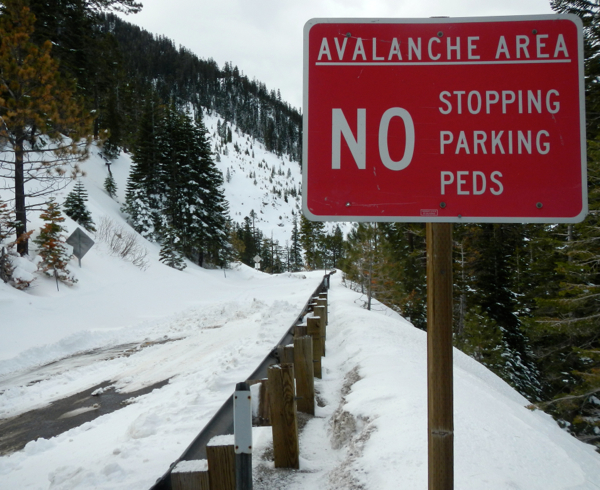
This section of roadway is still dicey. No avalanche control is allowed in the area, unlike other stretches of state highways in and around the basin.

Landslides and avalanches are what keep the road closed. Clearing it of snow usually isn’t an issue.

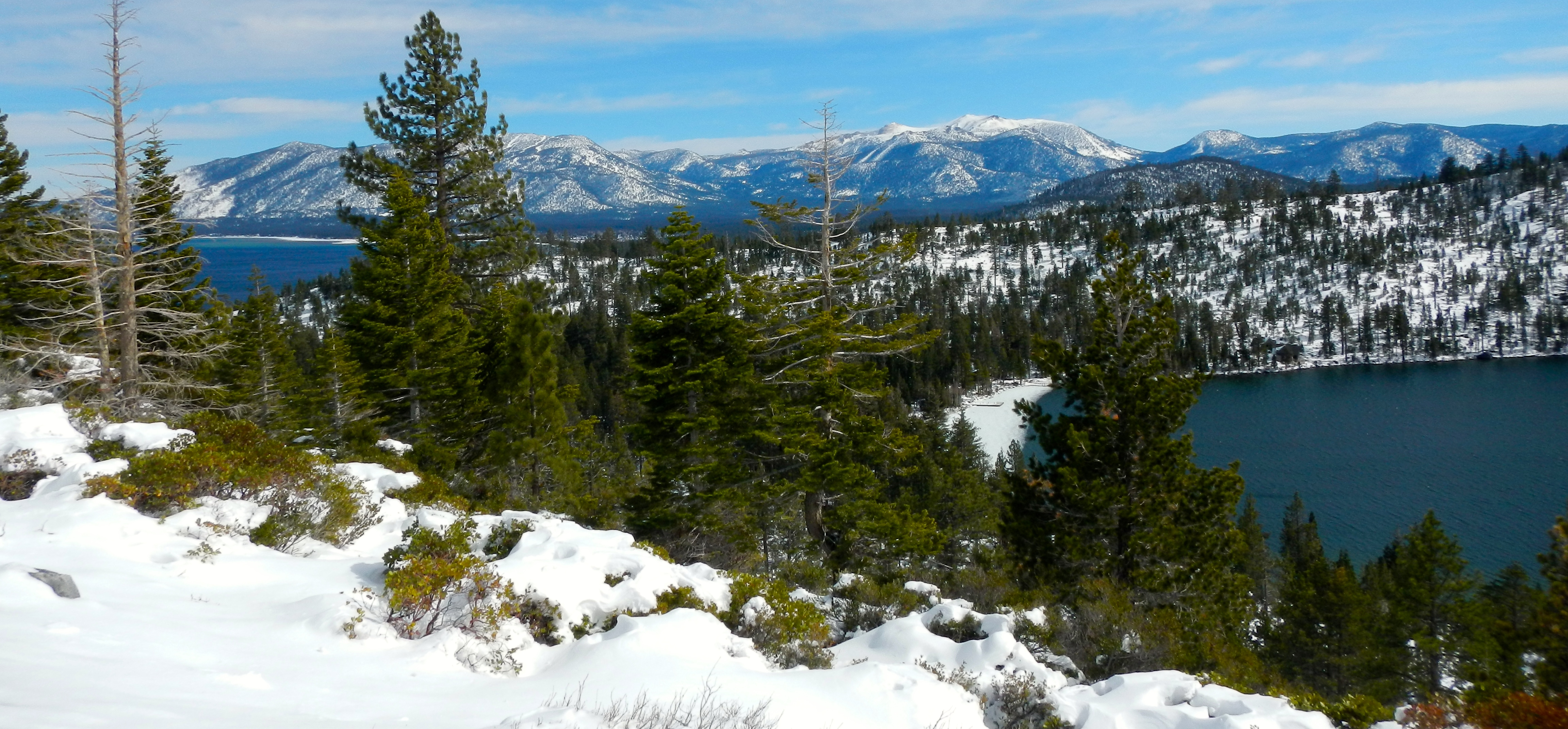
Cascade Lake in the foreground, with Lake Tahoe in the distance. Photo/Kathryn Reed

Cascade Lake in the foreground, with Lake Tahoe in the distance. Photo/Kathryn Reed

“There are as many as 15 active slide zones in that four-mile stretch of the highway and no way for us to control it like we do on Highway 50 due to the terrain, so for the safety of the traveling public, we have to close it until the snow has settled and we can go in and clear it all off,” Nelson said on Feb. 19.

Caltrans drivers in a grader and blower were working in tandem on Friday, with the hopes of being able to have the highway open today. To know for sure, click on the state icon on the home page of Lake Tahoe News.


Kings Beach church statue vandalized

Placer County sheriff’s detectives are investigating the destruction of a statue of the Virgin Mary in Kings Beach as a hate crime.

Sometime last weekend suspects removed the head, hands and fingers of the granite state at Our Lady of the Lake Catholic Church. The fingers were found on church property.

Several churches in the area were vandalized last year, though authorities are not saying if the crimes are related.

Anyone with information about this case is asked to call Detective John Riella at 530.581.6325 or Placer County Crimestoppers anonymously at 800.923.8191.

— Lake Tahoe News staff report


Caucus prep: Clinton, Sanders answer 6 Nev. questions

By Reno Gazette-Journal

The Reno Gazette-Journal reached out to all of the presidential candidates, Republican and Democrat, for their responses to six questions of special interest to Nevada voters.

Informed by reader feedback, we asked them about immigration, drought, renewable energy, marijuana, online gaming and federal lands management. Below are the email responses from Democratic hopefuls Bernie Sanders and Hillary Clinton, given in alphabetical order.

The Democratic caucus in Nevada is Feb. 20.

Read the whole story


How feds use land in Nevada

By Caitlin Lilly, Las Vegas Review-Journal

In the wake of the Oregon standoff that resulted in the death of LaVoy Finicum and the arrest of Cliven Bundy andhis two sons, Time Labs examined how much land the federal government actually owns throughout the United States.

Not only does the federal government own 28 percent of all U.S. land, according to Time, but a large chunk of their ownership is in Nevada, where 84.9 percent of the state’s land is owned by the government.

Many Nevadans are aware of the statistic, but do you know how the land is used?

Read the whole story


States weigh rules for new kind of slot machine

By Philip Marcelo, AP

BOSTON — It’s like “Guitar Hero” that pays you back, if you’re any good.

At least, that’s the pitch gambling regulators across the country are hearing as they consider whether to allow casinos to offer slot machines that mimic video and arcade games in an effort to attract younger gamblers.

The latest is Massachusetts, where the state Gaming Commission released draft regulations governing the new machines on Thursday.

Marcus Prater, executive director of the Association of Gaming Equipment Manufacturers, a Nevada-based industry trade group, says so-called “skill-based” slot machines are meant to appeal to millennials who tend to skip over traditional machines because they see them as old-fashioned.

“This is something totally new,” he said. “Players have never had the option, in any market in the world, to influence the outcome of the game.”

But anti-gambling activists say the machines have the potential be more addictive than their predecessors because they blur the line between children’s games and wagering.

“They’re trying to find new ways to get people hooked on gambling,” says Les Bernal, national director of the Massachusetts-based Stop Predatory Gambling. “It’s an incredibly predatory business for that reason.”

What the industry considers “skill-based” slot machines runs the gamut.

Some manufacturers have unveiled machines giving gamblers the option of playing classic video games like “Space Invaders” and “Pac Man” as a sort of bonus round to earn more betting credits in between typical slot machine play.

Others are toying with gambling versions of arcade games like pinball and video game console products like “Guitar Hero.” Still others are developing casino gambling versions of popular smartphone games like” ”Angry Birds” and “Words with Friends.”

Keith Whyte, executive director of the D.C.-based National Council on Problem Gambling, is also concerned treating and preventing gambling addiction will become more challenging, a problem he suggests states will need to address if they permit the new games.

“There are a lot of smart people who get themselves into trouble as they believe they can beat the game,” he says.

Christopher Moyer, spokesman for the American Gaming Association, says there’s no evidence to suggest such games would be more addictive than current machines.

Prater says it’s too soon to pass judgment. The new machines are still in development and haven’t hit casino floors.

But that hasn’t stopped states from considering how to regulate them. So far, two states — Nevada and New Jersey — have laws and regulations in place.

Pennsylvania lawmakers are also considering legislation allowing them, while policymakers in New York, Maryland and other states have discussed the issue.

Massachusetts’ 2011 casino law already included a provision allowing for skill-based machines, so only regulations are needed.

Thursday’s proposed rules are modeled after Nevada’s, allowing for gambling machines that determine outcome not just based solely on chance but also on the skill, or a combination of both.

Todd Grossman, the Massachusetts Gaming Commission’s deputy general counsel, said the proposed regulations are broadly written so as not to create an “artificial barrier” to gambling manufacturers trying to test out new concepts. “We’re moving into unchartered territory, to a degree,” he said.

Wynn, MGM and Penn National Gaming — Massachusetts’s three licensed casino operators — say they’re reserving comment until they’ve had a chance to carefully review the eight-page proposal.

David Schwartz, director of the Center for Gaming Research at the University of Nevada-Las Vegas, says the evolution of slot machines is necessary as the amount casinos collect from them has generally not kept up pace with table games.

But Alan Woinski, president of Gaming USA Corp., a New Jersey-based gambling consultancy, predicts the latest generation of gambling machines is still at least a year away.

“Anything out there so far is just from companies trying to be the first, but with a less than stellar project, or it’s the major manufacturers taking their first crack at it,” he said.


Yosemite trademark dispute takes new turns

By Michael Doyle, McClatchy Washington Bureau

Yosemite National Park’s concessionaire executives met with National Park Service officials on Dec. 8, 2014. On that, at least, they agree.

What happened next, though, remains in dispute, like so much else involving renewal of the park’s lucrative concessions contract. Company executives say the park service “pressured” them to give up valuable intellectual property. Park service officials, in their latest court filing, deny it.

The conflicting recollections are becoming commonplace. From the courtroom to the California state Legislature, this multimillion-dollar conflict over Yosemite’s intellectual property is heating up like an ugly divorce to a long marriage.

Incited by the Yosemite names controversy, state Assemblyman Kenneth Cooley, D-Rancho Cordova, and Assemblyman Adam Gray, D-Merced, on Thursday introduced legislation restricting the trademarking of names associated with state parks, which Cooley said was “intended to send a message” about national parks as well.

Read the whole story


Minor earthquake registers south of SLT

A tiny temblor shook the South Lake Tahoe region early Friday morning.

According to the Nevada Seismic Laboratory, a 1.14 earthquake struck 12.5 miles south of South Lake Tahoe at 1:09am Feb. 19.

— Lake Tahoe News staff report


Solutions for stressed-out high school students

By Nikhil Goyal, Wall Street Journal

Last year, at the West Windsor-Plainsboro Regional School District in central New Jersey, Superintendent David Aderhold decided that students had had enough. District staff had recommended mental-health assessments for more than 120 middle- and high-school students for depression, anxiety and suicidal thoughts—a pronounced increase from the previous year.

In a letter to parents last fall, he wrote, “I cannot help but think that we may be failing [our students] by reinforcing an educational system that perpetuates grades at the expense of deep and meaningful learning.”

Aderhold isn’t alone in questioning the high-pressure environment at many schools. With growing evidence that students are suffering from the intense competition for college admission, schools around the country are rethinking everything from tests to classes to start times.

Aderhold, whose district near Princeton University includes 9,800 students, has enacted reforms. He abolished midterms and final exams and instituted a no-homework policy during breaks and some weekends. It hasn’t all gone smoothly. Some parents have complained, worried that the changes will leave their children unprepared for elite colleges.

Read the whole story