2 men wanted on felony murder warrant

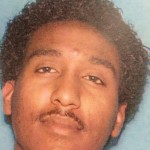
Dominic Randolph

Dominic Randolph

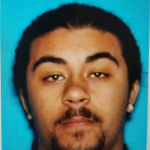
Dion Vaccaro

Dion Vaccaro

Arrest warrants have been issued for two men who are wanted in connection with the Jan. 30 murder of Dennis Wright Jr. in South Lake Tahoe.

Domenic Seanlee Randolph, 24, and Dion Jermaine Randolph Vaccaro, 26, are considered armed and dangerous, according to the El Dorado County District Attorney’s Office. Detectives don’t know where the two are now, but they most recently have lived in the Fairfield, Vallejo, Napa and Sacramento areas.

Already in custody on murder charges for the same crime are Tristan Batten, 18, and Harvest Davidson, 20. Both face one count of murder. Both are being held without bail.

Wright was gunned down in the parking lot of the Beverly Lodge in what is described as a drug deal gone bad. He and his girlfriend Kendra Ghiorso, 45, both of Amador County, were selling marijuana from their vehicle, officers said, with 100 pounds being confiscated the night of the shooting.

Randolph is 6-foot-3, 187 pounds, has brown hair and brown eyes. Vaccaro is 6-feet, 200 pounds, and has brown hair and eyes.

Anyone who sees either man is asked to contact Investigator Dave Stevenson at 530.303.2411 or dave.stevenson@edcgov.us.

— Lake Tahoe News staff report


California voters trending toward no party

By Associated Press

New state voter registration figures continue the trend of the fastest growing segment of the California electorate registering without any political affiliation.

The data released Monday by Secretary of State Alex Padilla show 24 percent of those registered have no party preference.

The report says California had 17.3 million registered voters in January. Of them, 43 percent were registered as Democrats and 27 percent as Republicans.

Both major political parties have been losing their share of the electorate in recent years as more people register as independents, but GOP registration is falling fastest as a percentage.

Padilla says registration is not keeping pace with increases in the population. Only 70 percent of those eligible to vote are registered.


California gas tax decreasing

By Associated Press

California’s tax board is lowering the state excise tax on gasoline by 2.2 cents per gallon.

Board of Equalization Vice Chairman George Runner says drivers in California overpaid their gas taxes last year under a complicated formula that was used to help bridge a state budget deficit in 2010.

So the board voted 3-2 on Tuesday to lower the tax to 27.8 cents per gallon as of July 1.

That will lower the amount of money going to roads and mass transit programs by about $328 million next year.

But the board calculates the tax rate to bring in the same amount of money as the old sales tax.

It reduced the gas tax by 6 cents last year to avoid over-collecting, but still took too much.


Nev. might get huge investment from Barrick Gold

By Jennifer Robison, Las Vegas Review-Journal

Nevada’s largest mining company is eyeing plans to invest big in its operations.

Barrick Gold Corp. said Monday that it could spend $2.1 billion through 2020 expanding gold mines in Nevada and Peru, with about $1.4 billion of the investments set for the Silver State.

The biggest chunk — $1 billion — would go toward building an underground mine at Goldrush, a new deposit about 4 miles southeast of Barrick’s Cortez Hills operation near Elko. Once it starts producing in 2021, Goldrush could yield 440,000 ounces of gold each year. The deposit has an estimated 8.6 million ounces in gold resources.

Read the whole story


4.5% across-the-board raises in LTUSD

By Kathryn Reed

Every employee in Lake Tahoe Unified School District is getting a 4.5 percent raise, which is retroactive to July 1.

The teachers union on Feb. 23 ratified the contract with the district. The classified group is set to vote Feb. 25. The school board is expected to take action March 8. The confidential employees and administrators will be getting the same raise.

Both unions are working on one-year contracts.

For the prior school year everyone received a 6.5 percent increase, in 2013-14 it was 3.5 percent. Raises were nonexistent for about five years as the district, as an extension of the state, wallowed in the recession.

During that time LTUSD lost 25 classified, 20 certificated and nine administration positions.

“What we are proud of is keeping the class-size reduction and music. Kids should not suffer because of tough times,” Superintendent Jim Tarwater told Lake Tahoe News.

He said now is the time to reward people for their work.

An item the teachers have been negotiating for some time is the rules concerning when someone wants to transfer jobs or departments. That language is now more transparent, according Jodi Dayberry. Dayberry is president of the local teachers’ union.

Another concession by the district is to pay $1,000 more for employees’ health insurance. The cap is now at $10,232 a year.

“I think we have had very positive negotiations. This last round especially. We were working collaboratively with the district,” Dayberry told Lake Tahoe News.


Easy win for Trump in Nevada caucuses

By Steve Peoples and Nancy Benac, AP

Notching three in a row, Donald Trump decisively won Nevada’s Republican caucuses Tuesday as Marco Rubio bid to elbow out Ted Cruz for second place in an increasingly urgent effort to slam the brakes on the Trump juggernaut.

Trump now can claim victories in the West, the South and Northeast – a testament to his broad appeal among the mad-as-hell voters making their voices heard in the 2016 presidential race.

“We’re winning, winning, winning the country,” Trump declared. “Soon, the country is going to start winning, winning, winning.”

Ticking off a list of upcoming primary states where he’s leading in preference polls, Trump predicted he’ll soon be able to claim the GOP nomination. “It’s going to be an amazing two months,” he told a raucous crowd at a Las Vegas casino. “We might not even need the two months, folks, to be honest.”

Six in 10 caucus goers said they were angry with the way the government is working, and Trump got about half of those angry voters, according to preliminary results of an entrance poll.

With time running out, Nevada was a critical test for Rubio and Cruz, the two senators battling to emerge as the clear alternative to the GOP front-runner. Rubio was out to prove he can build on recent momentum, while Cruz was looking for a spark to help him recover from a particularly rocky stretch in his campaign.

Lagging far behind the two senators in the Nevada vote were Ohio Gov. John Kasich and retired neurosurgeon Ben Carson.

Rubio, already campaigning in Michigan as caucus results rolled in, sought to project confidence that he can consolidate the non-Trump voters who have been splintering among an assortment of GOP candidates, saying, “we have incredible room to grow.”

But after finishing third in Iowa, fifth in New Hampshire and second in South Carolina, Rubio needs a win soon to support the idea he can beat Trump.

Cruz, a fiery conservative popular among voters on the GOP’s right, finished a disappointing third in South Carolina after spending much of the past two weeks denying charges of dishonest campaign tactics and defending his integrity. Another disappointing finish in Nevada would raise new questions about his viability heading into a crucial batch of Super Tuesday states on March 1.

The election calendar suggests that if Trump’s rivals don’t slow him by mid-March, they may not ever. Trump swept all of South Carolina’s 50 delegates, giving him a total of 67 compared to Cruz and Rubio who have 11 and 10, respectively. There were 30 delegates at stake in Nevada, and a whopping 595 available one week later in the March 1 Super Tuesday bonanza.

The billionaire businessman, in his victory speech, dismissed the notion that if more GOP candidates drop out of the race, they’ll coalesce around an alternative.

“They keep forgetting that when people drop out, we’re going to get a lot of votes,” he said.

Nevada’s caucusing played out in schools, community centers and places of worship across the state – a process that’s been chaotic in the past.

Count Tracy Brigida, fed up after her husband was laid off from his mining job, among those caucusing for Trump.

“I want a businessman to run the biggest business in the world,” Brigida said as she caucused at a Las Vegas high school.

Jeremy Haight drove straight from his marketing job to caucus for Marco Rubio at the same high school.

“He’s the most level-headed. He hasn’t said anything stupid or crazy … which is really what I think the country needs,” Haight said.

It was Cruz for Megan Ortega, who declared: “He’s consistent, he’s bold and he’s a class act.”

Preliminary results of the entrance poll found that about 3 in 10 early caucus goers said the quality that mattered most to them in choosing a candidate was that he shares their values, slightly more than the quarter who said they want a candidate who can win in November. About a quarter said they want a candidate who can bring change. About 2 in 10 want one who “tells it like it is.”

The GOP field that included a dozen candidates a month ago has been reduced to five, with former Florida Gov. Jeb Bush the latest to drop out after a disappointing finish in South Carolina. Kasich and Carson could play spoilers as Trump, Cruz and Rubio, battle for delegates with an increasing sense of urgency.

Indeed, Republican establishment heavyweights have been flooding to Rubio in recent days, including Arkansas Gov. Asa Hutchinson, North Carolina Sen. Thom Tillis and Utah Sen. Orrin Hatch. South Florida’s three Cuban-American members of Congress announced their support for him in the hours before the Nevada contest.

Nevada marked the first Republican election in the West, the fourth of the campaign. And it’s not one that’s gotten much attention from the GOP candidates.

Through Tuesday, the Republican candidates and the super PACs supporting them had spent a combined $3.8 million on television and radio advertisements in Nevada – less than a tenth of the $39.3 million spent ahead of last weekend’s South Carolina primary, according to Kantar Media’s CMAG data.

The entrance poll survey was conducted for the Associated Press and the television networks by Edison Research as Republican voters arrived at 25 randomly selected caucus sites in Nevada.


Calif. lawmaker wants to ban tobacco at youth sports events

By Alexei Koseff, Sacramento Bee

State Sen. Richard Pan is taking another swing at tobacco.

The Sacramento Democrat has introduced a bill that would prohibit cigarettes, chewing tobacco, e-cigarettes and other tobacco products within 250 feet of any game, practice or activity organized by a youth sports team in California where athletes under the age of 18 are present. Violators would be punished with a $100 fine.

“Youth sports is about promoting good health and athleticism and excellence,” Pan said. “We should encourage behaviors that support those goals and discourage ones that don’t.”

Read the whole story


Group takes step for loop road to go to voters

By Lake Tahoe News

Three former South Lake Tahoe city councilmembers and a founder of the city are on a quest to get the loop road before the voters.

Bruce Grego, John Cefalu, Bill Crawford and Laurel Ames have filed a notice of intent to circulate a petition regarding the loop road.

The loop road is a project spearheaded by the Tahoe Transportation District to realign Highway 50 so it goes behind Harrah’s Lake Tahoe and MontBleu casinos. It would make the current highway a city and county street from about Park Avenue to Lake Parkway. It would also require the demolition of several residences and a handful of businesses in South Lake Tahoe.

“While the group has serious concerns about the loop road project, including the use of eminent domain, they believe that putting this decision in the hands of the voters will empower the community to get involved and make an informed decision on a project that has far reaching implications now and in the future,” Grego said in an email to Lake Tahoe News.

The foursome wants to prohibit the city from approving or supporting the loop road. That is what would be before voters.

City Attorney Tom Watson has 15 days to write a legal summary that does not exceed 500 words and he must write a ballot title, assuming one can legally be written. If it cannot, the petitioners could start over.

Assuming Watson writes the summary, the quartet must publish the intent in an adjudicated publication, and then take that document to the city clerk. Then the group must get nearly 1,000 valid signatures on the petition. If certified by the county elections department, it goes on the ballot.

The city would be responsible for bearing the costs of the election, which could be about $10,000.


El Nino weakens a tad

By Seth Borenstein, AP

Meteorologists see signs that the super El Nino is weakening ever so slightly, but they caution months will pass before people in the Americas will feel it.

The World Meteorological Organization said Thursday that El Nino has passed its peak based on specific temperature, wind, and atmospheric pressure conditions.

That’s technically true, but Michelle L’Heureux, lead El Nino forecaster for the National Oceanic and Atmospheric Administration’s Climate Prediction Center, said there’s a few months lag time before the changes affect the Americas.
El Nino is the occasional but natural warming of the central tropical Pacific which, along with changes in the atmosphere, alters weather patterns worldwide. It often brings more rain to California and parts of the U.S. West and South, warms temperatures globally a bit, and causes droughts elsewhere in the world.

In December and January, El Nino measurements showed it tied 1997-1998 for the strongest since records started being kept in 1950.

“It’s still strong, but it has reached a peak value and it’s starting its decline,” said University of Oklahoma meteorology professor Jason Furtado. “It’s still there; it’s not like we don’t have El Nino anymore. We can still expect (El Nino) like conditions in March and April and even into May, as well.”

Mike Halpert, deputy director of the climate prediction center, said this El Nino hasn’t brought drought-struck California as much moisture as previous strong El Ninos, but there are still two months to go to get significant rainfall.

With El Nino still kicking, NOAA forecast a spring that’s wetter than normal throughout the South, much of the West and part of the East. Only the Great Lakes region and Pacific Northwest are forecast to be dry. It also predicts warmer than usual weather along the entire West Coast and most of the country north of Colorado, Missouri and Tennessee, with only Texas, parts of Oklahoma and New Mexico cooler than normal.

The International Research Institute at Columbia University forecast that once this El Nino fades, there’s a 50 percent chance it will be followed directly by El Nino’s flip side, a La Nina. La Nina often means droughts in parts of the Great Plains and Southwest with more rain in the Northwest. La Ninas often mean warmer winters in the Southeast and cooler winters in the Northwest.


Calif. pension fix leads to risk as market volatility soars

By Romy Varghese, BloombergBusiness

It’s hard for states to fix pensions – just look at New Jersey and Illinois. And even when legislators in California agreed two years ago on a way to keep the teachers’ retirement fund from going broke, it left the state’s finances more exposed to financial-market swings.

Under the plan, California, school districts and teachers will gradually increase their contributions to make the second-biggest U.S. public pension fully funded in 30 years. The catch: the state’s share depends on whether the fund hits its 7.5 percent annual investment target, meaning it could jump in bad years or plummet in good ones, according to the Legislative Analyst’s Office. Three decades from now, the difference between market winning and losing streaks could mean as much as $5 billion.

The uncertainty over the state’s future payments to the California State Teachers’ Retirement System, which oversees benefits for about 896,000 people, underscores the risks in betting on a continual surge in California, where the government’s fortunes have tracked the booms and busts of the equity market. For now, California’s still reaping a revenue windfall from the post-recession bull run that crested in the middle of last year.

Read the whole story