Sponsored travel for Calif. lawmakers topped $600,000

By Alexei Koseff and Jeremy B. White, Sacramento Bee

California legislators accepted at least $612,000 worth of travel last year from non-profit organizations and foreign governments, including lodging, airfare, meals and gifts received while visiting locations from Napa and Newport Beach to Australia and Argentina.

Senators took about $199,000 and Assembly members took about $413,000 of sponsored travel in 2015, according to statements of economic interest filed with the Fair Political Practices Commission this week. Twenty one lawmakers reported no subsidized travel last year.

Some trips related directly to policy issues that dominated the Legislature’s agenda. Lawmakers circled the globe to study how Australia endured a devastating drought. Months after a dogged oil industry campaign helped derail a bill to cut California’s petroleum use half, the California Independent Petroleum Association gathered 14 Assembly members and three senators in Newport Beach.

Read the whole story


Lawmakers want to improve CSU grad rate

By Jason Song, Los Angeles Times

Cal State University campuses are under pressure to boost their four-year graduation rates, which in most cases are far below the national average. A new state Legislature bill could make their task easier.

If the legislation is adopted, students who agree to take 15 units a semester and maintain a minimum grade-point average would get priority registration for popular classes, among other benefits.

The bill by state Sen. Steve Glazer, D-Orinda, a former Cal State trustee and strategist for Gov. Jerry Brown, is similar to pilot programs at four of the 23 Cal State schools. Participating students often get first shot at classes, additional academic advising and tuition waivers for any class that’s required to graduate but isn’t offered during the students’ first four years.

The proposed legislation would go a bit further by freezing tuition for students in the program.

Read the whole story


EDSO deputy arrested on DUI charges — again

Updated 4:15pm

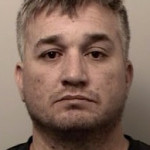
El Dorado County sheriff’s Deputy Tony Broadfoot has been arrested on charges of driving under the influence twice in nine days.

Tony Broadfoot

Tony Broadfoot

As of Saturday afternoon he was still in jail in Placerville on $250,000 bail.

These two arrests come after his initial DUI arrest on Dec. 8.  That incident occurred in South Lake Tahoe. At that time he was placed on paid administrative leave.

The latest two arrests – Feb. 25 and March 4 – were made by California Highway Patrol officers out of the Placerville office. According to CHP Sgt. Ryan Houdeshell, Broadfoot rolled his vehicle Feb. 25 on Highway 50 near Ice House Road. He was not injured. On March 4, it was also an accident, though Houseshell did not have the specifics. No one was injured. This occurred on South Shingle Road in Shingle Springs.

Sheriff’s Lt. Matt Underhill had no comment other than to say Broadfoot was on leave at the time of the latest DUIs.

— Lake Tahoe News staff report


Calif. parks, wildlife areas would benefit in Obama’s budget

By Michael Doyle, McClatchy Washington Bureau

California gets its share, and then some, from the Obama administration’s $4 trillion budget proposal delivered Monday to a skeptical, Republican-controlled Congress.

There’s money for restoring the Sacramento-San Joaquin Delta, likely to survive congressional winnowing. Proposed upgrades at places like Yosemite National Park will probably find Capitol Hill favor, as well, along with funding for Central Valley flood control and dam improvements.

The budget, for instance, offers $3.5 million to complete the Army Corps of Engineers’ design and engineering studies for protecting the Sacramento area’s Natomas Basin. It provides tens of millions of dollars to upgrade Folsom Dam northeast of Sacramento and improve the safety of the earthen Isabella Dam in eastern Kern County. These projects enjoy bipartisan support.

Read the whole story


STHS to open individual classes to WHS kids

Classes in the Tahoe Arts and Design sector at STHS are expected to be popular with WHS students. Photo/Kathryn Reed

Classes in the Tahoe Arts and Design sector at STHS are expected to be popular with WHS students. Photo/Kathryn Reed

By Kathryn Reed

Starting this fall students at Whittell High School should be able to take individual classes at South Tahoe High School.

The school boards of the respective districts are slated to vote on the agreement at their March 8 meetings.

While inter-district transfers between the Nevada and California districts have been available for a price for years, the ability to take select classes would be new.

The impetus to offer this to WHS students came from the group that was assembled more than a year ago to deal with parental dissatisfaction with how things were going at the Stateline school. One of the issues was lack of electives. With Whittell being such a small school, only so many classes are available.

“We are targeting juniors and seniors looking to build their academic resumes,” Teri White, superintendent of Douglas County School District, told Lake Tahoe News. “In order for it to work out we have to free the student up for almost two periods because of driving there and back.”

This means the student needs flexibility in their day to make it work, and also why they may only want to take one class at STHS.

Students will be required to provide their own transportation.

The Douglas school board this year approved the calendar for next fall, which now aligns with Lake Tahoe Unified School District. This will help with students who want to take classes in both states.

Whittell students will only be admitted to a STHS class if there is room, so there is no threat to a STHS student being displaced.

WHS students have Fridays off, so depending on which South Tahoe class they take, it may mean going to school five days a week.

While LTUSD will make money off of the students, Superintendent Jim Tarwater said the reason to do this “is to take care of kids.”

“I want those kids to compete in whatever college they want to go to,” Tarwater told Lake Tahoe News.

It will cost $3.63 a day, or a little more than $300 per class. For students on the Nevada side who go to STHS full time it costs $5,224.

Neither superintendent would venture a guess as to how many students might take advantage of this opportunity that will take effect in the 2016-17 school year – assuming the two boards approve it – but guessed it wouldn’t be that many.


EPA bans pesticide used on Calif. crops

By Geoffrey Mohan, Los Angeles Times

Federal regulators said Tuesday they will ban a pesticide widely used on California crops such as almonds and alfalfa, saying it imperils aquatic insects that are the food source of fish.

The U.S. Environmental Protection Agency on Tuesday filed an intent to cancel registration of all products containing flubendiamide, most commonly used in Belt, manufactured by Bayer CropScience, based in Germany. The chemical is also used in products made by Nichino America.

Canceling the registration would prohibit any further sales of products that include the ingredient.

Read the whole story


Caesars CEO granted initial approval for gaming license

By J.D. Morris, Las Vegas Sun

Caesars Entertainment Corp. CEO Mark Frissora received initial approval for a gaming license from state regulators this week after he sought to put to rest any concerns about his contentious exit from his last job.

The Gaming Control Board unanimously recommended a license for Frissora, who was named the next chief executive of Caesars about a year ago and officially took the reins of the company in July.

Board members were ultimately satisfied with Frissora’s responses to questions about the stormy end to his tenure at Hertz Global Holdings Inc., the rental-car company he led for eight years.

Read the whole story


Reno getting its retail mojo back

By Jason Hildago, Reno Gazette-Journal

Just a few years removed from the worst recession in its history, Reno is starting to get its mojo back. This includes garnering interest from franchise and corporate retail stores that are eyeing communities expected to see big growth in the coming years.

New store openings in the last year in Reno-Sparks include a nice mix of retail establishments such as Nordstrom Rack and Lululemon as well as national food franchise Dunkin Donuts and regional chain Roberto’s Taco Shop.

After falling off the radar screen for many companies during the recession, companies that are giving the Reno area a look today are liking what they see, said Carl Gerhardt, a franchise consultant who works with FranNet and mentoring group Senior Core of Retired Executives (SCORE).

Read the whole story


Nevada rate of uninsured kids drops

By Jason Hildago, Reno Gazette-Journal

Nevada no longer leads the nation in uninsured children.

The Silver State posted the largest improvement nationwide in reducing its rate of uninsured kids from 2013 to 2014, a report by the Robert Wood Johnson Foundation found.

An estimated 100,058 or 14.4 percent of Nevada children did not have health insurance in 2013, a rate that ranked 51st — or dead last — among all states and Washington, D.C., that year. By 2014, however, Nevada improved to 48th as its rate fell to 10 percent or about 69,300 uninsured children. The 4.4 percentage point reduction also represented the biggest improvement in the nation, according to the report, which was done by the University of Minnesota and uses the latest numbers available from the U.S. Census Bureau.

Read the whole story


SLT’s top cop blasts Calif. marijuana initiative

By Kathryn Reed

Control, Regulate and Tax Adult Use of Marijuana Act is a misnomer, according to South Lake Tahoe Police Chief Brian Uhler.

He believes proponents of this ballot measure came up with the name as a way to mislead people. Uhler contends the initiative does the opposite of what the title says.

It will likely be before California voters in November.

Uhler spoke March 1 to the South Lake Tahoe Drug Coalition about the proposed legislation. He had nothing positive to say about it.

It will allow anyone to grow marijuana at their residence without oversight from local government officials. Today, South Lake Tahoe has an ordinance allowing indoor grows, but they must be permitted which entails having the electrical and other safety issues be monitored. The act would negate the local regulations.
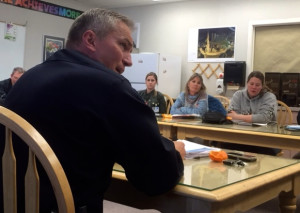
South Lake Tahoe Police Chief Brian Uhler on March 1 speaks about a marijuana initiative he wants defeated. Photo/LTN

South Lake Tahoe Police Chief Brian Uhler on March 1 speaks about a marijuana initiative he wants defeated. Photo/LTN

The act would also allow felons to get a marijuana business license. The proposal does not add dollars to the state’s general fund.

Proponents say the act will “legalize marijuana for those over 21 years old, protect children, and establish laws to regulate marijuana cultivation, distribution, sale and use, and will protect Californians and the environment from potential dangers. It establishes the Bureau of Marijuana Control within the Department of Consumer Affairs to regulate and license the marijuana industry.”

Uhler’s contention is that children will not be protected because marijuana businesses will be allowed near schools as long as they are at least 600 feet away. He also believes the language regarding advertising is a joke.

The initiative says, “Any advertising or marketing placed in broadcast, cable, radio, print and digital communications shall only be displayed where at least 71.6 percent of the audience is reasonably expected to be 21 years of age or older, as determined by reliable, up-to-date audience composition data.”

Uhler’s belief is that definition means plenty of children will still be hearing and seeing adds for marijuana, even possibly on billboards because more adults are on the roads than kids.

The new level of bureaucracy the act will create is where the bulk of the money will go. For 10 years $10 million will go to a public university to research and evaluate the effects of the act, for five years $10 million will go to the Governor’s Office of Business and Economic Development, $2 million annually is earmarked for UC San Diego for medicinal cannabis research, and $3 million for five years will be allocated to the California Highway Patrol to establish and adopt protocols to determine whether a person is driving while impaired.

A CHP officer at Tuesday’s meeting said the agency already has such a program and questions whether the money will actually be forthcoming.

If any money is left, it will be divided among youth education-prevention, environmental restoration, and local law enforcement.

Uhler stressed there is no money in the act for additional law enforcement officers on the street.

The UC San Francisco Center of Tobacco Control Research and Education said the act “is written primarily to create a new business and only include minimal protections for the pubic that are unlikely to prevent public health harms caused by the burgeoning marijuana industry.”

Members of the local drug coalition expressed a desire to educate the public about what the act really does, which the police chief stressed is the opposite of what the name implies.