Man dies while clearing snow in Truckee

A 62-year-old Truckee man died Sunday when the vehicle he was using for snow removal slammed into a garage.

Truckee police said it appears there was a medical event while the man was driving. The self-employed contractor was pronounced dead at the scene.

The incident occurred in the early afternoon of March 13 on Palisade Street in the Armstrong subdivision of Truckee.

— Lake Tahoe News staff report


Many state legislatures exempt themselves from record laws

By David A. Lieb, AP

JEFFERSON CITY, Mo. — State capitols are often referred to as “the people’s house,” but legislatures frequently put up no-trespassing signs by exempting themselves from public-records laws.

That tendency was apparent when the Associated Press sought emails and daily schedules of legislative leaders in all 50 states. The request was met with more denials than approvals.

Some lawmakers claimed “legislative immunity” from the public-records laws that apply to most state and local officials. Others said secrecy was essential to the deliberative process of making laws. And some feared that releasing the records could invade the privacy of citizens, creating a “chilling effect” on the right of people to petition their government.

Without access to such records, it’s harder for the public to know who is trying to influence their lawmakers on important policy decisions.

“The public has a right to know what their elected officials are doing, because it’s the people’s job to hold those folks politically accountable,” said Peter Scheer, executive director of the First Amendment Coalition, a San Rafael-based nonprofit that advocates for greater openness in government.

All legislatures allow people to watch and listen to their debates. But an AP review of open-government policies found that many state legislatures allow closed-door caucus meetings in which a majority of lawmakers discuss policy positions before public debates. Others have restrictions on taking photos and videos of legislative proceedings. In some places, lawmakers have no obligation to disclose personal financial information that could reveal conflicts of interest.

Legislators possess the power to change that but are sometimes reluctant to act.

A bill advancing this year in Massachusetts, for example, would strengthen the state’s public-records laws by limiting fees and setting new deadlines for state agencies and municipalities to comply. Yet it would continue to exempt lawmakers.

That mirrors the way things work in Washington, D.C. Congress exempted itself when it passed the national Freedom of Information Act 50 years ago. The president and his immediate staff also are exempt. By contrast, many governors are subject to state sunshine laws.

In many states, the public-records requirements passed by lawmakers present “a stunning contradiction,” said Charles Davis, dean of the College of Journalism and Mass Communication at the University of Georgia and a former executive director of the National Freedom of Information Coalition.

“I have just always found it astonishing that they would put those requirements on public officials throughout government and exempt themselves at the same time,” he said.

To gauge compliance with public-records laws, the AP sent requests to the top Democratic and Republican lawmakers in all states and most governors seeking copies of their daily schedules and emails from their government accounts for the week of Feb. 1 to Feb. 7. Of the more than 170 lawmakers who responded by mid-March, a majority denied the requests by claiming they were legally exempt. The governors were slower to respond but more often provided the information.

The legislative denials came from lawmakers of both parties, although slightly more from Republicans. In states where some lawmakers said “yes” and others “no,” it was more often the majority party lawmakers who denied the requests while a minority party leader complied.

In Missouri, Senate President Pro Tem Ron Richard was asked in front of dozens of reporters and editors whether he would release his government emails and daily calendars.

“All you have to do is ask for it, and I’ll give it to you. I don’t care,” Richard told those attending a statewide press association event in February.

Yet when the AP subsequently submitted an open-records request, Richard reversed course. A Senate administrator responded on his behalf with a letter saying that individual lawmakers aren’t subject to the Missouri Sunshine Law. Richard, who is in his first year as the Senate’s top lawmaker, explained that he learned his predecessors had determined they were exempt, and he didn’t want to break with precedent.

“I’m telling you I don’t hide anything in my emails. I just don’t do that,” said Richard, a Republican from Joplin.

Mississippi House Speaker Philip Gunn responded with a denial letter asserting his emails and calendars were his personal property, not subject to the Mississippi Public Records Act and protected “under the doctrine of legislative immunity” dating back hundreds of years to English common law.

Denial letters on behalf of Illinois’ top Democratic and Republican lawmakers said, among other things, that releasing the records could amount to a “clearly unwarranted invasion of personal privacy” for individuals who contacted lawmakers without expecting their names to appear in the news media.

An attorney for Kentucky’s legislature said secrecy was needed “to encourage effective and frank communications.”

“Arranging honors for our fallen heroes, seeking options for Kentuckians with substance abuse problems or counseling citizens regarding confidential problems are all in a day’s work for our members,” wrote Kentucky legislative general counsel Morgain Sprague. “These communications have always been protected by law.”

If lawmakers followed the same open-records rules that apply to others in government, the potential for some sensitive content being revealed would not be a reason for denying access to all of their emails. Rather, they could redact or withhold particular emails covered by various sunshine law exceptions while releasing the rest.

In several states, lawmakers who provided their records did withhold certain emails that they considered to be exempt from disclosure.

Texas Lt. Gov. Dan Patrick, who is the Republican head of the Senate, released 48 pages of emails but withheld the rest pending a request for a state attorney general’s opinion on whether confidential communications between elected officials and citizens are shielded from disclosure.

New Mexico lawmakers released hundreds of emails, mainly from constituents, but withheld three under an exemption for correspondence with certain legislative staff. They also released copies of their daily calendars showing breakfasts and dinners sponsored by industry and interest groups.

Lawmakers in Florida, which has one of the more expansive sunshine laws, freely released emails from people urging them to support or oppose particular bills. They also released calendars showing meetings with lobbyists for dentists, hospitals, teachers, the aerospace industry and others. The schedule for House Minority Leader Mark Pafford even included his morning exercise time and his flight itinerary for a trip to Washington, D.C.

“This is the people’s government. If somebody finds out I’m doing a workout or having a doctor’s appointment at a certain time, that’s OK,” said Pafford, a Democrat from West Palm Beach.

In Alaska, three of the top four lawmakers declined the AP’s request, explaining that their records can be kept confidential under the state constitution and “the deliberative process privilege.” But Senate President Kevin Meyer, a Republican from Anchorage, provided his calendar and let an AP reporter look at his email inbox as an aide scrolled through it.

Open-records advocates said such case-by-case allowances ultimately leave it to the whims of whoever is in power to decide what the public can see.

“The problem with that is that’s just an act of legislative mercy,” said Davis, of the University of Georgia, “and tomorrow they might have an absolutely identical document that they decide not to give you, because you have no legal right to it.”

Associated Press writers Adam Beam in Frankfort, Ky.; Becky Bohrer in Juneau, Alaska; Morgan Lee in Santa Fe, N.M.; William March in Tallahassee; John O’Connor in Springfield, Ill.; Emily Wagster Pettus in Jackson, Miss.; Bob Salsberg in Boston; and Will Weissert in Austin, Texas, contributed to this report.



Wounded Warrior fires execs over spending accusations

By Associated Press

WASHINGTON — The board of Wounded Warrior Project, one of the nation’s largest veteran support groups, has fired two top officials amid news reports accusing the group of wasteful spending.

According to a statement released on behalf of Wounded Warrior Project, chief executive officer Steve Nardizzi and chief operating officer Al Giordano are no longer with the organization. CBS News reports the two were fired after a Thursday afternoon meeting in New York.

READ: Wounded Warrior Project Board of Directors Statement

According to CBS, Wounded Warrior Project spends 40 to 50 percent of its money on overhead including extravagant parties while other veterans charities have overhead costs of 10 to 15 percent. The CBS report also talked to former employees who accused the organization of making money off their injuries.

One former employee told CBS that how Wounded Warrior Project spends money is equivalent to “what the military calls fraud, waste and abuse.”


CHP officer hurt on Donner Summit

By Mark Glover, Sacramento Bee

A California Highway Patrol officer sustained “major injuries” after being struck Saturday afternoon by an out-of-control sport-utility vehicle in wintry conditions along westbound Interstate 80 near Donner Summit, according to CHP officials.

The injured male officer, who was taken to a hospital in Reno, has not yet been identified.

CHP Lt. Sven Miller said the incident happened about 2:25pm at the Castle Peak off-ramp. Miller said the officer was outside of his vehicle when a Toyota SUV went out of control and struck the officer.

Read the whole story


As Americans take up populism, Supreme Court embraces business

By Noam Scheiber, New York Times 

WASHINGTON — The Supreme Court vacancy created by the death of Justice Antonin Scalia highlights a growing rift between the country and the nation’s highest court on questions of economic power and support for big business.

And that gap, legal experts say, is unlikely to be significantly narrowed by the kind of justice President Barack Obama — or the next president, Democrat or Republican — is expected to nominate.

Americans have grown substantially more populist in their outlook over the past 15 years, according to some measures of public opinion, like whether they are satisfied with “the size and influence of major corporations” and whether the government should “redistribute wealth by heavy taxes on the rich.” Indeed, if the presidential primaries are any indication, there is perhaps no more potent force in U.S. politics today than economic populism.

At the same time, some argue that the Supreme Court under Chief Justice John G. Roberts Jr. has become perhaps the most business-friendly court in recent history. A 2013 study by Lee Epstein of Washington University in St. Louis, William M. Landes of the University of Chicago Law School and Judge Richard A. Posner of the 7th U.S. Circuit Court of Appeals in Chicago ranked justices according to their rulings in cases involving business. The findings, which Epstein and Landes updated through the 2014-15 term for this article, show that six of the 10 most business-friendly justices since 1946 sat on the Supreme Court at the time of Scalia’s death.

Read the whole story


Parole denied for man who shot EDSO deputy

An El Dorado County man convicted of attempted murder on a police officer had his parole denied this month. It was the eighth time he was turned down.

A jury convicted Brian Montgomery, now 49, in 1991. He was sentenced to seven years to life, plus eight years. He is in the Solano State Prison.

On Dec. 4, 1990, El Dorado County sheriff’s Deputy Robert Pepper pulled Montgomery over for speeding in the Mt. Aukum area. Montgomery, who was 25 at the time, had been doing meth for several days and had the ingredients for making methamphetamine in his car. He shot the officer 11 times with .22-caliber automatic rifle.

Pepper survived, though despite wearing a bulletproof vest, he suffered bullet wounds to the chest, shoulder, side, abdomen, and back.

Pepper, now retired, spoke to the parole board by phone urging Montgomery not be released early.

d


Tensions rise over who gets Calif. water

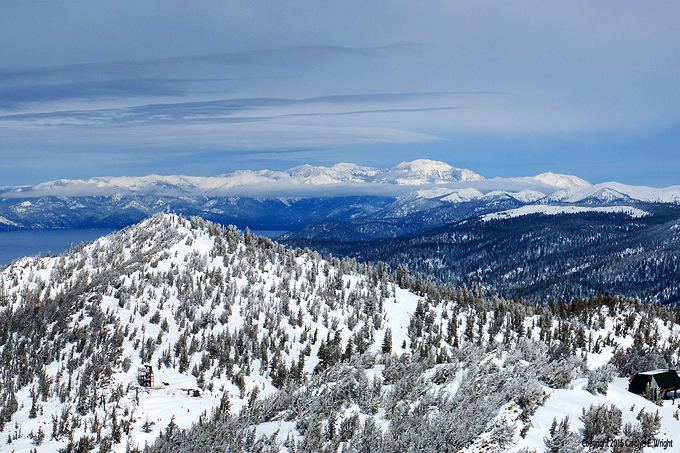
Snowmelt and rain water issues are beginning to boil into political controversy in California. Photo Copyright 2016 Carolyn E. Wright

Snowmelt and rain water issues are beginning to boil into political controversy in California. Photo Copyright 2016 Carolyn E. Wright

By Ryan Sabalow and Dale Kasler, Sacramento Bee

With prolonged and steady rain falling on Northern California for the first time in weeks, tensions are rising over how to manage the stormwater flows now streaming through the Sacramento-San Joaquin Delta.

Saying too much water is flowing out to sea, U.S. Sen. Dianne Feinstein on Friday called on operators of the federal and state water projects to pump more water south through the Delta to drought-stricken farms and cities in Central and Southern California.

Federal regulators painted a starkly different scenario, saying they are shipping as much water south as legally allowed under the environmental restrictions imposed by the Endangered Species Act. Fisheries officials cited recent surveys showing that smelt and the winter-run Chinook salmon are on the brink of extinction.

Read the whole story


Placer dedicates funds to improve Tahoe

The Placer County Board of Supervisors voted this month to fund 11 in the Lake Tahoe Basin.

Money will come from grants and transient occupancy tax revenues.


The 11 new projects are:

  • Truckee River Trail restoration: The project will strengthen and improve various reaches of the Truckee River Trail between 64-acres Park and the entrance of Squaw Valley resort.
  • Tahoe City ice rink: Establishes a seasonal ice skating rink in the Tahoe City Public Utility District’s Winter Sports Park, scheduled to open next winter.
  • Truckee River access trail: The project will connect the north end of the existing shared-use trail at Squaw Valley Road north to the Placer County line at the town of Truckee near West River Street. The total trail distance is about 8 miles.
  • Tahoe City mobility improvements: The project will improve the lakeside shared use trail connection between Commons Beach and Fanny Bridge, parking and pedestrian access to Tahoe City’s downtown business core and pedestrian crossing facilities.
  • Squaw Valley bike trail and staging area rehabilitation: The project finalizes the rehabilitation of the asphalt surfaces of the Squaw Valley bike trail and the trail staging area located within Squaw Valley Park.
  • North Tahoe shared-use trail: Facilitates permitting of a trail connection between the Cedar Flat neighborhood and the North Tahoe Regional Park. The project extends the multi-use trail network in eastern Placer County by 6 miles, linking residential, commercial and recreational uses.
  • Tahoe Truckee Area Regional Transit bus shelter: Provides an attractive, durable and protective bus shelter for transit riders along the Tahoe Truckee Area Regional Transit route in the eastern Placer County region. The smart shelter uses GPS technology giving transit riders real-time bus arrival information.
  • Water trailway interpretive signage: Signage will provide useful water safety and resource conservation tips, as well as navigable paddle routes and distances to locate public beach access to shoreline businesses, nearby hiking trails, historic sites, lodging and campgrounds at six public launch landing areas within the eastern Placer County region.
  • Martis Valley trail design and construction” The project will provide a 9-mile, 10-foot-wide. multipurpose trail connecting Northstar Village to the Town of Truckee, and ultimately the Tahoe basin.
  • Solar-powered message boards” Installs a solar-powered message board at Squaw Valley-Alpine Meadows ski resorts, providing traffic updates, wildfire alerts, avalanche hazards, snow removal activity, mountain conditions and parking conditions.
  • Historic Donner Summit Gateway welcome sign and visitor kiosk” The project implements the first of two phases to install a welcome sign and visitor kiosk at the historic Donner Summit Gateway.


State complaint filed against SLT councilwoman

By Kathryn Reed

A formal complaint has been filed with the Fair Political Practices Commission against South Lake Tahoe City Councilwoman JoAnn Conner.

The allegation stems from Conner’s participation in the city’s parade policy discussion at the last council meeting because her business is a beneficiary of that policy.

JoAnn Conner

JoAnn Conner

Conner at the March 1 meeting referenced a letter from the FPPC that said there was no conflict.

That letter dated Dec. 12, 2012, was sent to then City Attorney Patrick Enright from Jack Woodside, FPPC senior counsel. Enright had inquired about Conner’s potential conflict to produce a parade in the city while being on the council, as well if there would be a conflict with her obtaining the necessary permits from the city. The advice was that those things did not present a conflict.

The letter, though, goes on to say, “A conflict of interest may exist only if an official will make, participate in making, or influence a government decision. (Section 87100; Regulation 18700(b)(2).)”

Making a decision includes voting, which is what happened last meeting. Until that meeting it did not appear Conner violated the FPPC conflict of interest law.

Conner did not return a phone call.

Brooke Laine filed the complaint against Conner. The two at one time were on the council together.

“This is the most egregious violation of the law that I have seen in my 20 years of being involved in politics,” Laine told Lake Tahoe News.

Laine is adamant public policy is created for the betterment of the community, not for elected officials to profit by, whether that is financially or in some other way.

Conner earlier this month said her business does not profit from the parades, but that she puts them on for charities. However, in documentation Laine filed with the FPPC Conner multiple times on Facebook states how if she were not able to put on the Fourth of July parade, this would hurt her business.

Council members receive regular training in ethics and the Brown Act – California’s open meeting law, so it’s not like any member could say they were unaware of the law or potential conflicts.

“Her breach of all of those laws and her minimizing those laws is atrocious,” Laine said.

The FPPC letter went on to say, “In addition to the prohibition against making or participating in making a governmental decision, the conflict-of-interest provisions of the Act also prohibit a public official from influencing a governmental decision when the decision will have a reasonably foreseeable material financial effect on the official’s economic interests.”

It will be up to the FPPC’s enforcement division to review the complaint and make a finding. If the FPPC determines wrongdoing did occur, then disciplinary action would be handed down.

“Things range from an advisory letter, which says we don’t have sufficient evidence to prove a violation, but we advise you to be careful about this type of situation, here are the laws, facts, etc. The second next step up would be a warning letter, which is a finding of a violation but is not considered serious enough to warrant a fine. A warning letter is, however, considered a prior if there are future violations, and will be a factor in future penalties,” Jay Wierenga with the FPPC told Lake Tahoe News. “Then you get into the level of fines … usually ranging from a start in the low hundreds up to the $5,000 per (violation). Penalties are based on a number of factors, including complexity of the case, seriousness of the violation, harm to the public like was vital information withheld right before an election that could’ve affected the outcome.”


Facebook Reactions a gift to advertisers, cops

By Ali Winston, Reveal

Facebook’s new “Reactions” – a thumbs-up, a heart and four faces with expressions ranging from mirth to shock, sadness and anger – are intended to help users better express their responses to posts. As Wired reported last week, advertisers are salivating at the prospect of additional data about consumer preferences and trends.

In the same way that Gmail and other Google services scrape the content of user emails and search results to generate targeted advertisements, the emojis will provide a new method to produce more detailed analyses of individual sentiments and preferences.

Law enforcement and intelligence agencies also will revel in the new trove of open source intelligence delivered by Facebook’s new feature, which they will be able to mine for sentiment analysis of criminal and terrorism suspects.

A number of social media-scraping software programs used by federal and local law enforcement already mine Twitter, Facebook, Instagram and other social media to determine networks of association, centers of influence and potential signs of radicalization. Two platforms –SocioSpyder and Dunami – are used by the FBI and U.S. Customs and Border Protection, respectively. These platforms use advanced text analytics tools to gauge potential conflicts and interpersonal or intergroup relations.

Think of each of the Facebook Reactions as a column in a spreadsheet that corresponds to emotion. Previously, open source intelligence-gathering programs would have to search and interpret large chunks of text for sentiment and account for nuance and context. With the six new icons, determining emotion and sentiment through Facebook could now be exponentially simpler. Emojis already have found their way into the courts. Last year, a Brooklyn, New York, grand jury rejected charges against a teenage boy accused of threatening police with emojis he posted on Facebook.

For months, federal law enforcement has sought additional cooperation from Silicon Valley tech companies to help counter the use of social media by violent extremists such as the Islamic State group, which relies heavily on Twitter and other services to spread its message and recruit new followers. Earlier this week, federal officials met in San Jose with representatives from Google, Twitter, Facebook, Instagram, Snapchat, Tumblr and Microsoft to discuss how private firms can assist with the U.S. government’s counterterrorism efforts.

The Obama administration’s outreach to Silicon Valley comes at a time of tension, with the Department of Justice locked in a full-blown court battle with Apple over the FBI’s demand to unlock an encrypted iPhone 5c that belonged to Syed Rizwan Farook, one of the San Bernardino shooters. While Facebook will submit a legal writ supporting Apple’s stance, the company is far more receptive to assisting law enforcement than its peers in Cupertino. The new set of emojis were not developed for the sole purpose of aiding authorities, but they will be a welcome development to police and intelligence analysts alike.