Reservoirs recover, putting Calif. water limits in question

By Ryan Sabalow, Mark Glover and Dale Kasler, Sacramento Bee

With California’s two largest reservoirs hitting historically average levels following a weekend of heavy storms, the state’s chief water regulator is cautiously optimistic that the drought may finally be relaxing its grip.

If the wet weather continues, she said, the urban conservation mandates that turned lawns brown and have Californians taking shorter showers may be eased in the weeks ahead.

“In May, we’ll be either lifting it or changing it significantly,” Felicia Marcus, chair of the State Water Resources Control Board, said Monday. “The more precipitation we get, the more snowpack we have, the better it is.”

Over the weekend, the state’s largest reservoir, Shasta Lake, surpassed its historic average for this time of year. The second largest, Lake Oroville, hit that mark Monday afternoon. It marks the first time since 2013 that the reservoirs have reached their historical averages for this time of year, said Doug Carlson, a spokesman for the Department of Water Resources.

Read the whole story


Google coming to SLT to get user feedback

By Associated Press

SAN FRANCISCO — Google is about to embark on an old-school search, swapping its Internet algorithm for a custom-built van that will cruise across the U.S. to find out how people use its online services and react to new features.

The white van emblazoned with Google’s colorful logo and an invitation to “shape the future” of the world’s most powerful Internet company is scheduled to pull out Monday on a six-week road trip.

Google is using the van to help it break out of its Silicon Valley bubble. The van will make multiday stops in seven states, stopping near colleges, libraries, parks and some of Google’s own regional offices in hopes of finding out how average Americans are using the company’s multitude of digital offerings.

About 500 walk-up volunteers will be invited to step inside the van designed to serve as a mini-version of Google’s Silicon Valley laboratories, where most of the company’s user studies are conducted.

Once inside, researchers will watch, question and record how the volunteers use apps and other services on their smartphones in sessions that will last 15 to 90 minutes.

They will receive gift cards and Google t-shirts in return for their time.

A few may even get a glimpse at ideas that Google’s engineers are still refining before the company decides whether to release them as products to the general public.

The plan to build a research lab on wheels grew out of Google’s recognition that most people don’t live and think the same way as the population living in the San Francisco Bay Area, where the company does most of its user research.

In this geeky and affluent area, the day’s biggest worry sometimes boils down to how long it will take to summon an Uber ride to a fancy restaurant.

“We are trying to understand the whole end-to-end experience, which is why we are trying to get out to more locations and see more people so we can gather more context,” says Laura Granka, a lead Google researcher focusing on Internet search and maps.

Google is usually in the thick of the action on people’s computers and mobile devices, with seven different services boasting at least 1 billion users: Internet search, YouTube, maps, Chrome browser, Android software for mobile devices, Google Play and Gmail.

Traveling the country in search of more diverse opinions makes sense to San Diego State University marketing professor Steven Osinski, although he suspects the van’s road trip is more of a goodwill tour than a data-gathering expedition.

“I don’t know how much more they are going to learn that they are not aware of right now,” Osinski says. “With just one van, whatever data they get is likely to be very anecdotal. It will be a good public-relations story, but it doesn’t really strike me as a real game changer in terms of research.”

Granka, however, says Google’s marketing department didn’t have any involvement with the upcoming tour.

“It is purely driven by research and our desire to reach and understand more of our users,” she said.

The journey marks another step in Google’s evolution from a freewheeling company that routinely introduced services with a “beta” tag to signify they hadn’t been thoroughly tested.

Releasing products in test form hatched some hits, including Google News and Gmail, but it also produced some embarrassing duds. The list of flops includes a confusing document-sharing tool called Wave, a short-lived virtual world called Lively and a privacy-invading social network called Buzz.

Now, Google is taking a more deliberate approach that relies on more extensive research before its products hit the market.

In another sign of its transformation, Google last year folded itself into Alphabet Inc., a holding company that oversees many of the experimental projects, or “moonshots,” that formerly came out of Google.

After leaving New York, the van will be stopping in Chapel Hill, N.C., from Monday through March 18; Clemson, S.C., March 21-22; Atlanta, March 23-25; Boulder, Colo., April 4-8; Salt Lake City, April 11-15; Reno, April 18-20; and South Lake Tahoe, April 21-22.

If the trip yields helpful insights, Google plans to send the van on several shorter junkets to cities across the country later this year and may eventually hit the road in other countries.



Storms add significant water to Lake Tahoe

By Associated Press

The recent storms in Nevada and California have given Lake Tahoe a boost, according to the National Weather Service.

The storms added about 5.9 billion gallons to the lake, according to NWS meteorologist Marvin Boyd in Reno. More precipitation is expected in the weeks ahead, and that plus snowmelt should help raise the lake level.

“We’re pretty close to where we’re supposed to be right about now,” Boyd said Monday. “We do show some more systems coming through next week. … We’ll still get systems going through the area but they tend to be warmer.”


Inroads being made into Alzheimer’s, ALS

By Linda Fine Conaboy

RENO – To claim that ethnobotanist Paul Alan Cox has discovered a cure for ALS, sometimes called Lou Gehrig’s disease, Alzheimer’s and other neurodegenerative conditions would be a wild stretch of any imagination; but to say he and his team could be close is spot on.

It is estimated that every day an average of 15 people are diagnosed with ALS — more than 5,600 people per year. As many as 30,000 Americans may currently be affected by it. Annually, ALS is responsible for two deaths per 100,000 people.

Paul Alan Cox

Paul Alan Cox

Add to that the estimated 5.3 million Americans who have Alzheimer’s; this becomes a huge medical dilemma.

“ALS is a terrible disease,” Cox said during last week’s lecture at UNR’s College of Science 2016 lecture series. “Stephen Hawking can now only move his eyebrow. And no new drugs have been discovered to treat it since 1994.”

Alzheimer’s, he continued, is one of the top 10 causes of death. “There have been 455 clinical trials of Alzheimer’s drugs,” the doctor said. “They all failed. It’s time to start thinking outside the box.”

And that’s what he’s doing in his small lab, the Jackson Hole, Wyo.-based Institute for Ethnomedicine where he’s been working to discover new cures from plants and where he and his colleagues are studying the results gathered from people in remote Pacific Island villages that have high incidences of ALS and Alzheimer’s.

“We started looking at populations of people who have these diseases—up to 25 percent have died of ALS—it has killed a quarter of all the village adults,” Cox said.

What they discovered is that cycads, plants found in tropical and subtropical regions, produce neurotoxins called BMAAS, substances that are poisonous or destructive to human nerve tissue. These substances are found in the plants’ seeds. For years, people have eaten the seeds, usually in the form of flour dumplings, a food popular in the region.

The indigenous people also like to eat flying foxes, who also find the cycad seeds tasty, resulting in still another dose of lethal neurotoxins, hence, the overwhelming incidence of ALS and other diseases.

Cox also learned that in certain areas around Lake Michigan, these same neurotoxins flourish. Armed with their discoveries, Cox and crew began studying the results in earnest. There’s a sense of urgency to his studies, he said during his lecture. “People just don’t have time to wait.” He added, “I focus on patients, not profits.” He also said he targets cures and prevention rather than symptoms.

As he delved into his research, he decided perhaps there are areas in the world that are free of these neurodegenerative diseases. A remote area in Japan yielded such a place.

“The people here live very long lives. Nobody wears glasses and they have total recall even at 104-years-old. The median age is 86,” he said.

The key to the longevity turned out to be seaweed containing a substance called L-serine, a plant Cox called an environmental trigger.

Internet research shed more light on L-serine. In an interview, Cox said that laboratory experiments showed that the seaweed substance can block BMAA (the substance found in the Pacific Islanders) from entering body proteins thus preventing the tangles found in the brains of those with Alzheimer’s.

Based on the findings, the Food and Drug Administration granted permission for human clinical trials on L-serine in Alzheimer’s patients. With trials nearly complete, patients tolerated the oral doses well, although no conclusions have been reached.

During the lecture, Cox called the findings “breaking news” in ALS and Alzheimer’s. “We discovered that L-serine in animals produced an 85 percent reduction in Alzheimer’s. It is my hope that everybody can jump on this,” he said.

Over the years, Cox has received numerous awards, including prizes for his efforts to preserve Samoan rainforests. Of the people living in those forests, he said, “We must ensure equitable return to indigenous people. We guaranteed an equitable sharing of results to those countries losing their rain forests so quickly. We must form profitable partnerships for them so they will continue to cooperate with us.”


Justice Dept. warns local courts about unlawful fines, fees

By Matt Zapotosky, Washington Post

The Justice Department is asking local courts across the country to be wary of how they slap poor defendants with fines and fees to fill their jurisdictions’ coffers, warning that such practices often run afoul of the U.S. Constitution and have serious real-world consequences.

In a letter that was sent Monday morning to the chief judges and court administrators in all 50 states, Vanita Gupta, the head of the department’s Civil Rights Division, and Lisa Foster, director of the Office for Access to Justice, wrote that illegal enforcement of fines and fees had been receiving increased attention in recent years, and the Justice Department had a “strong interest” in making sure the rights of citizens were protected.

“Individuals may confront escalating debt; face repeated, unnecessary incarceration for nonpayment despite posing no danger to the community; lose their jobs; and become trapped in cycles of poverty that can be nearly impossible to escape,” Gupta and Foster wrote. “Furthermore, in addition to being unlawful, to the extent that these practices are geared not toward addressing public safety, but rather toward raising revenue, they can cast doubt on the impartiality of the tribunal and erode trust between local governments and their constituents.”

Read the whole story


Nev. GOP will back Trump if he is the nominee

By Megan Messerly, Las Vegas Sun

Across the country, Republican politicians have begun distancing themselves from their party’s presidential front-runner, Donald Trump, for fear of what a Trump nomination might mean for Republicans’ down-ballot chances. Not in Nevada.

Many of Nevada’s top politicians have pledged to stand behind the party should Trump be selected as the nominee. Gov. Brian Sandoval; Reps. Joe Heck, Cresent Hardy and Mark Amodei; and Sen. Dean Heller all have said they would support the GOP nominee, whomever that may be.

That’s not an endorsement: Hardy and Heller support Florida Sen. Marco Rubio, and Heck and Sandoval haven’t endorsed anyone, although Sandoval caucused for Rubio. But Nevada politicians appear hesitant to break with the pack. If the party chooses Trump, Trump for president they’ll be.

Read the whole story


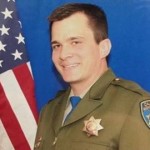
CHP officer hit near Donner Summit dies

By CBS-13

Nathan Taylor

Nathan Taylor

A California Highway Patrol officer who underwent surgery after being struck by a vehicle on Interstate 80 on Saturday has died.

Traffic came to a halt at around 2:30pm west of Castle Peak after Officer Nathan Taylor of Gold Run, who was wrapping up work from a prior accident, was struck by an SUV .

“Most other officers had already cleared that accident; he was there just providing traffic control as they waiting for tow truck ,” said Officer Pete Mann.

Read the whole story


EDC supervisors say no to extra road dollars

By Kathryn Reed

El Dorado County roads won’t be getting any extra money this summer based on a 3-2 vote last month.

The Board of Supervisors agenda item read: “Chief Administrative Office recommending the Board receive and file the Fiscal Year 2015/16 Mid-Year report and provide any direction related to the Fiscal Year 2016/17 budget.”

And while the board tried to give direction about roads, acting CAO Larry Combs said, “I would not recommend your board giving me that direction.” He said this after admitting to not having reviewed the budget and needing more than $50 million for the new sheriff’s building in Placerville.

(Combs works part time and lives in Auburn.)

Ultimately, the majority of the board agreed with him.

The minutes from Feb. 23 read: “A motion was made by Supervisor [Shiva] Frentzen, seconded by Supervisor [Ron] Mikulaco to direct staff to: 1) Provide the Board with a 5-year budget projection; and 2) Provide the Road Fund with 2 million dollars from the General Fund. Motion Failed. Yes: 2 – Mikulaco and Frentzen Noes: 3 – [Brian] Veerkamp, [Michael] Ranalli and [Sue] Novasel Received and Filed – No Formal Action Taken.”

Back in September, Combs got the board to agree to only use road fund money for streets starting with the 2016-17 budget and not supplement it with General Fund dollars as had been the practice of the last 15 years. He gave no reason why. This fiscal year $500,000 is coming from the General Fund for roads. Black Bart on the outskirts of South Lake Tahoe is one road slated for improvements.

Lack of road funding in favor of staff salaries is one of the reasons all five electeds are being recalled. While the discussion at the meeting sounded like most of the supervisors were in favor of increased road funding, that did not occur.

Novasel told her colleagues the roads are particularly bad in Tahoe this year with winter having returned. Pot holes are so large it’s like being on an obstacle course in some locations.

Novasel told Lake Tahoe News that while she supports funding for roads, that without a clear strategic plan and five-year budget forecast she doesn’t believe taking money out of the General Fund without knowing the consequences is the correct thing to do. She said she wanted to be able to look at the big picture and not piecemeal the budget together.

With that said, though, it is the electeds’ responsibility to set policy and give direction to the CAO – not the other way around. However, as a rule this board takes direction instead of gives it.

In the county’s midyear budget report it states that the road budget is starting off with $8.7 million less than expected, in large part because the state pass throughs were less than predicted. Road maintenance money in large part comes from the state in the form of gas tax sales. With vehicles being more efficient, that revenue source has been declining for years. Other state and local revenue streams make up the road maintenance fund.

Laura Schwartz with the chief administrator’s office said the budget is structurally balanced for the next three years – which legally it must be. Still, the county does not do long-term forecasting. The fiscal year starts July 1, though final numbers for that year are not solidified until October after the state has allocated its funding.

The county is projecting property taxes to grow by 4 percent per year. This last year it was just more than 5 percent.

Sales tax projections have been reduced to 2 percent growth to compensate for the reduction in what is collected from gas sales based on price of fuel going down.

Schwartz said, “There will be no new programs or staff without an outside funding source.” Even so, salaries and benefits are expected to increase 4 percent.

There will be a budget workshop in June. The document is usually released near Memorial Day.


EDC voters may be asked to raise snow removal tax

By Kathryn Reed

El Dorado County residents in the basin have been griping about the quality of snow removal service this winter.

It’s hard to keep up with the storms when the equipment is in the shop.

“We will be getting one new snowplow that we purchase this year that will be ready for next year. But we, during the snowstorms earlier this year, three of the six snowplows in South Lake Tahoe were not working. I think we have three now that are over 40 years old,” Pedretti told the Board of Supervisors in February. “It’s a wonder that our guys can keep them going at all. So, we have those problems.”

On the South Shore area property owners pay $20 annually for snow removal, while the fee is $50 on the West Shore in the Tahoma area.

The county is looking at going to voters this year, probably in November, to raise those fees.

“We haven’t decided on an exact number as of today. We calculate that it would cost approximately $55 annually for the West Shore, and $50 for the South Shore, to offset the cost of purchasing snowblowers and graders used for snow removal,” Pedretti told Lake Tahoe News. “However, this does not include the cost for ongoing maintenance of the snow removal equipment or the extra cost of staff that work during snow storms. These costs have not been included in the ‘fees’ in the past and we have not yet decided whether to attempt to recover a portion of these costs or not.”


Study: Nev. one of the worst states for women

By Caitlin Lilly, Las Vegas Review-Journal

If you’re a woman, a new ranking suggests you may not want to live in Nevada, as the Silver State ended up near last for how friendly it is to women.

To find the best states for women, WalletHub’s study compared all states and Washington, D.C., across 15 key factors “that speak to the needs and expectations of women in America.”

These factors were separated into two categories — women’s economic and social well-being and women’s health care and safety — and assigned a point value that were used to determine each states overall rank.

Read the whole story