Obama seeks more coordination on dealing with drought

By Darlene Superville, AP

WASHINGTON — President Obama on Monday directed the federal government to come up with a less reactionary and more long-term strategy for dealing with drought.

About 12.5 percent of the continental U.S. was experiencing drought as of mid-March, said Alice Hill, a key Obama aide on this issue.

That translates into more than 39 million people, or about one-eighth of the U.S. population, living with drought in the lower 48 states, mostly in the West and with much of California suffering through its fifth year of dryness.

Obama issued a presidential memorandum and separate action plan Monday that sets forth a series of goals for the federal government. They include sharing more information about drought risks with state, regional, tribal and local authorities, and improving coordination of federal drought-related activities.

Drought affects the food supply and infrastructure, hurts the economy and increases energy costs, according to the action plan. Drought conditions are also expected to become increasingly more severe due to climate change. Combating climate change is a top environmental priority — as well as a legacy issue — for Obama, who has tackled the matter on a variety of fronts.

“With climate change, we know that drought will intensify and continue to cause us significant challenges,” Hill said in a telephone interview with the Associated Press, explaining some of the rationale behind the president’s call for a more comprehensive and less reactionary strategy for coping with drought.

The goals contained in the action plan are to be carried out using existing resources.

Federal agencies last year pledged $110 million in drought aid after Obama met with governors and other leaders from seven Western states: Arizona, California, Colorado, Montana, Oregon, Wyoming and Utah.

The White House hosted a “water summit” on Tuesday, which was World Water Day, to raise awareness of the importance of safe, sufficient and reliable water resources.

Obama’s drought initiatives were released as he traveled in Havana on a historic, three-day visit to Cuba.


Spring break profitable for Tahoe vacation rentals

By Emily Starbuck Crone, NerdWallet

Move over, Marriott. Hotels were once the default lodging option for travelers, but in recent years, demand has boomed for vacation rentals in private homes. And travelers aren’t the only ones who stand to benefit from this trend; homeowners who rent out their house can turn a handsome profit, especially during peak times like spring break.

Just how much can homeowners pocket in popular areas? To find out, NerdWallet askedHomeAway, one of the largest facilitators of private for-rent properties, to provide data for its most in-demand U.S. spring break destinations, along with nightly rates during that time and year-round. A NerdWallet analysis found that in some spring break hot spots, homeowners can pay off between three and four months of their mortgage by simply renting out their home for two weeks in March — a common spring break period and one when many homeowners are quite possibly traveling themselves.

In many other top spring break destinations, homeowners can pay more than three months of homeownership costs from just two weeks of renting in March. After Breckenridge, the top spot is Miami, then Las Vegas, followed by South Lake Tahoe.

Read the whole story


Rising seas to displace millions on coasts

By David Perlman, San Francisco Chronicle

Millions of Americans living along the nation’s coasts will be forced to move inland by the end of the century as sea levels rise and storm surges become more frequent in this era of global climate change, a team of demographers foresees.

And nearly 700,000 coastal residents in the Bay Area would be forced to move from their low-lying neighborhoods under the most extreme conditions, the forecasters say.

According to their study, published last week in the journal Nature Climate Change, America’s coastal areas, where as many as 13.1 million people will be living, could be prone to flooding by 2100. In the Bay Area, 250,000 people living in low-lying parts of San Mateo County would be forced to move, and in San Francisco some 33,000 would be affected, the researchers calculate.

Their forecasts, they say, indicate that that if sea levels rise 3 feet by the end of this century, many sections of America’s coastal lands will be underwater and a total of 4.2 million people will have been forced to move toward higher ground.

And if the oceans rise by as much as 6 feet, the drowning lands will have sent 13.1 million Americans moving to higher ground, the demographers say.

Read the whole story


Nev. nonpartisan voters growing in importance

By Megan Messerly, Las Vegas Sun

Going into the Nevada caucuses, 49-year-old Catana Barnes wanted to help Vermont Sen. Bernie Sanders win the state.

But that’s not what happened.

The Sanders campaign and the state’s Democratic Party had spent weeks reminding nonpartisan voters, like Barnes, that they could register to vote as Democrats in order to participate in the state’s closed Democratic caucuses on Feb. 20. They could even show up on caucus day and register to vote.


In Nevada, one in five voters identifies as nonpartisan. With third-party voters added in, that number jumps to one in four Nevadans who do not identify with one of the major two political parties. They’re a critical segment of the voting population — they can be the make-or-break group in the general election — but due to the state’s closed caucus and closed primary systems, don’t participate in deciding who makes it to the November ballot.

Read the whole story


West Slope bank robber on the loose

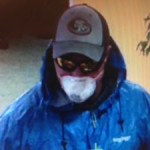
This man is wanted in connection with the March 21 bank robbery in  Georgetown.

This man is wanted in connection with the March 21 bank robbery in Georgetown.

A bank robber got away with an undisclosed amount of cash on Monday at the El Dorado Savings Bank in Georgetown.

The suspect was armed with a black pistol. He entered the West Slope bank March 21 at 12:49pm and demanded money.

He is described as a white male adult, wearing a San Francisco 49ers ball cap, blue rain coat, blue jeans, black sunglasses and a white dust mask over part of his face.

He was seen leaving in a red Dodge Durango.

Anyone with information is asked to call 530.621.6600. The suspect is considered armed and dangerous.

— Lake Tahoe News staff report


SLT murder suspects plead not guilty

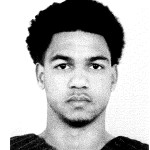
Tristan Batten

Tristan Batten

Harvest Davidson

Harvest Davidson

Two men accused of gunning down a man in South Lake Tahoe in January pleaded not guilty to murder on March 21.

Tristan Batten, 18, and Harvest Davidson, 20, are charged with the shooting death of Dennis Wright Jr., 40, of Amador County. Wright died at Barton Memorial Hospital on Jan. 30 not long after being shot multiple times at the Beverly Lodge.

Two other suspects in the case remain at large. Domenic Seanlee Randolph, 24, and Dion Jermaine Randolph Vaccaro, 26, are considered armed and dangerous, according to the El Dorado County District Attorney’s Office. Detectives said they most recently have lived in the Fairfield, Vallejo, Napa and Sacramento areas. Those are the same locations where Batten and Davidson hail from.

— Lake Tahoe News staff report


South Shore businesses divulge what they need

South Shore businesses need employees with basic math and critical thinking skills, better customer service training, and knowledge of technology and computers. Employers have a hard time with reliability, punctuality, and steady work force.

Those were some of the outcomes from a two-day Q&A volunteers had with area businesses last week.

Businesses said a younger work force is drawn to Tahoe for its proximity to snow and adventure rather than career building and development.

The walk was coordinated by the Lake Tahoe South Shore Chamber of Commerce. Three hundred businesses from Meyers to Round Hill were contacted.

The businesses that have had success with employment recruitment and retention said they’ve been able to study the millennial work force and change their efforts to better recruit the incoming generation and retain them by offering a positive work culture, incentives, and flexibility. Most interviewees said business has been good, as the snow has brought in the necessary tourism numbers to meet their bottom lines. Many businesses even those not directly tied to tourism spoke to the importance of sustaining and growing tourism. However, some stated challenges they have with traffic congestion, limited parking, signage, and poor Internet in the basin.


Ideas for creating a stronger work force included offering trade programs at Lake Tahoe Community College, developing partnerships between businesses in a work-share program, creating a central job posting site, and training employers on millennial recruitment and retention.

The survey results will be compiled and shared in the coming months.

The LTCC Adult Education Consortium will use the data to begin planning courses and curriculum related to industry needs in the region.


Nev. lawmakers differ with their lawyers on transparency

By Michelle Rindels, AP

While the Nevada Legislature’s lawyers are adamant that no lawmaker communications outside of final votes are public records available upon request, several lawmakers say the blackout is extreme and worth revisiting.

Their statements came after the Legislature’s lawyers rejected a request from the Associated Press for a week of emails and appointment calendars for four legislative leaders. The Nevada Legislative Counsel Bureau’s 28-page denial contrasts with responses from some lawmakers in other states who turned over emails and calendars at AP’s request.

“A blanket block on anything seems a little heavy-handed,” said Republican Assemblyman David Gardner, who said he previously assumed emails through his legislative account would be subject to the public records law that compels local governments and state agencies to turn over similar documents. “We’re public servants, and they have the right to know what we’re doing.”

The bureau’s lawyers say the principles that keep private any communication before final votes are longstanding and aim to facilitate free and candid discussion about ideas before a final vote. A bill passed on the last day of the 2015 legislative session that made those principles law simply codified arguments that could be made through case law, bureau lawyer Kevin Powers said in an interview on the public affairs TV show “Ralston Live.”

A number of lawmakers who include Sen. Aaron Ford, the top-ranking Democrat in the Nevada Senate and a subject of the records request, said they are wary of opening up the legislative process further.

“Every legislator … receives constituent emails, some of which are very personal — very personal. They don’t anticipate and expect that the media is going to get ahold of their personal, private issues,” he said in an interview with KNPR radio.

Others are calling for repealing the law, saying the public should be able to see whether lawmakers are behaving and how they are using public resources. They include Democratic congressional candidate Susie Lee, whose primary opponents include a legislator who voted for the bill and is subject to its protections, and Republican Assemblywoman Victoria Seaman.

Seaman was on the legislative operations committee that reviewed the bill on the last day of the session before it passed unanimously in the Senate and Assembly. She said she made a mistake in approving the policy without considering its potential harms.

“I think that if I knew it would be used to shield lawmakers from legislative inquiry, I never would have entrusted them with it,” Seaman said.

The information in emails and calendars could help citizens understand who’s bending the ear of lawmakers and could give insight into why bills lived and died. Sondra Cosgrove of the League of Women Voters Las Vegas Valley said that when she testifies on behalf of a bill, she’d like to know if lawmakers have already made up their minds before going into a meeting.

“I feel like the press and the voting public should be on an equal footing in being able to influence what’s going on,” she said.

Lawmakers are the only ones who can change their open-records policies. Several interviewed by AP seemed conflicted on how exactly to dial back the strong confidentiality rules.

“I would always lean toward being more open and explaining things,” said Republican Majority Leader Paul Anderson, who at the same time gave the Nevada Legislative Counsel Bureau credit for trying to protect the part-time lawmakers from embarrassing missteps and distracting disclosures.

Gardner said relaxing the laws too much could turn public-requests records into political weapons or could swamp the Legislature and its staff. But he said he was already researching how other state legislatures approach the issue to get ideas on how to tweak Nevada’s law.

“If you ask people, they’d say it’s a problem,” he said of the lack of transparency. “The problem will be where is the balance?”


Proposed FCC rules would limit how Internet service providers can use data

By Jim Puzzanghera, Los Angeles Times

Internet service providers would face tough new restrictions on how they could use the personal information of their customers, including their Web-browsing activity, according to privacy regulations proposed this month by a top federal regulator.

In most cases, cable and wireless companies that offer broadband service would need permission from customers to use or share the vast and potentially lucrative trove of data collected about them as they surf the Internet, send email or use mobile apps, the Federal Communications Commission said.

“Simply by using the Internet, you have no choice but to share large amounts of personal information with your broadband provider,” FCC Chairman Tom Wheeler wrote in article on the Huffington Post.

Read the whole story


Nevada’s high-tech twist on adventure tourism

By Benjamin Spillman, Reno Gazette-Journal

As co-founder of the social media photo competition Reno InstaGrammys, Natalie Handler is used to toting a camera everywhere she goes.

But one of her latest projects was unusual: The camera wasn’t in her mobile phone; it was a 40-pound behemoth she hoisted onto her back. The 15-lens camera designed to capture 360-degree images was part of the Google Trekker project, which collects Google Street View-style images for places cars can’t drive.

Handler was hauling it through the International Car Forest art installation near Goldfield as part of a partnership between Google and the Nevada Division of Tourism. Travel Nevada, the colloquial name for the division, is scheduled to announce the launch of the Trekker program on Tuesday.

The mission was a chance for Handler to do more of what she loves, exploring the dusty corners of Nevada and sharing them with others. It was also a modern update in the efforts to promote adventure travel throughout Nevada.

The Nevada Division of Tourism will post online unique footage generated by the Trekker at the car forest and about 20 other destinations and distribute the content to a social media audience that’s been steadily building for the past three years.

Since summer of 2013, when the division launched the “A world within, a state apart,” campaign, the Travel Nevada Instagram account has grown from 362 to about 15,500 followers.

On Facebook in the past month, Travel Nevada has reached more than 1.7 million people in the United States alone – almost all of them in the attractive 18-34 demographic, and many in the key markets of Los Angeles, Phoenix, Sacramento, San Francisco and Salt Lake City.

Read the whole story