Pot smelling like big business in California

By Ian Lovett, New York Times

After decades of thriving in legally hazy backyards and basements, California’s most notorious crop, marijuana, is emerging from the underground into a decidedly capitalist era.

Under a new state law, marijuana businesses will be allowed to turn a profit — which has been forbidden since 1996, when California became the first state to legalize medical cannabis — and limits on the number of plants farmers can grow will be eliminated.

The opening of the marijuana industry here to corporate dollars has caused a mad scramble, with out-of-state investors, cannabis retailers and financially strapped municipalities all racing to grab a piece of what is effectively a new industry in California: legalized, large-scale marijuana farming.

Read the whole story


Source of Tahoe Keys fuel spill unknown

Crews from CleanHarbors on April 12 get supplies out to absorb any of the remaining fuel. Photo/LTN

Crews from CleanHarbors on April 12 get supplies out to absorb any of the remaining fuel. Photo/LTN

By Kathryn Reed

Crews are at the Tahoe Keys Marina today dealing with an oil spill that was reported on Monday.

“We are not able to identify the source and no one has come forward to say that is my oil,” Cathe Pool with Lahontan Regional Water Quality Control Board told Lake Tahoe News.

She had a team at the site on April 11 to try to find the source, as well as take samples. Results from the sampling won’t be back for about three weeks. There is no obvious gasoline smell, so it could be old gas, diesel or hydraulic fluid.

South Lake Tahoe officials checked the storm drains and found no evidence the contaminant was coming through the network of pipes.

There are no fuel tanks nearby and the boats in the area don’t have an obvious leak.

Pool did not have an estimate of how much fuel had been released. A small sheen covers a large area. It could be seen in several of the slips on Monday, but not on April 12.

It is contained to a back channel beyond the marina, close to the professional buildings.

It has not reached Lake Tahoe.

El Dorado County hazmat crews were out early with pads to absorb the spill. According to Lahontan, Tahoe Keys Property Owners Association is taking the lead on the clean up. A boom and skimmer are being used. The TKPOA general manager was not available for comment.

Pool said, “It could be hard to nail this one down” – in terms of the source.


STHS teacher elected to state union board

By Kathryn Reed

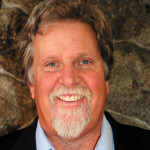
The classroom will never be far from Mike Patterson no matter the physical distance. That is because as a member of the California Teachers Association board he intends to put students at the forefront.

Patterson, who started teaching auto shop at South Tahoe High School in 1988, begins a three-year tenure on the CTA board June 26.

Mike Patterson

Mike Patterson

“I’m going to be the first career tech education teacher on the CTA board in a very long time,” Patterson told Lake Tahoe News. “I’m a firm believer that for the last 20 years in the state of California we have been dismantling the career tech programs. It is a huge disservice to the students of California, and the economy and the businesses in California because we are not training students for good paying careers.”

He had high praise for STHS, where so much emphasis is placed on CTE. But this is an anomaly.

Patterson intends to work with the governor and lawmakers to make career tech ed a priority throughout the state.

It was on Sunday that Patterson found out the state board position was his. That was the last day people could apply for the position. He was the only one to do so, which is not uncommon.

CTA has 17 districts, with Patterson’s including at least part of 23 of the 58 California counties going from Tuolumne to the Oregon border, all east of the coast. Each district has about 14,000 members.

Technically he will remain an employee of Lake Tahoe Unified School District. CTA reimburses the district the cost of his salary and benefits. This could be for nine years if he were to be elected to two more terms, which would be the maximum allowed. He is the first LTUSD employee to be on the state CTA board.

Patterson’s route to this statewide position has been an evolution, having started in 1991 when he was elected vice president of the local teachers union. That same year he became president of the chapter.

“I’ve always been a strong believer that school districts are better when there are strong advocates looking out for teachers, students and the community. That was the driving force for getting involved in 1991,” Patterson said.  “I’ve always been interested in our political process. In the early ’90s I started a political action committee for our association to elect school board members over the years.”

What got him involved at the higher level about 17 years ago was frustration with the state council. There is one elected state council rep for about every 450 teachers. The representative for South Tahoe Educators Association got reassigned and staff at the state level weren’t responsive enough. That led Patterson to getting on the council.

“About 700 of us get together and we argue and debate and vote and decide what policy CTA as a statewide organization wants to have,” Patterson said.

He served for nine years, went off a term and is now completing another six years on the council.

Seven years ago he was elected to CTA’s statewide political action committee, and has been the president the last four years.

The new job will involve even more travel. While there will be days Patterson will be able to work from his home in Meyers, much of his will be on the road. District offices are in Sacramento, Chico, Redding and Yuba City. CTA headquarters are in Burlingame.

“I will be out working with local chapters that need help. They could need help because they are having disagreements with the school board, or superintendent or not able to get a bargaining agreement, or it could be an internal issue where members aren’t seeing eye-to-eye,” Patterson said. “I don’t think there will be an average day.”


U.S. faces threat of losing EU visa waivers

By Laurence Norman, Wall Street Journal

BRUSSELS—The European Union’s executive will discuss on Tuesday the right of U.S. citizens to visit the bloc without a visa, a spokeswoman said Friday.

The European Commission’s discussion is a response to the fact that the U.S. has yet to grant visa-free entry to the whole of the EU, despite pressure from the bloc. The discussion could lead to EU visa waivers for U.S. citizens being shelved within months, although the bloc has some wiggle room over when it must act.

In January 2014, a revised visa system was implemented, giving the commission power to temporarily suspend visa exemptions for foreign countries that didn’t lift their own visa requirements. The new rules were primarily an attempt to put pressure on countries such as the U.S.

Read the whole story


NDOT trying to curb work zone fatalities

With numerous road improvement projects across the region, the Nevada Department of Transportation and Nevada Highway Patrol are making a concerted effort to get people to slow down and pay more attention while driving in road work zones.

“Tragically, there were 12 deaths in Nevada road work zones in a recent one-year period,” Nevada Highway Patrol Trooper Duncan Dauber said in a statement. “Nothing other than zero fatalities is acceptable on Nevada roads. By slowing down, always buckling up and focusing on the road, drivers can help reach that goal. And drivers should pay particular attention when driving through road work zones. If you commit a traffic violation in a road work zone with workers present, you can be cited and fines and demerit points against your license can be doubled.”


FAST FACTS Statewide Work Zone Crashes     July 1, 2014 to July 1, 2015 Total fatalities - 12   /   Total injuries - 612  /   Total crashes – 1,020  Washoe County Work Zone Crashes     July 1, 2014 to July 1, 2015 Total fatalities - 2   /   Total injuries - 53  /   Total crashes – 166

Nevada work zone crashes July 1, 2014, to July 1, 2015
Total fatalities – 12; injuries – 612 ; crashes – 1,020
                                                                        Source: NDOT

This spring and summer, NDOT will continue improvements on Interstate 580 between Glendale Avenue and Moana Lane in Reno. Other road construction projects will enhance I-580 through Washoe Valley and Highway 50 at Cave Rock.

Throughout construction, NDOT works to keep drivers and road workers safe, using protective barriers, warning signs, lower speed limits, lane closures and flaggers in certain work zones. Construction work is also often scheduled during nighttime and off-peak hours.

Nevada law doubles the penalty for speeding, up to $1,000, in any marked road construction or maintenance work zone when workers are present.


Washoe County woman tests positive for Zika

By Reno Gazette-Journal

The woman developed symptoms consistent with Zika virus after returning from El Salvador, according to an announcement from the Washoe County Health District. Symptoms included joint pain, body ache, fever, conjunctivitis, chills, abdominal pain, headache and rash.

A woman with recent travel history to El Savador has the first confirmed case of Zika virus in Washoe County, according to health officials.

The woman’s symptoms resolved within a week, according to health officials. The woman is one of 12 people Washoe County who have been tested in recent weeks. No other positive results have been received to date.

Read the whole story


Nev. establishes ties with NASA for drone business

By Sean Whaley, Las Vegas Review-Journal

STEAD — Nevada and NASA announced last week they are now partners in the drone business.

Gov. Brian Sandoval and Frank Aguilera, deputy director of the Aerospace Systems Program at the NASA Ames Research Center in California, along with other officials, unveiled the new $400,000 NUANCE lab at Reno-Stead Airport north of Reno.

The Nevada Unmanned, Autonomous, and NextGen Collaborative Environment Lab will enable NASA researchers and students with UNR to create drone simulations. The new project is expected to get under way by the end of the month.

Read the whole story


EDC eager to make improvements in Meyers

El Dorado County wants to make improvements in  Meyers. Photo/LTN

El Dorado County wants to make upgrades in Meyers. Photo/LTN

By Kathryn Reed

El Dorado County is on course to make improvements to Meyers in regards to aesthetics and how the highway functions.

While Caltrans is the ultimate decision maker on what goes on with Highway 50, the county has some say about what occurs. The county is using its $61,000 federal On Our Way Grant to figure out how best to make the Meyers corridor – from Highway 89 to Pioneer Trail — look and function better.

The county isn’t doing this alone. Instead of having a public meeting to gather ideas, officials are going to engage the public at various locations.

Safety in terms of access to the magnet elementary school and crossing the highway are the county’s main concerns. Officials also want to make the section into more of a complete streets concept, which includes landscaping.

“We’ve been working with Caltrans really closely with all of this. They seem to be open to concepts, at least what we are talking about,” Brendan Ferry, county transportation guru, told Lake Tahoe News.

The county is focusing on how it might be able to improve the intersection at either Apache Avenue or Pioneer Trail. Caltrans is already planning to build a roundabout at highways 50 and 89.

The problem at Apache is that this is where so many kids cross to get to the elementary school. It’s unsafe, with people often going faster than the 45 mph posted speed limit. Pioneer Trail and the highway intersection have multiple issues – from being a bottleneck on busy days, to not being functional for those on foot or two wheels.

While Meyers is working under a community plan from 1993, much of what is in it and what has been proposed for the update involves creating more of a main street feel through town, improved accessibility and logical connectivity.

“These concepts exist whether the area plan moves forward or not,” Ferry said. That is why it is not a conflict for the county to proceed with plans even though it is working to update the area plan.

The county wants to identify a project soon so it can apply for a grant this summer. The grant, which is due in June, would be funded by the feds and funneled through Caltrans. If El Dorado were to get full funding for a project, it’s possible work could begin in 2017.

“We are just really excited to try to help improve Meyers, especially from safety and access issues,” Ferry said.

—–

Notes:

People will be soliciting comments about the county’s plans for Meyers on April 22 from 11:30am-1:30pm at Century 21; 3-4pm at the magnet school; 4:15-6:15pm at Lira’s.

There will be a booth at the Earth Day festival at Bijou Community Park from 10am-3pm where more comments will be solicited.

For more info, contact Brendan Ferry at brendan.ferry@edcgov.us.


Is algebra an unnecessary stumbling block?

By Karen Matthews, AP

Who needs algebra?

That question muttered by many a frustrated student over the years has become a vigorous debate among American educators, sparked by a provocative new book that argues required algebra has become an unnecessary stumbling block that forces millions to drop out of high school or college.

“One out of 5 young Americans does not graduate from high school. This is one of the worst records in the developed world. Why? The chief academic reason is they failed ninth-grade algebra,” said political scientist Andrew Hacker, author of “The Math Myth and Other STEM Delusions.”

Hacker, a professor emeritus at Queens College, argues that, at most, only 5 percent of jobs make use of algebra and other advanced math courses. He favors a curriculum that focuses more on statistics and basic numbers sense and less on (y – 3)2 = 4y – 12.

“Will algebra help you understand the federal budget?” he asked.

Many U.S. educators, including the architects of the Common Core standards, disagree, saying math just needs to be taught more effectively. It’s fine for students to have quantitative skills, they say, but algebra is important, too.

“Every study I’ve ever seen of workers in whole bunches of fields shows that you have to understand formulas, you have to understand relationships,” said Philip Uri Treisman, a professor of mathematics and of public affairs at the University of Texas. “Algebra is the tool for consolidating your knowledge of arithmetic.”

Bill McCallum, a professor at the University of Arizona who played a lead role in developing the Common Core standards for math, said he would oppose any division of K-12 students into an algebra track and a non-algebra track.

“You might say only a certain percentage of kids will go on to use algebra, but we don’t know which kids those are,” he said.

In New York City, home to the nation’s largest public school system with 1.1 million pupils, just 52 percent of the students who took last year’s statewide Regents test in Algebra I passed, mirroring statistics elsewhere in the country.

Rather than scaling back on algebra, New York City educators have announced an “Algebra for All” initiative that aims to keep students on track by providing specialized math teachers in fifth grade, before algebra is introduced.

“We believe in high standards,” said Carol Mosesson-Teig, director of mathematics for the city Department of Education. “And we believe that the best way to serve the students is to strengthen the instruction.”

Eighteen-year-old Isaiah Aristy took the algebra Regents test twice and failed it both times.

Aristy, now a freshman at the Borough of Manhattan Community College who is hoping for a career in law enforcement, said he was good at math until he hit algebra.

“When it came to x and y and graphing, that’s when I started dropping, and it made me feel low,” he said. “But we don’t need to learn what x and y is. When in life are we going to write on paper, ‘X and y needs to be this?'”

Like millions of community college students across the U.S., Aristy must pass a remedial math class with no college credit, and then pass at least one college-level math class, if he wants to get an associate’s degree.

But Aristy isn’t just repeating Algebra I again. BMCC is one of about 50 community colleges in 14 state that offer an alternative track called Quantway, developed by the Carnegie Foundation for the Advancement of Teaching, that seeks to develop quantitative literacy.

“It includes some basic algebra concepts, but you don’t learn how to factor polynomials or solve complex equations,” said math department Chairman Fred Peskoff.

Project director Karon Klipple said the foundation devised Quantway and a statistics track called Statway in 2011 because of the sheer numbers of students dropping out of community college due to algebra. Sixty to 80 percent of community college students nationwide test into remedial math, and most don’t pass it, she said.

“This is where their hopes and aspirations go to die,” Klipple said. “They’re in college to try to make a better life for themselves, and they’re stopped by mathematics.”


Threats cast shadow over global travel industry

By Justin Bachman, Bloomberg

Travel executives should be a happy lot. A growing Chinese middle class is eager to see the world. Oil prices are stunningly low, leaving consumers more income to spend. A global economy demands we be on the move.

But more immediate threats overshadow the industry.

“The combination of global terrorism and a refugee crisis is creating an unprecedented crisis,” David Scowsill, chief executive of the World Travel & Tourism Council, said in a speech opening the group’s annual summit Wednesday. The council represents the largest travel companies and advocates for greater partnerships with government.

Europe is struggling to balance security and immigration amid a refugee disaster born of the Syrian civil war.

Read the whole story