SLT council ‘on air’ no matter the topic

By Kathryn Reed

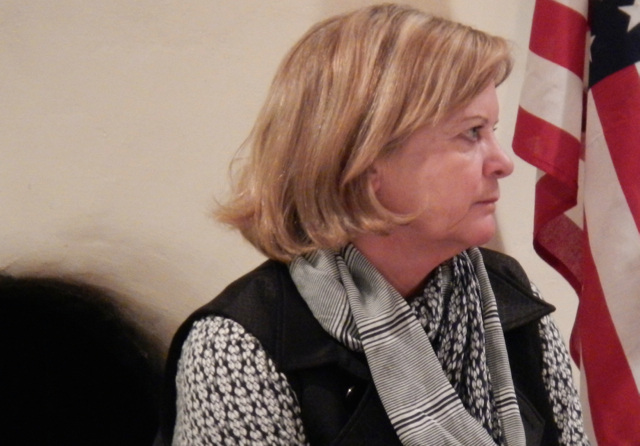
The brouhaha created at the April 5 South Lake Tahoe City Council meeting regarding televising public comments about non-agenda items was quelled this week when the electeds unanimously agreed to keep the camera rolling.

While legally the council has no obligation to televise any portion of its meeting, filming has occurred since 1998. The meetings are now available online – live and after the meeting – and on the cable public access channel. Audio recordings are also available, as are the minutes.

The abrupt stoppage of the airing of non-agenda item comments created a flurry of emails to the council and staff. There was outrage over it not being discussed or voted on by the entire council.

The original decision came about because some members of the public are slanderous with their comments. It’s also an opportunity for people to get on a soapbox about an issue or cause.

Between the city manager, city attorney and city clerk the electeds got a refresher April 19 about the Brown Act, California’s open meeting law. What was drilled into them is that they can shut down abusive language and content. The right to speak is one thing, while the actual words are another.

“There is no safe harbor for slander,” City Attorney Tom Watson said.

With that, he cautioned that if someone were to make a slanderous statement, the city could be held liable by broadcasting it.

That is in large part why previous councils from June 2003 to February 2011 did not air comments about items not on the agenda. A resident went off on his ex-employer at a meeting that was broadcast and the business owner was livid with the city.

The current council, though, believes the public’s right to hear what others are saying outweighs the threat of recrimination.

Per the Brown Act the council could never take away these non-agenda item comments entirely, only the airing of them. Creators of the Brown Act saw the need for the public to be able to have interaction with electeds without having to go through staff, which is why the comment period is mandatory for all legislative bodies in the state.

Watson also talked about how the council may respond to these comments in a limited manner, especially if it means to correct misinformation. There just can’t be lengthy dialog pertaining to non-agenda items otherwise that would be a Brown Act violation.

Bill Crawford, who was on the council for two terms, reminded the mayor that she has the power of the gavel, and if things really get out of hand the sergeant at arms – aka police chief – has the authority to remove someone from the podium and/or room.

Resident Ed Mosur said he wants to retain his right to criticize staff and not be told what he can or cannot say.

A change in policy going forward is people will have four minutes to make comments about non-agenda items instead of three.



3rd suspect in SLT murder behind bars

A third suspect in the January murder at a South Lake Tahoe motel has been arrested.

Domenic Seanlee Randolph

Domenic Seanlee Randolph

Domenic Seanlee Randolph, 22, was apprehended April 19 in Texas.

Dennis Wright, 40, of Amador County died in drug deal-robbery gone bad on Jan. 30. He reportedly had more than 100 pounds of marijuana for sale at the Beverly Lodge.

Randolph, along with Tristan Demond Batten and Harvest Cyle Davidson, has been implicated in the crimes. Still at large is 26-year-old Dion Jermaine Randolph Vaccoro.

It is possible other people could be arrested in connection with the incident.

— Lake Tahoe News staff report


Lake Tahoe’s clarity declines by 4.8 feet

By Lake Tahoe News

Lake Tahoe is getting warmer and that is not a good a thing for its clarity.

In 2015 the pristine waters got a little less so in summer and winter, according to data released April 19 by the UC Davis Tahoe Environmental Research Center and the Tahoe Regional Planning Agency. The average clarity last year was 73.1 feet; 4.8 feet less than 2014.

“It is commonly believed that drought years produce clearer water conditions, but the reality is more complicated than that,” Geoff Schladow, TERC director, said in a statement.

With more runoff this year compared to the last few springs, the summer 2016 reading could bring even more bad news.

Lake clarity is measured with a Secchi disk, which looks like a white dinner plate. The measurement is based on how far someone can clearly see it from the deck of a boat, with multiple readings taken throughout the lake.

Researchers say the clarity loss is not a long-term trend, but instead can be attributed to year-to-year variability based on the conditions in the lake.

“In 2015, the runoff water into the lake was warmer than the previous year on account of the low snow-to-rain ratio,” Schladow said. “As a consequence, fine particles flowed in closer to the surface, where they impacted clarity, rather than plunging to the deeper parts of the lake.”

Summer clarity averaged 73 feet, a 3.7-foot decline over the preceding year. Winter clarity last year declined by 7.6 feet to 71.6 feet.

During most years, clarity is worse in summer than winter. Schladow said 2015 was an exception because the lack of deep mixing during the winter resulted in little of the pristine, deep water being brought up to the lake surface to dilute the clarity-reducing contaminants. Even so, researchers said long-term decline in summer conditions is still a major concern.


Eastern Sierra overdue for large earthquake

By Scott Sonner, AP

Scientists say the Sierra’s eastern front is long overdue for a large earthquake along the California-Nevada line, where a magnitude-7 event expected on average every 30 years hasn’t occurred in six decades.

Nevada Seismology Laboratory Director Graham Kent says the region’s earthquake “drought” is likely one of the sources of a public misconception that it is at a low risk of experiencing a serious earthquake.

He planned to discuss details about the latest research today during an Earthquake Economic Resiliency Forum ahead of the Seismological Society of America’s annual meeting running Wednesday to Friday in Reno.

Kent said a magnitude-6 earthquake or larger typically strikes every 10 years or so along the Sierra Nevada frontal fault system running from south of Yosemite National Park to north of Reno and Lake Tahoe. There were seven magnitude-6.5 or larger in the region from 1915 to 1954, but none since, he said. The last magnitude-6 was 22 years ago in the Carson Valley south of Carson City.

The Federal Emergency Management Agency estimates a 6-magnitude quake could cause up to $1.9 billion in damage in the Reno-Sparks area and $590 million in the populated area of South Lake Tahoe, Kent said.

“Let’s take advantage of this extraordinary quiescent period in our earthquake history,” Kent said. “We have a great opportunity to bring experts together with our community — those who need to put plans in place not only for disaster response but, just importantly, a plan for quick economic recovery.”

The experts are gathering in Nevada days after powerful earthquakes killed hundreds of people in Ecuador (magnitude-7.8) and killed dozens and wounded thousands in Japan (magnitude-7.1). Scheduled speakers include Dick McCarthy, executive director of the California Seismic Safety Commission, and Cory Lyman, director of the Salt Lake City Emergency Management’s “Fix the Bricks” program.

The largest earthquake ever recorded in the Sierra fault system was a magnitude-7.4 in 1872 in Owens Valley south of Yosemite National Park. It’s still the third largest in California history, behind the magnitude-7.9 at Fort Tejon in 1857 and the 7.8-magnitude in San Francisco in 1906. More recent studies of the fault lines and damage suggest the Owens Valley quake was probably bigger than the one in San Francisco, Kent said.

The Seismology Laboratory at UNR chronicled the event in its March newsletter with historical excerpts from naturalist John Muir, who wrote about the violent shaking while at Yosemite.

“I ran out of my cabin near the Sentinel rock, both glad and frightened, shouting, ‘A noble earthquake!'” Muir wrote. “The shocks were so violent and varied and succeeded one another so closely, one had to balance in walking as if on the deck of a ship among the waves.”


Novasel talks roads, other EDC topics

By Kathryn Reed

Road projects dominated the conversation Monday night between El Dorado County Supervisor Sue Novasel and those at the South Tahoe Chamber of Commerce meeting.

“In concept I think it’s wonderful. I see it as an economic driver,” Novasel said of the proposed loop road near the state line.

The county won’t have a say on the project. However, Novasel is on the Tahoe Transportation District board, and it’s that agency which is spearheading the Highway 50 realignment. She is also the county’s rep on the Tahoe Regional Planning Agency Governing Board, which will have a say regarding some aspects of the project.

Her biggest concern with the loop road is parking.

Supervisor Sue Novasel on April 18 talks at the Cantina about an array of El Dorado County issues. Photo/LTN

Supervisor Sue Novasel on April 18 talks at the Cantina to chamber members about an array of El Dorado County issues. Photo/LTN

Carl Hasty, who heads the TTD, last week said the project is not designed to deal with parking.

Novasel likes the idea of a more walkable-bikeable area.

At the other edge of her district that is part of the Lake Tahoe Basin, the proposed roundabout at highways 50 and 89 generated much discussion.

Angie Olson, a Meyers resident, said, “Every morning I smell hot brakes. How are trucks going to slow down for the roundabout?”

Novasel said she has the same concern, as does the California Highway Patrol. It has been brought up with Caltrans, which is the state agency that desires the roundabout. A final decision has not been made to build this. A four-way stop and traffic signals are also possible.

The supervisor said she is lobbying for a designated chain control area. She has also asked Caltrans to create a computer-generated model to simulate what the traffic pattern could be like.

She said Caltrans plans to host a meeting in May about the roundabout, but no date has been set.

Novasel is also encouraging the transportation department to build the roundabout – assuming that is the desired fix for the intersection – at the same time the Echo Summit bridge is rebuilt. Construction is likely to occur in two to three years.

            Other items touched on at the meeting:

·      Tahoe Paradise Park will allow dogs on leashes starting May 5.

·      At today’s Board of Supervisors meeting changes to the vacation home rental ordinance are expected to be approved. They include mandating owners have a business license and endorsing the Good Neighbor policy.

·      Novasel believes hiring a public information officer will help the county to better get its message out.

·      Regarding the senior center, the supervisors have asked for the property to be assessed, as well as an analysis of financial value of the whole area. She said she’d like to write in a deed restriction so certain services would always be provided, like meals for seniors, which is a county program.

·      She defended her Feb. 23 vote not to allocate more money for roads, saying, “It was not a vote against roads, it was a vote against the process.”

·      Novasel said she wants to get money from Red Hawk Casino’s deal with the county so money comes to the basin to deal with roads. “It’s almost an act of God to get that contract changed,” she said. However, when the county in 2012 revised the 2006 agreement Tahoe was not and has never been a beneficiary of the tribe’s money.

·      When budget hearings begin later this spring for the fiscal year that begins July 1, money is expected to be allocated so the Meyers Area Plan can go through California Environmental Quality Act environmental review.


Controversial VRBO fees boost vacation rental costs

By Ellen Creager, Detroit Free Press

Vacation rentals are suddenly more expensive, thanks to a new guest service fee tacked on to the rental price by the big sites VRBO and HomeAway.com.

Travelers looking for a place to stay will pay up to $499 a week extra now that the sites have instituted a 4 percent to 9 percent service fee on all vacation rentals.


How does the fee impact travelers? A look at the VRBO site shows that a typical vacation condo that rents for $1,420 a week is subject to a new 9 percent guest service fee of $121, a $124 cleaning fee and taxes of $163, putting the actual rental price at more than $1,800.

Read the whole story


Nevada’s rooftop solar battle heats up

By Las Vegas Review-Journal

The future of a November ballot referendum seeking to return Nevada’s rooftop solar program to its original, more favorable rates for homeowners remains uncertain, but that hasn’t stopped the opposition from starting its campaign.

Citizens for Solar and Energy Fairness, a coalition including NV Energy that wants the new net metering rates approved by state regulators to remain in effect, is running a television ad and has a new website to educate voters on its opposition to the proposed referendum.

The coalition, which says it wants “affordable energy for all ratepayers,” states that the referendum to restore Nevada’s net metering program, should it qualify for the November ballot, would subsidize rooftop solar customers through those who do not have the systems.

Read the whole story


Loop road specifics begin to emerge

By Kathryn Reed

STATELINE —  “This project is not going to cure everything,” Carl Hasty said of the proposed loop road on the South Shore.

Hasty, the district manager for the Tahoe Transportation District, gave an update on the project April 13 to the Tahoe Regional Planning Agency’s Advisory Planning Commission.

His response was in regards to a question about parking. He added that the only parking associated with the loop road will involve any development that goes on – such as affordable housing.

Part of the presentation included a high-speed video of vehicle and pedestrian interaction near Heavenly Village during Presidents Day weekend. The purpose was to visually show the conflicts. The goal is to do it again on a busy summer day. There was no mention of documenting the area during normal flows to see what, if any, conflicts exist during the bulk of the year.

One of the visuals had a Heavenly gondola tower becoming a feature of the median.

There will be an overpass built to get people from the Harrah’s parking lot to Van Sickle Bi-State Park. Even though this state park has had funding issues since the get-go, it will be the park’s responsibility to keep the overpass clear of snow. The actual structure will be Caltrans’ liability

The loop road plan calls for making the current Highway 50 from about Pioneer Trail to Lake Parkway a city-county street, and turning the street behind Harrah’s-MontBleu into the five-lane highway. To make this happen commercial and residential buildings in South Lake Tahoe would be razed, and streets realigned.

One APC board member asked for a future rendering to identify the right-of-way that will need to be acquired to make the project a reality.

Hasty said the district has talked to properties involved, but no rights-of-way have yet to be secured, but added such a slide could be developed.

Another member asked if the bypass would speed up the flow of traffic.

“You don’t want it to go faster,” Hasty said. The expectation is for traffic to flow more easily and be more fluid.

To get bicyclists through the area more safely a cycle track is being proposed for city-county road.

The draft environmental documents are now slated to be released in June. The final could be done in September. In between those time there will be more public hearings. One alternative is doing nothing – which has to be included. It will address current standards in terms of public safety and traffic issues.


DRI officials fear university takeover

By Associated Press

Members of one of Nevada’s top environmental research organizations fear that the pending exit of its president will lead to a takeover by the state’s largest universities.

Longtime Desert Research Institute President Stephen Wells will leave this summer for another job in New Mexico. Organization officials say they are concerned state leaders will try to fold the institute’s resources into one or both of Nevada’s universities, the Las Vegas Review-Journal reported.

“Our faculty are nervous,” Wells said. “I’ve encouraged them to be very candid about what their feelings are, and I would say most people want to stay as an independent institution.”

Nevada System of Higher Education Chancellor Dan Klaich said there are no plans at this time to overhaul the institute. Klaich did question the potential merits of a takeover during a faculty meeting, but he said that those were theoretical.

“Change makes folks nervous — especially change in leadership,” Klaich wrote in an email Friday. “At an institution like DRI where there has not been a change in almost twenty years and where reorganization was discussed during the budget cuts, it is natural that some are concerned.”

DRI Faculty Senate Chair Dana Trimble wrote in a March 23 email addressed to Klaich and Board of Regents Chair Rick Trachok that the senate would like to formally end talks of mergers, even In the abstract.

“It’s always something on the table — the merger discussion is always happening,” Trimble said. “We worry about it because we’re a very small institution and we feel very vulnerable.”

DRI supporters said the presidential search should be top priority and that questions about the institute’s future can wait.

UNR officials said Friday that the school is not involved in any discussions about a merger.

“DRI is a valued partner in research and graduate education,” UNR President Marc Johnson said in an emailed statement. “The productive collaboration between DRI and UNR has extended over many, many years.”

UNLV officials did not respond to requests for comment.


Supreme Court sides with Google, not authors

By Associated Press

WASHINGTON — The Supreme Court turned away a challenge Monday to Google’s online book library from authors who complained that the project makes it harder for them to market their work.

The justices let stand lower court rulings in favor of Mountain View-based Google and rejected the authors’ claim that the company’s digitizing of millions of books amounts to “copyright infringement on an epic scale.”

Lower courts have said that Google can provide small portions of the books to the public without violating copyright laws.

The Authors Guild and individual authors first filed their challenge to Google’s digital book project in 2005. Google Inc. has made digital copies of more than 20 million books from major research libraries and established a publicly available search function.

In October, the 2nd U.S. Circuit Court of Appeals in New York agreed with a judge who concluded that Google was not violating copyright laws when it showed customers small portions of the books. The authors said the project would spoil the market for their work.

The appeals court said that Google’s “snippet view, at best and after a large commitment of manpower, produces discontinuous, tiny fragments, amounting in the aggregate to no more than 16 percent of a book. This does not threaten the rights holders with any significant harm to the value of their copyrights or diminish their harvest of copyright revenue.”

The three-judge appeals panel did acknowledge, though, that some book sales would likely be lost if someone were merely searching for a portion of text to ascertain a fact.

Writers involved in the lawsuit include Jim Bouton, author of the best-seller “Ball Four,” Betty Miles, author of “The Trouble with Thirteen,” and Joseph Goulden, author of “The Superlawyers: The Small and Powerful World of Great Washington Law Firms.”

The case is The Authors Guild v. Google, 15-849.