Cops use taxpayer resources for photo op outside SLT

Ricci by his handler's vehicle at Emerald Bay. Photo/SLTPD

Ricci by his handler’s vehicle at Emerald Bay. Photo/SLTPD

By Kathryn Reed

Instead of patrolling the streets of South Lake Tahoe an officer drove out to Emerald Bay and onto the sands in front of Vikingsholm for a photo shoot.

The reason, according to Police Chief Brian Uhler, “To provide a nice photo to Ms. [Lisa] Maloff who donated over $100,000 to the police K-9 program.”

Officer Scott Crivelli’s dog Ricci is sitting next to the police vehicle with Emerald Bay in the background. A non-sworn member of the police department took the photo.

Emerald Bay is not in the city limits. This is also State Parks property. Uhler did not explain why the photo shoot wasn’t done in South Lake Tahoe.

Ricci was authorized to do this by “ranking staff”, which Uhler said he considered “justified”.

When asked if the officer was on overtime, Uhler told Lake Tahoe News, “It was justified, so no answer required for your question.”

Marilyn Linkem, head of the Sierra District for California State Parks, did not return a call or email.

“TRPA code generally does not allow vehicle use on beaches or off-road in stream environment zones,” Tom Lotshaw with the Tahoe Regional Planning Agency told Lake Tahoe News. “That said, there have been exceptions allowed in the past for non-environmentally harmful vehicle-use and equipment on beaches on a limited case-by-case basis.”

Uhler said a park ranger unlocked the gate for the officer to get to the beach.

Uhler said this use of city resources – personnel and vehicles – was a good idea because: “It’s good to promote our organization in a positive way. Community outreach is vital to any police organization.”


Placer works to resolve Kings Beach traffic issues

speed boat beach parking

Source: Placer County

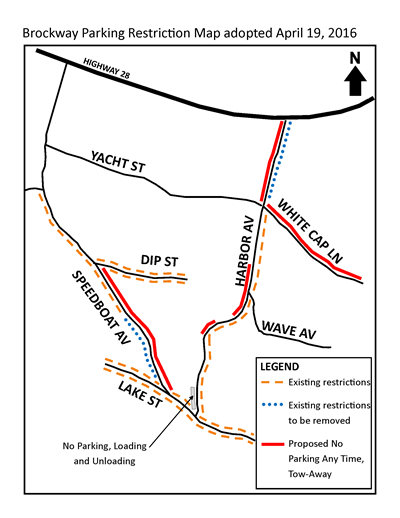
Placer County is about to implement more stringent parking regulations near Speedboat Beach in Kings Beach to help alleviated some of the traffic problems in the surrounding neighborhood.

Supervisors on April 19 voted to tighten parking restrictions on nearby county roads and increase the fine for illegal parking from $25 to $100. The board also approved creating a designated loading and unloading area at the main public access point to the beach.

To help make an immediate impact, county staff will pursue a pilot program to fund additional patrols and enforcement of California Highway Patrol parking ordinances.

Several county supervisors went on a tour Monday with staff to get a visual of the problems and proposed solutions.

Much of the Speedboat Beach area is privately owned. Still, the number of visitors has grown. In large part this is because the beach is more expansive because of the drought. More people means more parking and traffic congestion as well as trash in neighborhoods.

Placer County hosted three community meetings last year to hear from locals about how to solve the problem. The improvements proposed to the board this week were ones that had the highest feasibility and strongest community support.

All changes should be in place by June 1. Supervisors will look at the issue again in a year to determine if further changes are needed.

Signs at the beach will help delineate public access areas, identify beach rules and help visitors better appreciate the beach’s natural resources and the need to protect them.

Staff also recommended replacing the aging wooden stairs that provide access to the beach and installing a permanent public restroom with flush toilets. The board encouraged staff to continue refining those proposals with community input.

— Lake Tahoe News staff report


North Shore bus system improvements planned

Placer County supervisors this week approved the 2016 Tahoe Truckee Area Regional Transit Systems Plan.

It replaces the 2005 document. The new plan formalizes many of the recommendations from local government partners, transit advocacy groups and business leaders who want to develop a world-class transit system for residents and visitors.

It will cost $8.7 million over five years to update the Tahoe Area Regional Transit system. Two models have been drafted, dependent on funding.

The financially-constrained plan upgrades would include:

  • Increased overall services by 67 percent
  • Increased number of buses in operation from 10 to 13
  • Expansion of dispatch and mechanic staff
  • Construction of four bus shelters
  • Improvement of Crystal Bay bus stop facilities.

The financially-unconstrained plan upgrades would include:

  • Elimination of all transit fares
  • Extension of winter and summer 30-minute daytime service north of Squaw Valley and Northstar to Truckee
  • Extension of year-round night service to Truckee
  • Expansion of fleet by two buses.

Funding for the increases in service could potentially come from increased Federal Transit Administration funds, potential transportation sales tax funds, sustained transient occupancy tax funding and contributions from land development.


Calif. rethinks approach to conserving water in drought

By Scott Smith, AP

Water providers throughout California said Wednesday they want to decide how much water their customers need to conserve during the ongoing drought rather than take orders from the state.

Californians remain under strict state conservation orders that have caused many residents to take shorter showers and let their lawns turn brown even as drought conditions ease.

The State Water Resources Control Board had an informational workshop in Sacramento to chart the future of urban water conservation measures. Regulators are considering if they should toss out the restrictions or dramatically change them.

“It’s our responsibility to be sure we have available supplies to meet demands,” Fiona Sanchez of the Irvine Ranch Water District in Southern California told water regulators at the workshop.

Felicia Marcus, chair of the State Water Board, said she would like to allow local control but fears not all local water officials would provide realistic assessments of their water supplies, leading to the possibility of serious shortages.

Nearly a year ago, Gov. Jerry Brown ordered California’s residents and businesses to conserve water during the state’s driest four-year period on record.

Residents statewide used 23.9 percent less water over the nine months ending in February while under orders to use 25 percent less water compared to the same months in 2013.

Residents are now under orders to cut back through October by at least 20 percent.

Several other districts — particularly in Northern California — propose that the state should toss out or significantly relax emergency conservation orders.

Strict orders remain in place, despite significantly more rain and snow this winter flowing into California reservoirs, water officials say.

Continuing to ask Californians to sustain “heroic water conservation efforts” that don’t reflect healthier water supplies today could erode the officials’ credibility with residents when they’re called upon next time to make sacrifices, David Bolland, special projects manager for the Association of California Water Agencies says in a letter to water regulators.

“It is time to end the State Water Board’s mandatory water use restrictions statewide,” says Bolland, who represents hundreds of urban, commercial and agricultural water districts.

Two Sierra Nevada reservoirs that supply about 31,000 residents in Tuolumne County are expected to overflow, making the emergency regulations there unnecessary, Thomas Haglund, general manager of the Tuolumne Utilities District, wrote to the board.

In a letter submitted by several environmental organizations, Tracy Quinn, a senior policy analyst for the Natural Resources Defense Council, cautioned against abandoning conservation measures in response to outcry from water districts.

There is no certainty of another wet winter and much of the state remains in drought conditions, Quinn said. She added that some adjustment to the drought orders are warranted, but conservation should be a way of life for California.

“California’s water challenges are immense and extend far beyond the current drought,” Quinn wrote.
The board is expected to adopt California’s new conservation method in May.


Liberty on target to use more renewables

Construction has begun on Liberty Utilities’ first solar facility.

The Luning Solar Energy Center in Mineral County will be a 50 megawatt project. In addition to the solar facility, a 120 kV power line approximately 1.6 miles long will be constructed from the solar facility to NV Energy’s existing Table Mountain substation. NV Energy will then deliver the energy to delivery points within Liberty Utilities’ California service territory.

Liberty Utilities currently purchases all of its power from NV Energy, except for emergency diesel-generated power. Last year Liberty renegotiated the agreement with NV Energy to exclude coal-fired power whenever possible.


Liberty provides electricity to the California side of the Lake Tahoe Basin, as well as to Truckee and Alpine County.

Renewable resources currently comprise approximately 22 percent of Liberty’s total power mix and meet California’s current mandate, which is scheduled to increase to 33 percent by 2020 and 50 percent by 2030.


SLT councilwoman blurs elected, personal lines

By Kathryn Reed

South Lake Tahoe City Councilwoman JoAnn Conner sat in her official chair on Tuesday lobbying for special favors for her business, though she denied that is what she was doing.

Conner, who owns Golden Bear Events, is putting on an event at the South Lake Tahoe Recreation Center this weekend. She went through the normal permitting process – sort of.

The gym, meeting rooms and kitchen each have an hourly rate.

Her permit does not include the kitchen.

At one point Conner seemed flustered, not even sure that the kitchen rental was even a separate item. Coincidentally, on that day’s agenda was an item to finalize the master fee schedule for all city property. City Attorney Tom Watson showed her how the kitchen is separate.

Yet, Conner had been having correspondence with staff for weeks about the kitchen rental.

JoAnn Conner during the April 19 council meeting claims her issue with kitchen rental the rec center is not personal.

JoAnn Conner during the April 19 council meeting claims her issue with the kitchen rental at the rec center is not personal.

In a March 30 email to Lauren Thomaselli, who oversees the rec center, Conner wrote, “I received the contract for the facility rental for the Home and Garden Show, but there is an error. We do not rent the kitchen for this show as the food vendors have their own set up.”

Five hours later, Conner received an email from City Manager Nancy Kerry stating, “JoAnn, Lauren has revised the contract to reflect the change as you have described, no rental of the kitchen.”

The two engaged in another exchange of emails on April 13 regarding access to the kitchen.

Kerry wrote, “In regards to the rental and use of the kitchen, your application indicated Golden Bear Events does not want or need to rent the kitchen, which is why the [facilities use permit] was revised and sent to you without the rental of the kitchen. [On April 12], we heard very clearly from the court that it is very important to you and to the court to be treated the same as every other business and not receive any adverse impacts, as well as any advantage or favor. Any other business or person who uses the kitchen must pay the rental fee. The city’s permit is with [Gold Bear Events] and you requested the application be amended without the kitchen, which results in the kitchen being locked.”

Conner, after the contract was signed, asked for the kitchen to be open without expecting to have to pay for it. At first she claimed it was only to get water to make coffee.

“I just want to clarify the issue of accessing the kitchen just for water has nothing to do with my business. I just want someone to draw that line,” Conner said at the April 19 council meeting. She called the Humane Society a separate entity and said the nonprofit only needed the water for coffee.

The Humane Society actually needs hot and cold running water because it is selling food, and will need to wash utensils. The county Health Department requires access to the water. If it were only a case of potable water, it would be cheaper to bring in gallon jugs than to rent the kitchen at $25 per hour. (Nonprofits receive a 25 percent discount on rentals.)

Conner claims it is all about a vendor needing access – not her. However, all the vendors are working under Conner’s business license and permit. Vendors pay her as the producer of the event to have access to things like running water, electrical outlets, chairs and tables. (However, the Humane Society has been given a free booth.)

The rec center does not charge renters extra for tables and chairs, though event promoters may tell vendors there is a special fee for those things.

Instead of footing the bill for the kitchen, Conner said the Humane Society would have to pay for it.

On April 13, Niki Congero, who heads the Humane Society, emailed Thomaselli, regarding the kitchen: “I think it might be best if we, the Lake Tahoe Humane Society, rent it then as we are the ones using it. When would be a good time for me to pop in and take care of details/contract and whatever you need?”

In the end, an anonymous donor paid for the kitchen rental on the Humane Society’s behalf.

If Conner were to be seen doing something special for anyone because of her real or perceived pull with city staff because of her elected position – like getting fees waived, this would be currying political favor and is unethical at a minimum, and would be potentially illegal. She could have made her points from the public podium and not her council seat to have ethically avoided the conflict of interest.


South Tahoe house fire kills 3 dogs

Three dogs died in a South Lake Tahoe house fire Thursday night.

Firefighters were able to keep the blaze to the interior of the two-story house, so it’s possible it could be rebuilt. In the mean time, the two occupants of the 3701 Aspen Ave., Unit 4 residence are displaced. There was extensive smoke and fire damage.

A floor heater is being blamed for causing the fire that started on the first floor at 8:22pm April 21.

“There was a bunch of debris around it. When the pilot light kicked on, it ignited the contents,” Fire Chief Jeff Meston told Lake Tahoe News.

He estimates the damage to be about $75,000.

Meston warns people to never place anything on or around a floor heater.

“It’s almost like putting something on top of a barbecue grill,” he said.

— Lake Tahoe News staff report


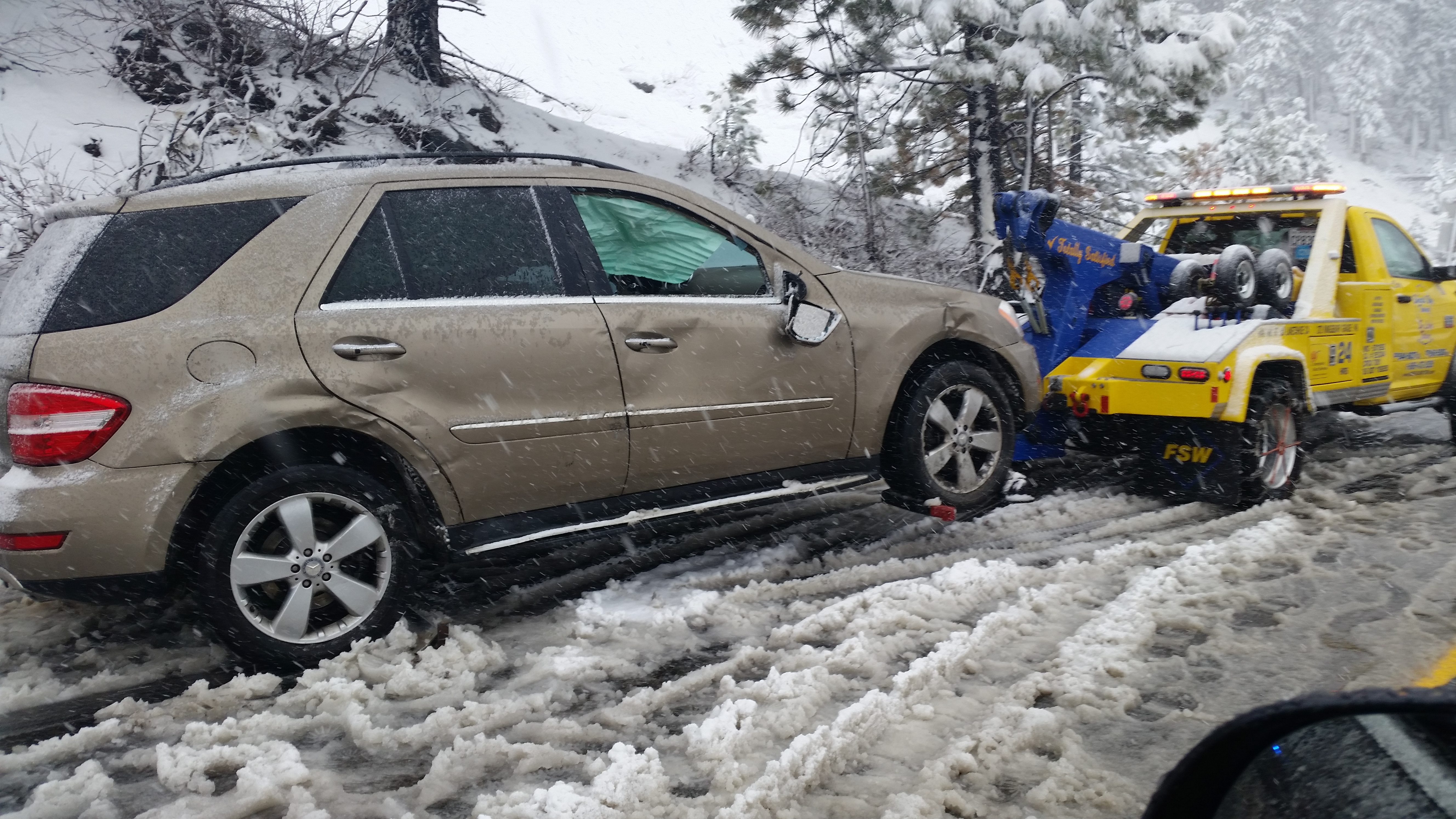
Snow + bad driving = multiple crashes

Slushy roads are causing multiple spinouts and crashes in the Sierra, like this one near Echo Summit on April 22. Photo Copyright 2016 Carolyn E. Wright

Slushy roads are contributing to multiple crashes and spin outs in the Sierra, like this one April 22 at Echo Summit. Photo Copyright 2016 Carolyn E. Wright

Roads in and around the Lake Tahoe Basin are a mess with wet snow and errant drivers.

Interstate 80 going east is currently closed near Boreal with no estimated time of reopening as the California Highway Patrol clears multiple crashes.

Traffic on Highway 50 at Echo Summit was stopped for at least 30 minutes this afternoon while crews cleared several spinouts.

Ruthe Loehr with the Meyers CHP office told Lake Tahoe News, “It is a mess. Right now we called in extra units to work overtime. Everyone is on the road right now.”

A three-car accident near Echo Summit included the vehicle in the back rolling over after it slid into the mountainside. No one was injured.

Loehr said a lot of people are driving in the snow without the proper tires or not having all-wheel or four-wheel drive. She said crews clear one spinout and then go to the next.

A winter weather advisory remains in effect for the basin until 11pm April 22.

While Saturday is expected to be mostly sunny, rain is in the forecast for Sunday and snow on Monday.

— Lake Tahoe News staff report


Officials: Nevada groundwater wells OK in drought

By Associated Press

CARSON CITY — Despite the ongoing drought across Nevada and much of the rest of the west, state officials say wells are in good shape.

KRNV-TV reports that officials with the Nevada Division of Water Resources, Office of the State Engineer, say state wells and aquifers appear to be resilient to the ongoing drought.

State Engineers Office Deputy Administrator Rick Felling says Nevada’s aquifers are able to withstand short-term and even some longer-term droughts.

Division staff measured groundwater levels in wells throughout various hydrographic basins in the state, focusing on water levels primarily in irrigation and stock wells.

Felling says there has been a small decrease across the board due to pumping during the drought but most areas will recover.


Study: Climate change will bring worse weather

By Sean Greene, Los Angeles Times
 
Since Americans first heard the term global warming in the 1970s, the weather has actually improved for most people living in the U.S. But it won’t always be that way, according to a study.

Research shows Americans typically — and perhaps unsurprisingly — like warmer winters and dislike hot, humid summers. And they reveal their weather preferences by moving to areas with conditions they like best.

A study in the journal Nature has found that 80 percent of the U.S. population lives in counties experiencing more pleasant weather than they did 40 years ago.

Read the whole story