Watchdog group: World becoming ‘paranoid’ about media

By David Goldman, CNN

The 2016 World Press Freedom Index shows that world leaders are cracking down on the press’ freedom.
World leaders paranoid about journalism are cracking down on press freedom, continuing a recent trend in which governments are increasing their influence over the media.

“There has been a deep and disturbing decline in respect for media freedom throughout the world,” free press advocacy group Reporters Without Borders said in a report released last week.

The United States ranked 41st on the list, eight spots lower than in 2015.

Read the whole story


Tahoe Keys oil spill investigation expanding

By Kathryn Reed

The investigation into the April 11 oil spill at the Tahoe Keys has expanded beyond that one incident.

“There seems to be a fair amount of things that need to be addressed. I understand there is lot of history in that particular marina that we’ve just been made aware of,” Mitch Goode, wildlife officer with the California Department of Fish and Wildlife, told Lake Tahoe News.

While an oil filter has been recovered, it could not have been responsible for the amount of oil that was recovered, according to Goode and Lahontan Water Quality Control Board officials.

CleanHarbor, which was in South Lake Tahoe for multiple days cleaning up the slick, claimed 30 gallons of oil were skimmed off the surface. The oil was found on a back channel near the professional buildings on Venice Drive.

The contaminated water never reached Lake Tahoe. Goode said wildlife was not adversely affected.

His agency will be following up with the individual who reportedly dropped the oil filter into the water. Divers with the state found it. However, Goode said it has nothing to do with the spill.

Cathe Pool with Lahontan said the enforcement team is meeting Thursday to decide how to proceed. That agency’s investigation is ongoing, as they wait to get the results back from water samples. They are also coordinating efforts with Fish and Wildlife to determine how to go after anyone who may have violated any state laws.

Goode said multiple tips have been flowing into his office since the spill was first reported. Many have nothing to do with this incident, but instead involve other issues at the Keys. His agency is going to investigate all of the leads, with the hope that the source of the latest spill is identified and other concerns are resolved.


Snowpack melting fast despite April storms

By Paige Blankenbuehler, High Country News

Throughout late March and into April, much of the West experienced unseasonably warm days. Then, in late April, temperatures plummeted in Southwest Colorado’s San Juan Mountains and more than 2 feet of wet, heavy spring snow fell. Suddenly, ski boots were out again and for a day or two, it felt like winter was back.

But those storms have only helped a small fraction of the West, with much of the moisture buoying snowpack levels along the Eastern Rockies in Colorado and Wyoming. Meanwhile, the rest of the region is on the opposite trajectory, losing snowpack at record-breaking rates.

At the beginning of April, snowpack levels across the region were “near normal,” says Cara McCarthy, deputy director for the National Water and Climate Center in Portland, under the Natural Resource Conservation Service.

But in just the few short weeks since, that snow is melting faster than climate hydrologists have seen in nearly four decades, bringing the snowpack far below normal in most states in the West.

For California, in its fifth year of drought, this season has been a bit of a roller coaster. In January, snowpack readings increased to 127 percent of normal (up from 90 percent in December) — good news for a state where 30 percent of the water supply is dependent on snow.

Read the whole story


Reno man arrested in murder near Truckee

Maurice Di Aundra Rogers

Maurice Di Aundra Rogers

The Reno man accused of shooting a woman to death and leaving her body under an overpass near Truckee is due in court May 12 after not entering a plea earlier this month.

Maurice Di Aundra Rogers, 33, is being held without bail in the murder of Felicia Romaine Spruell-Jones, 46, of Reno. Her body was found April 4 about 6:20am under the Interstate 80 overpass at Farad.

Detectives are still trying to determine if she died there or someplace as well, as well what the relationship between the two was.

— Lake Tahoe News staff report


Author: Vigorous climate change fight needed

By Linda Fine Conaboy

RENO – Climate change isn’t new news, but it is big news now and its effects are becoming increasingly obvious in the forms of horrendous wildfires, extreme weather conditions and the slow strangulation of some of the ocean’s most beautiful fields of coral.

In the words of journalist, syndicated columnist and best-selling author Naomi Klein, climate change is an unfolding disaster.

Naomi Klein

Naomi Klein

Klein forcefully and without hesitation spoke last week to a large crowd at the University of Nevada’s 2016 Forum for Excellence. This group didn’t have to be persuaded that Klein’s topic is a life-changing consequence of man’s greed and that it isn’t a problem to be dealt with in the future. It’s here and the fallout of climate impacts everyone on the planet.

She opened her talk discussing the December 2015 meeting of world leaders at the Paris Climate Summit, where an agreement was forged to maintain the increase in the average global temperature warming at or below 1.5 degrees Celsius, or 2.7 degrees Fahrenheit. The agreement was formally signed at the United Nations on April 22, leaving many observers scratching their heads, wondering how this aggressive stance will be obtained and then maintained given the world’s continuing dependence on fossil fuels.

According to a press release from 350.org, a group of global activists who have come together to battle climate change, the signing is purely ceremonial until at least 55 countries representing 55 percent of global emissions have ratified it.

Klein calls the Paris Agreements “a concrete plan for disaster. We know what we need to do to stay strong and safe, but we’re only willing to do half of it. What happened in Paris is the best our governments have been able to come up with, but we still have an ecological disaster.”

She said the targets reached in Paris are not binding and there are no repercussions built into the agreement. “The same leaders who set the noble goal of 1.5 Celsius are not really willing to go along with it.

“It was a real fight in Paris to keep climate change below 1.5 degrees Celsius,” she said. “But in Bolivia people depend on glaciers for water. If we allow the climate to warm, many cities will drown.”

Klein said that if we stay on the road we’re now traveling, a temperature increase of 6 degrees Celsius is possible, an untenable figure. “We’re headed there now. Pakistan suffered a heat wave where thousands died and no one even reported on it. India and Pakistan are now in the early stages of a heat wave with another coming next month.”

There was no dodging the fact that Klein is not a fan of the Paris agreement. “The Paris accords are a fake,” she said. “They are just words. Political reality does not match up with reality. We are in such contradiction—our political leaders are not willing to take the needed steps.”

She said she came upon the climate issue later in life—she’s 45 now—describing her previous state as one of “soft denial.” Her wakeup call came 10 years ago when she saw what she called the “tragedy of Katrina” in New Orleans.

“Katrina was ferocious and we’re going to see more Katrina’s as the Earth warms.” She described the dilapidated state of the levees, pre-Katrina, followed by apathy after the heavy weather slammed into the area.

“There was no evacuation plan. If you had money, you could get away; if you were poor, you were abandoned. FEMA couldn’t find New Orleans. This was a case of institutionalized racism,” she said.

Climate change, Klein said, is an accelerant to everything else, making some things uglier and meaner. “Each shock [similar to climate change] will create deeper divisions. Think Flint, Michigan. What makes this possible is perpetual crisis.

“Transition is inevitable, justice is not,” Klein said. “We have to see how the issues are connected.”

According to Klein, we are stuck when it comes to climate change. She calls it a “really bad case of historic timing.”

However, she said that climate change is not a new concept—it’s been acknowledged for decades. She pointed out that as long ago as 1988, Earth was Time’s “Man of the Year”, appearing on the magazine’s cover. That was also the year the first climate change meeting occurred.

But the 1980s were years of many changes such as the fall of the Berlin Wall and NAFTA (North American Free Trade Agreement). These events, according to Klein, meant that capitalism could be brought to the entire world and at the heart of this revolution is privatization.

“It’s hard to regulate privatized entities like railroads and public transit. Climate change is a huge political challenge,” she said.

At this point in her talk, she referenced the challenge faced by those in Nevada who invested in solar energy. “In Nevada,” she said, “the Public Utilities Commission did the bidding of NV Energy, destroying an industry. People are being penalized for doing the right things. Corporate money is corrosive,” she said.

Klein opined that it is difficult for politicians to stand up and take courageous positions, but she mentioned President Obama’s stand on the Keystone XL pipeline, when he cited climate change for the first time. “More victories like this are now being won,” she said.

“We have a lot of no’s when it comes to climate change,” she said. “But we need the yes’s too. If the climate movement is to expand, the movement must articulate what the positive side is.”

She named undertakings like “Black Lives Matter,” where people are refusing to be treated as if they are disposable; fewer fossil fuel projects; women and indigenous people on the front lines; and the BLM’s thwarted push to open public lands for gas and oil drilling as just a few of the positives coming out of the climate change movement.

Fossil fuels, she said, need to stay in the ground. “Small steps won’t help this problem, it’s time for big steps. The time to start is now, but at this late hour, now is not the time for small steps.”

Klein is the author of several books, including her latest bestseller “This Changes Everything; Capitalism vs. the Climate.”



Improving mental health resources could help global economy

By Willa Frej, Huffington Post

Ineffective treatment for anxiety disorders and depression is leading to significant economic problems and hinders human development, suggests research from the World Health Organization.

Those mental health disorders cost the global economy $1 trillion every year, according to the study, which was published this month in the Lancet Psychiatry. Furthermore, mental illnesses cause “a lot of death and a lot of disability,” WHO’s Shekhar Saxena told NPR.

The study estimated what would happen if more resources were dedicated to improving treatment for depression and anxiety in 36 low-, middle- and high-income countries between now and 2030.

Read the whole story


More questions than answers in EDC budget

By Kathryn Reed

El Dorado County has substantial money issues with no obvious solutions.

The Board of Supervisors on Tuesday begins the process to come up with a budget for 2016-17. The fiscal year begins July 1. By law the budget has to be balanced.

The staff report says the county will be nearly $5 million in the hole in 2018-19 if things don’t change. The structural deficit will be part of the discussion April 26.

Even though CAO Larry Combs says the budget is balanced, that’s a bit of misnomer and not everything department heads or electeds want is getting funded.

Combs, in his report, does not suggest any ideas of how to come up with more revenue or to cut expenses. Combs, who is the interim CAO, only works a few hours a week. (One of his other primary jobs is to find a permanent leader for the county.) In the past the CAO has been proactive with the budget, even starting in the fall.

All he offered in his report was, “For any items that the board wishes to add to the budget, something must come out of the budget or a new funding source must be identified.”

The staff report for Tuesday’s session also says, “Use of one-time revenue or one-time savings to fund ongoing operational expenses will not help future year deficit, but will only buy time.”

As with most organizations, salaries and benefits are the biggest drain on the General Fund.

However, the CAO has been driving up those costs. And in doing so he keeps violating board policy when it comes to hires. Anyone hired at step 4 or 5, the latter being the highest, must have this run by the supervisors. Combs hired his friends for the assistant CAO and risk manager positions at the higher levels. The recently appointed chief counsel is also at a higher step. The board has not been brought into the loop on these decisions.

Various county departments put in requests that totaled $7 million more than revenues. There is another nearly $25 million that is also not accounted for and some of those are ongoing expenses.

“Department requests exceed our available revenues by $7 million. If we maintained our ‘status quo’, in other words, no new positions or other appropriations increases and no decreases to department revenues, the budget would be balanced. Requests came in $7 million higher than status quo,” Laura Schwartz, chief budget officer, told Lake Tahoe News.

The job of the electeds is to prioritize spending. There will be several budget hearings in May, with approval set for June.

Schwartz in an email that Combs was copied on did not explain why General Fund money is not being used for road maintenance when this has been the norm for years. This $3 million line item is part of the nearly $25 million that isn’t being funded.

Also not in the budget is the $2.2 million needed to pay the debt on the new sheriff’s headquarters.

“We have purchased the property for the new public safety facility, but we are still researching financing options,” Schwartz said. “You are correct. Currently we do not have funding to build the facility allocated.”

The unfunded list also contains $1 million for land use litigation. In other words, there is no money budgeted to fight the lawsuit challenging the General Plan. Neither Schwartz nor Combs explained how the lawyers would get paid.

One item the five all agreed to was approved last week when they allocated $256,651 in property taxes – annually – to El Dorado County Hills Fire Department. This is the richest fire district in the county.

They went against Auditor-Controller Joe Harn’s recommendation. He told them in writing, “I believe that it will be a major challenge to continue to provide existing services at current levels in future years.”

This is also the same fire district from which Supervisor Brian Veerkamp receives an annual pension of approximately $200,000 from having been the fire chief. He voted for the allocation, even made the motion, without anyone stating this is a conflict of interest.


Quake report spurs retrofitting Nev. buildings

By Scott Sonner, AP

RENO — A new report raising the likelihood of a destructive earthquake striking Salt Lake City in the next half-century has underscored the urgency to retrofit more than 30,000 older brick homes and other unreinforced buildings at high risk of collapsing.

It’s also getting attention in neighboring Nevada, where a significant quake is overdue along the Sierra. Nevada officials are anxious to see if Utah succeeds in a first-in-the-nation attempt to secure federal disaster funds for private homeowners to aid in such efforts.

The Working Group on Utah Earthquake Probabilities, in conjunction with the U.S. Geological Survey, released a report last week projecting a 43 percent probability that a magnitude-6.75 or higher earthquake will strike in Salt Lake along the Wasatch front within the next 50 years. That’s twice more likely than previously believed.

Experts estimate a mangnitude-7 quake would kill at least 2,000 people, seriously injure 7,400 to 9,300 and cause $33 billion in damage.

“The numbers are staggering,” said Cory Lyman, Salt Lake City’s emergency management director.

“It’s almost incomprehensible,” he said last week at the Seismology Society of America’s annual meeting in Reno.

The Federal Emergency Management Agency estimates that 90 percent of deaths in a large Wasatch earthquake would be directly related to the collapse of bricks, cinder blocks and other unreinforced masonry.

Such structures are vulnerable because they have no steel reinforcing bars.

“Concrete doesn’t bend so when it starts shaking like that, it starts to crumble,” Lyman told The Associated Press on Friday.

“Salt Lake City alone has more than 30,000 residential URMs (unreinforced masonry) that are not likely to withstand the impact of any significant tremor,” he said. “It gets to be a little frightening. To mitigate these horrific numbers, we have to have a strategy.”

Craig dePolo, a research geologist at the Nevada Bureau of Mines and Geology, said most deaths and serious injuries occur when people are struck by falling material while fleeing buildings.

“We tell you not to, but if your life is threatened, it’s a common response,” he said.

Chimneys are particularly vulnerable, as are parapets and cornices, the short walls and decorative ledges that run around some building tops.

Most older roofs are not attached to walls, rather the joists sit in grooves under the weight of the roof. Decades ago, most buildings were built that way so if the roof caught fire, it would burn and drop to the ground, leaving the walls intact, dePolo said.

No one was killed, but nearly all the unreinforced buildings were destroyed in rural Wells in 2008 when a 6.0-magnitude quake struck about 60 miles from the Utah line, he said. He estimates there are 1,400 unreinforced buildings in Reno, Sparks and Carson City above a series of Sierra-front faults where earthquakes of 6.5 hit on average every 30 years but haven’t struck in more than 60 years.

“Thirty to 40 percent of those will partially or totally collapse during strong shaking,” dePolo said.

Current retrofitting plans focus on historic buildings at the University of Nevada, including a $2.7 million project at a century-old dormitory. Cheaper alternatives include posting signs on vulnerable structures that say, “Dangerous Building. If Earthquake, Get Back.”

Utah launched a “Fix the Bricks” program in 2012, encouraging residents to retrofit homes when they put on a new roof or remodel. That brings the price down significantly, in the range of $10,000 for a typical single-family bungalow, Lyman said.

He said they got the idea to apply for a pre-disaster mitigation grant after learning FEMA was footing part of the bill for Oklahomans to build tornado shelters.

“Hopefully by next year we will have a template that others can use,” Lyman said about the proposal that would reimburse homeowners for up to 75 percent of retrofitting costs.

Nevada is counting on that, said Graham Kent, director of the Nevada Seismology Laboratory. “When we first saw their program, we asked if they can make sure to develop it so we can go back and plug in the words ‘Reno’ and ‘Sparks’,” he said.


Sierra trees getting cut to prepare for summer

By Marc Benjamin, Fresno Bee

Once bathed in deep green, the forests in the foothills and Sierra east of the San Joaquin Valley are increasingly turning reddish-brown as drought- and beetle-weary trees die by the month.

It is a somber warning of a potentially dangerous summer.


A study next month examining trees from the air is expected to report a near doubling of the 29 million trees already reportedly dead or dying. In 2014, it was already a crisis when 3.3 million trees had fallen prey to the infestation, said Daniel Berlant, communications director for CalFire.

“From the top of Kern (County) to Tuolumne County is the hardest hit,” Berlant said. “But we are seeing tree mortality moving farther north into the Placer County area at the top of Lake Tahoe.”

Read the whole story


Explosion at suspected South Tahoe drug lab

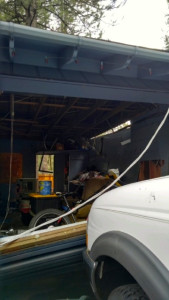
The garage where a suspect drug lab was operating in South Lake Tahoe blew up April 24. Photo/Provided

The garage where a suspected drug lab was operating in South Lake Tahoe blew up April 24. Photo/Provided

A suspected drug lab exploded Sunday night in South Lake Tahoe.

When firefighters got to the house on the corner of Plum Street and Bruce Drive just after 5:30pm April 24 there was no fire.

They put on their gear to make sure nothing was smoldering and no one was inside. Firefighters assisted Animal Control in getting out the two dogs.

Fire officials are calling it a possible honey oil lab. Butane is used to extract THC from marijuana to get the more concentrated honey oil.

The police are in charge of the investigation and they have not responded to inquiries.

— Lake Tahoe News staff report