Outside groups to unleash political ads in Nev.

By Megan Messerly, Las Vegas Sun

The primary election is barely in the rearview mirror, yet outside groups are already ramping up spending in Nevada with their sights on November’s general election.

The groups — a mixture of super PACs and nonprofit “dark money” outfits that don’t have to disclose their donors — have started carving out sizable chunks of airtime.

The official campaign arms on both the Republican and Democratic sides for the House and the Senate are doing so, too.

Read the whole story


Growing concern: Crops raised with oil field water

By Julie Cart, Los Angeles Times

Here in California’s thirsty farm belt, where pumpjacks nod amid neat rows of crops, it’s a proposition that seems to make sense: using treated oil field wastewater to irrigate crops.

Oil giant Chevron recycles 21 million gallons of that water each day and sells it to farmers who use it on about 45,000 acres of crops, about 10 percent of Kern County’s farmland.

State and local officials praise the 2-decade-old program as a national model for coping with the region’s water shortages. As California’s four-year drought lingers and authorities scramble to conserve every drop, agricultural officials have said that more companies are seeking permits to begin similar programs. The heightened interest in recycling oil field wastewater has raised concern over the adequacy of safety measures in place to prevent contamination from toxic oil production chemicals.

Read the whole story


Evacuation orders lifted for Trailhead Fire

Updated 9:50pm:

The mandatory evacuation notice for the Trailhead Fire has been lifted.

Containment is at 50 percent, with acreage burned not growing on Monday. It remains at 5,444 acres.

More than 2,000 people continue to fight the wildland burning in a remote area of El Dorado County.

It started June 28 in the Middle Fork of the American River Canyon in Placer county. The fire is now in El Dorado County and on the Eldorado National Forest.

The stable atmosphere has been good for crews to make progress.

Three firefighters have been injured; heat and lacerations.

The cause remains under investigation.

— Lake Tahoe News staff report


Nev. ready to boost drone industry to next levels

By Nicole Raz, Las Vegas Review-Journal

Nevada is at the forefront of pushing the national unmanned aircraft system or drone industry forward.

“We view all the UAS test sites as equals,” a Federal Aviation Administration spokesman said. “However, Nevada has one distinction: It’s the only site to have the ability to certify unmanned aircraft as an FAA designated airworthiness representative.”

Nevada’s FAA test site designation is giving state drone-industry players a boost to develop the industry to its limits.

Read the whole story


Deadliest roads for animals in California

By Robert Kuo, Sacramento Bee

Driving to San Francisco or Lake Tahoe for the weekend? Be careful not to hit the wildlife on these roadways.

A UC Davis professor who tracks vehicle-animal collisions found that in the Sacramento region, the most animals are killed on Interstate 80 from Davis to Sacramento, the stretch of road known as the Yolo Bypass, as well as on Highway 50 near El Dorado Hills.

In the Sierra Nevada, roadkill was spotted most often along state Highway 89 north of Lake Tahoe, and state Highway 49 in the foothills.

Read the whole story


Majority of Nevadans could be minorities by 2022

By Adelaide Chen, Las Vegas Review-Journal

Nevada isn’t a majority-minority state quite yet. But it is projected to be in 2022 or 2023, according to the state demographer.

Part of the driving force is that more of Nevada’s 19-and-under population is Hispanic than white (non-Hispanic white). As of 2015, the estimate was 41 percent to 37 percent respectively, according to the U.S. Census Bureau’s latest figures released today.

Five years ago, the estimate was 40 percent white and 39 percent Hispanic.

The state demographer, Jeff Hardcastle, said about a third of the Hispanic population had lived in the state before 2000, a third were born between 2000 and 2010, and a third migrated from out of the state or country.

Read the whole story


Report: Hard to know who paid for political ads

By Geoff Mulvihill, AP

It’s getting harder to know who is funding political advertising at the state level as more money becomes anonymous or is filtered from one political action committee to another, a study finds.

In 2014, the last year in which statewide elections were widespread across the country, only 29 cents of every $1 of independent political spending could be tracked easily to its original individual donor, according to the Brennan Center for Justice at the New York University School of Law. The center found that dark money and what it calls “gray” money are rising even faster in state elections than in federal races.

In places where the costs of elections can be cheaper because word is distributed by direct mail rather than television ads, the spending can have a larger impact.

“Dark money can outspend all,” said Larry Norden, deputy director of the Brennan Center’s program on democracy.

Dark money comes from nonprofit advocacy groups that spend on political purposes but are not subject to campaign finance disclosures. Its rise is one of the effects of the U.S. Supreme Court’s 2010 Citizens United ruling, which removed caps on how much corporations, unions and interest groups can spend on advocacy communications that do not specifically call for the election or defeat of candidates.

That category of spending grew from less than $600,000 in 2006 to nearly $22 million in 2014 in the states the study evaluated.

Despite that rise, the majority of state political spending overall remains from traditional channels where most large contributions must be disclosed: candidates’ official committees and party organizations.

One election with heavy dark money spending was the 2014 Arizona race for two seats on the Public Utilities Commission, which was in the throes of a debate over solar power policy.

More than $3 million in dark money poured into that race through social welfare nonprofit groups that in turn donated to PACs that made independent expenditures. That was up from just $3,000 in total outside spending in a similar race in 2008 — and all the money at that time was linked to specific donors.

Some of the 2014 money came from the Arizona Public Service Company, the state’s biggest utility, but the company has not disclosed how much. There has been litigation since then over whether the public has a right to know how much the company funded. A utility spokeswoman did not return a call.

That election is a prime reason Arizona fast became a hub of dark money. In 2006, there was just $35,000 involved in state races. In 2014, it was over $10 million.

The Brennan study was limited to California, the most populous state, along with Arizona and four others: Alaska, Colorado, Maine and Massachusetts. They were among only nine that had statewide elections in the study years of 2006, 2010 and 2014 and collected enough data on political spending by outside groups to do the analysis. The authors said they did not have enough time to delve into all nine states, so they chose the first six alphabetically.

James Bopp Jr., a conservative Indiana lawyer who has pushed for political contributions to be equated with speech, says the Brennan analysis is misleading.

Many states require advocacy groups to report individual donors who specify that their contributions be used for political purposes. Donors who make general gifts, he said, don’t determine whether it will be used in political ads.

“It would be unfair to attribute that spending to any of your donors,” Bopp said.

The Brennan authors said they were surprised not by the growth of dark money but rather by what they called gray money.

It happens when a super PAC, which is supposed to be independent of a candidate’s campaign organization, takes contributions from other PACs. While all the committees are required to report the source of their funding, it takes digging through multiple reports to find out where the money originates.

That category of spending was far larger than the fully dark money in the six states. It was $42 million in 2006 and tripled to $129 million in 2014.

In California, the report found, strict state reporting requirements and tough enforcement meant there was not a surge in dark or gray money like there was elsewhere. Amounts of both were lower there in 2014 than four years earlier. But the report said voters still did not know who was behind political ads before Election Day in some cases.

The Brennan Center is calling for more disclosure requirements, including mandating that donors be made public before elections.
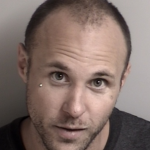


Felon back in South Lake Tahoe jail

A felon with a thick arrest record is behind bars again after being arrested at a South Lake Tahoe beach on Sunday.

Part of Sean Wanamaker’s parole restrictions is that he isn’t supposed to set foot in South Lake Tahoe, police Sgt. Travis Cabral told Lake Tahoe News. Not only has he been in town for a few days, he allegedly got in an argument with a guy that led to a weapon being drawn and then a six-hour standoff on Saturday at Motel 6.

Sean Wanamaker

Sean Wanamaker

While the standoff did not flush out Wanamaker, the 31-year-old didn’t go far. He was located July 3 at Lakeside Beach.

Wanamaker faces charges of a felon being in possession of a firearm, brandishing a weapon, and violating parole.

Wanamaker is well known to South Lake Tahoe officers, as well as law enforcement on both coasts. In January, he was arrested in South Lake Tahoe on a parole violation and resisting arrest. In 2015, he was arrested on North Upper Truckee Road for alleged possession of drug paraphernalia, domestic battery and violation of parole. He has spent time in a New Jersey jail on a burglary charge, and was arrested several years ago in Mammoth on a felony hit and run charge.

— Lake Tahoe News staff report


State gives El Dorado, Placer money for roads

Combined, South Lake Tahoe, El Dorado and Placer counties have been awarded millions of dollars from the California Transportation Commission.

South Lake Tahoe is getting $36.4 million for water treatment improvements and reconstruction of 10 lane miles of roadway on Highway 50 from north of the Highway 89 junction to the Trout Creek Bridge.

El Dorado County’s $16.6 million is for roadway improvements and replacement of the South Fork American River Bridge on Highway 49 near Coloma.

Placer County’s allocation of $799,000 went to Auburn to install Class II bike lanes and make curb, gutter and sidewalk improvements along Nevada Street between Placer Street and Fulweiler Avenue.

In all, 156 projects costing $583 million will be built.

“Caltrans is working to ensure every dollar counts when it comes to California’s transportation infrastructure,” Caltrans Director Malcolm Dougherty said in a statement. “All these investments will benefit Californians now and for decades to come.”

— Lake Tahoe News staff report


Trailhead Fire containment grows to 20%

Updated 6:54pm:

An air and ground assault continues today by firefighters working the Trailhead Fire in rural and remote El Dorado County.

Since the wildland blaze started June 28, 5,044 acres have burned. Contained has increased to 20 percent.

Most of the fire is burning in El Dorado County, which is where all the evacuations are. There are still 2,600 structures threatened. The lines around the fire in Placer County held overnight. Residents there on voluntary evacuation.

The cause of the fire remains under investigation.

— Lake Tahoe News staff report