Hospital to bring addiction recovery, psychiatric care to N. Nev.

By Mike Higdon, Reno Gazette-Journal

The first new behavioral health hospital in almost 30 years will open next year.

Reno Behavioral Healthcare Hospital broke ground near Target in the Meadowood area of Reno. The 80,000 square-foot mental health hospital and addiction rehabilitation center will operate 120 inpatient beds and outpatient services for children, teens, adults and seniors in Northern Nevada and the California border communities. CEO Steve Shell anticipates it will open late spring 2017.

“There is a shortage of services in general, particular residential services, for substance abuse,” said Cody Phinney, administrator at the Nevada Department of Health and Human Services in the Division of Public and Behavioral Health. “So to have those facilities, and West Hills also has that, is immensely helpful because there’s not enough capacity even if someone can pay out of pocket.”

Read the whole story


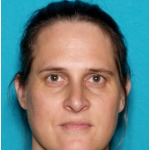
Deputies looking for missing West Slope woman

Kimberly Gillespie

Kimberly Gillespie

The El Dorado County Sheriff’s Office just put out a notice that a Pollock Pines woman has been missing for a week.

Kimberly Gillespie, 42, was last seen July 8, possibly walking in a rural area east of Pollock Pines.

She is deaf and has other disabilities that affect her memory and mobility. She white, 5-feet-inches, approximately 140 pounds, brown hair and brown eyes. She was last seen wearing a sleeveless shirt, blue jeans and tennis shoes.

Anyone with information regarding her location or condition, is asked to call Detective Simon Brown at 530.642.4717.

— Lake Tahoe News staff report


Calif. card room rules still generate conflict

By Greg Moran, San Diego Union Tribune

Guidelines issued by California gambling regulators for how card rooms in the state can conduct some high-stakes card games don’t satisfy Indian gaming officials, who say the new rules still allow card rooms to illegally have Las Vegas-style games.

The June 30 guidelines issued by the Bureau of Gambling Control, a division of the Attorney General’s Office, were aimed at quelling a simmering dispute between tribal casinos, card rooms and state regulators. But it didn’t.

Two trade associations representing the card room industry said they were concerned the new rules would cut into their business. And tribal casinos, who under the state constitution have the exclusive right to conduct Las Vegas style gambling, said the new guidelines solve nothing.

Read the whole story


Low Sierra snow seen as piece of alarming climate picture

By Kurtis Alexander, San Francisco Chronicle

A fifth year of disappointing snow in the Sierra is part of a much larger predicament of record-low snow across the Northern Hemisphere, a setback that scientists identified Wednesday as another reminder of the alarming pace of human-caused global warming.

A panel of climate experts organized by SEARCH, or the Study of Environmental Arctic Change, met in Washington, D.C., to draw attention to the historic melt-off of snow and ice during the first six months of 2016 — and the resulting problems.

“We lost the snow earlier than anytime on record, and it wasn’t just in one part of the snow-covered universe,” said Dave Robinson, New Jersey state climatologist at Rutgers University, noting that as much as 30 percent of the land in the Northern Hemisphere is typically white. “This is the lowest spring snow extent on record.”

Read the whole story


3 new petitions approved for Nov. 8 Nev. ballot

By Sean Whaley, Las Vegas Review-Journal

CARSON CITY — Three petitions — seeking to restore favorable net metering rates, open Nevada’s electricity markets to competition and exempt medical equipment from the sales tax — have qualified for the November general election ballot, Nevada Secretary of State Barbara Cegavske said.

The energy competition measure, which would amend the state Constitution and require two favorable votes in November and in 2018, will be Question 3.

The medical tax measure, also a constitutional amendment requiring two votes, will be Question 4.

Read the whole story


Women more likely than men to face poverty during retirement

By Adam Allington, AP

During their working years, women tend to earn less than men, and when they retire, they’re more likely to live in poverty.

These are women who raised children and cared for sick and elderly family members, often taking what savings and income they do have and spending it on things besides their own retirement security.

The National Institute on Retirement Security, a nonprofit research center, reports that women are 80 percent more likely than men to be impoverished at age 65 and older. Women age 75 to 79 are three times more likely.

While experts cite a pay gap as a major cause for retirement insecurity, other factors play a role, from single parenthood and divorce to the fact that women typically live longer than men.

For Marsha Hall, 60, the process of trying to save for retirement has been nearly impossible.

“I’ve had jobs that included a 401(k) and I was able to put some money aside, every month,” she says. “But then I would get laid off and have to cash out the 401(k) to have money to live on.”

Born and raised in Detroit, Hall is divorced and doesn’t have any children. She works part time as a file clerk. She and her siblings pitch in to care for their 75-year-old mother. Hall says she tries not to think about what her situation will be like at that age.

“My bills are current, I have food,” she says, “but I’m still living paycheck to paycheck, if it wasn’t for Section 8 (a housing subsidy), I don’t know where I’d be living.”

Joan Entmacher, vice president for family economic security at the National Women’s Law Center, says, “The solution to the retirement (funding) crisis starts with the earnings and wage gap.”

That gap narrowed between the 1970s and 1990s, but stopped shrinking in 2001. Women earn about 76 cents to 79 cents on the dollar, compared with men.

Women are more likely to report that Social Security is the biggest source of income — 50 percent to 38 percent for men, according to a recent poll by the Associated Press-NORC Center for Public Affairs Research. Women are 14 percentage points less likely to say they will receive a pension.

Entmacher says women are more likely to take on caregiving responsibilities, which increases the likelihood they will end up working part-time jobs, often for lower wages, and without benefits such as pensions, sick leave and health care.

“The bulk of stay-at-home moms are not these high income, well-educated women that you read about,” she says.

Over a 40-year career, the pay gap between men and women adds up to an average of $430,480, according to the Census Bureau. For minorities and women of color, the number is much higher.

“If we are talking about a 65-year-old black woman, she was born before desegregation,” says Karen Lincoln, a professor at USC and director of a center for geriatric social work.

“This has a huge impact on things like the quality of education they receive, the employment opportunities available to them, and their ability to accumulate wealth,” Lincoln says.

Lincoln points to additional census data showing African-American women are paid 64 percent that of white men, compared with 54 percent for Hispanic and Latina women. In addition to making less, women are much more likely to be single parents, putting additional economic strains on them. In 2013, almost 83 percent of custodial parents were mothers, according to the census.

Starting with the Johnson administration’s “War on Poverty” in 1964, and the creation of safety-net programs such as Medicare and Medicaid, poverty rates among men and women have been falling steadily. In 1966 the percentage of women over 65 living below the federal poverty line stood at 32 percent, compared with 12.1 percent in 2014. For men over 65, the numbers are 23.5 percent and 7.4 percent, respectively.

Yet some analysts say the poverty rate is a poor gauge to assess the quality of life for aging seniors.

“The poverty rate is a deceptive number, it doesn’t reflect the money they (men and women) need to actually exist,” says Jennifer Brown, manager of research at the National Institute on Retirement Security.

Brown says that increasing life spans mean a woman in the United States today will live five years longer than the average man, and about four years longer than her grandmother.

“Those increases in longevity come with huge increases in medical costs,” Brown says. “Especially if you’re taking about things like long-term care or treatment for mental disabilities such as dementia and Alzheimer’s.”

Medicare does not cover long-term care. To get some subsidized coverage, seniors would need to spend down their assets to qualify for Medicaid or have a long-term care insurance policy.

In 2016, the Census poverty threshold for a single person is $11,880. According to UCLA’s Elder Index, a measure of the cost for housing, food, transport and health care, for a 65-year-old renter, the base cost pay for these needs is $24,024 and growing.


Group touts benefits of recreational pot in Nev.

By Chris Kudialis, Las Vegas Sun

Making recreational marijuana legal in Nevada would help eliminate black market sales and generate millions of tax dollars for education, representatives of an advocacy group said Tuesday.

Speaking at the law offices of Ashcraft and Barr, 2300 W. Sahara Ave., representatives of the Campaign to Regulate Marijuana Like Alcohol discussed a new economic study from Las Vegas-based RCG Economics. The study estimates a regulated recreational marijuana industry would create more than 40,000 jobs in Nevada.

“Legalization of recreational adult-use would be a benefit to all Nevadans,” campaign spokesman Joe Brezny said.

Read the whole story


Nev. drought ‘waned’ over past 3 months

By Mark Robison, Reno Gazette-Journal

“The big news is that drought has waned over the last three months.”

That’s the opening sentence of the quarterly report put out July 13 by the Nevada State Climate Office.

Above normal winter and spring precipitation was given as the main reason.

Read the whole story


Nev. receiving $1.8M settlement from test-maker

By Trevon Milliard, Reno Gazette-Journal

Nevada will receive a $1.8 million settlement from test-maker Smart Balanced Assessment Consortium for the screw-up that resulted in only a third of public school students completing standardized exams in 2015.

The settlement, announced Tuesday by the Nevada Attorney General’s Office, is the latest reimbursement reached for testing problems in 2015. In April, testing company Measured Progress agreed to a settlement worth $1.3 million for its role in the debacle.

The settlements come in a combination of cash and discounted products and services.

Read the whole story


Nev. settles with EPA over polluted Spooner Summit runoff

By Sean Whaley, Las Vegas Review-Journal

CARSON CITY — Nevada officials on Tuesday approved a $120,000 settlement with the Environmental Protection Agency over violations relating to polluted stormwater runoff from state Transportation Department-run facilities.

The consent decree, approved by the Board of Examiners, which includes Gov. Brian Sandoval, acknowledges past stormwater management violations and formalizes a plan to prevent future occurrences.

Sandoval said Nevada could have been fined millions of dollars for the violations, which involved transportation department facilities in Reno and at Spooner Summit.

Read the whole story