Most Nev. sheriffs against gun background check initiative

By Ken Ritter, AP

Sheriffs in most Nevada counties have come out against a background check initiative that gun control advocates are supporting on the ballot this November, but the top cop in the largest police agency in the state says he’ll sit this one out.

“This is a vote of the people,” Joe Lombardo, sheriff of Clark County and head of the Las Vegas Metropolitan Police Department, told the Associated Press. “I’ve chosen to remain neutral on this.”

In the rest of the state, most of the other 16 elected sheriffs oppose Question 1, the Nevada Background Checks for Gun Purchases Initiative.

“Any bill that does not address mental health, which I believe to be the core cause of the violence we’ve had across the country, does not meet my expectations,” said Kenny Furlong, sheriff in Carson City. “Mental health has to be addressed.”

Sheriff Sharon Wehrly in Nye County said she believed the initiative chips away at Second Amendment rights.

“It merely places more restrictions on good people, will make it more difficult, and incur unnecessary costs for law-abiding citizens to manage their personal property,” she said.

Backers of the measure say they have broad support — ranging from former sheriffs in Clark and Washoe counties, Bill Young and Mike Haley, to endorsements from groups including the Latin Chamber of Commerce, Nevada Parent Teacher Association, school teachers’ union and the Nevada Public Health Association.

“It really shows how gun violence is impacting various areas in our communities,” said Jennifer Crowe, spokeswoman forNevadans for Background Checks. “They know it’ll make a difference and save lives.”

A yes vote would require background checks through a licensed gun dealer when most firearms change hands, except for temporary transfers of a weapon while hunting or target shooting, for immediate self-defense, and transfers between immediate family members. A licensed dealer would be allowed to charge a fee for a background check.

Proponents call the lack of background checks a loophole in the law.

The National Rifle Association is the leading opponent of the Nevada measure, while supporters are heavily funded by Everytown for Gun Safety Action Fund, a group affiliated with former New York City Mayor Michael Bloomberg.

Furlong helped draft a Nevada Sheriffs’ and Chiefs’ Association letter in February 2013, signed by all 17 sheriffs in Nevada at that time, that opposed expanding background checks for weapon purchases.

Most of the sheriffs in the state met this week in Ely, and considered at that meeting a revision of the February 2013 letter, said Robert Roshak, executive director of the association. Eight sheriffs who signed in 2013 are no longer in office, including Haley in Washoe County.

Chuck Allen, Haley’s successor, said he promised voters he’d oppose the measure when he ran for office in 2014.

“The core principle is not to infringe our right to keep and bear arms,” Allen said during a break in the sheriffs’ meeting on Thursday. “We need to focus on other issues like mental health, keeping firearms out of the hands of criminals, and not imposing more restrictions on law-abiding citizens.”

Furlong experienced a mass shooting when a man who had been diagnosed with paranoid schizophrenia opened fire in a Carson City IHOP restaurant in September 2011, killing four people, wounding seven others and then killing himself.

He said legal mental health confidentiality would have blocked a background check from flagging the shooter as a person who shouldn’t buy a gun.

“How do background checks break through the wall that guarantees and protects a person’s privacy, and still provide for public safety?” Furlong asked

Crowe, however, said data shows low numbers of police officers killed with firearms, gun suicides and rates of women shot and killed by their intimate partners in the 18 states with laws like the one on the Nevada ballot.

“In states that have closed the loophole, they’ve cut gun violence,” she said.

Lombardo’s agency, with about 2,500 sworn officers, covers a city and most of a county home to 2 million residents and more than 40 million tourists a year. The area just topped 100 homicides this year — most of them shootings.

He said he’d support stricter background checks if the initiative passes, and didn’t foresee it being a burden on law enforcement.

“A system in which a private seller can have access to determine if a buyer is a prohibited person, and in a timely manner, is ideal,” he said.


Stateline casino win down for fiscal year

By Sean Whaley, Las Vegas Review-Journal

CARSON CITY — Nevada casinos posted a strong 6.8 percent gaming win in June, helping the state’s major industry eke out a tiny 0.66 percent gain for the fiscal year that ended June 30, the state Gaming Control Board reported Friday.

One of the two down markets was the Strip, which is influenced strongly by baccarat play. If baccarat was excluded from the Strip numbers, the market would have been up 1 percent in fiscal 2016, he said.

The other down market for the year was Stateline at minus 3.8 percent.

Read the whole story


Calif. doctor’s notes not valid at Nev. pot dispensaries

By Chris Kudialis, Las Vegas Sun

Medical marijuana dispensaries should no longer be able to accept California doctors’ recommendations from out-of-state patients to purchase in Nevada, according to an opinion from the state Attorney General’s Office, sent last week to the Department of Health and Human Services.

In a letter from Attorney General Adam Laxalt to health department Director Richard Whitley, obtained by the Sun on Friday, Laxalt’s office responds to two department inquiries on the Silver State’s medical marijuana program: whether patients can use a copy of a completed application at a Nevada dispensary to purchase medical marijuana, and whether out-of-state residents should be allowed to use a California physician’s note to purchase medical marijuana. Laxalt advised against both practices.

The letter and subsequent recommendations came as a surprise to Nevada dispensary owners, who said they were unaware that Whitley had reached out to the Attorney General’s Office. Some went as far as to call the potential effect of the letter “devastating” to business and patients they claim rely on such measures to purchase marijuana while in town.

Read the whole story


Reid betting big on Nev. for Democratic Senate majority

By Paul Kane, Washington Post

LAS VEGAS — The formidable political machine Harry M. Reid built in Nevada will face its most difficult task to date when it tries to hold on to the Senate seat being vacated by the retiring minority leader next year.

After getting crushed in the 2014 midterm elections, Senate Democrats have a chance to win back the majority a year from now. If successful, they would set the chamber’s agenda and, more important in the short run, control the nomination process for the next president’s Cabinet. That would require a four-seat gain if the Democratic candidate wins the presidency or a five-seat gain if the GOP retakes the White House.

With Reid’s retirement, Nevada has the only Democratic-held seat in jeopardy in 2016, and if Democrats can retain it, a lot of pressure would be placed on the five freshman Republicans who are seeking re-election in states that President Obama won twice: Illinois, New Hampshire, Ohio, Pennsylvania and Wisconsin.

Read the whole story


Blazes in the West reveal historic artifacts

By Jim Carlton, Wall Street Journal

SEQUOIA NATIONAL FOREST — Wildfires scorching the West are revealing an unexpected bounty: newly uncovered historic artifacts, some dating back thousands of years.

Looters and government archaeologists are scouring charred earth for the new archaeological treasures—sometimes even before all the embers are out.

Last summer, a fire that blackened about 150,000 acres in the mountains here above Fresno uncovered remnants of a 19th-century logging railroad that had been partially hidden by vegetation. Among the exposed artifacts: battered pails, rusted tin cans, and other vestiges of life from an abandoned logging camp.

“Camp dumps are cool because you can see what people were eating and drinking,” said Alex Verdugo of the U.S. Forest Service, as he recently picked through debris he estimates was discarded as long as 100 years ago.

Read the whole story


Climate change fingerprints all over Calif. wildfires

By Bobby Magill, Scientific American

Reports this week from the front lines of the Sand Fire in Southern California painted the scene as apocalyptic. The drought-fueled blaze was explosive, fast-moving and devastating, burning through 38,000 acres in the Santa Clarita Valley and forcing the evacuation of more than 10,000 homes.

If the state’s wildfire season holds true to forecasts, the Sand Fire will be one of many catastrophic wildfires to scorch drought-stricken forests and shrublands across California this year. So far, only one wildfire has been larger — the 48,019-acre Erskine Fire, which started in June in the Sierra Nevada Mountains and destroyed 250 homes and buildings.

None of the fires haa been among the worst or largest wildfires the state has seen in recent years, but they’re part of a dire global warming-fueled trend toward larger, more frequent and intense wildfires. The number of blazes on public lands across the West has increased 500 percent since the late 1970s, said LeRoy Westerling, a professor studying climate and wildfire at UC Merced.

The outlook this summer is sobering: Wildland fire potential for most of coastal California and the Sierra Nevada Mountains is above normal and is expected to remain that way through October, according to the National Interagency Fire Center.

Read the whole story


Federal money coming to North Tahoe for transit

Between $750,000 and $1 million will be allocated annually for North Lake Tahoe area public transit improvements.

The money is Federal Transit Administration funds that come to the Tahoe Regional Planning Agency that will be passed through to Placer County.

Placer County and the Tahoe Transportation District are now eligible for additional FTA funds following passage of the Fixing America’s Surface Transportation Act. Previously, Placer County received around $420,000 in FTA funds annually for the Tahoe area.

The FAST Act, passed in December 2015, is a federal law that provides long-term funding certainty for surface transportation infrastructure planning and investment. The FAST Act for the first time designates the Tahoe basin as an urbanized area, making it eligible for a larger portion of FTA funds allocated nationwide.

Placer County and TTD are now eligible for two separate FTA grants: one for bus and bus facility programs and another for an urbanized area formula funding program, which makes federal resources available to urbanized areas for operating costs and preventive maintenance.

Placer County will use these additional funds to help implement the Tahoe Truckee Area Regional Transit Systems Plan Update adopted by the Board of Supervisors in April. That plan lays out a five-year plan to increase service frequency and provide later evening service year-round.


Tahoe’s rising water temp concerns scientists

By Linda Fine Conaboy

INCLINE VILLAGE – It’s been said that Lake Tahoe is a complex body that man may never understand. That is true; however, UC Davis and Geoff Schladow, the director of the UC Davis Tahoe Environmental Research Center housed at Sierra Nevada College, are doing their best to prove that statement wrong—well, maybe, just a little bit wrong.

It seems that when experts think they’ve finally arrived at data that absolutely cannot be questioned, that same data is put into conflict with the patterns of human action and natural forces. In fact, a document provided by UC Davis, states that, “These patterns make clear that Lake Tahoe is a complex ecosystem, behaving in ways we don’t always expect.”

Unfortunately, despite all human effort to the contrary, 2015 was the warmest year ever recorded. In fact, 15 of the 16 warmest years have occurred since 2001, Schadlow told his audience at the annual State of the Lake briefing on July 28.

“Climate change is affecting a lot of processes,” Schladow said. But how, is the big question.

While Lake Tahoe may look pristine, clarity is getting worse. Photo/Linda Fine Conaboy

While Lake Tahoe may look pristine, clarity is getting worse. Photo/Linda Fine Conaboy

The answer lies in addressing numerous factors that influence the clarity and ecology of the lake. Such as night time air temperatures, which, according the Schladow, are drastically decreasing. In 1910, 80 days were below freezing; in 2015, only 24 days hit that mark.

Precipitation has remained fairly constant since 1910, Schladow said, but unfortunately, in 2015, only 6.5 percent of it fell as snow—this is the lowest number ever recorded. When precipitation comes from mostly rain, it is warmer and as it flows into the lake it brings with it silt and other detritus not conducive to a pristine body of water.

Schladow said that precipitation amounts in 2015 were devastatingly low leading to a dramatic 9-inch reduction in lake level. “Water normally fluctuates between a maximum level and the lake’s natural rim,” he said. “At the end of 2015, levels were well below that and are now just creeping above the natural rim.”

Research shows that the current drought is not really a long one, based on the study of trees still standing well below the surface of the Tahoe’s deep waters. However, Schladow cautioned, this could be the beginning of a 100-year drought.

As if these facts are not startling enough, there’s more to consider. Lake temperature continues to rise at the fastest rate ever. In 1970, the water averaged 42 degrees Fahrenheit; in 2015, it rose to 42.5 degrees. While this may not seem startling, Schladow said it takes a lot of energy to raise water temperatures even one-half degree. “That’s 15 times greater than long-term normal,” he said.

In addition, winter is now coming later in the year and spring is arriving sooner. Perhaps this is the reason that in the winter of 1975 colder water mixed all the way to the bottom of the lake; in 2015, the mix occurred at only a depth of 215 feet. Considering that at its deepest Lake Tahoe is 1,645 feet deep, this is alarming to scientists.

There is even more disquieting data regarding the state of the lake.

Consider that in 1965, a Secchi disk, a white, round object mounted on a pole or line lowered into the water and used to measure clarity, could be seen at a depth of more than 104 feet. In 2015, that distance had diminished to no more than 69 feet.

Think about the fact that there are no more Lahontan cutthroat trout in Lake Tahoe; the water’s too warm now.

Periphyton grows here now (white algae that coats rock around the shore). In the early days, the rocks were always clean. However, in 2015, there was not much periphyton growth, but Schladow holds little hope that this trend will continue.

Invasive species have made their way to Tahoe in the form of certain types of destructive shell fish and fast-growing non-native plants.

It is proven that the lake is definitely heating up and due to these warmer temperatures, in 2015 its waters did not mix to maximum depth—for the fourth year running. This lack of deep mixing accounts for the highest nitrogen-nitrate levels on record.

While the details are dismal, Schladow smiled as he related details of a partnership between UC Davis and the Desert Research Institute in Reno, a project that hopefully will reveal valuable information to researchers and enable them to begin to chip away at the negative processes affecting Lake Tahoe.

The Nearshore Network represents the initial collaborative step between the science community and the resource management agencies, aimed at developing a comprehensive approach for assessing and managing the nearshore ecology and aesthetics of Lake Tahoe. In lay-person’s lingo, that means that the environment of the shallower parts of the lake reveal myriad important data that are helpful to solving the evolving environmental quagmire facing all of us.

With seven water quality instruments strategically located around the lake, the hope is to obtain a more comprehensive look at the causes of Tahoe’s degradation and perhaps enough information to guide experts in the restoration of Lake Tahoe.

Unlike the deep part of the lake, the nearshore is the area in which lots of people recreate and it is subject to sudden changes in water quality because of storms, inflows from streams (which can have huge impacts on the turbidity of the water), storm drains and erosion.

“We need to know if it’s getting better or worse,” Schadlow said. “With these sensitive instruments, we can measure temperature, clarity, turbidity, wave height, wind speed and a host of other factors. We are monitoring trends. We know if it’s getting better or worse, but we also need to know why—hence the nearshore monitoring.”

As he closed his talk, Schladow said, “We may have reached the point where climate induced effects are similar in magnitude to the traditional effects from land use change and urbanization.”


Area plan maps Placer County’s future at Tahoe

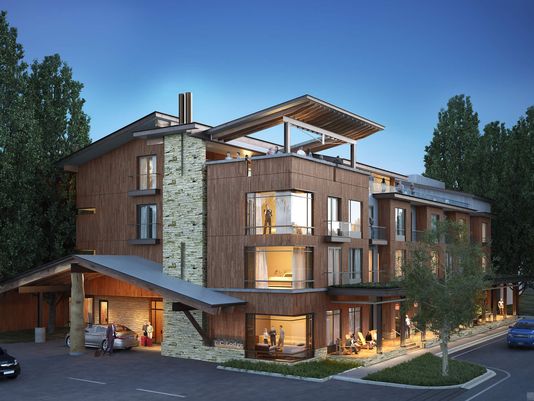
An artist's rendering of the proposed Tahoe City Lodge.

An artist’s rendering of the proposed Tahoe City Lodge.

By Kathryn Reed

If the preferred alternative is not selected, the developer of the Tahoe City Lodge said he would abandon the project.

Samir Tuma spoke before the Tahoe Regional Planning Agency Governing Board on Wednesday about the hotel he wants to build near the lake. This would be the first new lodging facility in Tahoe City in decades.

Tuma wants to build 40 traditional hotel rooms. An additional 31 one-bedroom and 47 two-bedroom suites are planned. The suites would be sold; with the idea most of the time owners would have them in the rental pool for tourists. They would be deed restricted.

Tuma estimates $43 million will be pumped into the economy during construction, with another $8.6 million annual contribution to Tahoe City-Placer County.

He owns 1.4 acres, which was the old Hendriksen site. The project, though, encompasses 3 acres. An agreement between Tahoe City Golf Course, which is owned by Tahoe City PUD, Placer County and Truckee Tahoe Airport, will need to be solidified to make the hotel come to fruition.

“I say we own the ugliest shopping center in Lake Tahoe and we would very much like to change that,” Tuma told the board July 27.

The meeting in Kings Beach was an opportunity for the board to hear from the public about what it thinks of the draft environmental documents for the Placer County Tahoe Basin Area Plan and Tahoe City Lodge project. Written comments will be taken until mid-August.

Of the 24 people who spoke Wednesday, there was not consensus about the documents. Some people are still upset a project is being tied into the area plan documents because there is a sense the plan is written to accommodate the hotel.

Tahoe Marina Lakefront homeowners are upset about a bike-pedestrian path going steps from their property. The condo owners are worried about safety, trespassing and vandalism, as well as losing privacy.

Some question the true environmental impacts, such as whether stream environmental zones will really be improved.

Placer County and TRPA staff acknowledged traffic would get worse.

The area plan encompasses all of Placer County’s acreage in the basin.

It allows for a second unit to be built on certain properties. There had been talk of deed restricting it for workforce housing and saying it could not be a vacation rental. Board member Shelly Aldean told staff she was disappointed this use for those units was removed from the preferred alternative. The Truckee-Tahoe Contractors Association is also an advocate for the secondary dwelling being deed restricted.

Many see the lodge being a welcome addition to town, especially with the upgrades to Tahoe City Golf Course. A partnership with Tahoe City PUD would mean a new clubhouse that would also be available to the hotel to use as meeting space.

—–

            Notes:

·      The deadline to comment is Aug. 15.

·      Final environmental documents should be out in the fall.

·      The TRPA Governing Board is expected to vote on it in January.


Reward offered in 30-year EDC cold case

A 30-year-old murder case now has a $25,000 reward associated with it.

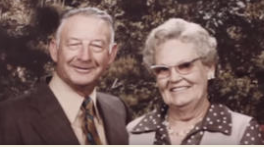
On June 2, 1986, 76-year-old Halley Wing, a grandfather and former law enforcement officer, was gunned down in the driveway of his son’s ranch on the West Slope.

Halley and Bernice Wing

Halley and Bernice Wing

The day of the murder, Wing’s family had plans to celebrate his son’s 49th birthday. That day, Wing noticed a blue sedan driving up the driveway of his son’s empty home in Rescue, which was next door to his home on the adjoining property.

Wing decided to drive over and investigate. His wife, Bernice, watched through binoculars as one of the two suspects got into the passenger side of Wing’s car and opened fire.

Thirty years later and the case remains unsolved.

The Wing family is offering a $25,000 reward for information leading to the arrest and conviction of his killer, and $5,000 for info regarding items that were stolen.

Anyone with information is asked to call Robert Cosley at 530.903.8468 or email robert.cosley@edcgov.us.