Nev. bear biologist bites back at critics with lawsuit

By Benjamin Spillman, Reno Gazette-Journal

A Nevada bear biologist who’s been subjected to heated online attacks is striking back in court.

Carl Lackey, a biologist for the Nevada Department of Wildlife, filed a lawsuit claiming critics used Facebook in a “vicious and calculated effort to damage his reputation and jeopardize his employment.”

The suit names the leader of the Bear League, an animal rights group, and two other people who Lackey claims are responsible for Facebook pages that are rife with attacks.

Read the whole story


SLT cop not indicted in shooting, civil case resumes

Updated 11:54am

By Kathryn Reed

A grand jury has decided there is not enough evidence to indict a South Lake Tahoe police officer who fatally shot an unarmed man in June 2015.

With that decision, it means the civil suit can proceed.

“I am confident we will prevail,” attorney Dale Galipo, who is representing the victim’s mother, told Lake Tahoe News. “In a civil case the only thing a family can seek is monetary compensation. But what is even more important than money is some accountability and responsibility on behalf of the officer and department, and they don’t want to see it happen to someone else’s child.”

Josh Klinge

Kris Jackson

On June 15, 2015, Officer Josh Klinge killed 22-year-old Kris Jackson of Sacramento. Klinge said he thought Jackson had a gun when he fired the single bullet into the suspect’s chest as he was escaping through a window at the Tahoe Hacienda Motel on Lake Tahoe Boulevard.

Klinge had been on paid administrative for about a year. This was at taxpayers’ expense. The department is not able to fill his position until it is determined what his future status will be. The 37-year-old had 10 years of experience before joining the South Lake Tahoe department in January 2015.

“He is not working currently. Beyond that I’m not really able to explain or give you more details. We will wait for all the legal processes to be resolved,” Police Chief Brian Uhler told Lake Tahoe News.

Jackson was on criminal probation at the time of the shooting. On June 1, 2015, he had been arrested by South Lake Tahoe police officers for allegedly possessing several baggies of cocaine, scales and packaging materials. On May 21, 2015, he had been arrested by local officers on a Sacramento failure to appear warrant related to a drug possession charge.

The civil suit was filed in federal court in Sacramento in early 2016. It had been stayed while the grand jury process was going on.

El Dorado County used a court ruling from this year to convene a grand jury in this case with the possibility of charging Klinge with the unlawful use of deadly force.

El Dorado County District Attorney Vern Pierson chose not to comment.

One of the problems with grand juries is oftentimes the documents are sealed, as is the case with this officer-involved shooting. No one knows who was interviewed, what was said or if there might have been even the appearance of favoritism toward one party or another based on evidence, witnesses and the line of questioning.

Galipo is trying to get the grand jury record unsealed, and is hoping it will be made public and not just for his eyes.

Jackson’s father, Patrick Jackson, is represented by attorney Michael Haddad. The two attorneys are working together.

And while Galipo generally finds police officers do a good job, he said they need to be held accountable when they cross the line.

“Who is going to police the police?” Galipo asked.

Depending on how the civil case goes, Galipo said there is the possibility Klinge could face federal criminal charges.


Earthquake shakes Truckee region

A 2.4 magnitude earthquake rocked an area about six miles northwest of Truckee on Tuesday night.

The temblor was felt at 6:35pm on May 2.

Earlier in the day the area was rattled by a sonic boom. It measured 2.9 at 2:12pm.

— Lake Tahoe News staff report


Maintenance worker ignites fire at SLT hotel

A plumber working at the Alder Inn in South Lake Tahoe sparked a fire that spread to the second floor.

The fire was reported at 1:30pm on May 1. Crews were able to rapidly extinguish the blaze on Lake Tahoe Boulevard.

The plumber was using a torch. The fire went up through the wall.

No one was injured.

— Lake Tahoe News staff report


South Tahoe electeds favor sales tax to fix roads

By Kathryn Reed

South Lake Tahoe has the opportunity to raise more than $2.5 million a year that would be spent exclusively on roads.

The City Council on Tuesday heard results from a March poll that was conducted by a consulting firm to gauge the likelihood of whether voters would approve a one-half percent sales tax hike. The results show voters are likely to say yes. The council is expected to make a decision in June about whether to place the question on the November ballot.

The state sales tax rate today is 7.25 percent. It is 7.75 percent in South Lake Tahoe. Measure Q passed with 58 percent of the vote in November 2004 to increase the sales tax by one-half cent. Those dollars go to the General Fund.

What is different with the proposed half cent hike is that it would go to a dedicated source – roads. This is why a two-thirds voter approval is needed. There would be no sunset for the tax.

That increase would equate to another 50 cents on every $100 spent on taxable goods. Groceries and health care are not taxed. Locals and tourists, who use the roads, would be paying for their upkeep through the sales tax. It is estimated visitors would pay 75 percent of the tax collected.

If approved, the tax would go into effect 30 to 60 days after the vote. The city could go out to bid in the winter and have a substantive roads project starting in summer 2018.

Ten years ago is when the public works department started the drum beat for a dedicated revenue source for roads. The council is finally listening.

The horrific conditions of city roads were exposed to an even greater and wider extent this winter. The roads are more like a mountain bike park.

Jim Marino, assistant public works director, told the council “the benefits of a dedicated source are long-term strategic plans and achieving that.” In some ways it’s a piecemeal approach today, without his department able to make substantive gains.

Marino estimates with a known dollar amount being available every season it would take four years to stabilize the roads. In year six or seven, the paving index should start to increase.

Working with utility companies as they make infrastructure improvements would help leverage city money to get even more work done.

The lodging association supports this tax because it will go just to roads. All the potholes make the area look like a poorer community and gives the city a negative reputation, according to Jerry Bindel. Real estate agent Adele Lucas said bad roads also affect her business.

Former Councilwoman JoAnn Conner questioned how the survey came about. Lake Tahoe News wrote about it in March. She also believes last fall’s vote shows voters don’t want a sales tax increase of any kind.

Measure U needed only a simple majority, but lost with only 42.26 percent wanting it. That half cent tax would not have been allocated to anything in particular. However, an advisory measurement showed voters did support roads if the money were to have been dedicated.

Councilwoman Wendy David said it is time for the city and council in particular to take action and take responsibility for the roads. “I believe this is a case when you don’t go forward with roads, you go backward.”

Consultants from True North said 68 percent of the 353 registered voters who were polled favor the tax hike if used for roads, to fix potholes, and to improve safety for drivers-pedestrians-cyclists.

A concern is that older voters are the ones most likely to show up in November, but they are the ones less likely to support a tax hike. That is something to be addressed in marketing the measure.

The survey also showed a majority support a separate roads management authority to oversee that the money is spent as voters expect it to be.


Nevada revenue higher than originally projected

By Seth A. Richardson, Reno Gazette-Journal

Lawmakers got some good news on Monday when economic projections for the state anticipated $100 million more in revenue for the Nevada than previously expected.

The Economic Forum, a nonpartisan group who analyzes and estimates how much money the state has to spend, projected $95.7 million more in state revenue over the next biennium than their initial forecast in December.

Chief Economist Bill Anderson and Daniel White of Moody’s Analytics say wages are increasing, bringing commodity prices and tax revenue with them.

Read the whole story


LTUSD part of statewide cry for safe schools

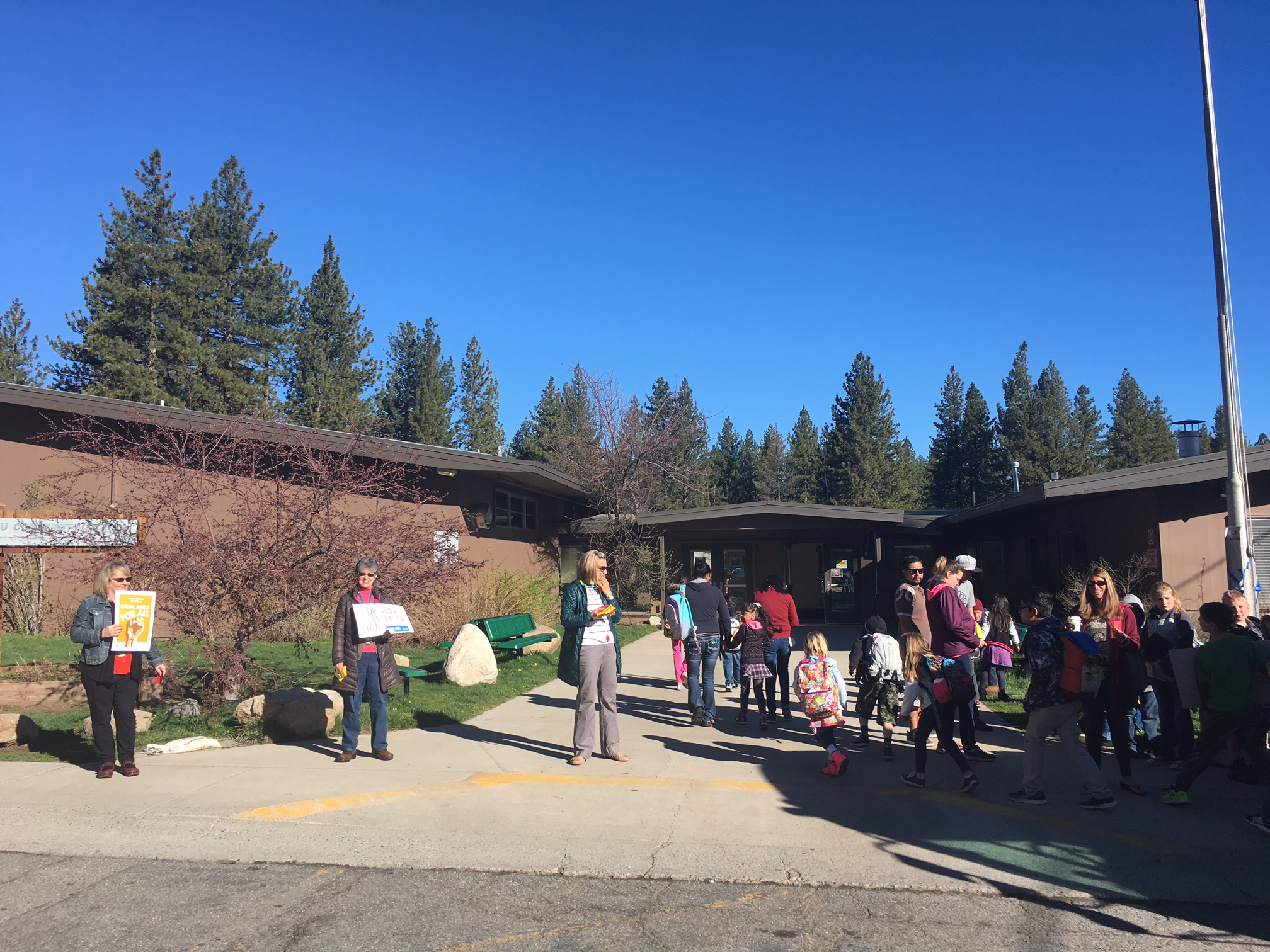
Lake Tahoe Unified educators on May 1 rally for schools to be a safe haven. Photo/Provided

Lake Tahoe Unified School District teachers were among thousands of California Teachers Association members who on May 1 led a massive social justice-focused Day of Action.

Educators, administrators, students, parents and community supporters were marching to protect public education and send the message that all students deserve safe schools — no matter if they are immigrants.

State schools chief Tom Torlakson has urged all California school districts to declare themselves safe havens for students. “All across California, students, parents and community members are walking into schools together today to show that schools must be safe for everyone,” Torlakson said at a rally in the Bay Area on Monday. “Students have a right to public education, regardless of their family’s immigration status.”

— Lake Tahoe News staff report


Mosquito season about to begin in Tahoe-Truckee

By Kathryn Reed

Get out the bug spray – mosquito season is likely to be pretty bad in the Tahoe-Truckee area.

“I would definitely say that with a snowpack this year that is more typical of what winter up here should look like, that we are anticipating a more typical mosquito season, which will feel like increased numbers compared to the last handful of drought years,” Angella Falco, field station manager in Tahoe for Placer Mosquito & Vector Control District, told Lake Tahoe News.

Mosquito larvae was evident in late April in Placer County with ponding water in various locations.

“This is going to be a bad year for mosquitoes, so we all have to work together. First and foremost, dump any standing water or any objects that can trap or collect water,” Krista Jenkins, district manager for Douglas County Mosquito Abatement District, told Lake Tahoe News. “Mosquitoes can breed in small amounts of water like planters, bottle caps, tires, buckets and etc.”

The district was formed in 1969 at which time the Lake Tahoe and Topaz areas of Douglas County were and still are not included. When the West Nile virus hit Douglas County in 2005, the district and Douglas County signed an agreement for services. That contract ends this fiscal year.
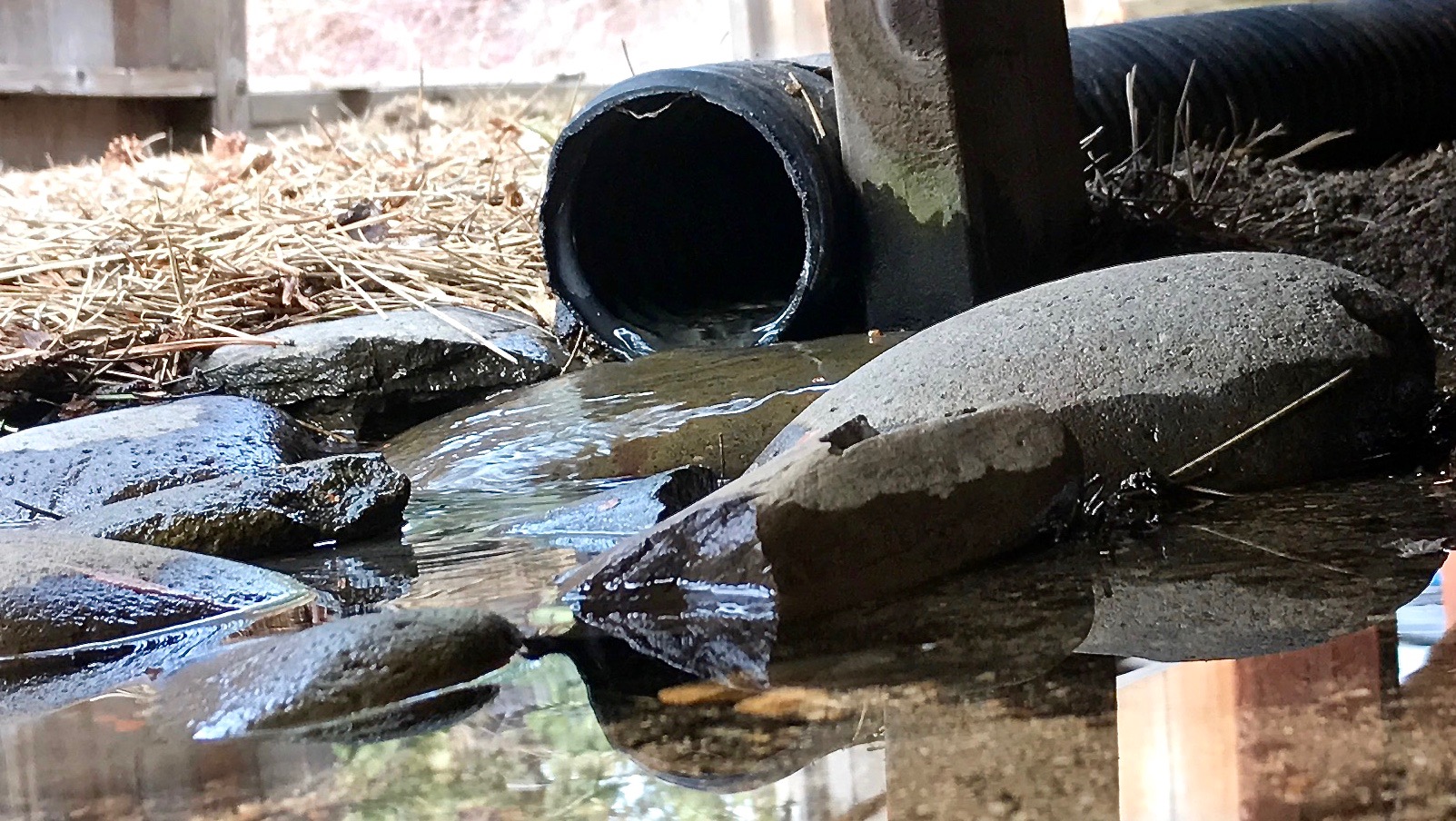
Standing water is where mosquitoes like to breed. Photo/Kathryn Reed

Normally mosquito breeding sites in Douglas County are monitored starting April 1. The long winter didn’t allow that to happen.

“Temperatures of both the air and the water play a big role in how the larvae stages advance. The cooler the temperature, the longer it takes the larvae to mature into flying adults, which is a good thing for us,” Jenkins said. “We cannot treat running water. When the water stops flowing and settles in the low areas or accumulates into catch basins, that is when our job begins. Emergence of the adults can happen from that point on. It all depends on the habitat of each breeding area.”

Vector control officials use what is considered an environmentally-friendly larvicide at Lake Tahoe. This is to prevent the larvae from hatching. If that doesn’t work, then an adulticide is used. This is a chemical that is released into the air.

“There are certain protocols to follow for this to happen and we are very strict about following them,” Jenkins said.

This month is when people throughout the Tahoe-Truckee area are bound to start noticing the pesky biting machines.

“With continued storms well into spring, it’s hard to estimate when adults will begin to emerge, but safe to say that mosquitoes will be found from mid- to late May, well into July based on the current snowpack,” Flaco said. “The lower elevations around the Lake Tahoe and Truckee areas will melt and produce first, and areas in and around the Soda Springs, Serene Lakes and Sugar Bowl areas producing in late spring.”

Residents are encouraged to call their county vector control office if standing water lingers, especially into the summer.

Dumping any water that has collected in containers is encouraged. This is to eliminate breeding zones. Mosquitoes can lay their eggs in the tiniest of areas.

Once they are hatched, mosquitoes are most active at dawn and the first two hours after sunset.

Authorities recommend applying insect repellent containing EPA-registered active ingredients such as DEET, Picaridin, IR3535, or oil of lemon eucalyptus to repel the insects. Wearing pants and long-sleeved shirts is also advised. Repairing torn window screens will keep the skeeters out.

Mosquitoes can carry the West Nile virus. In 2016, there were 442 confirmed cases of the virus in 30 counties throughout California, including one case in El Dorado County. Statewide there were 19 human deaths.

In the Carson Valley, there were three human cases of West Nile in 2016.

“We really have two mosquito seasons up here, snowmelt season with its handful of species, then changing over to our summer mosquitoes during the warm months,” Falco with Placer County said. “Our agency has an extensive surveillance program that includes assessing mosquito larvae and adult mosquito abundance in the spring through the summer. We do extensive treatment for mosquito larvae in snowmelt pools in the spring as well as catch-basin systems in the spring and summer. We also respond to reports of mosquitoes and dead birds. In the past several years of our enhanced surveillance in the Tahoe area, we have not found West Nile virus infected mosquitoes. Hopefully, this remains the case, but there’s no way to predict what the upcoming season may hold.”

Dogs and cats can become infected with West Nile virus, too, but they do not suffer the severe symptoms like humans, horses, and birds.

“We also trap mosquitoes on a regular basis to not only monitor the adult population, but to more importantly have the adult mosquitoes tested for the West Nile virus. This is also part of maintaining our protocols,” Jenkins said.

Water content near Echo Summit 190% of average

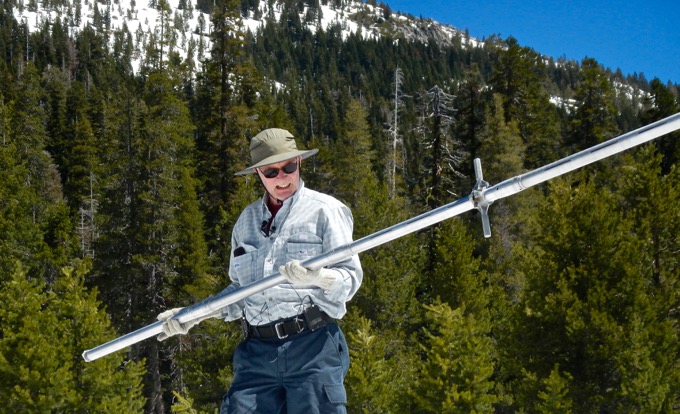
Frank Gehrke on May 1 measures the water content along Highway 50. Photo/Kathryn Reed

By Kathryn Reed

PHILLIPS STATION – Water is not going to be a problem in California this summer and fall.

At the final snow survey of the season near Echo Summit on Monday the numbers showed 27.8 inches of snow, with a water content of 14.6 inches. This is 190 percent of average.

The last reading along the snow field near the entrance to Sierra-at-Tahoe could not be obtained because it was under water. This isn’t unusual for the May reading. But the river of water flowing in the area was more widespread, a little deeper and flowing faster than most years.

During the drought there were times when there was no snow to measure in May.

Frank Gehrke, who does the manual readings for the Department of Water Resources, said the snow is melting at a rate of about one-tenth of an inch a day. At peak snowmelt, it will be about 1 inch a day. That should come later this month.

“The snowmelt is driven by the angle of the sun in the sky and how dirty the snow is,” Gehrke said.

With temperatures supposed to be in the 60s this week, the rate of melt will increase.

Statewide, the readings show the water content for May 1 being 42.5 inches, 196 percent of the average. The numbers compare to 2005 and 2011.

“It’s encouraging news in terms of surface water supply,” Gehrke said. With the abundance of water in reservoirs, it will give many areas the opportunity to allow the groundwater to recharge.

About one-third of Californians rely on this snowmelt for their drinking water or irrigation.

The important thing now is for water managers to monitor storage and flow to avoid flooding issues. Lake Oroville in Butte County is 91 percent of average for the date, Shasta Lake north of Redding is at 109 percent of average.


Nevada looks at replacing aging voting machines

By Sandra Chereb, Las Vegas Review-Journal

CARSON CITY — Nevada lawmakers and election officials got a sneak peek at a new generation of voting machines last week as the state eyes replacing its aging ballot-counting fleet.

“We’re looking at doing it for 2018,” Secretary of State Barbara Cegavske said of a possible timeline to have new machines in place.

The secretary of state’s office invited two vendors certified in Nevada — Election Systems & Software and Dominion Voting — to show off their wares Wednesday in a daylong open house at the Capitol.

Read the whole story