Sandoval to chair National Governors Association

By Ben Botkin, Las Vegas Review-Journal

Gov. Brian Sandoval will help put Nevada’s technology-driven economy on the national stage when he becomes chairman of the National Governors Association.

Sandoval starts his one-year term as chairman this week at the association’s summer meeting in Providence, R.I. Sandoval will use the three-day event that starts Thursday to look at technology tied to energy and transportation, including energy storage, renewable energy, drones, electric vehicles and autonomous vehicles.

“We’re on the ground floor of some of these big, disruptive and new technologies,” Sandoval said in an interview with the Review-Journal.

Read the whole story


Intensity of wildfires a challenge to officials

By Joshua Emerson Smith, San Diego Union-Tribune
 
Wildfire season is getting longer and more intense, and both scientific and forestry experts foresee hotter and drier conditions that would significantly exacerbate the situation.

State and local officials have in the last decade updated efforts to keep people and property safe from out-of-control conflagrations. This includes everything from updated building codes, requirements on defensible space around homes and various forest management techniques.

However, many fear these tactics won’t be enough to keep pace with the worst consequences of powerful blazes, which have ripped through the state’s forests with growing frequency and size over the last few decades.

Read the whole story


Truckee contending with smoke from I-80 fire

Updated 10:12pm:

The Farad Fire is at 600 acres and 5 percent containment. Firefighters will continue to construct control lines in preparation for Tuesday’s late afternoon winds that are expected to be 20 mph.

There are no evacuation orders in effect, but patrols will monitor the seven identified threatened structures in the Gold Ranch and Verdi Peak area. Interstate 80 has reopened with two lanes east and one lane west.

—–

Smoke from the Farad Fire is blowing into the Truckee area.

The fire has closed Interstate 80 in both directions near the California-Nevada state line.

It was first reported July 10 at 1pm along the interstate just west of Verdi.

Authorities are asking people to avoid this area. 

It has burned at least 500 acres. The fire is moving northeast toward Verdi, about 12 miles from Truckee. No structures are threatened.

The National Weather Service in Reno had issued a red flag warning for gusty winds and low humidity for Monday from 11am-11pm for this area.

— Lake Tahoe News staff report


Massage owner accused of sexual battery

The owner of a South Lake Tahoe massage parlor was arrested on sexual battery charges.

Qiteng “Eric” Lu, owner of Chinese Magic Massage on Highway 50, was arrested July 6 on charges of penetration by a foreign object, sexual battery and attempting to prevent a witness from reporting a crime.

The 34-year-old victim told police she was battered during her massage.

The South Lake Tahoe Police Department is requesting that anyone with information about this case, or anyone who had a similar experience at this business to call the South Lake Tahoe Police Department at 530.542.6100 or Secret Witness at 530.541.6800.

— Lake Tahoe News staff report


Conviction in EDC first degree murder trial

The last of three trials for the four defendants in a 2015 El Dorado County murder ended with a guilty verdict.

Nalana Omega was found guilty last week in the stabbing of Pete Thomas, 55. Thomas’ body was discovered Feb. 3, 2015, at a home in the town of El Dorado.

According to authorities, it was a robbery and murder.

The three others also convicted of first degree murder are Roberto Barrera, Raul Gonzalez Jr. and Danielle Marie Weed.

— Lake Tahoe News staff report


South Lake Tahoe council to vet future of VHRs

By Kathryn Reed

The much anticipated vacation home rental study commissioned by South Lake Tahoe doesn’t say much that people didn’t already know.

On July 11 the study titled Socioeconomic Impacts of Vacation Home Rentals in South Lake Tahoe will be the subject of a workshop by the City Council.

The council will likely discuss whether a cap should be placed on the number of vacation home rentals allowed throughout the city or in particular neighborhoods, if the permitting process should change, enforcement procedures, fines, and other related topics.

The public will have an opportunity to offer comments, suggestions and feedback. The workshop will follow the regular meeting which starts at 9am, but it is not time certain when the VHR discussion will commence.
                                                                                                                            Source: South Lake Tahoe VHR study

The report, which cost taxpayers $77,000, had its first public airing on June 13 when the consultants who put it together gave an overview for the council.

The purpose, as stated in the report, was “to examine the wide range of factors that may be influenced by the growth of the sharing economy, and evaluate the socioeconomic impacts of those factors.” This study was a partnership between faculty at California State University, Sacramento and Michael Baker International.

The report acknowledges that the city’s data on VHRs was “incomplete or inconsistent and required a great deal of processing.” Recent data was abundant, long-term wasn’t.

This led the researchers to use public data such as the Census, American Community Survey, multiple listing service, and economic and tourism reports.

Surveys and public meetings provided other content. Twenty-three percent of respondents to the resident survey identified themselves as VHR owners or operators.

In the report is an alarming admission by the consultants: “To the extent possible, data was verified for correctness and completeness; however, none of the data is guaranteed for accuracy, and the study team makes no warranties or guarantees on the validity of the data used in this report.”

Researchers also analyzed VHR related studies done in other locales.
South Lake Tahoe is not unique in losing long-term rentals when owners start using the property for short-term rentals. One study showed when restrictions were placed on where VHRs were allowed, the value of the property went up somewhat in VHR-allowable areas, while the decrease in value was greater where VHRs were not allowed.

This is what the data shows for South Lake Tahoe regarding the effects of VHRs on home values:

·      A VHR with an average allowed maximum occupancy of nine sells for about 8.5 percent more than a similar house not licensed to be a vacation home rental.

·      The presence of the average number of VHRs within a zero to a tenth mile of a home, and a tenth to quarter mile of a home, respectively raise the home’s selling price by 2.9 and 3.6 percent.

·      The presence of the average number of VHRs with a quarter to half mile of a home, and a half to one mile of a home, respectively lower the home’s selling price by -5.3 and -9.1 percent.

To the question of what would happen if VHRs were to go away, the research found, “The most dramatic impacts that phasing out VHRs in the city will have is the significant loss of TOT, and a shrinking of the city’s tourist economy. Occupations that support the VHR industry will follow the VHR market, and move into neighboring jurisdictions where VHRs are still allowed. While the city will still be the primary location for much of the region’s entertainment and recreation, there will likely be less diversity in the tourist economy as tourists staying in VHR accommodations outside the city look for recreation options closer to their VHRs.”

Many people claim if VHRs were reduced this would help locals with having more choices to live. Not true, says the study.

“VHRs make up less than 25 percent of the city’s vacant housing stock. Addressing problems with the currently operating VHRs treats only a part of the problem facing the city in regard to the lack of affordable housing and the mismatch between incomes and housing costs experienced by residents employed in the tourist industry,” the report states.

One potential way to loosen up the housing market would be to assess a fee on vacant houses.

Researchers looked at hybrid policy ideas such as:

·      Property transfer fee for properties that are not primary residences or intended for long- term rental.

·      Vacant property impact fees for properties that are left unoccupied for more than a certain number of days each year.

·      Regulatory relief or other incentives for absentee property owners who elect to offer their property as a long-term rental.

·      Partnership with the TRPA to explore opportunities for creating a new commodity market that addresses the environmental impacts resulting from tourists moving out of hotels/motels and into the neighborhoods.

·      Establishing a means for motel owners to convert units to permanent housing.

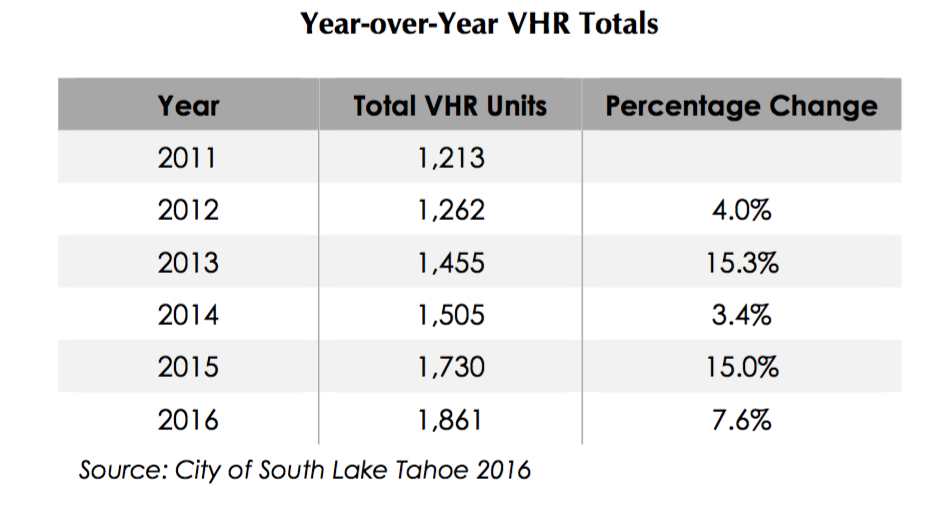
When it comes to finances transient occupancy taxes have long been one of the city’s top three revenue sources. This tax assessed to hotel rooms as well as VHR units equated to $8.67 million in 2011 and $15.686 million in 2016.

In that same time span, TOT from property-managed VHRs increased by 90 percent, from $1 million in 2011 to $1.9 million in 2016.

“The most dramatic increase, however, is in owner-managed VHRs, which increased 210 percent over the same time frame, from $299,146 to $927,238,” the report says.
The report used data from the 2015-16 Lake Tahoe Visitor’s Authority Visitor Profile Study, that says 19 percent of tourists stay in VHRs. Of all the lodging units available throughout the South Shore, VHRs in the city limits account for 12.8 percent of the market.

The report says almost half of the housing stock in the city is owned by people who don’t live here full time. At one time that figure was more than 70 percent. The shared economy is increasing the numbers, especially as platforms like VRBO and Airbnb make it easier for the owner to rent their home without a middle manager.

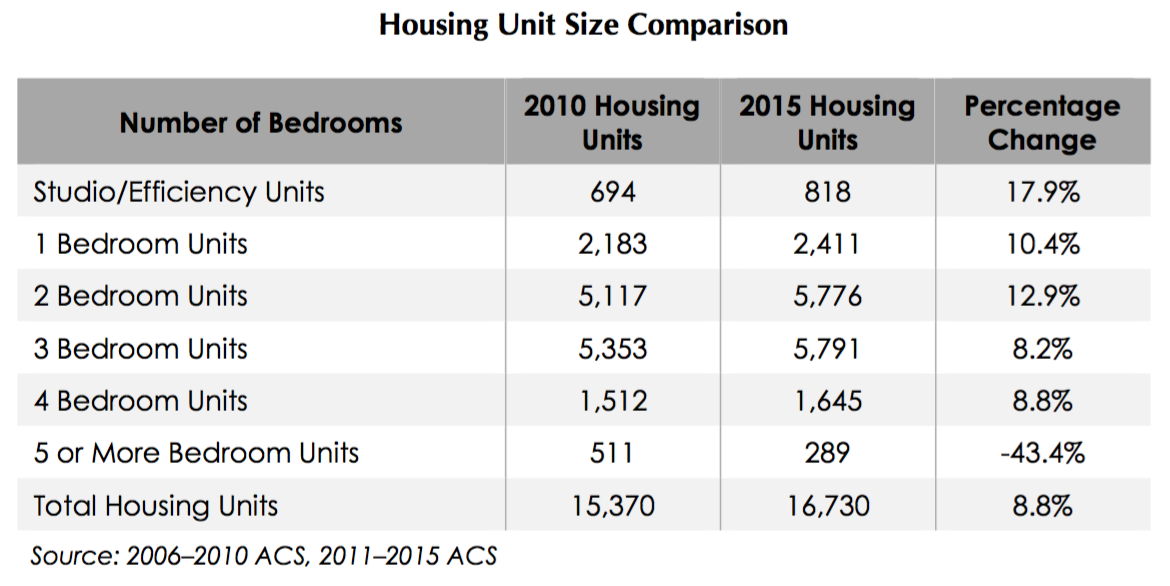
The city lost about 400 rental units for full-time residents between 2010 and 2015, the report states.

The report says, “About 44 percent of housing is owner occupied in the city, while the remaining 56 percent is renter occupied. … there has been a shift from occupied units to vacant units in the city. Between 2010 and 2015, about 6.2 percent of the city’s occupied housing was converted to vacant. Approximately 5.3 percent of these lost units were rental units and 7.3 percent were owner-occupied units. The conversion of housing units from occupied to vacant has predominantly occurred in the city’s single-family units.”

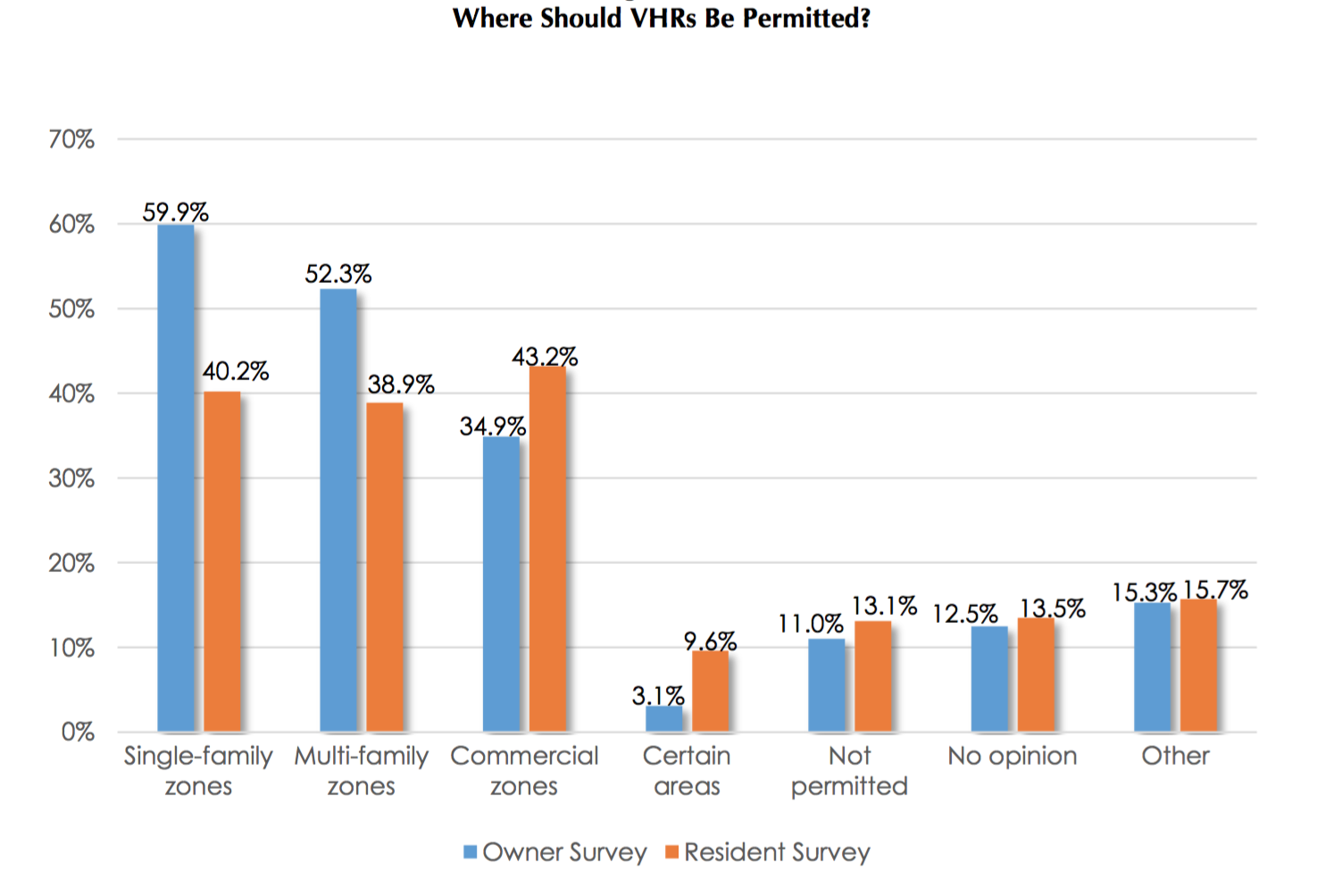
When residents were asked where VHRs should be permitted, 43 percent said commercial zones and 40 percent said single-family zones. The owners of VHRs predictably (60 percent) want them in residential areas, with 11 percent saying they should be allowed everywhere.

Here is a copy of the VHR study.


Swimmer rescued by paddleboarder on N. Shore

A swimmer is alive thanks to the help of a paddleboarder.

Placer County sheriff’s deputies on July 8 got a call saying a swimmer was in distress just off Dollar Point. By the time the police boat arrived the person had been pulled onto a paddleboard.

The swimmer, who was not wearing a life jacket, was taken to an area hospital.

“We can’t repeat enough the importance of wearing personal flotation devices with the very cold water in the lakes and rivers this year,” deputies said in a statement.

— Lake Tahoe News staff report


Scientists leaving labs to experiment with politics

By Melissa Healy, Los Angeles Times
 
They have built careers isolating cells, designing integrated circuits and mastering computer languages. Now they are knocking on doors, being interviewed on TV and asking perfect strangers to give them money.

Across the country, scientists — card-carrying members of an elite that prizes expertise — are exiting their ivory towers to enter the political fray. There’s the cancer researcher from Mississippi, the integrated circuit designer from New York, the physician from Utah and the stem cell biologist from Southern California, among dozens of others.

It’s a move that appears to defy the first principle of their profession: logic. Unlike a law degree, a Ph.D. does not provide a well-worn path to politics. And while 79 percent of Americans believe that science has made life easier, their esteem for the scientific enterprise has been on a steady decline, according to the Pew Research Center.

Read the whole story


DCSO trying to fund mandatory body cameras

Douglas County is trying to figure out how to pay for body cameras for sheriff’s personnel, which in this last legislative session lawmakers mandated.

The state will allow Nevada counties to increase the 911 surcharge from 25 cents to $1. This would equate to about $9/year per cell phone if the increase were implemented. Douglas commissioners are not excited to go that route.

As it is the fee doesn’t pay for the entire emergency dispatch system and would fall well short of the money needed for the cameras.

The current fee brings in about $127,000/year, which leaves a shortfall of $47,000 to operate the 911 system. That difference is supplemented from the General Fund.

Douglas commissioners have allocated $241,200 for the cameras. It needs more than $150,000 on an annual basis to maintain the equipment and fund the program.

The county is exploring ways to pay for the cameras, while at the same time seeking a vendor to provide them.

— Lake Tahoe News staff report


Weather gets weird throughout the U.S.

By Brian K. Sullivan, Bloomberg

Texas struggled through its driest year in history in 2011. Four years later was its wettest ever.

The Mississippi River rose to all-time-high flood levels in 2011. In 2012, its second-lowest.

After a five-year drought that made agricultural irrigation a political hot potato, Northern California experienced nearly double the normal rainfall this year, beating the old mark set in 1983.

As the planet warms, a less ballyhooed new normal is emerging in weather extremes. With deluge following dust, the record book is becoming increasingly difficult to rely on for those who study the weather. The seesaw from one record to its opposite also has problematic implications for water management, storm preparedness and even national security.

Read the whole story