Nevada lowers bar for state legal exam

By Natalie Bruzda, Las Vegas Review-Journal

The Nevada bar exam is notoriously one of the most difficult tests in the nation for aspiring lawyers, but that reputation could soon be dismissed as state officials tinker with the test to make it easier.

The first changes occurred about a month ago, when the Nevada Supreme Court lowered the score required to pass. The court, which has the final say in matters related to the state bar exam, also recently approved a recommendation to remove an essay topic that it deemed no longer relevant.

The moves comes as fewer law school graduates — in Nevada and across the country — are passing the bar exam.

Read the whole story


Law changed to allow electeds on CTC board

By Kathryn Reed

State law has been changed to allow elected officials to serve on the California Tahoe Conservancy board.

Late last year it was brought to light that Government Code pertaining to just this state conservancy prevented elected officials from being on the board. The CTC, though, since its inception in 1985 had allowed elected officials on the board.

When the board started questioning Executive Director Patrick Wright’s decisions and leadership, CTC staff suddenly brought this rule to light. Issues with Wright are still not fully resolved. He had a review this spring after years of not having one. All that was said publicly is that the board this fall would discuss his performance further.

Former Councilman Hal Cole this year has been representing the city, while Senior Deputy County Counsel Paula Frantz has been serving on the CTC board since January for El Dorado County.

Larry Sevinson has been Placer County’s non-elected representative for long before the conflict was brought to light.

At the Aug. 15 meetings of the South Lake Tahoe City Council and El Dorado County Board of Supervisors the bodies are expected reappoint one of their own to the board. Tom Davis had been representing the city prior to the brouhaha. Sue Novasel was representing the county.

Cole has said he would continue to serve if that’s the council’s choice, but believes it should be one of the five councilmembers. County staff is recommending Supervisor Sue Novasel return to the CTC board. Historically the District 5 supervisor has been the rep.

Assemblyman Frank Bigelow, R-Fresno, who represents the South Shore, introduced the change in the law.


Caesars quarterly loss narrows

By Richard N. Velotta, Las Vegas Review-Journal

Add unlucky play to the list of financial struggles Caesars Entertainment is undergoing.

The Las Vegas-based company, operators of nine Las Vegas properties and in the midst of emerging from Chapter 11 bankruptcy protection, reported huge losses — but not as bad as in the second quarter of 2016 — on weak revenue performance.

Caesars Entertainment Operating Co., which includes two subsidiaries, but not Caesars Entertainment Resort Properties, the owner of six casinos, on Thursday reported a loss of $1.4 million, $9.68 a share, on $1 billion revenue. A year earlier, the company had a loss of $2 million, $13.25 a share, on revenue of $992 million for the quarter that ended June 30.

Cash flow remained unchanged at $289 million for the quarter.

Caesars is the parent company of Harrah’s Lake Tahoe and Harveys in Stateline.

Read the whole story


Tahoe’s first recreational marijuana shop to open

By Jenny Kane, Reno Gazette-Journal

The Nevada side of Lake Tahoe is finally diving into recreational marijuana sales this week while the California side waits patiently on the opposite shore.

NuLeaf, a medical marijuana dispensary that opened its Incline Village location in July last year, will be the first Tahoe-area dispensary to sell recreational marijuana products starting at 11am Aug. 5.

The 2,500 square-foot dispensary, located at 877 Tahoe Blvd., is just outside the California boundary. It sits at the center of Incline Village. 

Read the whole story


Sand Harbor drowning victim identified

The man who drowned last weekend at Sand Harbor has been identified as Jose Partida, 27, of Sparks.

The official cause of death was accidental drowning.

Partida was swimming around the a rocks in the late afternoon of July 29.

He was brought to shore but unable to be revived.

— Lake Tahoe News staff report


Grand jury critical of STPUD-Alpine County deal

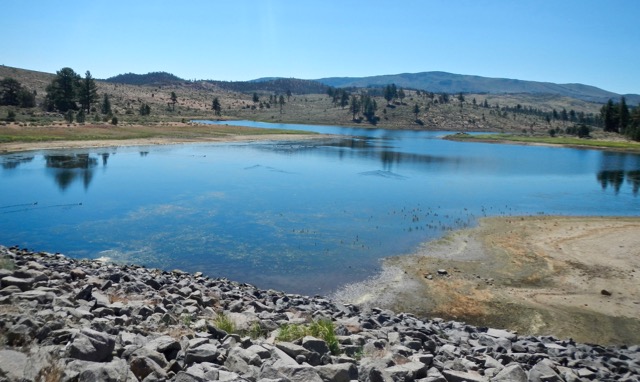
South Tahoe PUD’s wastewater ends up in the Harvey Place Reservoir in Alpine County. Photo/LTN file

By Kathryn Reed

The validity of a contract between Alpine County and South Tahoe Public Utility District as well as the amount of money involved in the document were the subject of a grand jury investigation in the last year.

The 2016-17 Alpine County Grand Jury report that came out this summer concluded that the consolidated agreement from 2002 is not valid because only two members of the Board of Supervisors voted on it. This would be a violation of the Government Code.

The other main concern is the amount of money South Tahoe PUD pays the county for the right to discharge treated wastewater in the county. The $100,000 annual fee does not rise with inflation. It has gone up to about $117,000 based on additional hookups in the district, with the assumption more water is being discharged.

STPUD General Manager Richard Solbrig on Aug. 3 gave a brief update on the report to his board. The district does not have to respond to the report.

The county does have to respond. The report is expected to be a topic on the supervisors’ Aug. 15 agenda.

“Even if the current consolidated contract is not valid, the previous agreements are still valid,” Supervisor Don Jardine told Lake Tahoe News.

The original document was signed in 1967 and there have been six amendments since then. The consolidated document was to bring all of those previous agreements into one contract.

STPUD per federal law, which is the same for all sewer districts in the Lake Tahoe Basin, must export the treated wastewater. This is to protect Lake Tahoe. Nevada law does not allow wastewater from another state on its lands. This is why all the wastewater from STPUD goes to Alpine County.

It was easier and more cost-effective to pump it over Luther Pass than to go over Echo Summit.

Jardine, who has been a supervisor for 30 years, said none of his colleagues has brought up the contract in recent memory.

“I have not been approached by other board members to increase fees,” Jardine said. He is the chair of the board.

The grand jury report says, “It is recommended the BOS request to have annual adjustments for inflation added to the agreement. Alpine County would be receiving about $248,000 if the 1983 figure had been adjusted for inflation. The 1995 Alpine Grand Jury made this exact same recommendation which was never acted upon. If the 1995 recommendation had been acted upon, Alpine County would be receiving about $185,000 annually if the annual adjustment for inflation took effect in January of 1996.”

Jardine and Solbrig were part of a meeting earlier this week in which the grand jury report was discussed. They are on an advisory commission to the Alpine County Board of Supervisors. No one from the public or grand jury was at that meeting.

What was discussed more in depth was what might be in that wastewater; of particular concern was whether pharmaceuticals or chemicals from personal care products might be leaching into the soil or groundwater. This has been an issue in other parts of the country.

“The USGS has been in the basin sampling for those contaminants,” Solbrig said Thursday. “There have been no findings in Lake Tahoe or through exports of water.”

At the commission’s November meeting, it meets quarterly, it’s possible there could be a recommendation for some of the money STPUD gives Alpine County to be used on testing for contaminants. This will ultimately be up to the supervisors.


Doctors: Trump change could lead to more teen pregnancies

By Lizzie Johnson, San Francisco Chronicle

High school students toting both textbooks and newborns are becoming increasingly rare. But a Trump administration proposal to rewrite federal birth control mandates could soon change that, some medical experts fear.

The teenage birth rate in the United States has hit an all-time low after nearly three decades of decreases, data from the Centers for Disease Control and Prevention show. The number of 15- to 19-year-olds who gave birth in 2016 was down 9 percent from the year before, to 20.3 births per 1,000 women. Since 1991, the rate has plummeted by 67 percent, the biggest drop since the CDC began tracking the data nearly eight decades ago.

More than half of teens have had sex by age 18, the CDC found — a rate that’s down a bit from the early 1990s, but not nearly as sharply as the number of births. Medical professionals and policy experts say increased contraception use has contributed to the decline in teenage motherhood.

Read the whole story


Ranch Fire deemed to be human caused

The Ranch Fire that burned more than 140 acres in El Dorado County’s wine country was human caused.

According to CalFire, a person was cited and educated after it was determined he was grinding metal near dry grass, which sparked the blaze.

The fire, which is 100 percent contained, started July 26 on Ranch Camp Road near Mt. Aukum and Somerset.

— Lake Tahoe News staff report


2 skydivers die at Minden airport

Two people died Thursday morning in a sky diving accident at the Minden airport.

Guide Ashlie Caceras, 43, of Lodi and David Becker, 21, of Sankt Martin, Germany, were tandem skydiving.

Douglas County sheriff’s Deputy Jim Halsey told Lake Tahoe News the cause of accident is under investigation. His department and the FAA are involved.

When emergency personnel arrived at the airport about 10:15 Aug. 3 the two were deceased just outside the airport boundaries, with the parachute deployed. They had been with Skydive Lake Tahoe, a company that operates out of the Minden airport.

— Lake Tahoe News staff report


Ranchers, loggers sue feds over frog protection

By Dale Kasler, Carolyn Wilke and Ryan Sabalow, Sacramento Bee

Tiny frogs and toads used to swarm over the Sierra Nevada. Now, the government says nearly 2 million acres of land needs to be preserved to prevent them from going extinct.

California ranchers and logging groups say those protections are hurting their ability to make a living. So another conflict over the Endangered Species Act is going to court.

The California Farm Bureau and two ranchers’ associations sued the U.S. Fish and Wildlife Service on Monday, challenging a year-old decision to designate more than 1.8 million acres of rural California as “critical habitat” for three species of frogs and toads that are protected by the Endangered Species Act.

The case affects a wide swath of the Sierra Nevada region, from Lassen to Inyo counties. It includes portions of Placer and El Dorado counties. Most of the land is owned by the government and is in designated wilderness areas, where the “highest level of conservation protection” on federal land is required, according to the Fish and Wildlife Service.

Read the whole story