McClintock defends his stance on earmarks

Publisher’s note: Rep. Tom McClintock also represents El Dorado County.

By Ed Fletcher, Sacramento Bee

As the federal budget season heats up, some Placer County officials are grumbling that Republican Rep. Tom McClintock’s ideological opposition to congressional earmarks puts their constituents at a disadvantage.

“It’s already hurt us,” Supervisor F.C. “Rocky” Rockholm said in a recent interview.

McClintock said he will not seek congressional earmarks – budget requests made outside of the budget process.

Read the whole story


Economic gain of 2010 Olympics a moving target

By Susan Wood

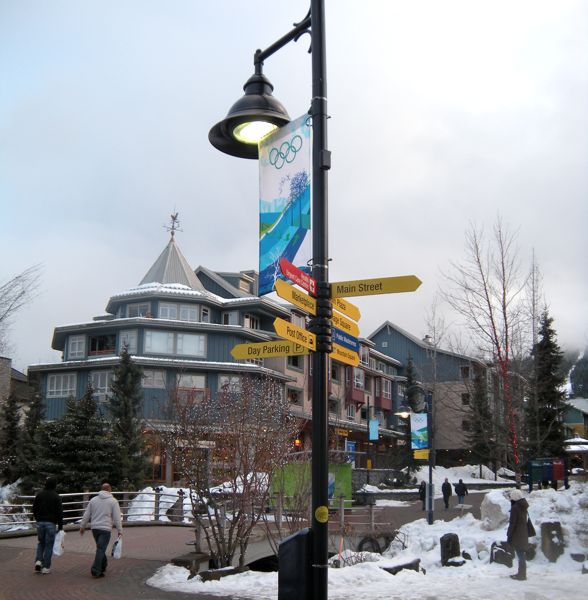
WHISTLER, British Columbia — When the 2010 Winter Games launch tonight, tourism officials and business owners may wonder how to put a price on hope and optimism — two mantras of the Olympic athlete.

From small village retailer to large hotelier, the economic gain in revenue to Whistler is so up in the air even its tourism agency admits to wishing it had hard numbers to justify millions of dollars spent in time, effort and infrastructure. All this is going on amid one of the worst global economic recessions.

Business people in Whistler are cautiously optimistic the Games will be a boon. Photos/Kathryn Reed

Business people in Whistler are cautiously optimistic the Games will be a boon. Photos/Kathryn Reed

“The recession has increased the intensity of the competition Whistler faces (as a tourism destination) because travelers have less to spend and have more options on where to spend their money,”Tourism Whistler spokesman Jeff McDonald told Lake Tahoe News. “We are in competition with ski resorts and sun resorts all over the world.”

Tourism Whistler predicts the lodging reservations for the 2009-10 season from November to April will increase at least 1 percent compared to the year before. Last year, the area was down by 12 percent as the global economic downturn took hold, McDonald added. The agency declined to provide what the actual numbers were.

The budget for this Winter Games was set at $1.6 billion. As a comparison, host city Salt Lake City in 2002 had a $3 billion budget with a $76 million profit. Many host cities view prior Olympic years to get a benchmark. Most consider the tourism aftermath of those wanting to experience an Olympic city as one of the biggest benefits.

Tourism is one of the world’s largest economic sectors. In Canada, the industry generated about 633,000 jobs in 2006, with industry expenditures reaching $66.8 billion — a 6.5 percent increase over the prior year, according to a recent PricewaterhouseCoopers report.

Vancouver’s gross domestic product is projected to grow 4.5 percent in 2010, the Conference Board of Canada indicated in its latest outlook. A rebound in housing and consumer spending is anticipated to accompany the overall boost of hosting the Olympic Games.

Employment, tax revenue and long-term facility investment have been considered economic advantages to the host cities. But these communities must also weigh those benefits with the impacts on the cultural heritage of the area, consumption of money as well as land and facility space, along with the transportation issues that accompany such events that attract the masses. The latter is called the”Olympic aversion” in which visitors avoid an area perceived as having crowds, jack hammers and traffic delays.

The Vancouver Organizing Committee, with the help of Tourism Whistler, shot out of the starting gate when it won the bid in 2003 and went right to work on the infrastructure to create a pleasant buzz that the improvements would be an advantage to welcome the world, McDonald contends. He also added that Whistler dispelled the myth that host cities’ prices are inflated, streets under constant construction and sidewalks and venues too crowded to move around.

(Note: When Lake Tahoe News was on the scene 2½ weeks ago, some venues were being worked on, construction was under way in Whistler Village, and finishing touches were being made to the Sea to Sky Highway, the main artery that connects the 90-mile stretch from Vancouver to Whistler.)

Many locals and regulars said the improvement to the Sea to Sky Highway has increased substantially, citing poor road conditions in the past.

“I think it’s great we’re getting the Olympics. We’re really looking forward to it. The only concern is getting around,” Marie Johnson of North Vancouver said, while standing in a guest relations line at Whistler Blackcomb ski area. She added feeling blessed to work in a home office.

This was a major concern when the Summer Olympics came to freeway-sprawling Los Angeles in 1984, but as it turned out, the traffic was better than ever because so many motorists altered their driving patterns.

Adaptability may be the name of the game. This may apply to parking. Whistler locals have already surrendered the idea of parking in town. The village may be packed with tourists, if they’re not on the massive ski area that’s 90 percent open to skiers and boarders during the Olympics.

The sold-out Fairmont Chateau Whistler is located next to the slopes of Blackcomb, which has no Olympic venues scheduled but more than 32 feet of snow — the usual seasonal average — to accommodate riders. An 11-minute Peak-2-Peak Gondola ride can transport the skiers and boarders to Whistler where the men’s and women’s downhill as well as super G and giant slalom events are slated.

(The luge, bobsled and skeleton are in between the mountains outside the ski area boundary.)

Location, location, location. Two doors from the Fairmont in the Upper Village, waiter Charlie Watts of Merlin’s restaurant expects to rake in a lot of tips from local customers seeking their ski experience with a little Olympic buzz at the same time.

“We’re going to be a locals’ bar,” he said, while serving up the restaurant-bar’s signature nachos with two drafts of Kokanee — Merlin’s Olympic-sponsored beer. During the Games, the bar will cover the outdoor patio with a tent and host bands every day.

In the main Whistler Village, the well known Araxi restaurant reported being completely booked on Feb. 13 and 14, partly because those dates fall on Valentine’s weekend.

The Summit Lodge and Spa on Main Street is completely booked during the Olympics with the exception of the last five days of the Games ending Feb. 28. But interest was building, and the lodging industry has caught on to this last-minute reservation trend, General Manager Rosemary Cook said in January.

Cook admitted the recession has had some impact on tourism, but people “still want to take a trip and still want to eat,” she said. “Instead of staying at a 5-star or 4-star, they may want to go to a 3-star.”

She runs cooperative advertising promotions with the Tourism Whistler agency to make the ad dollars go farther. She also believes the Olympics can only help bring that tourism dollar around, but is unsure to what extent.

Cook is not alone in her cautious optimism.

“I don’t think (the Olympics) can hurt, despite Whistler already being known — as long as we keep the snow, and it doesn’t rain,” said Mike Wheaton of Carumba restaurant located in the village. “We’re hoping it will be like the Christmas rush.”

Wheaton said the restaurant needs the boost because the pre-Olympic January lull cut into profits in a significant way.

Dan Ellis of Armchair Books in the village has gotten in the spirit of the Games by putting out Olympic-oriented coffee table books for the scores of tourists and Olympic workers he expects. He believes many locals will stay away, including people he knows from Squamish “leaving the craziness” of traffic and parking issues.

Scott Aldrich, Whistler Grocery Store manager, expressed more optimism about transit issues based on “the amazing bus system.” The transportation agency running it has quadrupled the bus runs around the clock to accommodate the influx of riders.

Whistler Village Sports manager Jed Hague commended the local Housing Authority for infrastructure projects designed to give employees affordable housing through Olympic-oriented infrastructure improvements. Many travel to work from the nearby communities of Pemberton and Squamish and may find the commute harder during the Olympics.

“I think people are not sure what to expect, but that’s very typical of the Olympics. But the snow is fantastic. Sure, there’s an impact, but it’s the Olympics. Get over it,” Hague said.

ngg_shortcode_0_placeholder


Stateline gaming win down 25%, statewide it’s up 5.8%

By Cy Ryan, Las Vegas Sun

Buoyed by strong betting on Baccarat and football and some increases in slot play, Strip casinos reported a gross win of $502.1 million in December, a gain of 5.8 percent and the second straight month of increases for the resort corridor.

Statewide, however, the news wasn’t as good. The gaming win fell 3.2 percent for the month.

“We have just finished the most difficult year in gaming history and in a period where some data points are positive and some are negative,” said Bill Bible, director of the Nevada Resort Association that represents Strip Casinos.

Read the whole story


DA: Dugard wants nothing to do with Garrido

By Sam Stanton, Sacramento Bee

Phillip Garrido contrived an elaborate plan to keep in contact with Jaycee Lee Dugard through attorneys if he ever was arrested, but she told the El Dorado County district attorney Monday that she’s “not following the plan” and wants no contact with her alleged kidnapper and rapist.

The startling claims are outlined in a court filing by the district attorney made today to oppose a motion by Garrido’s lawyer that she be given the whereabouts of Dugard, who is in seclusion.

Read the whole story


Hwy. 50 project may make drive to Tahoe less congested

caltransWhen Caltrans completes the $108 million project it started this week on Highway 50, it may mean an easier drive into South Lake Tahoe.

The idea is to unclog traffic congestion and reduce air pollution by adding 15 lane miles of bus-carpool lanes on Highway 50 between Watt Avenue in Sacramento and Sunrise Boulevard in Rancho Cordova.

“Extending the bus-carpool lane will have an immediate impact for more than 180,000 drivers commuting on the Highway 50 corridor,” Caltrans Director Randell Iwasaki said in a press release. “When this project is completed, motorists who carpool or ride a bus between Sacramento and El Dorado County will save more than 30 minutes travel time a day during the morning and afternoon weekday commutes.”


STHS to initiate sports medicine discipline

sthsBy Kathryn Reed

To complement the world-class athletes and medical professionals who live and work in South Lake Tahoe, a sports medicine training facility is going to be built at South Tahoe High School.

Word came last week that Lake Tahoe Unified School District has locked in a nearly $2.5 million grant to build the facility. (The most that could be requested was $3 million.) Matching funds are needed. Those will come from the $64.5 million bond (aka Measure G) approved by voters in 2008.

This brings the total in matching funds from the state to $31 million.

Of the 220 grants submitted to the state to share the $250 million, LTUSD had the fourth highest score.

It will be at least next year before the actual check arrives, but notification means the district and its architects can go ahead with drawings.

Superintendent James Tarwater acknowledged at Tuesday’s board meeting the work of Angela Swanson and Ivone Larson to make this a reality.

“Angela always smells out a nickel,” Tarwater said of the former board member who is a consultant for LPA architects.

Larson is four-for-four in writing career technical education grants.

“No longer is there a separation of vocational education and college prep. We are putting them together and (students) are getting hands-on experience,” Larson said when interviewed at her office Wednesday afternoon. “Basically, everyone here will be in a career pathway.”

The STHS principal said students and the community have expressed interest in sports medicine disciplines.

In many ways, the new facility will function as the lab component for existing classes offered at the high school. Sports medicine will be incorporated into freshmen seminar, health science, anatomy, physiology and biology, as well as the dental program.

Students will learn about being a physical therapist, could have enough education to be a certified personal trainer upon graduation, or be on their way to pre-med.

“We are redesigning what we are doing for the future of kids,” Larson said. “We are placing kids in jobs right out of high school.”

This type of secondary education could also get them into a prestigious four-year university.

A remodel of the gym was already written into the bond language, so the sports med facility is being incorporated into that along with a separate 7,800-square-foot building adjacent to the Blue and Gold gyms.

Although definitive architectural drawings have not been done, in the grant application is a description of what the district would like to build. The building is likely to include a classroom, physical therapy-conditioning area that will have devices similar to a PT office, whirlpool therapy, therapy pool, rooms with massage tables, a hand therapy room and all the appropriate equipment.

“There’s a lot of expertise in our community with exercise and sports medicine that can be tapped into,” said Steve Bannar, one of the orthopedic surgeons from Barton Health who gave input before the grant was written. “I think there is a lot of potential.”

Bannar would like for it to become a training facility that athletes throughout the world would use. He touched on how the 1968 Olympic track athletes trained on the South Shore because of the elevation in preparation for the Mexico City Olympics.

Publisher’s note: On Friday, read about the options LTUSD has when it comes to the next round of bond sales regarding Measure G.


Cash stolen from SLT Wells Fargo

bankBy Kathryn Reed

An undisclosed amount of cash was stolen Wednesday morning from the Wells Fargo Bank inside Raley’s at the Y in South Lake Tahoe.

“He clearly walked in with purpose and knew where he was going,” Detective Jeff Roberson, with the South Lake Tahoe Police Department said.

No weapon was seen, but the suspect did threaten to kill someone if he didn’t get the money, Roberson said.

The suspect gave a handwritten note to a teller, who then handed over the cash. The suspect did not try to disguise his handwriting, Roberson said.

The FBI is involved, as agents are in all bank robberies. But it’s likely this will be handled by the city police because the amount of stolen cash does not meet the fed’s threshold for cases like this.

The suspect is described as being male, white, between 5-8 and 6-feet, 180-200 pounds, 35-45 years old, wearing black pants, white tennis shoes, a white ski parka with the hood on.

No one saw the suspect get in a vehicle. Officers are looking for the woman he passed on the way out of the store.

The bank is located to the far right of the grocery store near the produce section. People kept shopping while officers cordoned off the bank at 11:20am for a little more than an hour.

When reached by Lake Tahoe News on Wednesday, bank employees deferred comment to higher ups outside the branch. Those Wells Fargo officials did not call back.


EDC reviewing charter after grand jury criticism

By Cathy Locke, Sacramenton Bee

A committee appointed to review El Dorado County’s charter has joined the 2008-09 grand jury in recommending a November ballot measure calling for the document’s repeal.

Following a brief discussion Tuesday, the Board of Supervisors scheduled a workshop on the committee’s recommendations for 9am March 15.

Read the whole story


Fallen Leaf Lake concessionaire out after 14 years

By Susan Wood

With the Fallen Leaf Lake district board awarding its general store to a new concessionaire after months of fighting with some community members, the results provided two pictures of the aftermath as different as the scenery from season to season.

Rick Firkins of All Star Catering of Albuquerque, N.M., who lives part time in Christmas Valley, said Tuesday he was excited about the prospect of the new venture at the lake where he’s fished for years. He called the place “underutilized” and pledged to expand the cafe menu and grocery inventory.

Ruth and John Rich

Ruth and John Rich

The Fallen Leaf Lake Community Services District decided Saturday in a 3-1 vote to hand over the operation to Firkins under the supervision of the board and staff General Manager Tom Barnes after expressing months of distrust in Fallen Leaf Landing’s accounting practices and disagreeing over what it would pay in rent. New board member Jennifer Thornton dissented.

Former President Dana Clark had resigned a few weeks earlier, capping off a tumultuous time for the quiet mountain village outside South Lake Tahoe at the base of the Desolation Wilderness.

And come August, the issue may be far from over as the divided community heads toward an election to fill a seat on the five-member panel. It may decide March 6 whether to place the open seat on the Aug. 31 ballot.

Firkins admitted to walking into a hornet’s nest that has divided the community, but looks forward to working with the board, which had outlined a contract and expectation of $134,000 to operate the district in the 2010 season. The board failed to get agreement from Fallen Leaf Landing on at least $101,000 in rent to run the store and marina.

Even though the contract highlights the marina operation, Firkins said he plans to focus on the store and cafe.

Terms of the five-year contract include the district receiving a minimum rent of $75,000 a year and a security deposit of $25,000, along with 10 percent of store, marina and boat-rental fees in addition to 65 percent of mooring revenue.

“I appreciate being considered. There had to be a problem or I wouldn’t have been considered,” Firkins said. “I told them it should have been done sooner.”

On the other end, John Rich of Fallen Leaf Landing said he wants to focus more on his family but remains angry at a “few people in the community with an agenda.” He expressed much disappointment in having years of experience and months of wrangling over a contract with the board come to such an abrupt end.

The longtime Fallen Leaf Lake residents were ousted after 14 years when contract negotiations reached an impasse, despite numerous letters against and legal threats aimed at the board when it explored taking over the operation. Ruth Rich told Lake Tahoe News she wished to thank all the customers and members of the community who supported her family so ardently.

“We’ve had a long track record of serving this community very well. I don’t think (the board’s) concerns were valid,” John Rich said, citing the district insisting on open access to the revenue and expenses of his dual operation. “Expense access is not conventional.”

But board President Mike Kraft disagreed.

“The district has to know the value of its asset,” Kraft said. “In order to properly operate, the district needs to accrue $126,000 minimum.”

After balancing assets and liabilities, the district reported $744.41 in its general fund as of Jan. 31.

“Given the options the board was presented with, we felt we had no option than to go with the plan we went with,” Kraft said.

On the contrary, resident Debra Barnes took issue with what she perceived as “the board’s inept decision-making that has outraged the community,” she told Lake Tahoe News.

“The residents are shocked and appalled at the Community Services District vote and decision to hire a concessionaire that has no experience running a retail store and marina. This caterer did not participate in the (request for proposal) process and did not submit a bid within the RFP deadline,” Barnes said.

Firkins made a presentation to the board on Saturday. It is not known who invited him to do so.

“I expect that voters of Fallen Leaf will pursue every available option to them to return the governance of the Fallen Leaf community to a majority vote of reasonable minds. Jennifer Hall Thornton’s swearing in last month was a step in that direction, but more needs to be done and I expect will be,” Barnes added.

Lake Tahoe News inquiries went unanswered from Betsy Wheeler, who came armed at one recent meeting with a petition legally challenging the board’s last proposed ousting of Fallen Leaf Landing.


SLT gets rid of firm that handled Poland, Mittelstadt

sltBy Kathryn Reed

The law firm that handled the Johnny Poland and Jacqueline Mittelstadt cases for South Lake Tahoe no longer has a contract with the city.

Normally items on the consent agenda are a slam dunk for approval. Not so in this particular case.

On Tuesday, the South Lake Tahoe City Council voted 5-0 to deny City Attorney Patrick Enright’s recommendation to “authorize city manager to execute agreement for special services” with Liebert Cassidy & Whitmore.

The issue was supposed to come to the council last summer, but that was just after Enright and Mittelstadt were hired and in the early discussions of the expense of outside counsel. The president and managing partner for Liebert Cassidy & Whitmore signed the agreement July 3, 2009.

The city and law firm had been operating under an agreement from 2007. The firm, which has offices in San Francisco, Fresno and Los Angeles, had been brought in to handle labor negotiations. In the past, city personnel led by the city manager was responsible for negotiating with the various bargaining units.

Councilman Jerry Birdwell was the first to speak against retaining the group that specializes in employment labor law.

He called the firm’s representation “detrimental” and expensive for the city.

An attorney for the firm unsuccessfully argued in court for Poland to not be reinstated to the South Lake Tahoe Police Department. The veteran officer returned to work this year. More than $120,000 was paid to the firm to handle the Poland matter.

Councilman Bill Crawford accused one of the partners in the law firm of not being prepared when he tried to convince the council why Mittelstadt should be bounced from her job as city attorney.

The council in closed session reversed course and kept Mittelstadt employed, but demoted her to assistant city attorney.

“I would never employ them again,” Crawford said of the firm.

Attorney fees for Liebert Cassidy & Whitmore ranged from $160-$290 an hour, with paraprofessional staff commanding $110-$130 per hour.

Although the firm has not raised it rates since 2007, Birdwell commented that in this economy fees should be coming down.

The law group also charges 15 cents per copy — which can add up in a business that is wordy and redundant in its writing.

“I don’t want to re-up on an agency I was not happy with,” Councilman Hal Cole said.

He was the first to suggest the city go out for request for proposals to allow other firms to compete for the city’s business.

Gene Harter, representing Public Employees Union Local 1, said it was time the city brought some of the work in-house.

Hiring two city attorneys last June was supposed to reduce the expense of outside counsel.

With the 5-0 vote by the council, it was included that an RFP would be sought; with the realization the two city attorneys can’t do all the work this law firm specializes in.

Also at the meeting, but with no discussion, the council approved the annual litigation report. Click on report for the details.