Ritz Carlton, Northstar Village developer in bankruptcy

Updated 1pm Feb. 17.

By Kathryn Reed

Most of East West Partners’ holdings in the greater Lake Tahoe area are now under bankruptcy protection.

The 335-undeveloped acres known as Northstar Highlands which East West has the rights to build 1,450 units on below the Ritz Carlton; the golf courses Old Greenwood and Gray’s Crossing; and the amenities arm called Tahoe Mountain Club went into bankruptcy in Delaware on Feb. 16.

“We are optimistic we will be well positioned for the long term,” Blake Riva, a partner with East West, told Lake Tahoe News. “We don’t intend to liquidate any of our holdings.”

Old Greenwood golf course is in bankruptcy. Photo/Provided

Old Greenwood golf course is in bankruptcy. Photo/Provided

East West Partners is headquartered in Avon, Colo. Its California operations are based in the Village at Northstar, which it developed. Truckee is the address for all of the properties now in Chapter 11 bankruptcy.

The Village at Northstar is not part of the bankruptcy, nor is the ski resort Northstar-at-Tahoe, nor any of the company’s other holdings.

The village’s commercial operation is run by CNL, which also owns the ski resort. Booth Creek operates the ski resort. East West Partners sold the residential aspect of the village to individuals. A homeowners association manages the condominiums.

“This filing will not impact the experience of guests enjoying Northstar-at-Tahoe Resort — either on the mountain or in the Village at Northstar. Lodging guests at Northstar-at-Tahoe Resort will also be unaffected,” Betsy Cole, CFO of Booth Creek Ski Holdings, said in a press release.

Riva said the bankruptcy is a “combination of the current economic environment and changing financial partners.”

The company went from Morgan Stanley to Barclays. Morgan Stanley took a major hit as the banking industry nose-dived in the last couple of years. It could not meet its debt so that’s how Barclays got involved.

“(Barclays) reviewed all of our business ventures in Tahoe and concluded the best path forward would be to go through this reorganization,” Riva said.

He would not put a dollar figure on the debt owed creditors. However, court documents show the company’s real estate holdings have collapsed in value by 60 percent and that it has $61 million in debt.

“The larger amounts are bank loans for projects,” Riva said.

Until a reorganization plan is approved by the bankruptcy judge, Riva said a short-term plan is in place to keep the operation going so the public will not notice a hiccup in service.

This should be good news to the Ritz-Carlton, which opened mid-mountain at Northstar in December. East West Partners was the developer of the five-star multi-million dollar resort and is the owner of it.

Ritz officials touted the Tahoe Mountain Club as a selling point to buyers and guests of the high-end hotel before it opened. Now they are downplaying the significance.

“Ultimately it doesn’t mean anything to us,” Ritz spokesman Steven Holt said Wednesday of the bankruptcy.”The Ritz-Carlton is not included in the filing. Our operation is not impacted.”

Riva also said, “The Ritz is a separate entity. We have a separate ownership structure.”

The Hyatt Residence Club, which is at the base of the gondola that whisks people to the Ritz from the Northstar Village, is also excluded from these bankruptcy proceedings. Guests at this Hyatt also have access to the Tahoe Mountain Club.

Riva said the golf courses will be open when the snow melts.

Old Greenwood is a Jack Nicklaus Signature course. The development also includes luxury custom homes and fractional ownership.

Gray’s Crossing is on the outskirts of the town of Truckee off Highway 89. The private 18-hole golf course by Peter Jacobsen and Jim Hardy is surrounded by houses, including Sunset magazine’s 2007 Idea House.

East West Partners is not the only developer in ski towns to face economic hardship. Intrawest earlier this year sold the Village at Squaw to Squaw Valley Ski Corp. Intrawest also owns Whistler Blackcomb, site of the alpine skiing events for the Olympics.

Lake Tahoe Development Company is in bankruptcy over the $410 million hotel-retail-convention center complex in South Lake Tahoe across the street from Heavenly Mountain Resort’s gondola.



South Tahoe takes convention center developer’s side

By Kathryn Reed

Divided along what has become the usual line, the South Lake Tahoe City Council voted 3-2 on Feb. 15 to support Lake Tahoe Development Company having 30 more days to own sole rights to coming up with a plan to get the stalled convention center project out of bankruptcy.

Today is the deadline for interested parties to submit comments to the court regarding LTDC’s request to have exclusivity rights that expired Feb. 2 to be extended to July 2 — the date LTDC wants.

Councilmen Jerry Birdwell and Bill Crawford believe the developer has had long enough to come up with a plan.

An artist's rendering of the Chateau at Heavenly Village.

An artist's rendering of the Chateau at Heavenly Village.

“He’s had a 120 days to work on it and he didn’t,” Birdwell said of developer Randy Lane before the council deliberated for 20 minutes in closed session.

Crawford said, “If there is a reorganization, it will be very lengthy, especially if he is going to change the project, and that is his plan.”

The “he” Crawford referenced is Michael Rosenfeld, founder and CEO of Woodridge Capital Partners based in Los Angeles. That firm along with Pacific Coast Capital Partners of El Segundo, also in Southern California, wrote letters to the council dated Feb. 11 stating their interest in taking over what locals call “the hole.”

Nicholas Colonna, with PCCP, and Rosenfeld wrote, “We are committed to moving forward immediately to address the financial problems plaguing the property [currently in bankruptcy] and work with the city to insure (sic) the property assemblage remains intact and entitlements are maintained. Our goal is to preserve long term value for the property and for the community of South Lake Tahoe.”

Kenny Curtzwiler and Harry Segal were the only members of the public to show up for Monday’s 1pm special meeting. No one representing the developer or the potential investor was present.

Curtzwiler is in favor of giving the investor time to come up with a viable plan, but wants the council to ensure Lane has nothing to do with the project in the future.

Segal, who owned one of the parcels and is part of the bankruptcy proceedings, told the council to do whatever it can to “protect the interest of the original property owners.”

“In the end the judge will be the one who decides. But we owe the taxpayers of this community, and people who invested and are holding notes an opportunity to get paid,” Mayor Kathay Lovell said after the meeting. Lovell participated by phone because she was out of town.

Lovell, along with Councilmen Hal Cole and Bruce Grego voted in support of a 30-day extension.

“I just felt like we needed to provide this guy some level of support if he is the real deal. And that’s a big if,” Lovell said of the investor.

Cole said after the meeting that he isn’t even sure the court will be swayed by the city’s stance, believing the judge will put more weight on what the creditors have to say. A decision will come March 2.

“I don’t think the 30 days is going to make it or break it one way or the other,” Cole said after the meeting.

Lane, principal for the Zephyr Cove-based developer, filed for bankruptcy in October. No work has been done on the project since winter 2007.

City National Bank, which is owed nearly $8 million by LTDC, has filed a motion with the court to not extend the exclusivity period.

“Lane has provided me with the name of the so-called investor referenced in the Debtor’s motion to extend the exclusivity periods, but such investor has not contacted me, or, to the best of my knowledge, anyone else at CNB. Thus, I have no reason to believe that a plan of reorganization built around such person is in the offing. Nor do I have a clue as to any of the details of such a plan, including its treatment of the Loan and other secured debt, the means for its implementation and whether such plan is feasible,” Raymond Walsh, senior vice president of special assets for City National Bank, wrote the court.

In that same document Walsh says the bank plans to submit a reorganization plan.

“Allowing the debtor more time with which only it may file a plan does not accomplish anything other than delay the case, allow interest to accrue on the Loan, and exacerbate the risk that the TRPA and building permits will expire before the Chateau Project is sold or completed,” Marc Levinson, attorney for City National Bank, writes in his statement to the court.

Levinson also writes, “The Debtor is flailing about, hoping that magic happens — thus the unidentified investor featured in the Motion.”

The project

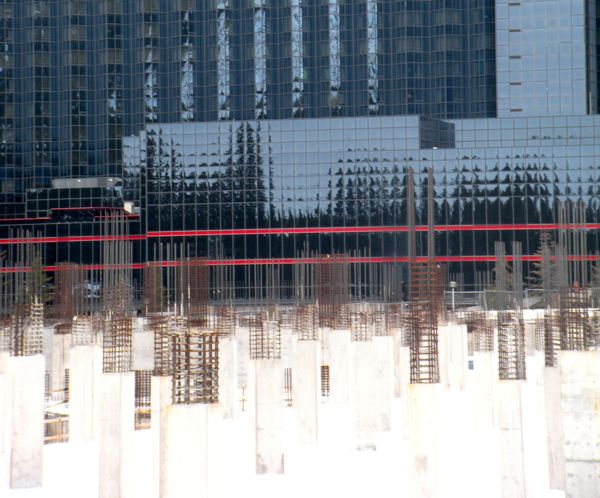
Concrete and rebar cover much of the 11-plus acre site on the far eastern edge of South Lake Tahoe. The $410-million Chateau at Heavenly Village project, as it has been called, was to encompass two hotels, a convention center, retail and open space.

It has been wrought with trouble since what is generically known as Project 3 was approved by the council in 1997. Marriott, Harrah’s Entertainment and Harveys when it was owned by Colony Capital had rights to develop the site. All three backed out.

Lane came along and said he’d do it with partner John Serpa. Lake Tahoe Development Company secured all the permits. An owner participation agreement was negotiated by then-Councilmen Cole and John Upton.

It has since been revised and when Cole was off the council it was decided by the council of Lovell, Mike Weber, Ted Long, Crawford and Birdwell to allow construction to start without financing in place.

Lane told the council he had financing, but that fell apart. Somehow work started.

That council also approved construction to begin without a final map in place. Right now 29 parcels — not one as would be normal for something like this — is covered in concrete. That just adds to the complexities of the eventual bankruptcy reorganization plan.

It would be hard to give the property back to the owners with their business gone, the structure gone, the land covered with concrete and utilities ripped out.

Eminent domain had to be used to secure many of the parcels.

A marketing study was done in February 2007 by Hospitality Valuation Services and Strategic Marketing Group allegedly proving the need for a convention center. Cole and Upton said they saw the document, but the other three council members at the time (Lovell, Weber and Long) never did.

An earlier study from 1995 by Coopers & Lybrand concluded a convention center would do well in South Lake Tahoe.

The 4-year-old marketing study in part projected the convention center would host 95,900 conventioneers the first year. (The convention center was supposed to open in summer 2009.) That number was expected to grow to 181,450 in year four.

It’s 2010. No one on the council in open session has asked if the project as approved is still needed or wanted, or what should go there if this investor or another wants to alter plans.


Lousy construction and recycling markets hit refuse company

By Kathryn Reed

Garbage companies are not recession-proof.

Empty buildings mean no garbage is being produced. An 11-acre site that used to be bustling with business is now an idle eyesore of concrete and rebar that produces no trash. Construction, other than at South Tahoe High School, is pretty much non-existent on the South Shore. This means no construction waste to dispose of. People aren’t eating out as much. This equates to less waste at restaurants to pick up. People aren’t buying as much, which produces fewer recyclable, especially cardboard.

“It’s a pretty big hit,” Jeanne Lear of South Tahoe Refuse said of not having the convention center or the previous businesses.

STR calls the blue bag recycling program a success. Photo/Kathryn Reed

STR calls the blue bag recycling program a success. Photo/Kathryn Reed

Building in Tahoe usually means tearing something down. That waste would usually go to STR.

Lear said roofing material would come in on daily basis.

“It came to a standstill last year,” Lear said, saying she could probably count the number of trucks on two hands.

To combat the decline in trash, which in turn is a decline in revenue, the company has cut its contribution to the employee pension fund from 10 percent to 3 percent for the 110 workers. Positions are not being filled.

“We are working on routes to make them more efficient, to have fewer people on trucks and a longer day,” Lear said. “We are encouraging them all to get a commercial license so they call can drive.”

Another hit to the bottom line has been the fluctuating commodities market of recyclables. Plus, California this year reduced what it will pay for recyclables.

In July 2008, paper was worth $187 ton, it dropped to $46 a ton in January 2009 and was at $116 a ton in December 2009. Aluminum, in those same time periods, was at $1,908 at ton, $679 and $1,200.

“The value of recyclables doesn’t cover the cost,” John Marchini of STR said.

With trash pickup mandatory in the city limits and the lake portion of El Dorado County, STR can count on a certain amount of income each month.

But in Douglas County it is facing an issue that many jurisdictions are grappling with – fewer or smaller cans to pick but the same amount of waste because it’s been separated out as recycling.

“Trucks still have to go out, but there is less revenue from the waste,” Marchini said.

But STR is happy with the blue bag program, calling it a success. The material is cleaner than separating it on the conveyor belt with all of the trash, though that is still done.

Most of the materials recycled in South Lake Tahoe end up filling otherwise empty cargo container ships headed for China. There it is turned into a slew of goods that is exported back to the United States and elsewhere.


South Tahoe CrossFit overcomes issues with city

By Kathryn Reed

Having a cashed check in hand for a business license in the city of South Lake Tahoe does not mean a business will get the license.

Owners of CrossFit gym learned that the hard way.

The gym opened last summer on Shop Street. They filled out the paperwork, paid the city its fees. About two months later a letter arrives from the Finance Department saying a gymnasium is a non-conforming use in the industrial area.

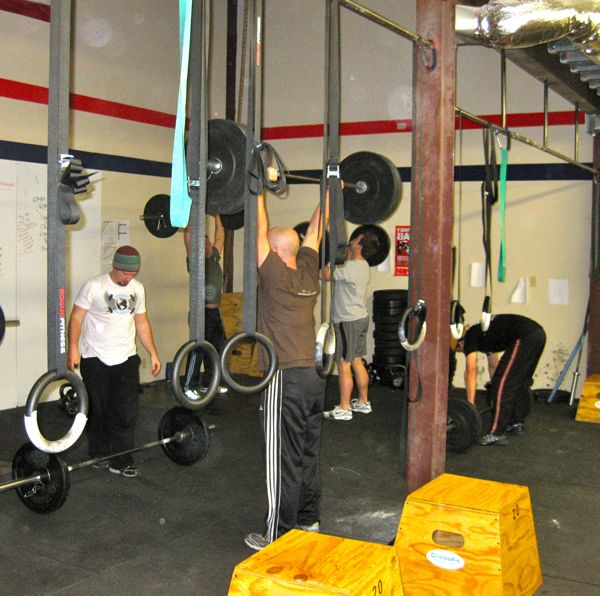
CrossFit does not have traditional weight machines. Photos/Provided

CrossFit does not have traditional weight machines. Photos/Provided

Back to the city offices went the owners.

“They came to the front counter and we showed them the Industrial Area Community Plan. We showed them other areas where they could go,” explained Hilary Hodges, planning manager for South Lake Tahoe.

The owners — Tim Anderson, Matt Johnson, Tom Modenhauer and Weldon Wulstein — were in the process of appealing the planning staff’s denial of a business license just as the business was growing.

In December, South Tahoe CrossFit moved to Dunlap Street at the corner of James Street — where city code allows it to be. Anderson says the current location is about five times as big as the old site.

A city Finance Department employee said the business license application for CrossFit is under review.

“We are tax paying and law abiding,” Anderson said. “You would think economic success should be applauded. We are doing something that is good for people.”

It is the city’s policy to cash checks before the Planning Department has reviewed the paperwork. That is where the confusion is. Business owners have a receipt for money paid, are not told by the city not to operate, and have most likely signed a lease. A physical address for the business is necessary for the city to issue the license.

“Usually if people are on top of it they will come in and ask (about zoning and other issues) before they sign a lease and open a business,” Hodges said.

Anderson et al decided to open South Tahoe CrossFit because they believe in the philosophy of the workout.

Pushups are routine at South Tahoe CrossFit.

Push-ups are routine at South Tahoe CrossFit.

“Instead of a big gym crammed full of equipment, we don’t have machines except for one rower,” Anderson explained. “The rest is bar bells, kettle bells, a big pull up bar. We do things with rings. Our workout is inherently different.”

People workout in small groups with a trainer, often doing the “workout of the day.” Different ability levels may workout together, but one person may be doing box jumps 12-inches high while another is at 30 inches.

“It is intense. That’s why you can get done in 20 minutes,” Anderson said. “We’re all about working across multiple joints and muscle groups. I defy anyone to say your heart rate isn’t up.”

For more information about South Tahoe CrossFit, click here or call (530) 541.2341.

CrossFit is based in Washington, with gyms in Round Hill and Tahoe Vista, too.


Recycling organic material about to be a whole lot easier

By Kathryn Reed

Pine fills the senses. A chill is in the air. The building seems massive with only a few pieces of equipment inside. A pile of wood fills one corner; wood chips are at the other end of a large red chipper that looks like it could spit out an entire pine tree.

This is the scene at the Resource Recovery Center — South Tahoe Refuse company’s organic materials recycling center.

“Once you get a loader and a couple cars on the scales it won’t be too big,” said John Marchini, who runs STR.

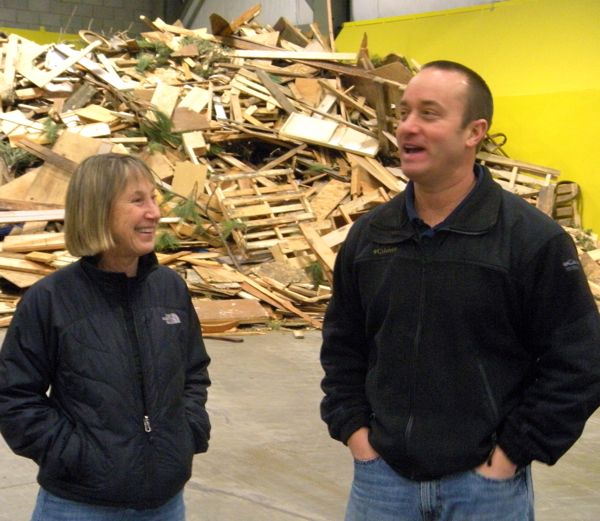
Jeanne Lear and John Marchini in STR's Resource Recovery Center. Photos/Kathryn Reed

Jeanne Lear and John Marchini in STR's Resource Recovery Center. Photos/Kathryn Reed

Construction milled wood, slash, wood pallets and few Christmas trees have come through the facility. It will officially open in April to contractors.

The purpose of the 33,700-square-foot facility on Ruth Avenue in South Lake Tahoe is to process about 30 tons of organic material a day.

Lawn clippings, pine needles and recyclable construction waste currently cross the assembly line of the Materials Recovery Facility next door.

“The new Resource Recovery Facility will increase efficiency by directing organic material to a single, dedicated operation with existing markets and end-uses for these resources,” according to STR officials.

Bentley and Full Circle Compost, both in the Carson Valley area, are interested in this material for their operations.

Contractors will have a card to swipe that has all of their information stored on it. A scale weighs their load. They dump their goods. Then they go out a different door, get weighed again, swipe the card one more time and then receive a quarterly bill in the mail.

Before this center came along, contractors paid by the yard instead of weight.

This system should speed up the process for contractors to get in and out. Plus, it is designed to make recycling of this material more efficient.

The cheaper is operated remotely.

The chipper is operated remotely.

South Tahoe Refuse is still working out with the joint powers authority, which is made up of the city and both counties, to see how best to have residents sort out green waste. It may be a green bag or special tie to signify yard waste is inside.

Wood chips and pine needles will be available for contractors to use for erosion control on construction sites. For now, the processed material will not be doled out to residents.

Bunkers will store the various processed materials.

The center will be open Monday-Friday. It’s possible Saturdays will be devoted to grinding.

In 2000, the garbage company realized it was not going to accomplish the state mandated recycling diversion goals with the facility it had. California is incrementally increasing the amount of trash jurisdictions much divert from landfills.

The state says it should be 50 percent, while South Lake Tahoe has set a goal of 55 percent. Jeanne Lear of STR says the new center will get STR over the 50 percent threshold.

Between 62 and 70 percent of the waste coming to STR is from South Lake Tahoe, with the remainder from El Dorado and Douglas counties.

The building at times has been controversial because some believe the garbage company should be in the industrial area.

“The cost to move would have been cost prohibitive. We’ve been here since 1962,” said Marchini, whose grandparents started STR.

Marchini said the city approached him about moving. Twelve locations were looked at, with three making the short list. None penciled out financially. Besides the cost involved in moving the operation, neighbors of the sites that were looked at were not thrilled with the prospect of a garbage company moving in.

STR responded to a request for proposal from El Dorado County and won the bid to be the operator of the mixed waste facility. Construction began in May 2008.

STR owns the land and facility. The company took out a loan for the project. Ratepayers are paying part of the expense of the building.

The cost to separate out trash is expensive. Lear said because consumers have said sustainability is important, lawmakers listened and trash companies are doing their part per mandates from the jurisdictions they serve. The consumer in turn has to pay for living greener.

Marchini said it would be a whole lot cheaper to take everything to the landfill.

For more information about South Tahoe Refuse, click here.

Publisher’s note: On Monday, read about how the economy is affecting South Tahoe Refuse.


Plane lands on Hwy. 50 near El Dorado Hills

By NEWS-10

A small plane made an emergency landing on Latrobe Road just off of Highway 50 Saturday morning, according to officials.

California Highway Patrol spokesman Michael Bradley said the single-occupant plane landed just after 11 a.m. The plane clipped a car on the way down, but no one inside was injured. The pilot walked away without a scratch.

Read the whole story


Garrido charmed parole agents, files show

By Sam Stanton and Denny Walsh, Sacramento Bee

Phillip Garrido apparently had a way with people.

Repeatedly over the years he managed to charm the prison officials and parole agents supervising him to the point that they lauded him in letters.

Even when they detected him acting “real weird” or “strange” during visits to his Antioch home, they made no effort to conduct thorough searches of the property, admitting in writing they made only

Phillip Garrido
Phillip Garrido

“cursory” checks of the premises.

Read the whole story


STHS construction zone to become learning center in April

By Kathryn Reed

South Tahoe High School’s class of 2010 will graduate knowing what it’s like to learn in a new building with state-of-the-art equipment.

The building in what was the parking lot at the front of the school will open the day after spring break in April.

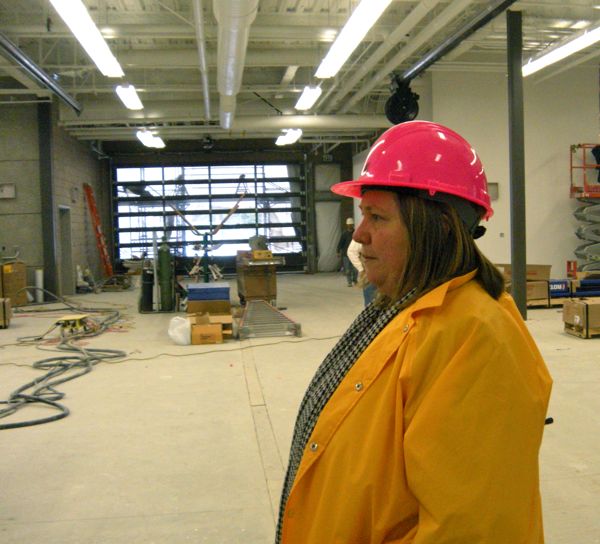
South Tahoe High Principal Ivone Larson talks about the auto shop that will open in April. Photos/Kathryn Reed

South Tahoe High Principal Ivone Larson talks about the auto shop that will open in April. Photos/Kathryn Reed

At Tuesday’s school board meeting the funds to buy equipment and furniture for the two-story building were approved.

SMC Construction of Reno broke ground on the project in May. Many of the guys working there this week live on the South Shore. That was one of the goals — put locals to work.

Called the career technical education building, it houses the auto shop on the lower level. A glass garage door lets natural light in. It’s spacious, clean and looks almost ready to overhaul several Toyotas at once.

Ten bays will allow students to work on vehicles — and not just ones powered by gasoline.

The lifts are still in boxes, having arrived last week. Overheard are air nozzles and other necessities for the trade.

Two members of the Lake Tahoe Education Foundation are getting a tour from LTUSD Facilities Director Steve Morales. They are surveying the area in anticipation of having the annual Excellence in Education celebration in the building in May.

Both levels have areas for recycling.

Upstairs is where graphic arts, architectural drawing and construction classes will be taught.

Windows are everywhere it seems. Views, once the construction mess is done, will be stunning for those who teach and learn here.

The other building now under way will be ready for the 2010-11 school year. Most of the portables in the back of the school have been removed, and those that haven’t will be this summer.

This two-story building that overlooks the football field is designed to address the overcrowding at the school that resulted in the use of portables long after their designated 15-year lifespan.

Classrooms for math will be housed here, as well as environmental science (including a green house), the dental program complete with chair and X-rays, The Company — where students can do web design, business finance and the like.

Walls can be removed to allow for a speaker to talk to more than one class at a time or for teachers to collaborate.

Both buildings have areas for student displays in the hallways. Internal stairs and elevators are in both, thus eliminating the need to go into the snow.

Some teachers have needed to be trained to teach in the new facilities. One just went to a biodiesel course. Others have the required training, but aren’t using it because the courses or facilities are not yet in place.

“We are hoping (these programs) will draw families from outside the area to this level of education,” STHS Principal Ivone Larson said.

Bids are being sought on the theater modernization project and the digital arts building that will be erected in front of the auto shop. Construction is expected to start this spring.

Larson said monthly meetings are going on with staff at Lake Tahoe Community College to ensure what students will be able to do in digital arts will tie directly into the college’s curriculum.

The high school also wants to integrate its programs on site. Larson used the example of a digital arts student designing a set that construction students would build for the theater department.

“We are setting it up by department a lot like you would see on a college campus,” Larson said.

The inner workings

Four years later and still the white board with its blue writing is attached to a wall in a room that is affectionately called the Think Tank.

Written on it are the dreams of district staff and officials. It starts at kindergarten and has paths that could lead students to Ivy League schools.

The buildings and then the programs associated with them are the result of the vision and tenacity of several people.

Blueprints line the other walls, showing which dreams are about to be realized.

With grants coming in on a regular basis, it’s possible a second white board of dreams will need to be created.

ngg_shortcode_0_placeholder


Developer lines up investor to take over convention center

By Kathryn Reed

Randy Lane has an investor to take over the convention center project in South Lake Tahoe.

“We are still going to be involved, but these other people will be the face of the project,” said Lane, the main force behind Lake Tahoe Development Company.

But who the investor is is not being disclosed because no contracts have been signed. LTDC’s contract with the city cannot be transferred to a buyer/investor without the City Council’s approval.

Harveys casino looms over the rebar and concrete laid years ago by Lake Tahoe Develpment Company. Photo/Kathryn Reed

Harveys casino looms over the rebar and concrete laid years ago by Lake Tahoe Development Company. Photo/Kathryn Reed

Lane said the projects the investor has worked on would be recognizable even if the investor’s name is not.

On Monday at 1pm the council is meeting in closed session. Notification was sent out at 4:30pm on Friday.

The meeting is to discuss the city’s position on whether the developer should have his exclusivity rights in bankruptcy court extended until July 3.

“The investor absolutely weighs in the decision regarding an extension,” Councilman Hal Cole said.

Cole would not say who the investor is, but said he didn’t recognize the name of the company.

Zephyr Cove-based Lake Tahoe Development Company has been in bankruptcy since October. The firm owes creditors $54 million. The project at the state line was expected to cost more than $400 million to build. The council allowed demolition of existing businesses and concrete to be poured without a final map filed or financing secured.

A debtor has 120 days to file a reorganization plan in bankruptcy court. That time period ended Feb. 2. At that time the city said no to Lane’s request for an extension and the court denied a hearing on the issue.

The need for a special meeting on another extension request is because the paperwork must be filed in Sacramento on Feb. 16. But the city has known this date so why the last-minute meeting on a holiday when city offices are otherwise closed raises questions.

Lane has until Feb. 23 to offer rebuttals to any denials, which are expected by two of the major creditors. The judge will make a ruling March 2.

“The issue is whether or not we want to extend it for a period of time to see if he has the financial wherewithal to do it or let the exclusivity end,” City Attorney Patrick Enright said.

But not all the council members like how this is being handled, nor understand the eleventh-hour nature of doing business. Councilman Bruce Grego was the only one not to return phone calls.

“It’s 5:52 in the afternoon (Friday) and I just received a packet over a half-inch thick and I have to go over it between now and Monday. This is information I was told I would receive Wednesday. I didn’t even receive a phone call about it,” Councilman Jerry Birdwell said. “It’s a Friday on a holiday weekend and they are calling for a special meeting. They expect me to go through all of this and digest it and I don’t even know who these (investors) are. I am not pleased with the way this has been handled.”

Cole hand delivered the information to Birdwell’s bed and breakfast.

Cole and former Councilman John Upton are the two who brokered the deal with the city and developer.

The operating agreement with the city and developer calls for two hotels, a convention center and retail to be built on a little more than 11 acres.

What the project may evolve into is unknown.

“We talked a little about the owner participation agreement. We are still wanting meeting spaces and not a major deviation in the OPA,” Cole said.

Cole met this week with Lane and a representative of the potential investor.

“My job is to work something out in the best interest of the public. My opinion is Hal Cole is not doing that,” Councilman Bill Crawford said. “Enright promised an email to be sent Wednesday late afternoon to let the rest of us know what happened in those meetings. It hasn’t happened.” (This was as of late Friday afternoon.)

Mayor Kathay Lovell met separately this week with Lane, the investor’s rep and the two city attorneys.

Lovell said the Feb. 15 meeting is in closed session because it has to do with potential litigation and nothing to do with a potential investor, which contradicts what Cole said.

Lovell said if and when the developer formally comes forward with a desire to modify the agreement or have others take over the OPA, that meeting would have to be in open session.

But apparently decisions are going to be made Monday regarding the largest redevelopment project in South Lake Tahoe’s history without the public having input or at least being able to hear the dialogue.

It would seem if the council favors an extension of exclusivity for LTDC, that it likes the investor who is lined up since the city has once already said no to an extension.

It’s unknown how much weight the city has in bankruptcy court because it is not a creditor.

The extension being sought by Lane in court would mean he has exclusive rights to present a reorganization plan. However, because the 120 days has passed, it’s possible creditors could bring plans forward in March. Lane and his investor could present a plan in March as well.

Another issue facing the project is that permits are set to expire this year. If that happens, the value of the project to potential investors diminishes even more.


Declining property values affecting LTUSD bond sales

ltusdBy Kathryn Reed

Judging by the perplexed looks on the board members’ faces, it was clear the decision they need to make regarding issuing the second series of bonds is going to take some soul searching, coming to grips with potential public outcry and a need to better understand economics.

The mathematician on Lake Tahoe Unified School District’s board, Larry Green, vocally disagreed with staff’s recommendation. Board member Judy Cefalu was in Green’s corner simply because it would raise more money and therefore get more things built sooner.

Member Sue Novasel clearly wanted the option staff suggested.

It was not obvious which way board members Wendy David and Mike Doyle were learning.

In November 2008, voters approved a $64.5 million facilities bond for the South Shore district. In March 2009, $29 million in bonds was issued. Much of that money is being used to build two buildings at South Tahoe High School.

Joanna Bowes of KNN Public Finance and Charlie Feinstein of De La Rosa & Co. Investment Bankers spent a good portion of Tuesday’s board meeting explaining to the board and audience the two main options the district has.

By the end of the meeting the board opted to postpone making a decision until it meets in March.

The problem, so to speak, is the assessed value on property in the district’s boundaries is not keeping pace with original projections. In the past 17 years it was growing at an annual rate of 6.64 percent. However, in the last year it has grown 1.02 percent.

The 2008 bond passed with the assumption property owners would pay $28 per $100,000 of assessed value for 35 years. The calculations predicted that rate would stay steady or go down for the voters as property values went up and turned over, therefore necessitating new owners contribute more because the value of their property would be greater.

Option 2, what staff recommends, is considered the more conservative approach. It would extend debt service for five years – meaning property owners would pay for the bond that much longer.

The district would get $17 million to use for the construction projects.

Green believes this option doesn’t take inflation risks into consideration.

Option 1 is likely to raise $23 million for the district, but property owners are apt to pay about $31 per $100,000 of assessed value. This means $15 more a year for homes with an assessed value of $500,000.

Staff recommended Option 2 because it is more conservative.

It was brought up that as cash moves into the market it’s likely construction prices will shoot up. This means not having the money in hand now could result in paying higher prices down the road that might render fewer projects being completed.

Click on bonds and financing to review material presented to the board.

Publisher’s note: On Saturday, find out how construction is going at South Tahoe High School.