Bear Valley construction plans take shape

By Michael Kay, Union Democrat

Bear Valley could break ground as early as next summer on a three-decades-in-the-making plan to build a gondola from base camp to one of the peaks at the ski resort.

Regulations and requirements from both Alpine County and the U.S. Forest Service have stalled the improvements in the five years since the current owners took over the resort in 2005.

But if the process rolls smoothly along, construction could begin on the estimated $7 million lift by next summer, Rosie Sundell, the resort’s senior marketing director, told attendees at the Angels Camp Business Association meeting Monday night.

Read the whole story


Heavenly, Diamond Peak eager to begin construction

Rob Sabo, Northern Nevada Business Weekly

The summer construction season doesn’t look very promising in the Truckee Meadows, but two Lake Tahoe-area ski resorts will build facilities this summer.

Construction of a new lodge at the top of Heavenly Mountain Resort’s gondola is expected to begin by mid June, and Diamond Peak Ski Resort will start construction of a new skier services building on May 1.

The 14,720-square-foot lodge at Heavenly will be a year-round facility housing food and beverage services and restrooms, says Casey Blann, vice president of mountain operations. Currently there is no indoor seating at the

Artist's rendering of the lodge to be built at the top of Heavenly's gondola.

Artist's rendering of the lodge to be built at the top of Heavenly's gondola.

top of the gondola, far and away the main people mover at the 4,800-acre resort.

Read the whole story


South Tahoe council reaches its lowest level to date

By Kathryn Reed

Bruce Grego. That was the topic for more than two hours as the South Lake Tahoe City Council conducted a special meeting Thursday about whether the city councilman should have been reimbursed with taxpayer dollars for his use of outside counsel.

Tension filled the room. Hostilities – verbal and body language — were everywhere.

In the end, nothing was resolved.
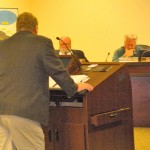
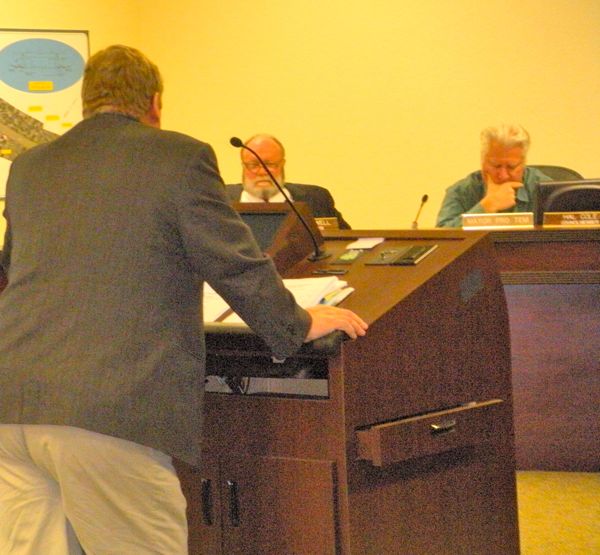
Councilman Bruce Grego, standing, defends his actions as colleagues Jerry Birdwell and Hal Cole listen. Photo/Kathryn Reed

Councilman Bruce Grego, standing, defends his actions as colleagues Jerry Birdwell and Hal Cole listen. Photo/Kathryn Reed

The council did agree things could have been handled better regarding the issue. But how they should be handled in the future was neither discussed nor asked to be put on a future agenda.

One thing the city could do is have warrants come before the council before they are paid – all but staff paychecks. This would eliminate situations like the Grego brouhaha. This is common practice in other cities.

The city has changed the policy when it comes to hiring outside legal counsel. It now all goes through the city attorney’s office. Grego, with everyone else, voted on this last summer. Still, he did not bring to his colleagues’ attention that he had personally sought outside legal counsel with the city manager’s permission and that he had billed the city for it. The other council members were not aware of this until the warrants were in their packet for the April 6 meeting or Lake Tahoe News called them. (Here is the original story.)

Grego never said Thursday he would have done anything differently. He was adamant it was his right to collect $937.50 in taxpayer money for having hired Dennis Crabb work on his behalf with the Fair Political Practices Commission regarding a potential conflict of interest he has as the attorney for Lakeside water district when it comes to voting on redevelopment matters near Stateline.

It has not been explained why the money is coming out of the Redevelopment Area 2 fund when the council hasn’t even created such an area.

Grego was a member of the public for the hearing because legally he couldn’t vote on the matter because it involves him and more than $500.

Most members of the public in situations like this are given five minutes to defend themselves or make their case. Grego was allowed to talk as long as he wanted.

Mayor Kathay Lovell looked a bit despondent through much of the proceeding. Lovell was inconsistent with the use of her gavel as about a half dozen members of the public spoke, and the councilmen kept interrupting each other and the public.

Lovell and Councilman Bill Crawford kept squabbling like children.

All the meeting at Lake Tahoe Airport seemed to accomplish was to further divide the council and make it apparent that it is going to be a long four months until City Manager Dave Jinkens retires, and even longer until a potential new council is seated in December.

What did come to light is:

• Jinkens admitted he’s talked to the grand jury about various issues in the city.

• City Councilman Jerry Birdwell has spoken to the district attorney and taken the Grego issue to the Justice Department via the FBI. His issue is the use of public funds for private matters. (He called for the meeting and was visibly upset through the proceedings.)

• Crawford believes Grego and Jinkens are in collusion and that corruption has occurred. He considers his most important responsibility to be fiduciary.

• Grego called the comments against him slanderous and welcomes any investigation.

• Jinkens said comments spoken Thursday were atrocious and possibly violated state law.

• Cole and Lovell said no criminal behavior has occurred.

• Former City Attorney Cathy DiCamillo signed the letter to the FPPC that Crabb wrote. Grego, when asked by Crawford if he had an ethical issue with that transaction, said “no.” After the meeting, City Attorney Patrick Enright said that behavior is not normal in legal circles. (DiCamillo no longer lives in South Lake Tahoe.)

• Grego and Birdwell remember having breakfast in April 2009 to discuss the reimbursement issue. Grego said Birdwell’s advice was to submit the bill to get a check from the city. Birdwell said his advice was to take it before the City Council.

• A memo from now former City Attorney Jacqueline Mittelstadt dated Aug. 20, 2009, said she vetted the reimbursement issue with the finance committee of Hal Cole and Birdwell. Cole has zero recollection of any such meeting. Grego said he has no memory of it either. Birdwell has a copy of the document. (Most items are emailed between staff and council members, however Grego has documents faxed to him or hand delivered because he doesn’t use email.) Grego said perhaps Birdwell’s friendship with Mittelstadt is why he has the document and others don’t; implying that the memo may never been disseminated to the people who were supposed to get it.

• The sequence of Grego asking for permission from Jinkens to seek outside counsel, subsequent emails, memos, other conversations-documentation, requisition for payment – the time line of it all was convoluted and never linked together in a manner to prove everything was on the up and up or not. (Grego has never explained why he didn’t immediately seek clarification about the potential conflict when first elected since he knew all along there could be one. He was on the City Council in the last 1980s and is not a newcomer to how things work in city government. Plus, he has worked for the water district for 10 years and the hole was there when he was elected.)

• The timing of Cole, Grego and Lovell seeking the dismissal of Mittelstadt was linked to the timing of memos involving the Grego issue. Nothing was proved.

• Kenny Curtzwiler, a vocal member of the community who lives in the county, said he thought this matter should have been heard in closed session. He said until this meeting he thought the seated council was the best he’s seen South Lake Tahoe elect and called Jinkens the best city manager.

• Peggy Cocores took issue with Curtzwiler’s statement.



El Dorado County sheriff’s candidates politely spar

By Kathryn Reed

STATELINE — Relaxing the renewal process for people carrying concealed weapons and knowing the budget will be a critical issue facing the next sheriff of El Dorado County are two things the six candidates for the job agree on.

During a lunch meeting Wednesday at Harrah’s Lake Tahoe that was hosted by Soroptimist International of South Lake Tahoe, six questions were presented to the men who want to be sheriff.

El Dorado County sheriff's candidates.

El Dorado County sheriff's candidates.

The candidates were lined up as they will appear on the June 8 ballot: Ernie Hillman, retired sheriff’s captain; Larry Hennick, retired sheriff’s sergeant; George Nielsen, Placerville police chief; Craig Therkildsen, El Dorado County sheriff’s captain; Bob Luca, retired chief of the California Bureau of Investigation; and John D’Agostini, district attorney’s investigator.

The need for a new sheriff is because Jeff Neves left in December before his term was to expire at the end of this year. Undersheriff Fred Kollar was appointed to be interim sheriff until the next sheriff is elected. He had planned to retire at the end of the year and will still do so.

If no candidate receives more than 50 percent in the June primary, then there will be a run-off in November.

On Wednesday, each had to explain what sets them apart from the others seated at the front of the room.

Hillman: “My experience differentiates me. I’ve held every sworn position except sheriff (in El Dorado County). I’m the only candidate with military experience. I served two terms in Vietnam.”

Hennick: “I’ve worked the streets here. I have a home here. I have a back to basics approach.”

Nielsen: “I’m a top executive of a law enforcement agency now.”

Therkildsen: “I’m working for you now. I’ve worked up here for 4.5 years.”

Luca: “I didn’t spend my whole career in one department doing the same thing over and over again.”

D’Agostini: “My age. I have three, four terms in me.” He is also the only candidate currently with an elected position. He is on the Pioneer School District board of education.

Another question posed to them was: “What steps will they take to ensure the budget ax doesn’t continue to fall on the sheriff’s department?”

Hillman: “I can’t promise you it will not take a hit. I will argue for every dime we can get. It may be an uncomfortable situation for the Board of Supervisors, but I will take them on.”

Hennick: “You need to be revenue generating. With alternative sentencing programs you have them pay for their time so they are not spending time in jail. Use asset seizure and forfeiture.”

Nielsen: “First, I have experience doing these things. You focus on staffing. I transferred a management person to the streets. We must prioritize public safety. I’ve written five (grants) in the last year and got three. That’s results.”

Therkildsen: “We’ve made cutbacks and have not reduced the number of deputies on the street. We are not going to cut street deputies.”

Luca: “The role of sheriff is to set priorities. I’ve managed large budgets. The role of the sheriff is to be in the community, at the Legislature to lobby.”

D’Agostini: “There will be cuts. The last place I want to cut is the boot on the street. I will do a line item review of the budget. Grants are great, but some come with long tails.”

Hillman’s 30-year career is all with El Dorado County, including a stint as lieutenant on the South Shore. Although now retired, he says his batteries are recharged to take on the job as sheriff.

This is Hennick’s third run for sheriff. He wants to bring back the mounted patrol, have a resident deputy at Meek’s Bay and have the DARE program in schools.

Nielsen says in the last five years he has helped to reduce the crime rate in Placerville by 53 percent. As a law enforcement executive now, he believes he could hit the ground running.

Therkildsen, the only candidate to have his ballot statement translated into Spanish, believes he too will not need a learning curve because he is immersed in the department now as a captain.

Luca believes his diverse background with the California Bureau of Investigation and as an investigator with the El Dorado County District Attorney’s Office is an asset. His priorities are to stop sexual predators and elder abuse.

D’Agostini wants to rebuild community trust. His priorities are solving property crimes and increasing respect for civil rights.

There will be another sheriff’s candidates’ forum April 20 at 7pm in the El Dorado Hills Community Services District Pavilion, 1021 Harvard Way, El Dorado Hills.

California residents have until May 24 to register for the June 8 primary. There are a slew of positions up for grabs on the ballot.


Harrah’s restructures to avoid defaulting to creditors

By Howard Stutz, Las Vegas Review-Journal

Harrah’s Entertainment plans to issue $500 million in second priority secured notes that are due in 2018, which will be used to pay down loans that come due over the next two years.

In a statement Tuesday, the casino operator said the offering is subject to several conditions.

Soon after the announcement, Moody’s Investors Service maintained a “negative” rating outlook toward Harrah’s long-term debt.

Read the whole story


DA: Evidence against Garrido overwhelming

By Sam Stanton, Sacramento Bee

El Dorado County District Attorney Vern Pierson said today he has overwhelming evidence to convict accused kidnapper and rapist Phillip Garrido, and that he believes there is evidence to show Nancy Garrido might have been under her husband’s control.

“We believe it does exist,” Pierson said during a 50-minute hearing in Placerville.

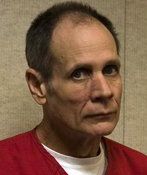
Phillip Garrido

Phillip Garrido

Pierson said the mere existence of the two daughters that kidnap victim Jaycee Lee Dugard had while in Garrido’s captivity for 18 years “is incriminating.”

“This is a case that we can prove without any difficulty as to Mr. Garrido,” Pierson said.

Read the whole story


Angora residents, Forest Service work on life after the fire

By Jeff Delong, Reno Gazette-Journal

When the Cain family rebuilt their Tahoe Mountain home, leveled during the Angora Fire of June 2007, most windows were installed facing east.

In that direction, many trees survived, their trunks scarred by fire but with canopies now green with healthy needles.

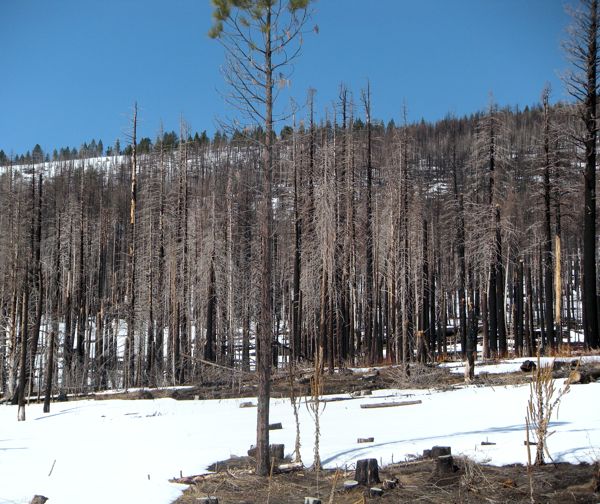
The U.S. Forest Service has plans for the Angora burn area. Photo/Kathryn Reed

The U.S. Forest Service has plans for the Angora burn area. Photo/Kathryn Reed

To the west, looking toward Angora Ridge, the forest is dead. Bare tree trunks rise from the snow like huge, blackened toothpicks.

Read the whole story


Dye study may lead to use of herbicides in Lake Tahoe

By Kathryn Reed

One day the Lahontan Water Quality Control Board is probably going to have make the decision to either leave the invasive non-native Eurasian milfoil plant in Lake Tahoe or eradicate it with herbicides.

The mantra for handling invasive aquatic species, be it plant or animal, is prevention, control, eradication. Prevention, in this case, is not an option because it’s been here for years. Control seems sketchy as the plant continues to clog the canals in the Tahoe Keys in South Lake Tahoe and is growing in other locales around Lake Tahoe. Eradication would be the next step.

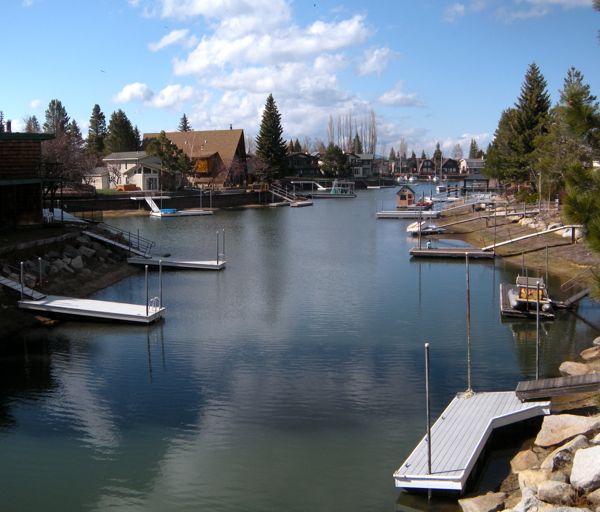
Channels in the Tahoe Keys in South Lake Tahoe are full of milfoil. Photo/Kathryn Reed

Channels in the Tahoe Keys in South Lake Tahoe are full of milfoil. Photo/Kathryn Reed

For now, though, Lahontan is allowing a study to go forward this summer involving a dye that is designed to duplicate how an herbicide would react if it were injected into Lake Tahoe.

“Part of why we are doing this is to see how long it will stay in a localized area,” Lars Anderson, lead scientist with the U.S. Department of Agriculture’s Weed Science Program, told the board Wednesday. (The water board met April 14 at Lake Tahoe Community College.)

Dan Sussman, environmental scientist with the water agency, said how the dye breaks down would help determine what herbicides could be used in the future.

The agency is not advocating herbicides be used, but wants the studies in place to know what options are available. Studies like the one Anderson will conduct this summer could then be part of environmental documents that would be put together on a case-by-case basis for eradicating the various invasive species in Tahoe.

Herbicides are not permitted in Lake Tahoe. However, a revision to the document that dictates what’s allowed per Lahontan is likely to permit herbicide use. The amendment is expected to be before the board in November. The document will be available to the public this summer.

The fluorescent red dye will be put into the lake in June and late summer in about 2 to 3 feet of water. Instruments on boats will be used to collect data in real time about the spread of the dye. It’s expected that the dye will not be able to be seen more than eight hours after it enters the lake.

The board and Executive Director Harold Singer voiced concerns about letting the public know what is going on to minimize any potential outcry. Officials are meeting with the Tahoe Keys Homeowners Association later this month as part of that outreach. Information will also be posted at the marina and other locations where the dye may be used – like in Emerald Bay, Lakeside Marina and Incline Village.

The problem with milfoil is that it can overtake a lake. It easily spreads from lake to lake via boat trailers. The feather-like leaves are distinctive. The plant is popular in home aquariums.

It can interfere with swimmers, boats and clog in-take systems for drinking water. Dealing with those issues as well as eliminating the weeds is expensive.

In the past, harvesters have been used to get rid of milfoil. Sussman told Lake Tahoe News there are harvesters on the market now that pull out the entire plant instead of mowing it.

Bottom barriers are also a tool. These have been used more often for eradicating clams. However, Sussman said they are working on invasive plants because they block out the light.

The dye (Rhodamine WT) tracer study that will begin in two months is one of several pilot programs being conducted around the lake to look into how best to rid Lake Tahoe of invasive plant and animal species.


Ronald G. Bricker 1951-2010

Ronald G. Bricker passed away on April 12, 2010, at his desk at Royal Aloha Resort on Quaking Aspen Way on Kingsbury Grade, doing what he loved — managing the resort. He was born on Sept. 10, 1951 in Dinuba, Calif. to Darell G. and Mary E. (Liz) Bricker.

They moved around a lot during his early childhood because his father worked for Federal Aviation Agency in Alaska. He spent time in Big Delta, Moses Point, Bethel, Northway, Anchorage, Soldotna and Kodiak, Alaska. He attended the University of Alaska, Anchorage, earning a degree in psychology. His skills were versatile; he spent several years commercial fishing in Uganik Bay off Kodiak Island and Bristol Bay, Alaska, and crabbing in the Bering Sea. He was also a skilled carpenter. He was the webmaster for Deb Howard and Company in South Lake Tahoe for 10 years prior to becoming manager of Royal Aloha Resort.

Ronald G. Bicker

Ronald G. Bricker

Ron married the love of his life, Pamela, in Carson City on April 14, 1993, and they have had 17 wonderful years together. His two granddaughters, Corynn and Ashley, have been a great joy to him. Of his many pastimes, he enjoyed following the stock market, golfing and watching his teams play on TV, especially the Seattle Seahawks. He loved his many friends and treasured their friendships.

Ron is survived by his wife Pam of Stateline; son Scott Bricker; granddaughters Corynn and Ashley of South Lake Tahoe; parents Liz and Darell Bricker of Gardnerville; sister Debra Howard and husband Tony of South Lake Tahoe; niece Alicia Miller, husband Gary; great-nephew Merrick of Santa Cruz, Calif.; nephew Brett Howard of San Francisco; aunt and uncle Marty and Lloyd Mitchell of Lodi, Calif.; cousin Steven Mitchell and wife Connie of Lodi, Calif.; and his extended family of brother- and sister-in-laws, nieces and nephews from Pam’s family.

A celebration of the life of Ronald G. Bricker will be at 2pm on May 1 at the home of Deb and Tony Howard at 1315 Wildwood Court, South Lake Tahoe. In lieu of flowers, his family respectfully requests donations be sent in Ron’s name to the American Heart Association, 1281 Terminal Way, Ste. 111, Reno, NV 89502 or the charity of your choice.


DCSD settles with unions — no raises

dcsdBy Kathryn Reed

ZEPHYR COVE — Financial issues dominated Tuesday’s agenda for the Douglas County School District board of trustees.

The board on a 6-0 vote (Keith Roman was absent) agreed on a contract with the various unions that includes this school year and 2010-11. No raises will be given, but no one will be laid off because of budget cuts either. That was a critical agreement.

However, layoffs will occur because of declining enrollment. Those cuts should be finalized by the end of the month. Most likely three or four teachers will lose their jobs and possibly one classified position will be cut.

Susan Lacey, president of the Douglas County Professional Educators Association, said the dreary financial situation in the state led her group, the bus drivers, and support staff organization to settle now.

“We thought it would be better to get things wrapped up,” Lacey told Lake Tahoe News. “We thought it better not to continue with language issues (in the contract) and just get the salary wrapped up.”

The union had its eye on Washoe County where cuts have been harsh as well as Clark County because it may re-open labor negotiations.

No one is getting a raise. However, the district is funding the step increase (an automatic raise for teachers based on years of service) even though the state is not reimbursing it for this expense. The district is also funding a 0.5 percent increase to the Public Employee Retirement System for the two-year period.

The money for this is coming from a reduction in insurance costs. Employees don’t pay a penny for their health insurance – it’s call covered by the district, which is self-insured. The district is going to pay close to $90 less per month for a total of $575/month for each of the nearly 900 insured employees. The savings will pay for the other items.

“That freed up money to deal with budget cuts,” Assistant Superintendent Rich Alexander said.

Employees will not see a change in their health care plans.

“We have a budget for this year and next that keeps us solvent,” Alexander said.

With Nevada looking to make further cuts to education, the future is murky for the state’s school districts.

Also on the agenda Tuesday was a revision of the qualified school construction bond language that then affected Ameresco’s energy savings contract.

The board expects to have a public hearing May 19 on the 2010-11 budget.