Money issues forcing cuts to Planned Parenthood

pphBy Kathryn Reed

Planned Parenthood has cutback its services to the Tahoe-Truckee area. Gone are the programs at the California Conservation Corps in Meyers and at Sierra High School in Truckee.

“Because of budget constraints and issues with the entire state we are restructuring,” said Alison Gaulden, spokeswoman for Planned Parenthood in Reno.

In South Lake Tahoe, services offered twice a week at Tahoe Youth & Family Services will remain, as will the regular visits to Mount Tallac High.

Gaulden said Sierra High students could access the nearby public health clinic.

Sierra High counselor who is also the school district’s intervention counselor said the Nevada County clinic is open Wednesdays form 1-4pm and requires a car to get there from campus.

“It’s a huge loss to us,” counselor Debi Spohr said of Planned Parenthood’s departure. “Not only do we have the asterisk students here, we have the teen parenting program.”

She worries about the incidents of repeat pregnancies without easy access to birth control. Planned Parenthood was on the Sierra campus twice a month.

“I think we need to go lower with educating kids, not getting rid of it,” Spohr said. An eighth-grader in her district gave birth this month.

Planned Parenthood hopes the expansion of its Tahoe City site into a full-fledged center will help the area. Right now services are offered less than 20 hours there.

“With more hours, we’ll have the ability to do the full spectrum of service. Right now a lot of what we do is consultations,” Gaulden said. “We will be able to do full annual exams, and the full gamut of reproductive health care.”

This includes breast and cervical cancer screenings, pap and pelvic exams, sexually transmitted disease testing, pregnancy testing and counseling.

“Two-thirds of our students are from the Kings Beach area. It’s so hard for them to get to Tahoe City,” Spohr said.

But Gaulden said at some point decisions are based on dollars, not client needs.


NV Energy moving forward with using slash piles for fuel

slashBy Stephanie Tavares, Las Vegas Sun

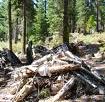
NV Energy’s experimental use of wood chips in one of its coal plants was a bit of a flop, but the utility and state officials are hoping it will wind up being the first step toward using waste wood that is stacking up in Nevada.

The test, which began late last year, found that wood could be burned to generate electricity, but the timber would need more processing first and possibly a change in plant design to make it worthwhile.

The utility conducted the tests as part of its efforts to find new sources of renewable energy.

Read the whole story


Millions in grant dollars keep public entities afloat

s;tBy Kathryn Reed

Even in these economic times, grants continue to be available to public agencies, often from other public agencies.

In the 2009-10 South Lake Tahoe budget, the capital improvement program is receiving 35 percent of its budget from federal grants and 29 percent from state grants. That can be partially broken down to 21 percent from the U.S. Forest Service, 19 percent California Tahoe Conservancy and 11 percent Federal Aviation Administration.

The money the city receives from grantees goes toward Explore Tahoe, roads, erosion control, buildings and grounds, redevelopment, housing, equipment and the airport.

The road at the airport got paved this week with an FAA grant.

“Most of the city’s grant funding is for capital projects,” explained Christine Vuletich, city finance director.

She said in the five years she’s been on the job she’s noticed an uptick in grant dollars being secured even though the city does not have a grant writer.

Although the grant dollars are designated for specific purposes, it’s likely the items those dollars go toward wouldn’t otherwise be funded, especially when cash is in such short supply these days.

South Lake Tahoe is not unique in trying to obtain grant dollars. Most public agencies do. Lake Tahoe Unified School District has $30 million in grants to add to the $54 million bond voters approved – all for facilities.

South Lake Tahoe’s Public Works Department obtains several grants each year for erosion control. Housing grants are another biggie for the city.

Vuletich does not have it broken down as to how much each department receives in grant funding.

On Tuesday the City Council approved the application for a grant from the U.S. Department of Justice. The police department is asking for $16,883, which would be spent on equipment like Tasers, patrol rifle, handgun magazines, tactical ballistic blanket, ammunition and laptop computer.

Also at the meeting this week was a report by Nancy Kerry, redevelopment and housing manager, about the successes her department has had in the last year with grants and what the goals are for the coming year.

“What is great about looking back over the last year from what we applied and then received is to realize we did very well in our percentage of grants funded,” Kerry said after the meeting. “The number of applications funded indicates it was time well spent, a good use of taxpayer resources.”

She said the primary reasons the grants are needed is that it means jobs, stimulates business and in turn could help stabilize the housing market if people can keep paying their mortgages or rents.

“As for housing grants, those end up helping people get into their first home. That’s good to have full-time owners in homes rather than second homeowners or renters. That’s good for property taxes for the city and good for the neighborhoods and community,” Kerry said.

Grants this year include the $1.5 million Housing and Urban Development grant to remove lead based paint from homes in the city. It’s creating jobs for contractors, money for Lake Tahoe Community College because it’s providing some of the education, and cash for Barton Memorial Hospital because it will test children for lead disease

Kerry was in Tennessee last week for a seminar for all recipients of the lead based paint grant. (The trip is paid from the grant, not out of city coffers.) There she was able to tap into what the feds are looking for in 2010-11 grant applications.

“Right now the federal programs are focused on collaboration. They are looking for cities that can work well together, perform well and come up with innovative collaborative solutions to issues,” Kerry said. “HUD is blending (Department of Energy) money and housing money into new Green Healthy Homes Initiative. The GHHI is the concept or theory that if homes are healthier, kids would be healthier and a healthier home is a green home, too.”

Each year about $20 billion is spent on children’s illnesses, including asthma and allergies. The idea is the GHHI might help reduce the need for all those dollars.

“We’ll take a look at funding opportunities for these kinds of programs because those too would go to the local contractors primarily, which help to circulate the funding among local workers and services,” Kerry said.



Doolittle corruption case dropped

3-5C11DOOLITTLE1.embedded.prod_affiliate.4

By Michael Doyle, McClatchy Newspapers

WASHINGTON — A Justice Department corruption investigation that helped drive John Doolittle from office has now been closed without charges being filed, the former Sacramento, Calif.-area congressman said Friday.

“I’m thrilled,” Doolittle said in an interview. “They’ve dragged this thing out for six and a half years.”

Doolittle’s relief, though, is tinged with bitterness at how he believes the Justice Department has mistreated him. He says he accumulated $600,000 in attorneys fees, some of which he was able to pay with campaign funds. The lingering investigation hindered his ability to find work. In the beginning, he said, it proved “very devastating” to his high school-aged daughter.

Read the whole story


Planes collecting climate data in Sacramento region

By Cathy Locke, Sacramento Bee

A Gulfstream airplane will make low-level flights over the Sacramento region this month to collect data for a U.S. Department of Energy climate study.

Researchers from the department’s Pacific Northwest National Laboratory in Richland, Wash., will lead the study, coordinating air and ground operations at three locations. Participating scientists come form several of the Department of Energy’s national laboratories, NASA and the University of California, Davis, as well as other academic and research institutions.

Read the whole story


Mudsnail latest nonnative species to invade waterways

By Stephanie Tavares, Las Vegas Sun

Move over quagga and zebra mussels, a new invasive mollusk is making waves in Nevada.

Sport fishermen and state wildlife officials are worried about New Zealand mudsnails after a colony of the tiny critters was found at a boat inspection area at Lake Tahoe last week.

Although they haven’t gotten the attention that quagga and zebra mussels have, mudsnails are in Lake Mead and Lake Mohave. They’re in Echo Bay and Boulder Basin and at Willow Beach.

The reason there hasn’t been much noise about them is they aren’t capable of the kind of damage that quaggas are. Unlike the quaggas, mudsnails don’t attach themselves to infrastructure such as hydropower generators and water pipelines.

Read the whole story


Democrat lands on board of conservative Placer County

By Ed Fletcher, Sacramento Bee

Conservative Placer County is doing a fair amount of head-scratching after Tuesday’s vote. How did Democrat Jack Duran oust a Republican and claim a seat on the Board of Supervisors?

While Duran’s backers point to his track record as trustee of the Roseville Joint Union High School District, Republican analysts say F.C. “Rocky” Rockholm got pulled under by the anti- incumbent riptide sweeping across the county.

“The only thing worse than being an incumbent is being an incumbent with a whiff of scandal,” said Jeff Flint, a Republican political consultant who lives in Lincoln.

Read the whole story


LTCC secures loan to make sure money doesn’t run out

By Kathryn Reed

Lake Tahoe Community College is taking measures to ensure it can pay its bills even if Sacramento doesn’t.

The board agreed Tuesday to borrow about $1.7 million from El Dorado County Office of Education – just in case.

Sue Niehoff

Sue Niehoff

Sue Niehoff, vice president of Business Services, told the board at Tuesday’s meeting that if the state does not have a budget adopted by Oct. 1, the college would be in trouble. With it being an election year, there are rumblings from Sacramento that a budget may not be passed by then.

A midyear TRAN (tax revenue anticipation note) might need to be issued as another stopgap measure. A TRAN is a short-term resolution and comes with strings.

By going through the county and not issuing a TRAN now, the college is saving between $70,000 and $90,000.

The 2010-11 budget will be discussed June 22 at 6pm, with adoption expected at the special June 29 6pm meeting. The College Council is reviewing the budget today.


LTCC slow to decide how to replace departing president

By Kathryn Reed

What happens when Paul Killpatrick vacates the president’s office at Lake Tahoe Community College next month?

The answer to that question should come June 15 at 7am after the board of trustees’ special meeting.

Paul Killpatrick is leaving LTCC on July 16.

Paul Killpatrick is leaving LTCC July 16.

The board discussed before and after the regular session on June 8 how to proceed. No decision was made.

Michelle Risdon, Academic Senate president, reiterated her group’s issues: cost of having an interim president; consistency in leadership; and taking the time to think about what qualities everyone wants in the person to next occupy that seat.

She told the board that 31 of the 33 faculty who responded to a questionnaire did not want to hire an interim president.

At the June 2 board meeting the faculty presented the idea of having the two vice presidents share the role of president. One hasn’t even started his job.

Board member Fritz Wenck this Tuesday said, “There seem to be a number of people out there who would be good in the interim. Some people I think would be outstanding.”

Board President Kerry David doesn’t believe having the two VPs share the president’s job is the best idea because those jobs already require added work compared to a few years ago, the people in the positions are new, and the college has things like accreditation and a declining budget to deal with.


Quest to increase Tahoe’s clarity begins with TMDL

By Kathryn Reed

KINGS BEACH — With fine sediment being the major pollutant clouding the pristine waters of Lake Tahoe, that load of dirt is going to be scrutinized even more in the coming years.

Today the Lahontan Regional Water Control Board expects to release its plan to increase clarity, goals for how far a Secchi disk should be seen, and a credit program for those responsible for the pollution.

Increasing the clarity of Lake Tahoe is what theTMDL is all about. Photos/Kathryn Reed

Increasing the clarity of Lake Tahoe is what the TMDL is all about. Photos/Kathryn Reed

Called total maximum daily load, this is something agencies that oversee water bodies throughout the country must pay attention to under the Clean Water Act, which is regulated by the Environmental Protection Agency.

“A total maximum daily load, or TMDL, is a calculation of the maximum amount of a pollutant that a water body can receive and still safely meet water quality standards,” the EPA says.

Lahontan staff is proposing fine sediment particles be reduced by 32 percent in 15 years. This should allow the disk, which resembles a white dinner plate, to be seen 77 to 80 feet below the surface. (Right now it’s at 70 feet.) If the new level of clarity can be sustained for five years, scientists would consider the decline of Lake Tahoe’s clarity to be halted.

Robert Larsen, an environmental scientist with Lahontan, engaged the board in a nearly

Near shore clarity is not addressed in the TMDL.

Near shore clarity is not addressed in the TMDL.

three-hour workshop on June 9 at the North Tahoe Event Center in Kings Beach. It was October 2008 that the board last had a thorough TMDL presentation.

“This TMDL is about deep water transparency. We’ve lost 30 feet of clarity in the last 40 years,” Larsen said.

Although aquatic invasive species and near shore degradation are concerns of Lahontan’s, they are not part of the TMDL. Larsen said addressing fine sediments would impact nutrients, which in turn affects near shore water quality.

Fine sediment is defined as particles less than 16 micrometers. Seventy-two percent comes from the urban upland – basically all the developed area of the basin; 15 percent from atmospheric deposition (the air), 9 percent non-urban upland (U.S. Forest Service and other undeveloped areas), 4 percent stream channels, and less than 1 percent from shoreline erosion.

The urban areas on both sides of the state line are being asked to cut the amount of fine sediment reaching the lake by 24.5 percent so the overall goal can be achieved. Larsen estimates it costing $1.5 billion to achieve this goal.

Where the money is going to come from was not discussed. It is one of those unfunded government mandates. The credit program will be the penalty part for non-compliance.

The counties, city, and both state departments of transportation are the primary players that must meet the criteria being set forth.

Robert Erlich, stormwater coordinator for South Lake Tahoe, was the only member of public to speak Wednesday. He has concerns about the costs involved as well as the continuing operation and maintenance dollars required.

The public will have 90 days to comment on the TMDL document. Click here for more information. If the report is not there, it will be by June 14.

The board will have a public hearing in September, with adoption likely in November. From there Nevada officials must approve it, as well as the California Office of Administrative Law and state Water Board. It could be implemented in 2011.