Tractor-trailer barrels into Incline home, driver feared dead

Publisher’s note: Updated 11:40am.

By Jeff Delong, Reno Gazette-Journal

Gwendolynn Ewasko, 19, was in the living room of her Incline Village home this morning when a truck crashed into it and exploded.

“There was a big crash and I saw these huge flames. I thought it was an earthquake,” Ewasko said. “Everything just came caving it. It was crazy. If I had been in my room or the kitchen, I would have definitely been badly hurt.”

Her father, Damon Ewasko, was at work when the accident happened. He watched as firefighters mopped up and said he was happy his daughter escaped unhurt.

Read the whole story


Douglas County scraps water consolidation plan

By Austin Fay

STATELINE – Two years of work by Douglas County staff and the water districts in the county seemed to go down the drain Thursday when the commissioners on a 4-1 vote decided to forego consolidating the eight water systems.

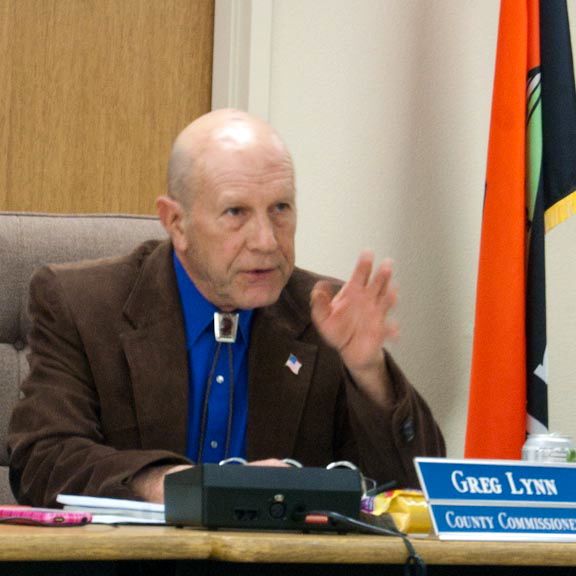
“The problem in my mind is we’re asking one set of non-users (of water) to subsidize another set of users.” Commissioner Greg Lynn said.

Commissioner Greg Lynn makes a point at the June 17 meeting. Photo/Austin Fay

Commissioner Greg Lynn makes a point at the June 17 meeting. Photo/Austin Fay

But all the work and time is not a waste.

Commissioners agreed to seek a modification of the consolidation and look into paying for another study to investigate the viability of the modification. The last consolidation feasibility study cost the county $100,000.

However, Commissioner Doug Johnson, the dissenting vote, asked, “If not now, how much longer do we wait? I don’t see how we’re going to succeed by kicking the can down the road.”

Also being considered is splitting the consolidation based on geography. Users who live close to Lake Tahoe would be consolidated into one system and those who live in the valley another.

For almost two years of deliberations at eight commissioner meetings the board has been trying to find the best solution, while complying with new federal water treatment standards to reduce arsenic levels in the water, and contending with a decline in new development in the county.

Implementing a water system consolidation would have affected 3,537 residential units.

In some cases consolidation is pitting ratepayers against each other. Residents at the lake like their flat rate, which could go away. Residents in the valley don’t want rates to go up in order to subsidize other water systems. Jobs Peak district gets the short end of the stick with 2-inch water lines because it would put them in a higher pay bracket.

About 50 citizens were at the meeting. Jack McQuirk, a Marla Bay resident and an economist by trade, said he was there to encourage “true economies of scale” and to keep the Douglas County commissioners in check.

“I think that the county commissioners and the county manager have not watched over what’s gone on in the county,” McQuirk said. “The water districts have not been run properly. They made a lot of money when they were independent and didn’t put a lot of maintenance money back into the system.”

Valerie Wharton of Minden was outraged by the proposal, but calmly read a letter she wrote to the commission. “I didn’t ask for the county to install a meter on my property and neither did my fellow neighbors. To say this is crazy would be an understatement.”

Residents of East Valley and West Valley would have bore most of the burden, as they are the most populated. Some said they are unfairly paying an average of $25 more per month to subsidize other water systems in the county. West Valley residents would have seen a $6 average monthly uptick in their water bill.

Support for consolidation tended to increase among the 1,097 residential customers at Lake Tahoe where rates for Cave Rock residents would rise from $181 to $303 a month without it. Under the proposal before commissioners on Thurs¬day, District 4 and Western District 5 residents (those who live near Lake Tahoe) would have to pay for the installation of meters. Their average rates would be $108 a month by 2014.

Customers of the largest water system operated by the county, East Valley, will find their base rate increased from $20.60 a month to $23.91 a month by July 1, 2013. Their monthly volume charge would more than double from $1.41 per 1,000 gallons to $3.44 for up to 8,000 gallons. All amounts are for a three-quarter-inch water line. East Valley residents using up to 24,000 gallons would see their use bill go from $2.26 per 1,000 gallons to $4.07 per 1,000 gallons in 2013.

West Valley water customers would see their base rate rise from $15.85 to $23.91 per month. Their volume charge per 1,000 gallons would triple from a $1.10 for the first 8,000 gallons to $3.44.

Rates in Douglas County will remain on their projected upward-sloping path until the County Commission finds a solution. By the time a decision is made, the commission might look different because commissioners Nancy McDermid and David Brady are up for re-election in November.


USFS, El Dorado County settle Meyers Landfill lawsuit

By Kathryn Reed

The 19-year-old Meyers Landfill lawsuit is over. Final approval is expected today or Monday, with all parties signing the agreement by June 23.

“Needless to say, I am happy to see that this day has finally arrived,” El Dorado County Supervisor Norma Santiago told Lake Tahoe News.

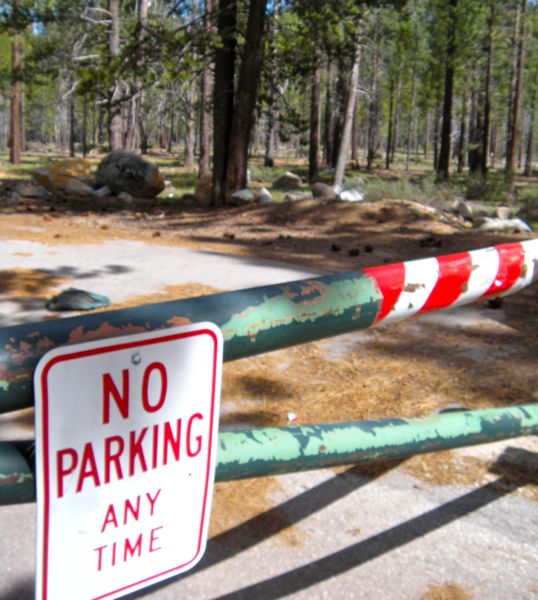
Access to the old Meyers Landfill will be fenced off soon. Photo/Kathryn Reed

Access to the old Meyers Landfill will be fenced off soon. Photo/Kathryn Reed

The 26-acre site off Pioneer Trail that is easily accessed directly across from Elks Club Road has been sitting idle since it ceased being a landfill in 1971. Garbage from El Dorado and Douglas counties, and South Lake Tahoe were dumped on this parcel of U.S. Forest Service land beginning in 1947.

In 1991, after vinyl chloride was discovered oozing into the ground and threatening Saxon Creek, the Forest Service sued El Dorado County.

Vinyl chloride is a carcinogen created after household waste breaks down. Methane and other gases are also issues. The Environmental Protection Agency has deemed it a SuperFund site.

The county has been the main defendant all these years.

“At this point I can say we have negotiated a consent decree with the U.S. Forest Service and the Department of Justice,” Tom Bruen, special counsel to El Dorado County, told Lake Tahoe News on Thursday. “It is being reviewed by top managers of the EPA and the Department of Justice. We are hoping for approval sometime next week.”

Third party defendants have included South Lake Tahoe, Douglas County, South Tahoe Public Utility District, Lake Tahoe Unified School District, Raley’s, South Tahoe Refuse, Harrah’s, Harveys, Heavenly, Safeway, Hertz, Barton Healthcare, Tahoe Valley Pharmacy and Sierra Pacific Power Co. Most have settled.

But, still, South Tahoe PUD had a closed session item Thursday about the lawsuit. Spokesman Dennis Cocking said the June 17 meeting was likely to be the last time it’s on an agenda.

Main sticking points, during what at times has been a highly contentious battle, are who would pay for what. Because everything is not yet a public record, specific dollar amounts are not available.

But millions have been spent on lawyers, a cap that was put on in 1975 that didn’t work, studies, monitoring and re-use proposals. Millions more will be spent on a cap and continued monitoring.

Officials are estimating the cap will cost upward of $4 million. Three contracts are in place for the cap project: contractor, quality insurance agent, and remedial engineer to prepare the CERLA (Comprehensive Environmental Response, Compensation, and Liability Act) reports for the Environmental Protection Agency.

Money will come from some of the third party defendants, some from the Forest Service, and the bulk from the insurance companies representing the defendants.

The county Board of Supervisors hired a contractor earlier this year to do the work. The Forest Service is having a meeting today to talk about the construction.

The cap will be on 10 acres of the site. Work will likely begin this month and take all summer.

“As a result, we will do closures of the landfill area and the road leading to it,” Forest Service spokeswoman Cheva Heck said. “This is not punitive in any way. It will not be safe to be back there.”

A fence will be put up around the perimeter of the work area. It will remain up for a couple years to allow for vegetation to take hold.

The Forest Service will release details next week of the exact area to be shut-off from the public.

Heck would not comment on specifics about the lawsuit.

“It’s still a legal issue,” she said.

But this is just the first phase.

“While we are pleased with this settlement, we have yet one step to go which relates to Operating Unit 2,” Santiago said. “This covers the area where the plume is currently traveling. Once the cap is on, there will be ongoing monitoring of this area to help determine how well the cap is working.”

How to deal with the groundwater will depend on how well the cap works. If the plume is leaving the site post-cap, then more will have to be done. What that “more” might be, is unknown. It’s possible a French drain could be installed to divert groundwater. Mother Nature might have other designs.

One day the site will be able to be used by hikers, mountain bikers and maybe snowmobilers. Talk of El Dorado County taking over the land have long been taken off the table. This means the many meetings and dollars spent on a feasibility study to relocate Lake Tahoe Wildlife Care to the site were for naught.

But Santiago isn’t quite ready to give up the fight. And with another four-year term starting later this year, she has a platform to work from.

“Regarding the land going to the county, I am still optimistic — perhaps the only one. However, any discussion would be premature at this point,” Santiago said. “Based upon my information, the process required to go down this path is very complicated and requires the patience of a saint. As always, I am up for the challenge.”



Truckee River flood control project divides officials

By Jeff Delong, Reno Gazette-Journal

A major flood control project planned for the Truckee River would not endanger efforts to restore threatened fish in the river, federal biologists say.

But Bob Williams, Nevada supervisor for the U.S. Fish and Wildlife Service, is concerned some components of the $1.6 billion Truckee River flood project could conflict with goals to improve habitat and free passage for the river’s fish, including the threatened Lahontan cutthroat trout and endangered cui-ui sucker fish.

“We take that responsibility very seriously,” Williams told a coalition of local governments pursuing the flood project Friday.

Local officials said they want to ensure nothing interferes with progress of the long-delayed flood project, designed to prevent events like the major flood of January 1997.

Read the whole story


Consumnes River claims 2 lives

Publisher’s note: The body of Leo Wescombe, 29, of Australia has yet to be recovered form the Cosumnes River after the kayaker disappeared in rapids on Sunday.

By Bill Lindelof, Sacramento Bee

A 19-year-old Mount Aukum man drowned Tuesday in the rapids of the Cosumnes River, officials said Wednesday.

El Dorado County sheriff’s deputies said that John Fagan Jr. was swimming in a large pool in the middle fork of the Cosumnes River when he was swept downstream through a series of rapids.

Witnesses lost sight of him for several minutes until his body was spotted 200 yards downstream, floating face down, according to a news release.

Read the whole story


Affordable housing project to break ground in Kings Beach

housingAn affordable housing project in Placer County’s portion of Lake Tahoe cleared a final hurdle Wednesday when the California Tax Credit Allocation Committee awarded $2,292,167 per year for 10 years ($22,921,670 total) in low income housing tax credits to the project. This last piece of a complex funding plan will complete the financing for the Kings Beach Scattered Sites Housing Project.

The Scattered Sites Project will be the first to be built in the Placer County portion of Lake Tahoe, and is also the first housing development project in the Lake Tahoe area from the Placer County Redevelopment Agency. The project, which has been more than three years in the approval process, is occurring through a development agreement between Kings Beach Housing Associates LP, through its managing partner Domus Development LLC, and the Redevelopment Agency.

The $34 million project will construct 77 units on five sites in Kings Beach. The project has been a main focus of the Redevelopment Agency, which has spent about $4.65 million acquiring the five properties for the project. In addition, RDA has provided an additional $3.3 million in project funding and obtained two competitive state grants totaling $5.4 million for the project.

Placer County will upgrade infrastructure by installing new sidewalks, curbs, and water and sewage lines. Additionally, the buildings will have environmental design features and be built to LEED certification standards.

In all, 75 of the units will be deed restricted for low-income residents who earn between 30 percent and 60 percent of the area median income. The remaining two units will be for on-site managers.

The project is expected to break ground this summer.


Father of Lake Tahoe science joins DRI staff

By Jeff Delong, Reno Gazette-Journal

A man who researched Lake Tahoe’s ecology and environmental troubles for more than a half century will join Reno’s Desert Research Institute as an adjunct professor, DRI officials announced today.

Charles Goldman, who began studying Lake Tahoe in 1958 and founded the University of California, Davis’ Tahoe Research Group, will work in DRI’s Division of Hydrologic Sciences.

Charles Goldman

Charles Goldman

“Dr. Goldman is synonymous with Lake Tahoe and science,” said DRI President Stephen Wells. “He will be an invaluable resource for our ongoing Tahoe research efforts.”

Goldman, 79, will remain a professor emeritus at UC Davis while working part-time at DRI. Goldman and his wife Nancy own a home near Tahoe City.

Read the whole story


LTCC board appoints Middleton acting president

ltccBy Kathryn Reed

If Susan Middleton weren’t retiring, her next title would be great in the resume building department – acting president of Lake Tahoe Community College.

She will assume the top spot of South Tahoe’s two-year college when President Paul Killpatrick heads to Seattle on July 16. She will be at the post a limited time – until Aug. 31, her retirement date.

Middleton is vice president of Academic Affairs and Student Services. She has been at the college for 24 years.

The decision came Tuesday at a special board meeting. Not many people attend LTCC board meetings, so to have about a half dozen people there at 8am was extremely unusual. Not all of them were happy to learn the board is going to hire an interim president. Faculty wanted the two VPs to share the job.

To have Middleton as acting president follows the bylaws in terms of hierarchy. Her position is No. 2 at the college, with VP of Business Services third in line.

At the board’s regular meeting on June 22 it’s possible a decision will be made as to whether to post the interim job for a short spell or to narrow the list of candidates being supplied from the chancellor’s office and elsewhere.

About a dozen names have been presented to the board as possible interim presidents. Board President Kerry David said he did not know if former college President Guy Lease was in the mix. Lease returned to the college as an interim VP of Business Services, a job he had fulltime before becoming the institution’s second president.

David said a search for the college’s fourth full-time president would begin in the fall. He would like to be interviewing candidates by January.


USFS helicopters ready for fire season

usfsThe Forest Service is operating the Bell 212 helicopter (H514) out of Auburn, Station 10, for a month during the early part of fire season.

“Due to the wet winter and heavy snow pack the Forest Service moved their helicopter to the CalFire station in Auburn so that it would be more available for lower elevation fires while the high country is still under snow,” Jeanne Pincha-Tulley, Tahoe National Forest fire chief, said in a statement.

In early July, this helicopter will move back to White Cloud, east of Nevada City, where it’s normally based. “Helicopter 514 is very versatile and used for transporting 8 firefighters to the fire, carrying buckets of water and providing general support flights,” Pincha-Tulley said.

Also in July, the heavy helicopter, a Boeing Vertol 107, (H74D) will be stationed at the Truckee airport. This helicopter is larger and can carry 1,300 gallons of water. Both helicopters are national resources and will be on call for fires or other emergency response throughout Northern California and the nation.

A TNF 25-person helitack crew provides support to the firefighting operations involving both helicopters, plus the crew responds as an initial attack unit for wildfires. This is the 10th year that helicopters and a helitack crew have been stationed on the TNF.

The Forest Service will again be using a Shrike Commander as its Air Attack Plane (Air Attack 17). This critical resource is used for directing aerial firefighting and providing information to the ground troops regarding location and condition of a fire. Air Attack 17 will again be stationed at the FS/CalFire Air Attack Base. The air attack base located on National Forest land east of Grass Valley is operated jointly by the Forest Service and CalFire.


Mobile businesses under scrutiny on South Shore

By Kathryn Reed

Even though South Lake Tahoe adopted a resolution in July 2004 authorizing mobile vending services to operate in town, no regulations came with it. That is likely to change next week when the City Council is expected to discuss an ordinance regulating these businesses.

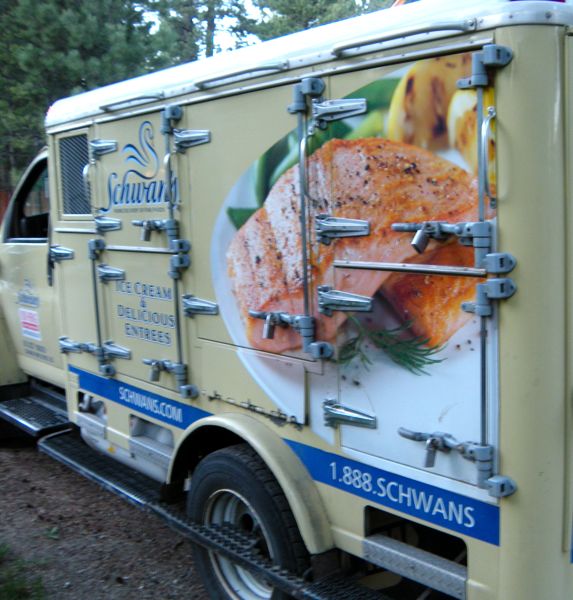
There was a short discussion during the first reading of the ordinance last week. The conversation bounced from businesses like Schwan’s that can legally deliver food to people to unmarked trucks selling goods to people using pushcarts to sell food to people selling seafood door-to-door.

Schwan's is legal; but other mobile businesses are suspect on the South Shore. Photo/Kathryn Reed

Schwan's is legal, but other mobile businesses are suspect on the South Shore. Photo/Kathryn Reed

The ordinance would clarify the requirements to own/operate a mobile vending service in the city, specify locations of operation, and establish health-safety regulations for the product and equipment.

El Dorado County has had a strict policy for a number of years. Sheriff’s Lt. Les Lovell said his department has a zero tolerance policy for people operating businesses illegally out of their vehicles. No business license means a trip to jail.

Two repeat offenders were caught in May selling stereo equipment out of a white Suburban. The two men from out of town were arrested, the goods confiscated and $4,000 in cash seized. Sheriff’s deputies made the arrest at the Rockwater restaurant in the city limits.

It’s possible from the cash seized that victims could get restitution.

“Persons wishing to make a report should be prepared to show that they were victimized. Although these transactions are almost always in cash, that should not be hard at all (to prove) as they will probably have the equipment and possibly even have some paperwork,” said Hans Uthe, El Dorado County assistant district attorney. “People who get taken in by the scam should not feel bad. These guys are very, very slick and highly persuasive.”

Although the May incident involved a Suburban, the “White Van Scam” is occurring throughout the country. It almost seems to be organized or perhaps it’s just copycat criminals.

It’s a typical bait and switch crime. The seller sets up shop out of the vehicle on a street corner or in a parking lot with goods for sale at extremely reduced prices. They claim their store is overstocked or have some other story for wanting to get rid of the goods. The product might appear to be in the original packaging. A second seller distracts the buyer and that’s where the switch often occurs. What ends up in their hands isn’t what they thought they were buying.

Sometimes the equipment is so shoddy it causes complementary components to short out.

“Buyer beware,” is how Lovell describes it. “You get what you pay for.”

Lt. David Stevenson with the South Lake Tahoe Police Department wasn’t familiar with the “White Van Scam” and said these types of crimes come and go, though he hasn’t noticed an increase in them.

Lovell said one of his detectives or deputies will work undercover when a suspicious vehicle is selling goods.

“They see where the (suspect) is keeping the money, where they keep the receipt books so we know what to look for when we grab them,” Lovell said.

People selling produce from the side of the road often don’t have a business license and therefore are not regulated by the city or county. People selling firewood without a phone number posted are not always on the up and up either.

Lovell said he welcomes calls (530.577.3000) about people operating suspicious businesses in the county.

“It’s not fair to hardworking locals who pay taxes,” Lovell said of the illegal vendors/businesses.