Ex-Harrah’s dealer tapped for Calif. Supreme Court chief

By David Siders, Sacramento Bee

Gov. Arnold Schwarzenegger will nominate Tani Cantil-Sakauye, a Republican appellate court justice with a reputation as a moderate, to be chief justice of the California Supreme Court, the Bee learned Tuesday.

Cantil-Sakauye, 50, of Sacramento is a former prosecutor and Sacramento Superior Court judge. She would replace Chief Justice Ronald George, who has announced he will retire Jan. 2.

Cantil-Sakauye has been on the 3rd District Court of Appeal since 2005. If approved by a three-member commission and by voters in November, she would start a 12-year term in January.

She would be the state’s first Filipina American chief justice.

Read the whole story


Website lets patients find out about doctor’s past

By Carrie Peyton Dahlberg, Sacramento Bee

Barbara Chaccour’s teenage daughter needed a dermatologist, so Chaccour picked one from a glossy magazine ad.

Months later, the Sacramento businesswoman was shocked to learn that her daughter’s doctor had been convicted and fined for using research drugs instead of Botox, and that his medical license was on probation.

“If I’m going to a doctor, I want to know he has a clean record,” she said. From now on, “I definitely would be more careful.”

Read the whole story


Experts: Slow fire season has potential to explode

By Brian VanderBeek, Sacramento Bee

The lack of any major fire activity during the first half of the summer has firefighters knocking on wood.

And there’s a lot of wood on which to knock. The higher-than-normal rainfall in a longer-than-normal rainy season has produced grasses nearly everywhere, and the bumper crop of herbaceous fuel has smoke-watchers anxiously monitoring the Coast Range and the Sierra.

“We have a few weather stations along the forest, and we’ve been looking at the trends,” said Jerry McGowan, forest fire management officer for the Stanislaus National Forest. “Those trends are climbing, but so far there haven’t been any large fires this year within the United States. Everybody has been lucky.”

Read the whole story


Mini power outages strike South Shore

By Kathryn Reed

Power has been flickering off for brief moments for the past two mornings on the South Shore.

NV Energy took the main line serving the Meyers substation out of service on July 19.

“When that occurred, the electric load was shifted to another line on Kingsbury Grade with a wire that had apparently been damaged sometime earlier in the year by a falling tree,” Karl Walquist, spokesman for the electric company, said. “The additional electric load, and associated heat, caused the damaged line to fall to the ground, knocking out service to the Meyers substation at 8:48am and causing a small fire.”

Service on the California side was out for a few minutes while crews re-energized the line that had been taken offline. Customers near Heavenly Mountain Resort in Nevada were without power for about an hour because the affected line is in the middle of Kingsbury Grade near Palisades and Easy Streets.

However, the California outage affected more people – about 16,000 customers from Meyers to Al Tahoe.

While crews were back working on the Meyers substation Tuesday morning, about 9,000 customers lost power at 10:28am. The one-minute blackout hit Meyers, the Y, Upper Truckee and Gardner Mountain.


Tahoe slogs through fuel reduction jobs with little cash

By Kathryn Reed

Money, or the lack of it, could derail the Lake Tahoe Basin-wide effort to create defensible space throughout the region.

In the last five years, $10.4 million has come to the Nevada Fire Safe Council via the Southern Nevada Public Lands Management Act. That resource is drying up because the sale of land in Southern Nevada is not as robust as when developers were scurrying to build.
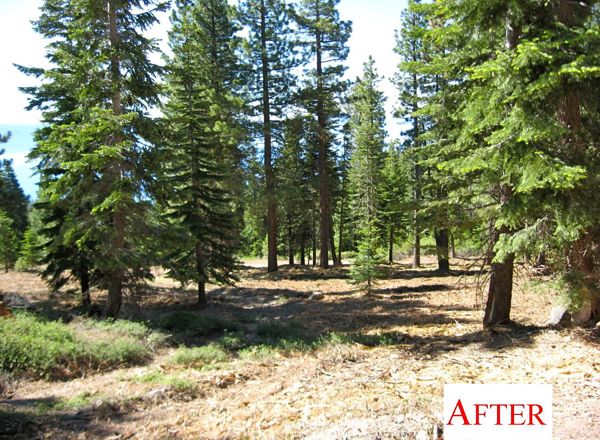
What a treated area looks like. Photo/Stew McMorrow

What a treated area looks like. Photo/Stew McMorrow

It wasn’t until 2008 that a change was made in the act to allow money to be spent on fuel reduction. That year a $4.4 million grant was awarded to the fire safe council.

“We currently have funding through next season. After that, then things become a little more uncertain,” said Mark Novak, fire marshal with the Tahoe-Douglas Fire Protection District.

He said his department has applied for a grant that would fund another season of fuel reduction work. His agency treats 200-250 acres a season.

Unique to Tahoe-Douglas is voters in 2008 agreed to tax themselves for these types of projects. That brings in about $600,000 a year, but is not enough to fund all the projects.

An advantage to having that known pool of money is when grants require matching funds, the Tahoe-Douglas crew can point to the voter supply of money.

“In our area, about 3,000 acres still need treatment. We need to keep moving forward,” Novak said.

Nevada Fire Safe Council

Andrew List, executive director of the Nevada Fire Safe Council, is researching funding options. One idea is looking at SNPLMA projects that were funded but the project didn’t go forward, therefore the money is unspent. If that money is back in one big pot, Tahoe could be in the running for it.

List wants to create an interest baring account so projects would use the interest, not the principle.

U.S. Forest Service grants have helped the fuels management cause. A FEMA grant is another possibility. A Nevada Division of Forestry grant was one of the early funding sources.

“We act as the fiscal sponsor. We are a nonprofit,” List explained. “We submit grants and work with the five fire districts in the basin. We help put the projects out to bid so we can get the best value and contractor for the job, handle oversight and pay the bills. Then we let the fire guys do what fire guys do.”

The fire safe council works on non-federal land, most of which is private. A rebate program helps residents pay for the treatments. Information about the rebate program is here.

Fire safe council chapters exist throughout the basin, with the first one being formed in Glenbrook in 2002. The idea is neighbors form an alliance to help one another with becoming a fire safe area. There are 56 chapters in the basin.

During the July 17 fire meeting hosted by Assemblyman Ted Gaines, R-Roseville, South Tahoe Fire Chief Lorenzo Gigliotti received interest from three people who would like to be leaders of fire safe chapters. The city currently has five chapters.

Through the council, 1,405 acres were treated in the Lake Tahoe Basin in 2009, 806 acres in 2008, with a goal of 1,500 acres this year.

The council focuses on the wildland urban interface – which is where communities abut the forest.

Defensible space inspections are provided for free by fire departments. This tells a homeowner which trees may need to be removed or other vegetation. Fire behavior, how a slope plays into fire risk, what vegetation burns hot, what is good to have close to a structure and other criteria are considered.

It’s often the smaller tree that are taken out to thin an area. Space between the canopy of the trees is critical so flames can’t jump from one tree to another. Ladder fuels, the low hanging branches, are another concern.

California law requires property owners maintain 30 feet of clean and green space immediately around their houses and 100 feet of defensible space clearing around the residence.

The 2009 operations report for the Tahoe Fire & Fuels Team goes into detail about the acreage that was treated last year, where the funding came from, the rebate program and more.

What others are doing

Fire officials seem to have one eye on their budget and the other on stands of trees that pose a serious fire risk.

South Lake Tahoe has the Homestead project under way, which is treating 230 acres near Lake Tahoe Community College and Bijou Community Park.

To date, the city has completed 1,620 defensible space inspections.

Placer County provides low-cost, curbside assistance for reducing brush from property. The program is coordinated through the Board of Supervisors, Resource Conservation District, Office of Emergency Services, Air Pollution Control District and sheriff’s office.

Money for the program is from a grant, but as of Aug. 2 residents will pay half of the $80 per hour fee. Since it began, the chipper program has created about 100,000 tons of chipped material.

Money was the overriding theme at a July 17 meeting in South Lake Tahoe regarding the bi-state Blue Ribbon Commission that was formed after the 2007 Angora Fire.

Lake Valley Fire Chief Jeff Michael has his fingers crossed, as do others, that Congress will soon reauthorize the Lake Tahoe Restoration Act. This is the bill then-President Bill Clinton helped create in 1997 after the inaugural environmental summit in 1997. Sen. Harry Reid, D-Nev., is expected to have the act and fuels reduction as central themes to this year’s summit that he is hosting Aug. 17.

“We are trying to be as proactive as we can with the funds that we have available,” Michael said. “All of it has been grant funding. None one dime is out of the annual operating budget.”

His budget comes from people in his service district who pay via their property tax bill. It’s possible in the future voters could be asked to pay more.

Lake Valley averages about 300 acres a year – half done by hand, half mechanical treatment.

“The way we look at fuels, our treatments today aren’t final. It’s infinite,” Michael said. “We will treat the same forest over the next several year. You have to go back and look at it again.”

Lewis Grove, the defensible space inspector for North Tahoe Fire Protection district in Carnelian Bay, says his department is looking to treat 400 acres this season. The idea is to select urban areas that complement what is being done in the forest. This way a fire is less likely to spread from a residence to the forest or vice versa.

He said permanent residents are overwhelmingly supportive of thinning because “they are vested in it.”

“Nature will do what it can to thin a forest – fire, beetle infestation or you can let us,” Grove said.

He said showing people treated areas where wildflowers and wildlife thrive helps convince them it’s the right thing to have a healthy forest.

“For the most part, I think it’s a matter of education,” Grove said of fuel reduction projects.

Resources for residents include:

Emergency Preparedness Guide

Living with Fire Guide

ngg_shortcode_0_placeholder (Click on photos to enlarge.)


Whooping cough epidemic grows; vaccine urged

By Bobby Caina Calvan, Sacramento Bee

State health officials today urged more Californians to get vaccinated for whooping cough, as the disease grew to epidemic proportions.

To date, about 1,500 people in California have become infected with pertussis — a five-fold increase from the same time last year. Five infants, all under 3 months old, have died from the disease, and one additional case is under investigation by the California Department of Public Health.

“We are facing what could be the worst year for pertussis that this state has seen in more than 50 years,” said Dr. Gilberto Chavez, the agency’s chief of the state’s Center for Infectious Diseases.

Read the whole story


Squaw’s Cushing names her successor as resort’s CEO

Nancy Cushing, retiring CEO of Squaw Valley Ski Corporation, has appointed Andy Wirth to the position of chief executive officer at Squaw Valley USA.

Wirth will be responsible for all aspects of resort operations at Squaw Valley, and he will report directly to the board of directors at Squaw Valley Ski Corporation. Wirth will succeed Cushing, who has advised Squaw Valley Ski Corporation since 1985 and served as its president since 1994. Wirth’s appointment as CEO will be effective Aug, 2.

Wirth brings more than 24 years of experience in the mountain resort and hospitality management industry and a proven ability to enhance customer experiences, to increase revenue, and to drive profitability.

Wirth joins Squaw Valley from Steamboat Ski & Resort Corporation in Colorado, where he most recently had the position as senior vice president of marketing and sales and was a member of the Steamboat executive team. Wirth’s career at Steamboat began in 1986, and he has advanced through successive leadership roles in marketing and sales management throughout his tenure with the resort operating company.

In 2007, Wirth joined Intrawest ULC as a result of the acquisition of Steamboat Ski & Resort Corporation and was soon promoted to executive vice president and chief marketing officer with responsibility for all of the marketing and sales functions for Intrawest’s portfolio of mountain resorts, including Whistler Blackcomb, Mont Tremblant, Stratton Mountain and Winter Park Resort. In addition, he held a concurrent role in which he oversaw Intrawest’s enterprise-wide strategic alliances along with the development and management of the marketing and sales efforts associated with Intrawest’s Hospitality Management division with operations in North America, Europe, Mexico and Hawaii.


Panel to discuss smoke from USFS burns in Tahoe

By Jeff Delong, Reno Gazette-Journal

Where there’s fire, there’s smoke.

April Cole can certainly attest to that after a controlled burn at Lake Tahoe last April sent thick clouds of smoke billowing east to her home near the Carson City-Douglas County line.

“It was terrible. Oh my gosh, we couldn’t even breathe,” Cole said of a situation that had her close up her windows and posed particular trouble for her father, who lives next door and suffers a respiratory ailment.

That controlled burn, started April 18 by the U.S. Forest Service to lessen fire danger at Tahoe’s upscale community of Glenbrook, is scheduled to be discussed Wednesday by a state commission established to examine fire-related issues.

“We’re going to kind of talk about how it happened and how it can be avoided in the future,” said Pete Anderson, Nevada state forester and a member of the three-member commission established by Gov. Jim Gibbons to follow up on recommendations made by a joint Nevada-California task force formed in the wake of the disastrous Angora Fire of 2007, which burned 254 homes outside South Lake Tahoe.

Read the whole story


Nevada tourism agency scores with Google technology

Google has chosen the Nevada Commission on Tourism’s online winter ski commercial as a success-story case study after it attracted 8 million viewers in seven targeted markets.

JoLyn Laney, NCOT’s deputy director for marketing and advertising, will to participate in an advertisers’ panel discussion of in-stream video at the Destination Marketing Association International Convention in Ft. Lauderdale July 21-23.

NCOT was among the first tourism entities in the country to use Google’s new technology, in-stream video, which places video ads into online video programs, including television segments, in a commercial break format as on regular television. Viewers who were exposed to the ad in markets where it appeared were 33 percent more likely to consider Nevada as a vacation destination than were those who saw other NCOT online ads that did not use Google’s technology, NCOT’s research showed.

Tracking technology showed 45 percent of the viewers watched the entire 30-second commercial that appeared on in-stream video. The lively ad showed skiers on snowy Sierra Nevada mountain slopes overlooking blue Lake Tahoe.

Google used a process called geo-targeting to show the NCOT ad in designated marketing areas that offer convenient travel to Nevada and are home to skiers and snowboarders aged 25 to 54 with high-level household income: Los Angeles, Las Vegas, San Francisco Bay Area, Dallas, Seattle, Chicago and Phoenix.

NCOT’s research company, TNS Custom Research, and its Digital Marketing Effectiveness Study enables the tourism agency to track the effectiveness of its advertising campaigns and measure the return on investment, which last winter, when the ads ran, was $22 for each $1 invested. NCOT is funded by hotel room tax revenue that visitors pay, not by the state general fund.


South Tahoe’s Caltrans project gets green light

By Kathryn Reed

The much talked about Highway 50 improvements from Trout Creek to Ski Run Boulevard in South Lake Tahoe are moving forward.

The California Transportation Commission approved the Caltrans project on June 30. It will start next summer.

The project includes class II bike trails, lighting, walkways and an improved driving surface.

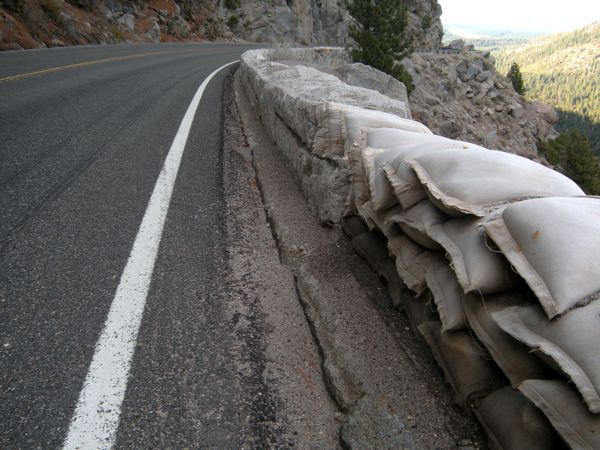
The short barrier on Echo Summit will be replaced in May 2011. Photo/Kathryn Reed

The barrier on Echo Summit will be replaced in May 2011. Photo/Kathryn Reed

The multi-million dollar project will take three years to complete.

In other Caltrans news, South Tahoe Public Works Director John Greenhut told the City Council this month that a deal has been struck with the state agency for the city to have possession of the rock wall on Echo Summit that will be dismantled beginning next May.

Caltrans officials will address the council again before that project begins. It calls for shutting down the summit to one lane of traffic for at least May 2011 while the rock wall is doubled in height.