Mild wildfire season has officials hoping it lasts

By Steve Timko, Reno Gazette-Journal

In the past few years, fires have threatened homes along the western Sierra front by mid-August. Or, smoke has drifted over from California wildfires and filled Reno’s skies, maybe even hurting air quality.

fireKnock on wood.

So far, that hasn’t happened much. And, western Nevada fire crews like the way it’s going and want to keep it up.

U.S. Bureau of Land Management spokesman Mark Struble said almost no crews specially trained to battle fires threatening homes are deployed anywhere in the West.

“This is the time of the year when we’re usually scrambling to get crews from anywhere,” Struble said.

“The season’s not over. We’re still in the middle of it. We’ve been lucky so far,” said Joe Durousseau, operations chief for the Reno Fire Department. “We don’t get a fire unless we get a start. If we don’t get any starts, we’ll be in good shape.”

In the past few years, fires have threatened homes along the western Sierra front by mid-August. Or, smoke has drifted over from California wildfires and filled Reno’s skies, maybe even hurting air quality.
Knock on wood.

So far, that hasn’t happened much. And, western Nevada fire crews like the way it’s going and want to keep it up.

U.S. Bureau of Land Management spokesman Mark Struble said almost no crews specially trained to battle fires threatening homes are deployed anywhere in the West.

“This is the time of the year when we’re usually scrambling to get crews from anywhere,” Struble said.

“The season’s not over. We’re still in the middle of it. We’ve been lucky so far,” said Joe Durousseau, operations chief for the Reno Fire Department. “We don’t get a fire unless we get a start. If we don’t get any starts, we’ll be in good shape.”

Read the whole story


Where is California’s overdue budget?

By Sacramento Bee

We’re more than 40 days into the state government’s new fiscal year. Democrats and Republicans still can’t agree on how to close the state’s estimated $19 billion deficit.

It wasn’t until recently, in fact, that Assembly and Senate legislative leaders settled on a detailed plan that has the support of both Democratic caucuses.

GOP legislative leaders and Gov. Arnold Schwarzenegger continue to push for the governor’s May proposal, though Republican lawmakers aren’t entirely on board.

The Republican governor says he thinks Democrats and Republicans are only about $4 billion apart in their negotiations. That is closer than anyone else is willing to suggest, but there are significant areas of agreement.

Read the whole story


Pantry’s bare shelves force Tahoe residents to go hungry

By Kathryn Reed

When people start lining up outside St. Theresa Catholic Church this afternoon for their bag of food to sustain them, they will receive nothing. Instead, a note on the door will say the shelves are bare and there is nothing to hand out.

This is the first week the South Lake Tahoe pantry has nothing to give to those who need one of life’s basic necessities – food.

Usually the church supplies a bag or two of staples to about 80 people each Tuesday and Friday from 1:30-3pm. Those bags feed several more depending on how many are in a family.

Shelves at St. Theresa's pantry are literally empty. Photo/Kathryn Reed

Shelves at St. Theresa's pantry are literally empty. Photo/Kathryn Reed

“I’ve never seen it like this. You’d be surprised how many sleep in cars,” said Beverly Sass as she sat in her office at the church rectory. “We are feeding more families these days than singles.”

The demand for food in these economic times is greater than what people can give. It used to be people would go to Costco, buy in bulk and bring something by St. Theresa as a donation. But those days are gone. Those givers no longer have extra food.

Sass said the Tuesday farmers’ market vendors have been generous with fresh produce. This is a treat for recipients are so used to only receiving dry goods.

It’s usually pasta, beans, cereal, macaroni and cheese, and peanut butter that fill bags. These items fill up an empty belly, are things children will eat and have some nutritional value.

To donate to the pantry, call Beverly Sass at (530) 544.3533 or drop items off at the rectory on the corner on Lyons Avenue just off Highway 50 in South Lake Tahoe.


Ritz-Carlton at Northstar surviving in uncertain economy

By Ed Fletcher, Sacramento Bee

As a recent visitor to Lake Tahoe approached the lower base end of the gondola ride at Squaw Valley Resort, he wondered aloud about the nearby Ritz-Carlton hotel.

“Didn’t they go into bankruptcy?” asked Daniel Huffman, of Cool.

The answer is no, the luxury hotel, which opened last year at Northstar-at–Tahoe, did not file for bankruptcy protection. And even more important for it, reservations – even over the summer – have outpaced expectations.

Ritz-Carlton at Northstar never filed for bankruptcy. Photo/Kathryn Reed

Ritz-Carlton at Northstar never filed for bankruptcy. Photo/Kathryn Reed

“The Ritz-Carlton had a phenomenal season,” pronounced Steven Holt, the hotel’s director of media relations.

Summer is supposed to be low season for the mountainside resorts in Lake Tahoe, as tourists abandon the steep slopes and flock toward the famed clear blue waters of the lake.

Read the whole story


Prosperity plan’s focus: health care, environment, tourism

By Kathryn Reed

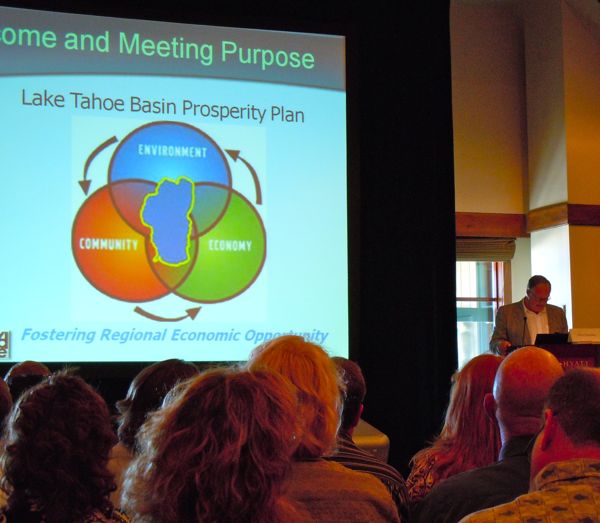
INCLINE VILLAGE –Tourism, health-wellness, and the environment. These three areas are supposed to be the economic saviors of Lake Tahoe.

In a room full of about 70 of Tahoe’s movers and shakers on Monday the two-hour talk was all about the Lake Tahoe Basin Prosperity Plan. A bit of irony is the meeting was at the Lone Eagle Grille in Incline. Incline Village is sometimes called Income Village based on the wealth of the homeowners.

John Breternitz, Washoe County commissioner, opens the economic forum on Aug. 16. Photo/Kathryn Reed

John Breternitz, Washoe County commissioner, opens the economic forum on Aug. 16. Photo/Kathryn Reed

El Dorado County Supervisor Norma Santiago, who has been instrumental with a handful of others to initiate this plan, promised this isn’t just another document to collect dust, but is one with legs.

But the problems of today are what they were 20 years ago, only exacerbated because of the recession, and the declining relevance of gaming in the basin and throughout Nevada.

This group believes the prosperity plan will change what the Lake Tahoe Basin will look like 20 years from now. If all things go according to this plan, employment won’t be in double digits, lake clarity will continue to improve, the area will be transformed into environmental innovation centers, a sports commission will attract major events, medical centers of excellence will sprout, high speed Internet access everywhere will allow for telemedicine and e-commerce.

But much of what is being said is what the people who live “poverty with a view” know – it has always been about the environment. Many in that room are the ones who pooh-poohed that for years. Their personal wallets were thick, or government-agency bank accounts flush with cash. Not so anymore. Poverty with a view is hitting closer to home.

People for years have said Tahoe needs a second economy to sustain itself during the ebbs and flows of tourism. But no one did anything. Look at Boulder, Colo., a mountain town that thrives not on tourism, but biotechnology firms. And, yet, it is an outdoor mecca much like Tahoe.

Tahoe could already have a world-class orthopedic center instead of being in the infancy of creating one. Dr. Richard Steadman left South Tahoe’s Barton Memorial Hospital for Vail in 1990 because there he had the support to create what he wanted.

Steadman’s website says, ”Dr. Steadman has developed numerous techniques for knee surgery and rehabilitation that have been adopted worldwide for the treatment of various knee disorders.”

What if those had been created in Tahoe? Would the area be more prosperous? Would people come here for destination health care? That’s a goal of this prosperity plan – to have people come here for health care needs. Barton can’t survive on the medical needs of locals. When it’s a bad ski season or mountain injuries are down, hospital revenues are blood red.

It was repeatedly pointed out at the Aug. 16 meeting that government is not going to be the savior. It will take the private sector to make this plan a reality. But it will also take buy-in from locals – the ones, perhaps, who have not been listened to in the past and have become jaded.

According to the executive summary the plan is, “To rebrand the region as a green, geotourism, health and wellness visitor destination, providing a unique, authentic Lake Tahoe experience including sports, recreation, culinary, historical, art, cultural experiences, environmental education and volunteer opportunities.”

As South Tahoe City Councilman Hal Cole put, it seemed like a political shindig more than a nuts and bolts meeting.

When Lake Tahoe News asked B Gorman, one of the leaders of the prosperity plan and executive director of the Lake Tahoe South Shore Chamber of Commerce, if transit would be part of this, she said, “No.”

LTN responded that a reliable bus going around the lake would be good for those who need it and those who want it – locals and tourists; in addition to reducing vehicle miles traveled, which is always touted as an environmental benefit.

Lake Tahoe Community College and Sierra Nevada College were touted as places of higher learning that will help foster the goals. But in a climate where education spending is continually being cut, it’s hard to know if these institutions or universities in either state could be relied upon as incubators of Tahoe prosperity.

Today, according to stats provided by prosperity officials, Tahoe creates $4.7 billion in revenues a year. Tourism is the dominant contributor.

Rick Tremblay with the federal Economic Development Administration said for the short-term Tahoe needs to reinvent its tourism model, while for the long-term is needs to “aggressively invest in technology.”

His examples of small towns that have done big things were interesting, but oddly irrelevant to Lake Tahoe. The region doesn’t have the land for much of what he talked about. Nor is manufacturing likely to happen based on all the regulations.

During the panel discussion where six people were invited to give input to the plan, Jared Blumenfeld, Region IX administrator for the U.S. Environmental Protection Agency, said, “It’s not a new idea to be green. You need to get it right and be bold. You need to have goals.”

Goals, if there are any, were not discussed Monday.

Blumenfeld further pointed out, “I think your brand is ahead of where you are.” Meaning, people expect Tahoe to be green and healthy. He said people are disappointed to find out how that really isn’t the case, and how dilapidated so much of the infrastructure is. Blumenfeld also pointed out how it’s hard to eat healthfully in Tahoe.

John Breternitz, Washoe County commissioner, said questions asked by forum attendees and the answers would be put on the website, but the FAQ page says it’s under construction.



Owners of Homewood, Alpine buy West Shore Cafe

By J.K. Dineen, San Francisco Business Times

San Francisco-based JMA Ventures has acquired Lake Tahoe’s West Shore Café, a lakefront property located next to Homewood Mountain Resort.

JMA’s acquisition of West Shore Café represents a new beginning for the restaurant, which closed its doors during the summer of 2009.

Read the whole story


Tribal gaming has role in California guv race

By Jack Chang, Sacramento Bee

This year, the long road to the governor’s office runs through the high desert reservation of the Morongo Band of Mission Indians.

It also stops at the reservations – and casinos – of the Sycuan and Viejas bands of the Kumeyaay Nation east of San Diego.

In fact, the campaign trail crosses many of the state’s Indian reservations, especially those with lucrative gambling compacts. That’s where Democrat Jerry Brown and Republican Meg Whitman – along with candidates for other offices – are seeking the support and potentially hefty donations of tribal leaders.

At stake is the financial backing of a state gambling industry that generates an estimated $7.2 billion a year in revenue. Also at play are the state-negotiated gambling compacts of 47 tribes that expire in 10 years and a proposal to open Indian casinos far away from reservations.

Read the whole story


Economics to be topic at annual Tahoe enviro summit

By Frank X. Mullen Jr., Reno Gazette-Journal

Invasive species, the threat of devastating wildfires and the economic future of Lake Tahoe will be topics at the forefront of the 14th annual Lake Tahoe Summit scheduled for Tuesday at Sand Harbor State Park.

“Environmental gains and economic gains are inextricably linked,” said Dennis Oliver, spokesman for the Tahoe Regional Planning Agency. “The conversation at the lake is that the region needs to reinvent itself as a destination in order to come out of our economic doldrums.”

Oliver said the area’s economic woes predate the national downturn. Over the past decade, increased gaming competition elsewhere has whittled away at the lake’s casino-based economy. On Monday, Tahoe business leaders are meeting in a “Prosperity Summit” to discuss ways to diversify the local economy, a theme that will carry over to the next day’s event at Sand Harbor, which is hosted by U.S. Senate Majority Leader Harry Reid, D-Nev.

Previous Tahoe Summits focused exclusively on environmental concerns.

The forums began in 1997, when Democratic President Bill Clinton, Democratic Vice President Al Gore and Reid hosted the first summit, a conference aimed at ensuring that the natural beauty of Lake Tahoe would be preserved. At the time, Lake Tahoe was losing its clarity at the rate of about one foot per year.

Read the whole story


Cracking CalPERS became easy for Stateline man when policy shifted

By Dale Kasler, Sacramento Bee

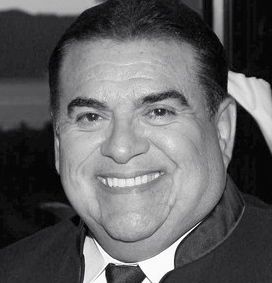
Alfred Villalobos, a sometimes pugnacious businessman with a troubled financial history, wasn’t an obvious candidate to charm his way into the inner circle of America’s largest public pension fund.

Though he had served three years on the CalPERS board in the 1990s, he wasn’t a universally popular figure. When he reappeared at CalPERS’ Sacramento headquarters two years after his departure, pitching investment deals, many within the organization were appalled at his heavy-handed lobbying. Amid the uproar, one of his earliest clients fired him, and his activities prompted hearings in the Legislature.

Alfred Villalobos

Alfred Villalobos

But the Stateline, Nev., businessman persisted. Over the course of a decade, he penetrated the very heart of the California Public Employees’ Retirement System, allegedly co-opting the chief executive and other top officials. His reward was more than $50 million in commissions earned on $4 billion worth of investments he pitched to the fund.

Villalobos’ work has become an influence-peddling scandal for CalPERS. State and federal officials are investigating, and CalPERS has commissioned its own examination of how one man could allegedly corrupt a $200 billion institution whose governing board includes the state treasurer and controller.

Read the whole story


California ag land may turn into farms of green energy

By Todd Woody, New York Times

LEMOORE — Thousands of acres of farmland here in the San Joaquin Valley have been removed from agricultural production, largely because the once fertile land is contaminated by salt buildup from years of irrigation.

Green

But large swaths of those dry fields could have a valuable new use in their future — making electricity.

Farmers and officials at Westlands Water District, a public agency that supplies water to farms in the valley, have agreed to provide land for what would be one of the world’s largest solar energy complexes, to be built on 30,000 acres.

At peak output, the proposed Westlands Solar Park would generate as much electricity as several big nuclear power plants.

Unlike some renewable energy projects blocked by objections that they would despoil the landscape, this one has the support of environmentalists.

Read the whole story