Placer County resident wins claim against MV Transportation, Roseville

By Kim Minugh, Sacramento Bee

For the first 18 years Thomas Avery was a quadriplegic, he did his best to live a normal life.

He returned to college and held jobs. He volunteered with at-risk kids. He relied on help for some basic tasks, like eating and dressing, but maintained a significant amount of self-sufficiency in and out of his home.

That was before he rolled backward off a platform lifting him into a Roseville paratransit bus two and a half years ago, dropping him six feet onto his head and causing severe brain injury.

Now, the 40-year-old rarely leaves his Del Paso Heights home. When he does, he often forgets where he’s going and why. His father sometimes follows to make sure his son doesn’t get lost.

“This accident totally took away a lot of my independence,” Avery said.

Twelve Placer County jurors apparently sympathized, awarding $6.4 million in economic and non-economic damages to Avery last week. The jury found that the city of Roseville and Fairfield-based MV Transportation, which operates the city’s paratransit system under contract, were liable for a faulty lift that caused the fall.

Read the whole story


EDC supes resist spending millions on lake clarity

By Kathryn Reed

El Dorado County supervisors practically mocked the idea of spending $11 million a year for the next 15 years to improve the clarity of Lake Tahoe.

Supervisor Ron Briggs said if the county even had that kind of money, “lake clarity would not be on the list.”

Jack Sweeney

Jack Sweeney

Supervisor Jack Sweeney said it would be on his nice to do budget list, but not need to do budget list.

Supervisor Ray Nutting questions why the Lake Tahoe watershed has higher standards than others in the state and doesn’t believe the area is entitled to the federal funding it has received over other jurisdictions.

Supervisor John Knight said overregulation in the basin is responsible for the area missing out on economic growth and equated it to being like Eastern Europe.

Supervisor Norma Santiago tried to provide some depth and understanding to the Lake Tahoe-specific issues that some of her colleagues clearly were not well versed in.

The five-member board came to South Lake Tahoe this week for the annual meeting in Tahoe. The other 51 weeks of the year the board meets in Placerville.

Lahontan Water Board Executive Director Harold Singer got an earful from some of the supervisors in regards to his agency’s desire, and probable future mandate, that the county come up with $11 million a year to stem the flow of fine sediment into the lake.

Ironically, it’s an $11 million shortfall the supes are trying to contend with when it comes to the 2011-12 county budget.

The county currently spends about $6 million a year on stormwater projects in the basin.

What wasn’t brought up until Joanne Marchetta, executive director of the Tahoe Regional Planning Agency, gave her spiel was that working with private landowners the county might be able to attain the total maximum daily load thresholds Lahontan expects to adopt at its Nov. 6 meeting.

After the morning started with Wendy David of Lake Tahoe Collaborative giving a presentation about the woes of social agencies in the basin, the supervisors pointed to her statistics as more pressing issues than the transparency of Lake Tahoe.

David spoke of the 32-member Collaborative’s start in 1992 and its evolution through the years into an advocacy group for those less fortunate. The agencies in the collaborative are dealing with 25 percent of the children in South Lake Tahoe being at the national poverty level, while 80 percent of the Latino population is poor.

Mental health issues will be the Collaborative’s focus this coming year.

“We do not have adequate transition care for patients coming out of jail or Barton Hospital,” David told the supervisors. “We don’t have a 23-hour hold facility here.”

The situation for emotionally disturbed children is precarious with the recently passed state budget that eliminated money for counties to provide aid for this population. Now it could fall onto school districts to pay for these children to receive services.

Chief Administrative Officer Gayle Erbe-Hamlin said, “The school districts don’t have the systems in place to take it on.”

That evening at the Lake Tahoe Unified School District board meeting CFO Deb Yates mentioned the issue to her board.

Both women believe more needs to come out of Sacramento before either body can begin to figure out how to financially meet the mandate to care for these youngsters.

Back at the Board of Supes meeting, Sweeney said he wished he would have known Singer was going to be at the Oct. 12 meeting before he received his packet Oct. 7. Had he been reading Lake Tahoe News, he would have known based on an Oct. 4 story.

In the end, it was agreed a workshop will be scheduled in Tahoe between the supervisors, county staff and Lahontan officials to hash out the lake clarity mandates.

In other action:

• TRPA’s Joanne Marchetta spoke of her agency’s new philosophy of not being the “just say no” agency and instead creating a culture to work more collaboratively with others.

• The supervisors during a lunch stop at Lake Tahoe Golf Course were given an overview of the Upper Truckee River project at that site. The TRPA Governing Board will discuss the matter Oct. 27.


Lake Tahoe area short of cash for cloud seeding

By Jeff Delong, Reno Gazette-Journal

With winter approaching and governments struggling through fiscal difficulty, researchers are in search of money needed to squeeze a little extra moisture from snowstorms.

The Desert Research Institute in September secured a promise of up to $100,000 from the Western Regional Water Commission to fund a cloud-seeding program for the Lake Tahoe area. In late October, the DRI plans to seek a larger contribution from the Truckee River Fund, which is administered by the Truckee Meadows Water Authority.

It’s part of an effort to continue a 25-year-old program nearly killed when the 2009 Legislature pulled state funding that was going to the DRI. A last-minute pitch to water purveyors saved the program last winter, and now officials are trying to line up the money needed during the winter of 2010-11.

Read the whole story


California driver’s licenses receive major overhaul

By Tony Bizjak, Sacramento Bee

State officials have unveiled a dramatic new design for California driver’s license cards, using technological advances they say put the state years ahead of counterfeiters.

The cards – issued beginning this month to new and renewing drivers – will be among the most secure in the world, said Matt Paulin, a chief deputy director with the state Department of Motor Vehicles.

Notably, driver’s licenses and identification cards will be printed vertically for anyone under age 21, making it easier for police, restaurants, bars, and nightclubs to see at a glance.

Read the whole story


Smoke on South Shore is controlled burn

All the smoke people are seeing and smelling on the South Shore is a controlled burn on Kingsbury Grade.

USFSU.S. Forest Service fuels management crews area off Buchanan Drive burning 10-15 acres. The burn could last through Friday.

State and local fire management agencies may also be conducting prescribed fire work during this period.

Residents and travelers can expect to see smoke from prescribed fire project areas.

This and other prescribed fire projects are designed to reduce wildfire risks to communities and critical resources.


Google pilots self-driving car around Lake Tahoe

By Sharon Gaudin, Computerworld

Picture sitting in your car, maneuvering through busy downtown traffic while talking on your phone or sending a few texts.

This isn’t a scene of illegal texting or phone use. Why not? Because the car in this scenario is driving itself, leaving the passengers inside free to use their mobile phones. (In Google’s ideal scenario, you’d be talking on an Android phone.)

This is Google’s image of the future. The company known best for its search engine announced this past weekend that its engineers are working on developing technology for cars that can drive themselves. Autonomous cars may be a bit far afield from Google’s normal work in search, browsers, operating systems and maps, but the company is looking to head down a new road.

“Our automated cars, manned by trained operators, just drove from our Mountain View campus to our Santa Monica office and on to Hollywood Boulevard,” wrote Sebastian Thrun, a distinguished software engineer at Google, in a Saturday blog post. “They’ve driven down Lombard Street, crossed the Golden Gate bridge, navigated the Pacific Coast Highway, and even made it all the way around Lake Tahoe. All in all, our self-driving cars have logged over 140,000 miles. We think this is a first in robotics research.”

Read the whole story


2-day closure of Ebbett’s Pass to remove wreckage

By Carlos Alcalá, Sacramento Bee

Crews will close a section of Highway 4 in Alpine County this week to recover a wrecked tractor-trailer.

The truck went over the embankment at Cadillac Curve. Crews from South Tahoe Towing and the U.S. Forest Service will attempt the salvage.

Highway 4 will be closed in both directions from Ebbett’s Pass to the intersection with Highway 89.

Read the whole story


Howell: the business climate is what needs to be improved

Publisher’s note: Lake Tahoe News is profiling candidates for South Lake Tahoe City Council and Douglas County Commission. The stories are being published in the order they were received.

Name: Lawrence Howell

Age: 44

Hometown: Stateline

How long have you lived here?: I have lived in Douglas County for 19 years.

Job/profession: Executive director of Rite of Passage (Schools and Mentor Programs for At-Risk Youth)

Lawrence Howell

Lawrence Howell

What would you build or tear down on the South Shore to make it great, as in what Whistler is like?:

The South Shore of Lake Tahoe needs to be redeveloped in order for any economic revitalization plan to work. All other successful vacation destinations have redeveloped their town “focus” and not relied on what worked in the past. Access to the area, accommodations in the area, and a climate of invitation are all items that need to be addressed.

What form of recreation do you participate in? What improvements to recreation would you strive to make throughout Douglas County?:

I run, hike, bike, ski, and enjoy water sports. Recreation in Douglas County is fantastic and does not need improvement. The business climate is what needs to be improved.

Recreation tourism is expected to be the driving force of the South Shore economy in the coming years, what do you specifically plan to do to improve bike paths and roads?:

The South Shore needs an agreement between Douglas and El Dorado County on what the master plan is for bike paths and roads. Once the plan is agreed upon it needs commitment and follow through. Visitors do not understand why bike paths currently start and stop without connecting continuously throughout the community (as they do in other vacation destinations).

How do you plan to boost revenue in Douglas County?:

Douglas County needs follow through. In the past 10 years there have been 10 strategic plans that have been “shelved.” Douglas County cannot afford “business as usual” because business in on the decline.

What stands out for you in the 2010-11 budget?:

The 2010-11 budget appears to have been developed behind closed doors. At the meeting to discuss and possibly adopt the budget the commissioners discussed one proposal and unanimously approved it. Each commissioner has a responsibility to bring proposals, look at all proposals, and develop alternative plans incase “Plan A” does not work.

What needs to be done to allow businesses to thrive in Douglas County?:

Douglas County has a reputation of not being business friendly. The County Commissioners need to work together in building the reputation that Douglas is business friendly. Currently the commission is divided and some have put their own agenda before the needs of the county. Also, county ordinances that do or appear to restrict business need to be eliminated or modified. One example is the current sign ordinance is unenforceable and outdated. Businesses need to apply for a variance in order to install a sign which meets modern day business needs.

What are the three major issues facing Douglas County and how to expect in four years to make it so they are not major issues when your tenure is through?:

1. State budget. Douglas needs to be prepared for the state to push down unfunded mandates and raid county funds. If Douglas is not united at the County Commission level things will be worse in four years.

2. County budget. Douglas needs a plan B and C. The residents need to know what the status of the budget is at all times. The residents need to what the county is doing to adjust with the changing times. The county needs to make prudent business decisions just as private business operators must.

3. Use of county resources (water, land, mountains, Lake Tahoe). We need a balanced approach. Whenever a direction is “No” (growth, building, business, more…) the community loses.

What have you done to help Douglas County be a better community?:

First and foremost I run programs for at-risk youth. My goal is to help youth become productive prosocial members of our community. I have also been active as community volunteer in many areas of our community:

1. Douglas County Planning Commission – current chairperson.

2. Douglas County Search and Rescue – member.

3. Barton Hospital Foundation Board – member.

4. Keep Improving Douglas Schools – vice chair.

5. Douglas County Parks and Recreation Commission – chair and vice chair.

6. China Springs Youth Camp Advisory Board – member.

7. Nevada Interscholastic Activities Association – AAA League President.

8. Leadership Lake Tahoe – chosen by fellow members as spokesperson.

9. Pop Warner Football and AAU Basketball – Coach

What boards, commissions, or other experience do you have?:

See Nos. 1,3,4,5,6,7 in previous answer.

Why should voters vote for you over someone else?:

My professional work and volunteer work experience has proven my knowledge, skills, and abilities to lead when faced with major challenges. My skills developed as a trained mediator will serve the county will during a time of conflict and challenge. My home is at the lake and my business is in the Carson Valley. This allows me to bring a unique perspective to the District 4 Seat.

What would you do to make the lake and valley more unified?:

United we are strong … divided we lose. With the looming budget issues Douglas County needs to be as united as possible. My skills as a mediator will prove helpful in bringing groups together for a common cause … maintaining the community we have decided to live and raise our families in.

BlueGo, the public transit, is mired in lawsuits and bankruptcy. Do we need public transit on the South Shore? If so, how do you propose to make it functional?:

The South Shore is in need of a public transit authority. One system is better for the economy, visitors, and the environment. The entire structure of the current system needs to be redeveloped. The current system was not designed to be self sufficient, was not appropriately governed, or effectively managed.

What is your stance on the 100-room rule for gaming growth in the county?:

The recent passage of the 100-room rule for gaming growth in Douglas County is an example of economic protectionism. This ordinance restricts business. In order to have 16 gaming machines (instead of 15) a business must build 100 rooms. Why? The current occupancy rate for rooms in Douglas County is 41 percent. If a business must “invest in our local economy” it should be in an area identified as a need such as roads, schools, senior services, social services, law enforcement, etc.

Consolidation of water agencies is stalled, yet ratepayers are faced with higher bills. What are your thoughts on this issue?:

The county picked one direction (Plan A) and paid an out of the area consultant a lot of money to develop a plan to consolidate the expenses of operating and maintaining separate systems. There should have been alternative plans developed in case the citizens did not agree with Plan A. Plan A was a bust and the county was left with no alternative but to dramatically raise rates.

1. The USDA Rural Economic Development has grant funding available for exactly what Douglas County water users are facing. The county has not applied for the funding.

2. Actually consolidating the water systems (not just the ratepayers) will reduce operational expenses.

3. Whenever there is an issue that can financially impact residents alternative plans need to be developed.

On the November ballot is an ordinance regarding the Minden airport. What is your position on it and why?:

The proposed airport ordinance is the result of the county, the organized opposition, and those organized in support of the airport operations getting together and working out a compromise that all have agreed to. Furthermore, the local airport is vital to Douglas County being viewed as business friendly. Without airport access businesses like GE and Starbucks would not have moved to our county. For those reasons I agree with the proposed airport ordinance.

Is there any individual, group or organization you would not take campaign money from? Why?:

I would not accept campaign money or support from any group that expects me to make decisions based on the level of their contribution. I am not accepting money or support from any group that alienates others or is not willing to listen to both sides of an issue.

Tell us something about yourself that voters don’t already know:

I was born in a military hospital and, before attending University of California at Davis, I lived in Germany, Japan, Maryland, Arizona, Ohio, Kentucky, and California.
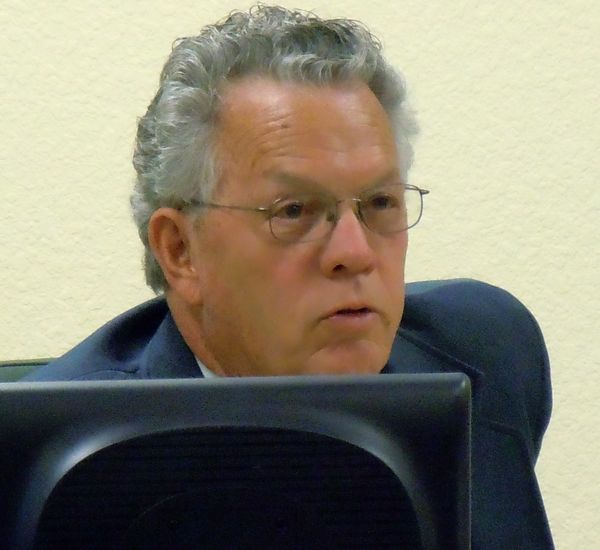



El Dorado supes’ budget shakeup impacts Tahoe office

By Kathryn Reed

An effort for El Dorado County Board of Supervisors to be on equal financial footing isn’t working out that way, according to some supervisors. The Tahoe office was hit the hardest.

countyWhen the preliminary 2010-11 budget was passed in June each supervisorial district was allocated about $225,000. In September, that was reduced to $193,500.

It was Supervisor Jack Sweeney’s idea last month for each of the five districts to have a pot of money instead of it being one pot for the whole board. From those individual pots the salaries of the supervisor (about $75,000) and of the assistant (it varies), health benefits, retirement, phone, car, mileage, and other expenses are paid.

Norma Santiago, who represents the South Shore, is being hit the hardest. She is no longer being reimbursed for mileage or cell phone expenses. Her assistant, Judi McCallum, will work 36 hours a week.

Santiago drives to Placerville nearly every day from her home in South Lake Tahoe, thus incurring more gas bills than some of her colleagues. Tahoe also has a separate office, while the other four only work out of the county seat.

“I am not going to change my work schedule. I am very dedicated to this job,” Santiago said, even though she will have less cash in her pocket.

Supervisor Ray Nutting has the largest swath of land to represent, so he, too, regularly fills his gas tank.

Supervisor John Knight and Santiago’s assistants are at the top of the pay scale because of the length of time they’ve been with the county – a hit to their bottom line.

Another discrepancy in costs is which health plan a supervisor is on and how many dependents he/she has as well as what plan their assistant is on. For those in Placerville, Kaiser is an option. The Tahoe plan is more expensive.

With the change in allocations, Santiago and Nutting are hit the hardest, Knight is close to breaking even, and Supervisor Ron Briggs has offered his surplus to help Santiago and Nutting. Sweeney’s excess of more than $30,000 is in his account for now.

Sweeney and Briggs could not be reached for comment.

“I made the motion to cut our salaries,” Nutting said.

That proposal will likely be before the board later this fall. It takes a change to the county charter to make that happen. Nutting would have preferred that to occur before the current financial structuring took place to keep things even.

Even if three votes could be obtained for a salary cut, in the case of Sweeney, he would still have a surplus. One reason he has fewer expenses is he’s on Medicare and has no dependent children.

While Santiago supports the pay cut over the current scenario, she doesn’t think the votes are there for it to pass.

Knight won’t be the third vote.

“I think it’s grandstanding,” Knight said of Nutting’s proposal. “I don’t think he thought it out. I think it’s political.”

Knight said he has never taken a dime of reimbursement pay from the county for things like medical insurance, phone or mileage.

Nutting said it costs him about $600 month in expenses to be a supervisor. No longer is he being reimbursed for his cell phone, though he says 99 percent of what he uses it for is county business.

“There is a lot of stuff going on that I don’t care for,” Nutting said in regards to the supervisors’ budgets. He agrees things need to be cut, but he doesn’t like the way it is happening.

With the added expenses, Santiago said it would be more like a 30 percent pay cut for her. She agrees the board needs to make cuts just like it is imposing on employees, but she believes it could be more fair.

“In the past there was one budget for the board. My proposal would be to look at the resources that are needed for each district, which would be a far more equitable way of doing this,” Santiago said.

The Board of Supervisors is having its annual Tahoe meeting this morning at 9 at Lake Tahoe Airport.


Thunder Valley offering helicopter service for casino patrons

By Sacramento Business Journal

Thunder Valley Casino Resort has started helicopter service from the Lincoln Airport to the Hayward and San Jose airports.

Lincoln Airport is 8 miles north of the casino.

The casino is considering using the casino resort’s rooftop helicopter pad.

Read the whole story