Man sentenced to death for killing CHP officer in El Dorado County

By Chelsea Phua, Sacramento Bee

An El Dorado County Superior Court judge on Monday sentenced David Charles Zanon to death for running down and killing California Highway Patrol Officer Scott Russell more than three years ago.

A jury in September recommended the death sentence, after convicting Zanon of first-degree murder in early August.

Zanon, who had a warrant for his arrest, was found outside a burglarized business July 31, 2007, in Rancho Cordova. He sped off, leading officers on a chase on Highway 50 into El Dorado County, where he ran down Russell near the Ponderosa Road exit. Russell had just placed a spike strip on the freeway to stop Zanon.

Read the whole story


N. Nevada’s tourism priority — special events

By Rob Sabo, Northern Nevada Business Weekly

Big special events such as Hot August Nights, Street Vibrations and the National Championship Air Races help define tourism in Northern Nevada, and the Reno Sparks Convention and Visitors Authority wants to bring more of them to the region.

New special events — either homegrown or wooed from other locations — would fill slow winter months and generate business on free weekends during the summer, says RSCVA President and Chief Executive Officer Ellen Oppenheim.

Events like Street Vibrations attract crowds, bring money to the region. Photo/Brenda Knox

Events like Street Vibrations attract crowds, bring money to region. Photo/Brenda Knox

But the challenge is balancing the needs of existing special events with the energy needed to bring new ones to the calendar.

“Special events are very important to this community. They are a proven draw for bringing visitors here, and as locals we have the added benefit of taking advantage of those events and being able to enjoy them,” Oppenheim says.

Ideas for new special events include a Western heritage festival, or a singles festival.

The RSCVA seeks both small events that might establish a strong following, such as the Santa Pub Crawl, as well as large-scale events. However, Oppenheim cautions, such events often come with large price tags.

Read the whole story


Ritz-Carlton at Northstar receives LEED certification

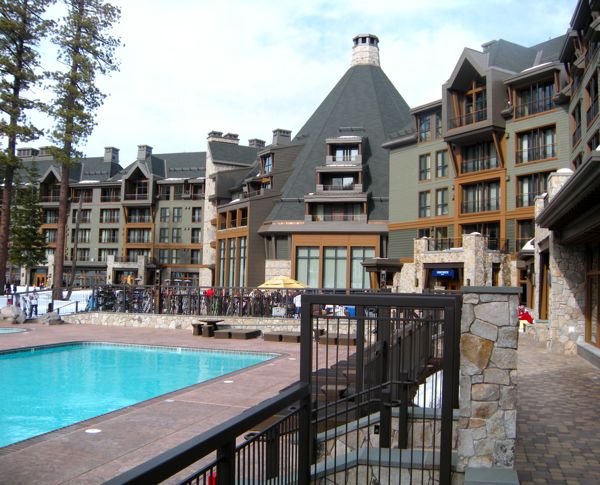
The Ritz-Carlton, Lake Tahoe that sits mid-mountain at Northstar-at-Tahoe has officially been awarded its LEED certification from the U.S. Green Business Council, becoming the first LEED certified Ritz-Carlton resort.

ritz tahoe“Receiving this award is a further example of the Ritz-Carlton’s continued commitment to innovation in the hospitality industry while developing environmentally sensitive and sustainable resorts,” Allen Highfield, general manager for the Truckee hotel said in a press release.

LEED is the internationally recognized green building certification system, providing third-party verification that a building or community was designed and built using strategies aimed at improving performance across all the metrics that matter most: energy savings, water efficiency, CO2 emissions reduction, improved indoor environmental quality, and stewardship of resources and sensitivity to their impacts.

San Francisco-based Hornberger + Worstell was the design architect for the project.

LEED recognized features of The Ritz-Carlton Highlands, Lake Tahoe:

• Recycling/re-use of construction waste – 16,000 tons to date, which is 88 percent of all construction waste for the project

• Reduced building footprint – provided 66 percent of site as open space

• Provided daylight and views to 75 percent of the building

• On-site re-use of rock for retaining walls

• On-site re-use of trees for mulch

• Use of recycled materials — $5 million value, or 9 percent of all materials used

• Use of local materials – 63 percent were extracted locally, 31 percent were manufactured locally

• Provided bike racks and lockers for employees

• Stormwater retention management — no net increased run-off and stormwater treatment.


Tahoe-Reno struggling to find identity for sustainable future

By Jason Hildago, Reno Gazette-Journal

It’s the early 1930s.

At one West Coast university, an engineering professor laments about how many of his graduating students have to move East because of a lack of tech jobs in his area.

The area without enough tech jobs? Palo Alto.

Region trying to define what it is once visitors leave the Reno-Tahoe airport.

Region trying to define what it is once visitors leave the Reno-Tahoe airport.

The professor? Stanford University’s Frederick Terman.

“Terman had a real interest in what happened to the students produced here,” said Henry Lowood, curator of the History of Science and Technology Collections at Stanford University. “He was seeing students like David Packard taking his degree and going to the East Coast to work for General Electric because there weren’t enough jobs here in his field. So, the problem for him was figuring out how to seed something here so his own students don’t end up going somewhere else.”

Less than a decade later, Terman convinces Packard to return to the area to form Hewlett-Packard with another fellow student, William Hewlett. By 1951, Terman’s pet project Stanford Industrial Park opens, attracting tenants such as HP, Varian Associates, Eastman Kodak and Lockheed.

Today, the Palo Alto area is known as arguably the most storied place for tech in the world. Terman, meanwhile, is affectionately regarded as the “Father of Silicon Valley.”

As Northern Nevada works to wean itself from a heavy diet of gaming and tourism, Silicon Valley’s story shows how it’s possible to create a thriving, new sector with enough vision, effort and just the right amount of luck.

The area is wrestling with many of the same challenges Terman tackled decades ago, but Northern Nevada also is dealing with a key wild card: one of the worst economic downturns in its history.

The recession still casts a large shadow over the area, and the challenge for Northern Nevada is to stay the course on economic development without losing sight of the big picture, said Richard Bartholet, research director for the Bureau of Economic Research at the University of Nevada, Reno.

“It’s much more challenging to do growth and economic development while working out of a hole,” Bartholet said. “We’ve got in excess of 14 percent unemployment and significant fiscal challenges at the state and local level. But while it would be nice to have some short-term ideas under way, it’s also important for business, community and political leaders to not get so focused on short-term challenges — like filling this budget gap — that they lose sight of where we want to go and who we want to be in the long term.”

Read the whole story


Reno marketing message resonating with Bay Area market

By Bill O’Driscoll, Reno Gazette-Journal

The word is getting around the greater San Francisco Bay Area about Reno-Tahoe’s allure.

A survey this past summer of 1,010 people shows marked increases since 2008 in their awareness of Reno-Tahoe as a place to visit and in their desire to make the journey.

“Interest is clearly up, and we can clearly see our web traffic has grown significantly,” said Ellen Oppenheim, president/CEO of the Reno-Sparks Convention and Visitors Authority.

The agency and the Atlantis Casino Resort Spa, Circus Circus Reno, John Ascuaga’s Nugget and Harrah’s Reno pooled resources to cover the $1.6 million marketing campaign that began last spring on billboards, radio and online dubbed “Reno-Tahoe USA: Far From Expected.”

Read the whole story


Officers to conduct DUI checkpoints throughout holidays

El Dorado County Avoid the 6 is having a slew of enforcement operations during the holiday season.

The following is the schedule:

Dec. 17: DUI Saturation Patrols 7pm-1am, Placerville

Dec. 18: DUI/driver’s license checkpoint, 6pm-1am, Placerville

Dec. 20: DUI Saturation Patrols, 7pm-1am, South Lake Tahoe

Dec. 28: DUI/driver’s license checkpoint, 8pm-1am, South Lake Tahoe

Dec. 29: DUI Saturation Patrols, 7pm-1am, South Lake Tahoe

Jan. 1: DUI Saturation Patrols, 7pm-1am, South Lake Tahoe

Jan. 2: DUI Saturation Patrols, 7pm-1am, South Lake Tahoe.

Additional information about the Avoid Program and operational plans from around the region may be found at www.californiaavoid.org.

Funding for the “Avoid” program is provided by a grant form the California Office of Traffic Safety through the National Highway Traffic Safety Administration.


Expense of textbooks has students looking for options

By Laurel Rosenhall, Sacramento Bee

When Elizabeth Walz ran for student government last year, she built her campaign around an issue she knew would resonate with her peers at UC Davis: the cost of textbooks.

textbookFor days, she stood in the quad polling students on their textbook-buying habits.

“A lot of the responses were, ‘I don’t even buy my textbooks – they’re too expensive. I only buy the ones I absolutely need. I go to the library, I use the ones on reserve,’ ” Walz said.

Like college tuition itself, the cost of textbooks has been soaring. From 1990 to 2009, textbook prices rose four times faster than inflation, according to the Student Public Interest Research Group. Today, the average college student spends $900 a year on textbooks.

Students can save some money buying used books or electronic versions, and many campus bookstores have started renting popular texts. But a new option is emerging: open-source textbooks that can be read for free online, or printed at relatively low cost.

Read the whole story


Garbage rates on South Shore increasing in 2011

By Kathryn Reed

Most South Tahoe Refuse customers can expect to pay a few pennies more a month for garbage service starting Jan. 1

The cost of living adjustment for South Lake Tahoe, El Dorado County and Douglas County is based on seven consumer price indices. Based on the franchise agreements STR has with the three entities this is considered a non-discretionary rate increase – meaning it’s automatic even though each governing body will vote on it.

STRThe City Council, after the three new members are sworn in Dec. 14 at 9am, is expected to approve this as part of the consent agenda. Douglas County commissioners have the increase on their Dec. 16 agenda. El Dorado County supervisors have not set a date.

For South Lake Tahoe, the 1.52 percent increase would equate to 35 cents more a month for residential customers. The 0.59 percent  increase for one can pick up in Douglas County means 9 cents more a month, or 18 cents for two can pick up. El Dorado customers are likely to see a 1.9 percent increase.

The point of the COLA is to maintain operating expenses.

Every four years the refuse company can ask for a more substantive rate increase through what’s called a general reset. That four-year cycle comes up next year. This means talks will start in 2011 and the adjustment would take effect in 2012.

“We look at the revenues of the company versus expenses and adjust the rates,” explained Terry Trease, STR controller. “The last thing people want is a rate increase. We’ve been given our marching orders to do what we can, to max out diversion with the personnel we have.”

Even though the company is meeting the state mandate of recycling 50 percent of the waste collected, it wants to do more. But doing more could mean more trucks or some other expense on the bottom line. STR is weighing the cost-effectiveness of all of its programs, Trease said.


Recycling state’s toxic waste involves shipping it overseas

By Tom Knudson, Sacramento Bee

In the soft morning light, the silver-gray mountain of electronic trash did not look especially hazardous. But it was.

wasteInside that massive rubble of technology, with its V-shaped canyons of printers and keyboards and its fin-like ridges of fax machines and coffee makers, was enough toxic material – including lead, cadmium and brominated flame retardants – to poison California watersheds for centuries and sow disease in humans.

“This is the problem,” said Jim Taggart, president of ECS Refining in Santa Clara, where the e-waste was waiting to be safely recycled. “This is the material that most people are exporting. They’ll get paid 5 to 10 cents a pound for shoving it in a container and shipping it overseas.”

Five years after California launched an ambitious effort to control pollution from electronic waste, much of our e-waste is being shipped overseas, where it is contributing to a legacy of pollution and disease that would not be tolerated in this state, a Bee investigation has found.

Domestically, California’s program is doing just what officials intended: It has outlawed e-waste from landfills and jump-started a multimillion-dollar state industry to recycle televisions, computer monitors and other video display devices, paid for with public money.

But there is a blind spot: The program provides no money for anything else, meaning large volumes of low-value, hazardous electronic waste that are difficult to recycle at a profit in California are instead being exported, a consequence the state did not anticipate. Much of it is flowing to developing nations where it is picked apart by workers exposed to a high-tech cocktail of contamination.

“Most people just don’t know what’s happening to their material when it’s dropped off,” said Taggart, one of the state’s leading e-waste recyclers. “If they knew, they wouldn’t be dropping it off.”

Nearly all TVs and monitors are recycled – at least initially – in California. That is not true for the towering mountains of other electronic products sold in the state.

Read the whole story


LTUSD dropout rate declines from previous year

By Kathryn Reed

Lake Tahoe Unified School District is bucking the state trend of rising dropout rates.

Data released this week for the 2008-09 school year show the South Shore district with a 5.3 percent dropout rate in grades 9-12. This compares to 2007-08 when the district 9-12 dropout rate was 6.5 percent.

The opening of the Career and Technical building is touted as a draw to keep kids enrolled at STHS. Photo/Kathryn Reed

The opening of the Career and Technical building is touted as a draw to keep kids enrolled at STHS. Photo/Kathryn Reed

This compares to the state rate of 5.7 percent in 2008-09 and 4.9 percent the previous school year.

“It’s going in the right direction,” LTUSD Superintendent Jim Tarwater said.

The current data reflects the third year of using the California Longitudinal Pupil Achievement Data System or CALPADS.

“We now have a data system that allows us to track students more accurately and have honest conversations about how to improve graduation rates and reduce dropouts among all subgroups of students,” Jack O’Connell, state Superintendent of Public Instruction, said in a prepared statement.

Most of the dropouts are seniors – 15 for the 08-09 school year at South Tahoe High School. One junior and one sophomore also dropped out.

At Mt. Tallac, the continuation high school, for that same reporting period it was 31 seniors, two juniors and one sophomore who dropped out.

At the transitional learning center, 10 seniors dropped out.

It’s normal for seniors to have the highest dropout rate, according to Tarwater. If they don’t have the units to graduate or have failed the state high school exit exam, they see no reason to keep going to school.

With better tracking of students in the transitional learning center, Tarwater is hoping those numbers will come down in the future to reflect a more accurate number. But some students leave the country and therefore cannot be tracked, but are considered a dropout for LTUSD.

The state’s 3-year-old data collecting system allows the district to send queries electronically to find out if a student has enrolled someplace else. Without knowing where students have gone, they are considered dropouts.

“Part of what we are trying to do with the netbooks is get kids engaged and hook them more,” Tarwater said. The plan is for all students in grades 3-12 to have one of the mini computers.

Assignments can be downloaded if a student is absent. The possibility of using Skype when they are out of town is being looked at.

The district is also banking on the new facilities at the high school that are bringing more programs and enriching the ones in place as factors to drive students to be in the classroom.

Enrollment remains a concern. The bottom has not been reached. The district started with 3,910 when the doors opened in August. Now enrollment is at 3,867.

It’s the high school that is losing students. Since the beginning of the year 12 ninth-graders have left, four 10th-graders, 10 11th-graders, and 11 12th-graders.

The middle school is staying even.

The elementary level is a mixed bag of gains, losses and status quo.

“Some of those kids are legitimate. There is probably a 10 percent mobility factor. Mainly it’s related to work which makes a ton of sense to me,” Tarwater said of why kids are leaving. If their parents got a job elsewhere, they had to go.

Every nine seconds, a student in the United States drops out of school, according to the National Center on Secondary Education and Transition. The National PTA is focusing on the dropout issue in the December 2010-January 2011 edition of its magazine Our Children, which will be available online later this month.