Tahoe real estate market makes gains in 2010

The Lake Tahoe real estate market ended the decade with strong sales and significant signs of improvement, according to a year-end report from Chase International. The report, which compares all sales and home prices from 2010 to those of 2009, shows a 16 percent increase in units sold and a 20 percent jump in overall sales volume.

Tahoe City showed the largest increase in sales with a 40 percent increase in total volume or dollars and 17 percent rise in units sold. Incline Village saw a 27 percent jump in both units and volume. The South Shore saw a 10 percent increase in dollar volume and a 15 percent increase in units sold. The East Shore was the only area that saw a decrease in dollar volume at minus 3 percent, but did see a 7 percent increase in units sold.

The median price of a home in Incline Village is $827,000, the highest in the basin, despite a 10 percent drop from 2009. The median price of homes sold along Tahoe’s East Shore is $570,000, up 5 percent over 2009 and for South Shore, the median price remained steady compared to 2009 at $317,000. The overall median price of homes sold in Lake Tahoe is $541,000, down 6 percent, while the average price remained stable with a 1 percent increase at $897,173.

The National Association of Realtors notes that historically high housing affordability is boosting sales activity across the nation, indicating a gradual recovery into 2011.

The sales of condominiums around the lake are also up substantially with a 48 percent rise in sales volume and 46 percent jump in units sold.

Truckee condos were up 46 percent in both sales and volume. Home sales in Truckee remained relatively flat, with little movement in volume and a five percent increase in number of units sold. The average price of a home in Truckee is $627,093, down 4 percent, and the median is $490,000, down 8 percent.




Judge suspends calls between Garridos

By Sam Stanton, Sacramento Bee

A judge today suspended phone calls between Phillip and Nancy Garrido after the El Dorado County counsel raised concerns that their monthly conversations may have veered into witness-tampering.

Ed Knapp told the judge in the Jaycee Lee Dugard kidnapping case that “our fears have been confirmed.”

Knapp said later outside of court that he could not discuss the problem in detail but would address it in a legal motion to be filed later to prevent the husband and wife from speaking to each other.

Since last summer, the Garridos have been allowed a five-minute phone call between each other once a month, despite concerns by the Sheriff’s Department that the calls could be used to influence testimony.

Read the whole story


Spooner Summit fire station ready for USFS to occupy

By Kathryn Reed

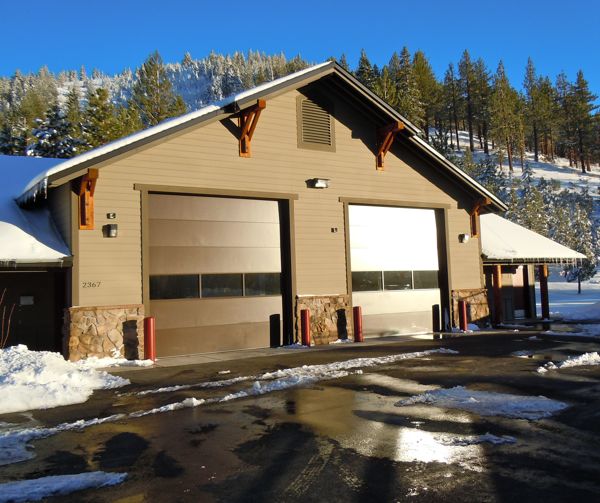
SPOONER SUMMIT — Tucked off the side of the road near the top of Spooner Summit is a new fire station that belongs to the U.S. Forest Service.

The contractor finished the nearly $1 million project last month. Half of the money for the structure is from Forest Service coffers, while the other half came from the Aramark Corporation. Aramark is the concessionaire – operating as Zephyr Cove Snowmobiles. The two entities share the building.

The two old structures that had been on the property were destroyed. They were in such sorry shape the regional Forest Service office in Vallejo condemned the structure in 2006 for winter use because of cracks in the beams and the threat it wouldn’t hold the snow.

The fire station is on the left, the snowmobile operation on the right. Photos/Kathryn Reed

The fire station is on the left, the snowmobile operation on the right. Photos/Kathryn Reed

“We started the process nearly a decade ago,” Mike Gabor, USFS engineer, said of the agency’s desire to create a functioning facility. Funding was the hold up.

No longer are rodents running around. No longer must a porta-potty be used. No longer is the inside temperature similar to the outside chill. No longer does the fire engine have to be kept outside.

The old buildings didn’t even have foundations, let alone running water.

Gabor said crews used to operate out of a 20 foot by 30 feet one-room building.

Although the fire station does not have an engine year-round, with the snowmobile operation going on, the site will be used 12 months.

During fire season one engine with five crew members and one fire prevention technician will be stationed at the building. However, the men and women sleep in their own bed each night.

A pile of stuff to clean up ago before the USFS took over.

A pile to clean up a week before the USFS took over.

The Forest Service has space for three offices, a weight room, and break room-training area, in addition to the bay for the engine.

The snowmobile side has a slightly smaller bay for storage of the sleds, an efficiency kitchen, and restrooms that can be accessed from the outside for the public during operating hours.

The structure is built to LEED standards, but because of the cost involved to get the green building certification the USFS opted not to go that route.

Cory Jennings, with Building Solutions out of Reno, is the superintendent on the project. Despite contending with snowstorms, he said drilling the six 200-foot holes for the pipes for the geothermal system was the trickiest part of the job.

Cory Jennings, construction superintendent, talks about the energy efficient building.

Cory Jennings, construction superintendent, talks about the energy efficient building.

The engine bay has heated floors. Passive solar is being used for the heat exchange.

Neither diesel nor propane is on site.

Recycled blue jeans were used as the insulation.

This acreage on the south side of Highway 50 just before the junction of Highway 28 has an interesting history. Concrete from the ski hill the Bliss family operated in late 1940s-early 1950s still exists behind the new firehouse.

Prior to that, the area was known as the Spooner Station and Summit Camp during the Comstock era.

In 1961, the state of Nevada built tent housing at the site for working inmates. Two years later a Carson City motel was brought up the road to provide some housing, office space and a dining area. The Spooner Honor Camp stopped operating in 1970.

Speculation is during this time is when the structures that were destroyed this summer were built.

The Forest Service acquired the property in 1971, using the old motel as a fire station starting in 1972. That structure was destroyed a few years later.


Raggio’s retirement leaves void in Nevada Legislature

By Bill Hagar, Reno Gazette-Journal

Bill Raggio, Nevada’s longest-serving state senator, said Wednesday that he is resigning because he can no longer navigate the lengthy hallways of the Nevada Legislature due to a torn Achilles tendon in his left ankle.

The departure of Raggio, an 84-year-old Reno Republican, will further diminish Northern Nevada’s clout in the Legislature and could doom any chances of the expansion of the Legislature in the redistricting of Nevada’s legislative districts later this year, political experts said.

Raggio, whose resignation is effective at 5 p.m. Jan. 15, had championed the idea of expanding the Legislature to keep up the representation of northern and rural Nevada in the face of the state’s overwhelming population base in Clark County.

“There is absolutely no question that the single-most powerful force for Northern Nevada in the state Legislature is now gone,” said Reno’s Pete Ernaut, president of government affairs for R&R Partners.

“This makes things kind of interesting for the north because here’s the guy who has been cutting deals for them for 30 years or so,” said Dave Damore, an associate professor of political science at the University of Nevada, Las Vegas. “So obviously in that sense, it creates a void.”

Without Raggio, expansion of the Legislature is probably a moot issue, some experts said. Raggio also tried and failed to add seats to the Assembly and state Senate 10 years ago.

Read the whole story


Chairlift cable dislodges at Heavenly

Updated: Jan. 6 3:20am.

No one was injured this week when the Mott Canyon chairlift at Heavenly Ski Resort derailed. Fourteen people were evacuated by rope and the lift remains offline.

“At approximately 1pm on Jan. 4, a male snowboarder at Heavenly Mountain Resort slid through the entrance gate at Mott chairlift, hitting an outgoing chair and causing it to derail. The lift system worked as designed, automatically stopping the lift and preventing any further derailment,” according to resort spokesman Russ Pecoraro.

Ski patrol used ropes to bring the 14 to solid ground on the Nevada side of the bi-state resort.

“The lift has received a post-incident inspection and is scheduled to operate pending U.S. Forest Service approval,” Pecoraro told Lake Tahoe News. The resort resumed operations Thursday.

The incident did not affect other lift operations.

— Lake Tahoe News staff report


Brown: School budget v. income taxes

By Kevin Yamamura, Sacramento Bee

Gov. Jerry Brown will spare K-12 schools from further drastic cuts in his budget – so long as voters extend higher income taxes in a special election, according to sources familiar with his proposal.

The tradeoff wouldn’t cure education ills, and many districts would still face another year of fewer school days and larger class sizes. But it could avert even deeper cuts after years of school rollbacks and help Brown galvanize powerful education support for tax hikes in a June special election.

“If something like that happens, I’m going to be looking for the feet to be kissed,” said Kevin Gordon, a veteran education lobbyist, of the Brown education proposal. “The big question is, what will the voters do, and if voters don’t come through, will we go through incredible anxiety all over again?”

Brown does not plan to suspend Proposition 98, the state’s minimum guarantee for K-12 and community college funding, though he may seek to do so if the tax hike extensions don’t pass.

Without any increase in state revenue, K-12 schools and community colleges stand to lose more than $2 billion in funding in 2011-12 – roughly 4 percent – because tax rates are scheduled to decline this year, according to the nonpartisan Legislative Analyst’s Office. Several school officials asked Brown at his Los Angeles forum on Dec. 10 to raise taxes to avoid further cuts to education.

Absent those taxes, the analyst’s office projects 2011-12 to be the worst year for schools in the current slump. Thereafter, schools stand to receive more money as the economy recovers.

Read the whole story


Plastic recycler keeps material from going to China

By Tom Knudson, Sacramento Bee

The journey begins with a plastic bottle tossed into a California recycling bin.

And it ends, more often than not, in China, where that bottle is turned into a cheap trinket or toy – a long-distance, low-grade form of recycling that contributes to global warming and sows no green jobs in California.

Now a company in Turlock is starting to change that.

With dreams the size of a Central Valley super-farm, Peninsula Plastics Recycling is buying up billions of California plastic bottles and feeding them into a jungle of industrial equipment in hopes of jump-starting a new eco-friendly food packaging industry.

The feedstock for that new industry is a Sierra Nevada snowstorm of plastic flakes made from all those bottles. The flakes are trucked to a sister company near Visalia that shapes them into the crinkly, see-through containers that cradle apples and strawberries, that cushion cookies and cupcakes in supermarkets across the United States.

Read the whole story


Reno airport passenger count bodes well for economy

By Lenita Powers, Reno Gazette-Journal

More cargo and passengers are moving through Reno-Tahoe International Airport, a harbinger of better economic times ahead for the area, Krys Bart, the airport’s chief executive officer, said last week.

“Airports are early indicators of the economy and these numbers are a sign of recovery for our community,” Bart said.

Cargo moving through the airport jumped by almost 20 percent in November compared to the same month last year, and the percent of passengers has risen by 1.7 percent since July 1, the start of the airport’s fiscal year.

The larger jump in cargo compared to the more modest increase in passenger traffic also follows the normal airport indicators of an economic upturn, Bart said.

“Cargo rebounds first because it is directly related to business activity,” she said. “If we have increased business activity, we should see increased wages and more disposable income, and then we should see increased passenger activity, too.”

Read the whole story


Gaines wins state Senate seat; wife may run for Assembly

By Kathryn Reed

Lake Tahoe will have a new state Senator in Sacramento on Thursday and at the same time will be without a representative in the Assembly.

This is because on Jan. 4 Ted Gaines soundly won the special election for the 1st Senate District seat. He garnered 63. 2 percent of the vote (81,945 votes) to Ken Cooley’s 36.8 percent (47,743).

Ted Gaines

Ted Gaines

At 10:30pm, Gaines Tweeted, “Just received a very nice message from Ken Cooley. I’m honored to serve the 1st District in the Senate & looking forward to getting to work.”

The election was necessary to fill the seat left vacant by Dave Cox’s death in July. No one won more than 50 percent of the vote in November, necessitating the runoff between Republican Gaines and Democrat Cooley.

Gaines is from Roseville, but has a second home on the North Shore and is familiar with Lake Tahoe issues.

Cooley is the mayor of Rancho Cordova.

Gaines, 52, was re-elected in that same November election to his third term as assemblyman. He will now have to resign from that position. His wife, Beth, is considering running for that seat.

Gaines is familiar with much of his Senate district, with about a third of being part of his Assembly district. The Senate seat encompasses parts of Alpine, Amador, Calaveras, El Dorado, Lassen, Modoc, Mono, Nevada, Placer, Plumas, Sacramento and Sierra counties.


STPUD managers forego raises; rank and file still negotiating

By Kathryn Reed

The general manager and the 17-member management group of South Tahoe Public Utility District will not be getting a pay raise for the next 18 months.

Negotiations are continuing with the union regarding a one-year extension of their contract that expires at the end of June.

“The board has made it clear they want to get it buttoned up sooner rather than later,” STPUD spokesman Dennis Cocking said.

stpud logoHe said no agreement has been reached, but he does not foresee raises on the horizon.

The 18-month deal for the small group is so everyone’s contracts will be up at the same time.

According to Cocking, the management group does not believe now is the time to make adjustments to salaries and therefore agreed to the freeze. This is the third year in a row this group has not received a raise.

The utility has not implemented any furlough days or reductions in pay.

One thing that sets STPUD apart from cities and counties is the revenue sources. The district does not rely on sales, income or hotel tax. Instead it gets money from ratepayers, property taxes, reserves and borrowing.

Another thing keeping South Tahoe PUD solvent is not having unfunded debt in its retirement plan.

At the 2pm Jan. 6 meeting the STPUD board is expected to approve General Manager Richard Solbrig’s five-year contract. It is not known when the union’s contract will be on the agenda.