Study: Devastating floods would be worse than major earthquake

By Matt Weiser, Sacramento Bee

California has more risk of catastrophic storms than any other region in the country – even the Southern hurricane states, according to a new study released Thursday.

The two-year study by the U.S. Geological Survey is the most thorough effort yet to assess the potential effects of a “worst-case” storm in California.

It builds on a new understanding of so-called atmospheric rivers, a focusing of high-powered winds that drag a fire hose of tropical moisture across the Pacific Ocean, pointed directly at California for days on end. The state got a relatively tame taste of the phenomenon in December.

More backyards in Tahoe may flood if predictions come true. Photo/Kathryn Reed

More backyards in Tahoe may flood if predictions come true. Photo/Kathryn Reed

The team of experts that developed the scenario can’t say when it will happen. But they do say it has happened in the past and is virtually certain to strike again.

“This storm, with essentially the same probability as a major earthquake, is potentially four to five times more damaging,” said Lucy Jones, USGS chief scientist on the study. “That’s not something that is in the public consciousness.”

The study aims to fix that.

Read the whole story


Complaints against EDSO must be refiled

By Carlos Alcala, Sacramento Bee

A federal judge told employees suing the El Dorado County Sheriff’s Office this week that they must clean up and refile their legal complaints by the end of the month.

U.S. District Court Judge Frank C. Damrell Jr. issued the orders in two lawsuits Monday, giving the plaintiffs 20 days to refile.

The suits were filed last year by then-Deputy Tanya Hunt and three community service officers with the Sheriff’s Office – Nicole Sahaj-Myers, Stacie Walls and Jona Scher.

The women complained that other members of the department had harassed and discriminated against them.

Read the whole story


Validity of convention center permits being investigated

By Kathryn Reed

Research is being done by the Tahoe Regional Planning Agency to figure out where the permits for the would-be convention center project stand.

When the project went into bankruptcy in October 2009 the permits were tolled by TRPA. This means the clock stopped ticking against the three-year validity of the permit while the project was in bankruptcy court.

How many new documents are needed for the convention center site is being worked out.

How many new documents are needed for the convention center site is being worked out.

The project came out of bankruptcy last month when creditors decided to foreclose on the project, rendering Lake Tahoe Development Company mute.

“If permits are held longer than three years, chances are likely conditions have changed so environmental analysis would be inaccurate,” Julie Regan, spokeswoman with TRPA, told Lake Tahoe News. This is one reason permits have an expiration date.

Last week South Lake Tahoe’s city manager met with TRPA’s executive director and chief legal counsel to discuss what changes are possible and what is valid. A decision is likely in the next couple weeks.

“If this project has to go back to square one, we are looking at a four or five year process with new environmental studies. That would be devastating,” City Manager Tony O’Rourke said.

Regan said TRPA wants to work with the city, but also wants to ensure all the legal aspects are covered.

“We don’t see a radical change in the footprint,” O’Rourke said. But he does foresee a more traditional hotel being built.

Most of the creditors have foreclosed on the 11-acre site near Stateline, though this week Owens Financial – the largest creditor – had still not filed the paperwork.

The foreclosure process essentially leaves the second and third tier creditors without anything, while the first tier are apt to recover some money, but not all that has been sunk into the hole.

For the entity that eventually takes over the project that originally called for a convention center, two hotels, retail and open space it means dealing with fewer people in a more simplified manner.

“Our biggest hurdle is nationally there is a lot of good product already built that you can get cheap,” O’Rourke said. “That is what we are competing with.”


Census: State government revenues decline 31%

Total state government revenue dropped to $1.1 trillion in 2009, a decline of 30.8 percent from $1.6 trillion in 2008, according to the latest findings from the U.S. Census Bureau.

The large decrease in total revenue was mainly caused by the substantial decrease in social insurance trust revenue. Social insurance trust revenue is made up of four categories — public employee retirement, unemployment compensation, workers compensation and other insurance trusts (i.e., Social Security, Medicare, veteran’s life insurance).

State governments received nearly $1.5 trillion in general revenues in 2009, a decrease of 1.4 percent from 2008. General revenue does not include utility, liquor store or insurance trust revenue.

Total taxes collected in 2009 ($715.1 billion), which accounted for 47.9 percent of general revenue, fell by 8.5 percent from $781.6 billion in 2008. This is the first year-to-year decline in tax revenue since 2002.

Federal grants ($477.7 billion) increased 12.9 percent from 2008 to 2009 and accounted for nearly one-third of general revenue.

This annual survey began in 1951. Current findings come from the 2009 Annual Survey of State Government Finances, which reports revenues, expenditures, debt, and cash and security holdings for each state as well as a national summary.

While tax revenue declined substantially, total federal grants to states increased 12.9 percent to $477.7 billion. Federal grants for welfare programs made up 59.3 percent of all federal grants received in 2009 and increased 16.3 percent to $283.3 billion over 2008, compared with 4.3 and 4 percent year-to-year increases in 2008 and 2007, respectively.

General expenditures by state governments rose 3 percent in 2009 over 2008. These expenditures totaled more than $1.5 trillion, with expenditures for education ($562.1 billion), public welfare ($437.5 billion) and health and hospitals ($119.1 billion) representing the top three activities.

State government spending on education totaled more than 40 percent of general expenditures in 15 states led by Georgia (46.1 percent), Utah (45.6 percent) and Alabama(45.3 percent).

State government spending on public welfare was greater than 30 percent of general expenditures in 11 states, led by Minnesota (37.5 percent), Rhode Island (36.5 percent) and Maine (36.1 percent).

The leading states in spending for highways, as a percentage of general expenditures, were Alaska (13.5 percent), North Dakota (13.4 percent) and South Dakota (12.9 percent).

Hawaii (12.3 percent) led the states in spending on public health and hospitals as a percentage of general expenditures, followed by Connecticut (11.4 percent) and Virginia (10.9 percent).


Gaines ready to tackle budget, higher ed, building codes

By Kathryn Reed

Change the requirement mandating new residential construction come with sprinklers and create a setting so those who want to graduate in four years from the CSU system can.

Those are two pieces of legislation state Sen. Ted Gaines plans to introduce this session.

Gaines, who represented Lake Tahoe in the state Assembly for four years, was elected to the state Senate last week and sworn in Jan. 6. The Republican from Roseville was still settling into is Sacramento office when Lake Tahoe News caught with him by phone this week.
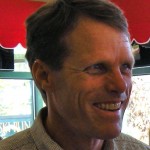
Ted Gaines

Ted Gaines

One of the major differences between the seats is the size of the district. The Assembly position covered four counties, the Senate 12. Gaines represents people on the Oregon border in Modoc County down to Mammoth Mountain in Mono County.

Despite the increase in territory, he plans to reach out to visit his constituents as much as he can. In the spring he expects to start setting up a series of meetings throughout his district, including Tahoe.

“As far as I’m concerned, I’m going to be just as active and accessible to everyone,” Gaines said in reference to any apprehension after last weekend’s deadly shooting in Arizona. “The state of California is reviewing their policies. They are briefing us legislators as far as proper procedures for having public forums. I will heed that advice, but it won’t prevent me from making sure I communicate with my constituents.”

Tahoe concerns

Gaines has a second home on the North Shore, so he is in a more unique situation than some elected officials to know firsthand what life in Tahoe is like – even if it’s part time knowledge.

He plans to keep an eye on the Tahoe Regional Planning Agency to ensure “they are operating in a transparent fashion so special interests are not influencing their decision-making.”

Having TRPA Governing Board meetings accessible on the web with audio and visual components is something Gaines is pushing for.

“I think what is becoming more and more clear is that economic development is good for Lake Tahoe. When you put new infrastructure in at the lake it improves the health of the lake if done right,” Gaines said. “We would want individuals serving on the TRPA to help the local economy while at the same time preserving the lake.”

Gaines is going to seek revisions to the state building codes that took effect Jan. 1 which call for sprinklers in all new residential construction. Until this month the need for sprinklers was triggered based on square footage.

Research is being done to determine if he’ll seek to repeal the legislation, create different standards for construction at sea level v. elevations like Tahoe, or delay implementation.

In 2009 a woman in Truckee died when the sprinklers in her home were triggered by smoke from cooking. The glycerin in the sprinklers mixed with the flames from the stove and caused the fatal explosion.

Statewide issues

Even though a Democrat is in the governor’s office, the Republican state Senator is optimistic change is coming.

“I’ve had three meetings with him in the last 30 days,” Gaines said of Gov. Jerry Brown. “I credit him for being engaged and wanting to help solve California’s problems.”

However, he disagrees with the governor’s idea to extend tax increases that went into affect two years ago. Voters may decide this in June.

“It’s an extension of taxes that didn’t exist two years ago,” Gaines said, explaining why he calls the governor’s proposal a tax hike.

Gaines in his years in the Assembly voted against all the budgets “because none was balanced.”

Gaines understands people don’t trust government. He is sure citizens don’t understand what they are getting in a budget that was $58 billion in 1997 and nearly doubled a decade later.

He looks at items in the budget that didn’t exist eight or 10 years ago and questions why. The senator points to in-home support services as a line item that keeps growing.

“I’m not sure what the state obligation is to care for families. That is a family obligation,” Gaines said.

He wants to pursue public-private partnerships wherever possible.

“We need to eliminate programs that are not essential,” Gaines said. “The programs that are essential need to run in a more efficient manner.”

He wants to create a better business climate, to do away with agencies that bicker with one another.

Gaines points to British Columbia, Canada, which eliminated 160,000 regulations over two years and has not suffered a recession. He thinks California could learn a thing or two from its neighbors to the north to make for a better climate for businesses.

Looking at investment tax credits for businesses wanting to invest in the state would also help create a better climate, he said. This in turn would help to spur job growth. (The state unemployment rate for November was 12.4 percent, while it topped 17 percent in South Lake Tahoe.)

When it comes to higher education Gaines is fed up students are not able to graduate in four years because the classes are not offered. He wants to revamp the number of electives needed to graduate to help students move through the system.

Gaines wants to create more water storage for California, citing how the population has more than doubled since the reservoir system was established. He wants to find a solution for the problems with the Delta. One thing he adamantly opposes is the $11 billion water bond that is supposed to be on a ballot in 2012.

Committee assignments for lawmakers will likely come out next week, so what specialty areas Gaines will be working on remains to be seen.

Filling Assembly seat

Candidates will compete in a March 8 primary to fill Gaines’ former Assembly seat. If no one gets more than 50 percent, the top two vote-getters – regardless of party – will be in a May 3 runoff.

People have until Jan. 24 to declare their candidacy.

Running so far on the Republican side are Gaines’ wife, Beth; Michael Babich of Auburn; and Mike O’Connor of Lincoln.

Dennis Campanale of Placer County is the lone Democrat in the race.



South Lake officer has unique run-in with suspect

A South Lake Tahoe police officer found out literally how crappy the job can be.

The 27-year veteran, whose name is not being used to spare him any more ridicule, was called to a Stateline area motel Saturday just before 11pm to check on an intoxicated man.

The 58-year-old suspect said he needed to relieve himself. Officers said he could do so in jail.

“As he was walking to the police car, he let go of the pants he was holding up. As his pants fell to his ankles, he bent over slightly, and began to spew excrement from his anus in the direction of the officers, hitting one officer on the leg,” Police Chief Brian Uhler said in a press release.

Uhler said that while it is tempting to laugh about this situation, it is serious because human excrement has germs, is considered a biohazard, and could cause illness. It is also an assault against a police officer.


2010 ties 2005 as hottest years on record

By Justin Gillis, New York Times

New government figures for the global climate show that 2010 was the wettest year in the historical record, and it tied 2005 as the hottest year since record-keeping began in 1880.

The new figures confirm that 2010 will go down as one of the more remarkable years in the annals of climatology. It featured prodigious snowstorms that broke seasonal records in the United States and Europe; a record-shattering summer heat wave that scorched Russia; strong floods that drove people from their homes in places like Pakistan, Australia, California and Tennessee; a severe die-off of coral reefs; and a continuation in the global trend of a warming climate.

Two agencies, NASA and the National Oceanic and Atmospheric Administration, reported Wednesday that the global average surface temperature for 2010 had tied the record set in 2005. The analyses differ slightly; in the NOAA version, the 2010 temperature was 1.12 degrees Fahrenheit above the average for the 20th century, which is 57 degrees.

It was the 34th year running that global temperatures have been above the 20th-century average; the last below-average year was 1976. The new figures show that 9 of the 10 warmest years on record have occurred since the beginning of 2001.

The earth has been warming in fits and starts for decades, and a large majority of climatologists say that is because humans are releasing heat-trapping gases like carbon dioxide into the atmosphere. The carbon dioxide level has increased about 40 percent since the Industrial Revolution.

“The climate is continuing to show the influence of greenhouse gases,” said David R. Easterling, a scientist at NOAA’s National Climatic Data Center in Asheville, N.C.

Read the whole story


Reno High grad shot in Arizona improving

By Martha Bellisle, Reno Gazette-Journal

A Reno High School graduate who, along with his wife, was shot last weekend at a Tucson political event was upgraded from serious to fair condition, but is still in a lot of pain, a friend said Thursday.

George and Dorothy “Dot” Morris had moved from Reno to a town just north of Tucson in the mid 1990s and were attending an event hosted by U.S. Rep. Gabrielle Giffords, D-Ariz., when a gunman opened fire on the crowd.

A total of 20 people were shot, six fatally, including Dot Morris. Giffords remains in critical condition, but is showing promising improvements, after being shot in the head.

George Morris tried to shield his wife, said their friend, Bill Royle, but she did not survive the attack. George Morris was shot twice — once to the chest and once in the leg, Royle said.

“He tried to save Dot, he tried to protect her, but it was too late,” Royle said. “He knows Dot is gone.”

On Sunday, George Morris was in serious condition at University Medical Center in Tucson, but hospital spokeswoman Loretta McKenzie said Thursday that he’s now listed in fair condition.

Read the whole story


Nevada tops among energy stimulus spenders

By Jeff Delong, Reno Gazette-Journal

Nevada ranks No. 1 in spending of federal stimulus dollars for energy efficiency projects, the National Association of State Energy officials announced.

The state spent 91 percent of the more than $9.5 million in energy efficiency and conservation grants awarded to it in 2009 as part of the federal stimulus program, officials said. Kentucky ranks No. 2, with 59 percent spent, with the national average at only 18 percent.

“It’s exciting that Nevada leads the nation in this effort,” said Stacy Crowley, director of the Nevada State Office of Energy.

The money, largely allocated to cities and counties, has gone to projects to help drivers at Lake Tahoe see street signs better in the dark and lit fields for softball players in Winnemucca.

Read the whole story


Demographics may alter LTUSD board elections

By Kathryn Reed

Lake Tahoe Unified School District may have to change how it elects board members because of the growing student Hispanic population – which is 41 percent.

ltusdThe California Voting Rights Act that was enacted in 2002 was implemented to make it easier for racial and ethnic groups to challenge at-large elections instead of contending with the federal Voting Rights Act. The theory is this gives people in all sections of a community a voice.

The irony is that even though LTUSD, like the majority of districts in California, has at-large elections, the five members already geographically represent the district. One lives in the Tahoe Keys, one in Meyers, one in Sierra Tract, one in Al Tahoe and one near Bijou.

They are, though, all white. Three are women and two are men.

The South Shore district is waiting for March when the Census figures come out to know what the overall demographics are of the South Shore compared to the district.

LTUSD has 3,878 students. Whites make up 49 percent of the population, Hispanics 41 percent, and blacks 1.2 percent.

Ultimately, it would be up to the voters to decide which type of representation they want. That could be on a ballot as soon as November, with the decision affecting a school board election two years later.

The legal brouhaha that has ensued since the state Voting Act was put into place has cost at least one district millions of dollars to fight it. Now a cottage industry has cropped up to assess whether districts need to change how board members are elected.

It can cost upward of $30,000 to sort through the legal mess, not to mention the multitude of meetings involving the county office of education and public.

When Superintendent Jim Tarwater was asked why not skip the consultant telling the district what to do and go to the voters in November, he said the process doesn’t allow that kind of logic to be used.

Tarwater has not been given a magic number from the Census that will trigger a review of the district’s elections.

Other stats given out at the Jan. 11 meeting include: Males outnumber females by two percentage points at 51 percent.

English learners – those whose first language is something other than English – account for 28 of the students.

The Hispanic population at Bijou is 76 percent, Mount Tallac 50 percent, Sierra House 46 percent, South Tahoe Middle School 41 percent, Tahoe Valley 37 percent, South Tahoe High 32 percent, Environmental Magnet 8 percent.

A figure stated at the Jan. 11 school board meeting that startled the board is the realization 59 percent of the students qualify for a free or reduced lunch. That is up from 45 percent a year ago.

“It reflects the economic times,” Tarwater told the board.

The board momentarily discussed how if the proposed cuts by the state to social service programs are enacted, it will create more of an economic crisis for families in the district.

In other action:

• Board member Larry Green said the tutoring program between Lake Tahoe Community College, where he works, and LTUSD has been reinstated.

• CFO Deb Yates will make a formal presentation to the board Jan. 25 about the budget and what might be in store based on Gov. Jerry Brown’s proposals.