McClintock may put Auburn Dam back on the table

By Michael Doyle, McClatchy News Service

WASHINGTON – Rep. Tom McClintock, R-Elk Grove, could start making waves in California water.

As new chairman of the House water and power subcommittee, McClintock can promote his pet projects while he squeezes environmentalists. Politically, this means renewed talk of an Auburn dam, stricter scrutiny of San Joaquin River restoration and more support for hydropower.

“We need to change the central objective of our federal water and power policy to one of abundance,” McClintock said in an interview. “That means building more water projects.”

In theory, McClintock’s position strengthens the staunch conservative’s ability to pursue his agenda. The House panel writes water legislation. It oversees spending by the Bureau of Reclamation, which operates California’s Central Valley Project. It holds administration officials’ feet to the fire.

In practice, McClintock’s ability to convert stature into action remains an open question.

The subcommittee’s other members have not yet been named, including the key position of senior Democrat.

Read the whole story


Vail businesses already see brighter economic times

Publisher’s note: This is the second of four days of stories about issues pertaining to Vail.

By Susan Wood

VAIL – Things are looking up for businesses from markets and restaurants to ski resorts and sporting goods shops in this snowsports tourism area, following a rough recession-based year for the United States.

Overall, November sales tax revenue in the town of Vail nudged upward to $660,141, an increase of 1.2 percent compared to the same month in 2009. Plus, this figure is estimated to go up another $33,000 because of late collections, improving collections to 6.3 percent from the previous year, according to a recent memo by Vail sales tax administrator Sally Lorton.

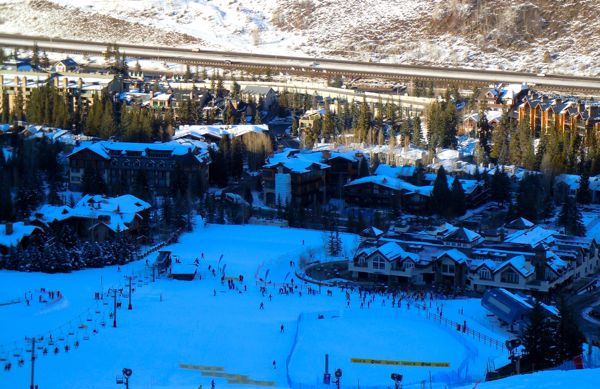
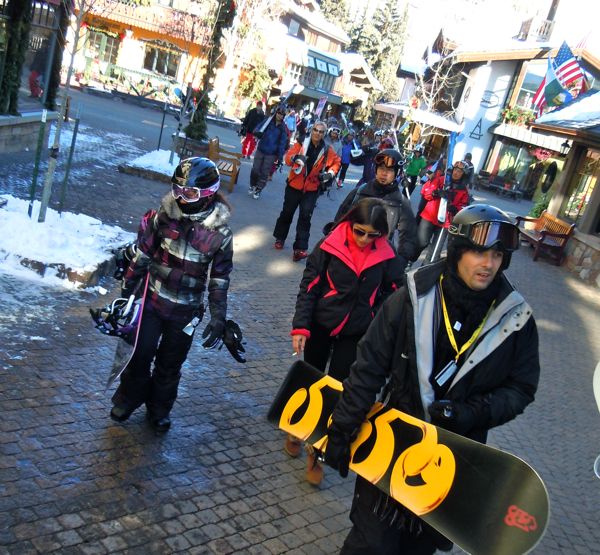
Vail businesses are in recovery mode from the recession. Photos/Kathryn Reed

Vail businesses are in recovery mode from the recession. Photos/Kathryn Reed

More than $14.6 million was collected for the town in sales tax revenue in 2010. In 2009, the figure was $14.3 million.

Food and beverage sales tax receipts came in with 8.8 percent more sold this past November, the town of Vail reported Jan. 7.

“It’s been a great last few months,” Stacey Gibson of Tavern on the Square said, while admitting that more Americans are saving money than they used to spend. “Everybody needs to get away and go on vacation. People save in different ways.”

Further, she acknowledged Vail the town appeals to an upscale visitor. The bar/restaurant located inside the Vail Resorts owned Arrabelle hotel is also fairly new to the Lionshead village. There’s a fine dining option called Centre V to offset the bar’s casual atmosphere – which is a short walk from the slopes for skiers and boarders.

While the lodging tax was down by 4.2 percent in November 2010, retail made up for the loss with a 4.8 percent increase in sales compared to a year ago. The villages of Vail, Lionshead and West Vail came on strong with double-digit increases in sales tax collections – anchoring Vail areas outside the villages that show a 19.2 percent dip in receipts.

“Business is bouncing back in Lionshead. We survived,” Bart & Yeti’s bartender Kevin Foley said, serving a crowd on a January weekday night. Foley was referring to the tough economy as well as his 36-year-old employer being located in the shadow of redevelopment that tore up the street for years.

“It was a war zone around here,” Foley said.

Although most everything is new around this locals’ retreat, the multi-level Arrabelle puts the outdoor area of Bart & Yetti’s in the shade.

Buoyed by La Nina conditions bringing an early winter to the West and a perceived pent-up holiday demand for fun among recession-weary consumers, sporting goods led the way in sales in November. Shops collected 36.2 percent more money than in 2009. The Vail Economic Advisory Council received the optimistic city reports on Jan. 11.

Vail Resorts, which owns Heavenly Mountain Resort on Lake Tahoe’s South Shore and Northstar-at-Tahoe in Truckee, has a high stake in these reports with more than half the town carrying the name of Vail or its lodging division RockResorts. Vail Resorts also runs the ski areas of Vail, Beaver Creek, Breckenridge and Keystone.

As of a few weeks ago, the ski resort corporation reported lift ticket revenue amounting to 7.4 percent more than the previous year.

Vail’s good economic news hasn’t necessarily surprised marketing officials from the Beaver Creek ski area to the RockResorts lodging division.

“People are still traveling. They may have dinner in their condos, but they’re still doing what they want to do,” Beaver Creek spokeswoman Jen Brown told Lake Tahoe News while steps from the slopes. Beaver Creek, which appropriately operates under the advertising tag line “not exactly roughing it,” has offered specials to get on the slopes as well as discounts once skiers and riders are there. The same goes for Vail, and customers are taking advantage of it.

Events are king with both resorts. These include “Holidaze” activities at Vail and Beaver Creek’s plans to host the World Cup Championships in 2015.

“Clients were skipping their ski vacations (prior to this year). We’re seeing the repeat guests dedicated to these resorts, and now we’re seeing the economy coming back. We’re quite fortunate,” said Marcella Bettis, RockResorts regional director of marketing.

Transient occupancy rates were down this past December by 0.3 percent to 57.1 percent compared to the previous year, but lodging establishments could be cautiously optimistic by making adjustments. The average daily rate went from $407 in December to $389 this month. The drop contributed to an increase of bookings to bring occupancy up to 57.4 percent.

Then, of course, not every place is Vail – where the highest real estate sale in 2010 was a 5,631-square-foot Solaris property penthouse that went for $14.8 million, according to the Vail Board of Realtors. The lowest sale was a 695-square-foot condominium at $249,900.

The upward swing in most tax reports for everyday purchases seems to mirror national trends in terms of spending over the holidays among bargain-hunting consumers.

“We’ve seen an increase (in business) this year at Christmas,” Pepi Sports buyer Shaun Filiault said of December’s receipts for his Vail Village store. Filiault added he’s noticed that when the hotels run deals, the people show up to rent skis and boards and buy accessories. But they may be more discriminating based on the state of the economy.

“I feel people buy what they need. We’re seeing more value-conscious consumers,” he said.

Either way, store results appear in-line with the national snowsports market reaching $1 billion in sales last year, an increase of 14 percent from 2009, according to a recent SnowSports Industries America report. The U.S.-based trade association also reported alpine equipment sales up 23 percent this season in comparison to last year’s.

At Kid Sport store in the Vail Village, workers have noticed a better ski season business than last year’s.

“Last year was the hardest year,” Dana Smith said, noting more locals are spending money on gear and clothes for their children. Anna Cutts mentioned the website sales are up.

The nearby market has seen a brisk business as well. Property manager Bob McNichols of Daedalus Real Estate attributes part of the success of his marketplace with the development of units to bring people into the area.

“Business is growing each year. Grocery sales are way up. I think more people are eating in, but they’re coming,” he said. “For us, these are the good old days.”

ngg_shortcode_0_placeholder (Click on photos to enlarge.)


Reno high school student dies from fall at Mt. Rose

By Steve Timko and Jaclyn O’Malley, Reno Gazette-Journal

Relatives of a 15-year-old snowboarder — who died Wednesday after crashing into a tree while walking down a slick ski resort mountainside — remembered him Thursday as an amazing and sweet boy.

Galena High student Maison T. Ortiz had been snowboarding with a friend at Mount Rose Ski Tahoe after they had finished one of their final exams at school, said his uncle Chris Hicks. They decided to make one of their final runs of the day on the Slide Mountain side of the resort, Hicks said. But the conditions were incredibly icy, which forced the boys to remove their helmets and boards, and walk down the mountain.

Ortiz lost his footing on the ice and slipped, crashing into a tree, Hicks said.

“They thought it was safer to walk down the mountain,” Hicks said.

Mount Rose Spokesman Mike Pierce said the accident occurred about 1:55 p.m. after the boys entered the Gold Run slope. The ski patrol was on scene within a few minutes and he was taken to Renown Regional Medical Center by Care Flight helicopter with serious head injuries, Pierce said. The resort learned Thursday he had died, he said.

Read the whole story


Search is on for man who never made it to S. Lake Tahoe

By Kristin Hanes, Fox 40

VACAVILLE — A spattering of cell phone calls are all family members and police have to go on as they try to find Jose Ruben Valdez. Valdez, 57, was supposed to have arrived in South Lake Tahoe on Wednesday when he left his Anaheim home. But, he never arrived.

Since then, Valdez has called family members several times on his phone, telling them he’s lost. One of those phone calls came from Vacaville, the others, he didn’t say where he was. Apparently, Valdez has dementia, and family members say he often gets confused or lost.

Read the whole story


Giffords standing, ready to move to rehab facility

By Jennifer Medina and Marc Lacey, New York Times

TUCSON — Representative Gabrielle Giffords, who survived a gunshot through her head on Jan. 8, is likely to leave a hospital here on Friday and move to the TIRR Memorial Hermann rehabilitation hospital in Houston to continue her recovery, a spokesman for Ms. Giffords said Wednesday.

In a sign of her significant progress, Katie Maass, a spokeswoman at University Medical Center, said Ms. Giffords, with the help of medical personnel, left her bed Wednesday and stood by the window of her room. She looked out the window, Ms. Maass said, although doctors have cautioned that they do not yet know the extent of her vision.

Ms. Giffords’s aides said the timing of the move to Houston might change depending on her health. Her doctors have said repeatedly that she was making remarkable progress, considering the severity of her injury, but that it was impossible to predict how she would recover.

Read the whole story


Vail Renaissance allows area to compete on world stage

Publisher’s note: This is the first of four days of stories about issues pertaining to Vail. Lake Tahoe News reporters spent the first week of January in Vail – skiing, eating, walking, talking, and observing. Today through Jan. 23 we share some of those experiences and insights with readers of Lake Tahoe News. The point is not to say Lake Tahoe should be Vail, but to point out what another ski town is doing. And with Vail Resorts now owning two ski resorts in Lake Tahoe and at one time wanting to be a player in the would-be convention center project in South Lake Tahoe, what Vail is doing very much pertains to Lake Tahoe.

By Kathryn Reed

VAIL – Lots of money exchanges hands each year among people who like to travel and those with a place to stay the night. The vacation rental market is a $24 billion a year business in the United States.

The town of Vail, Vail Resorts and people in the Vail Valley want their share and then some of that chunk of change.
The mountain and the town of Vail blend together. Photos/Kathryn Reed

The mountain and the town of Vail blend together. Photos/Kathryn Reed

With travelers having more options these days because every town seemingly is able to capture a bit of the tourist dollar, the status quo doesn’t work. Vail looked around about a decade ago and realized it wasn’t top dog in the ski destination market. The Deer Valleys and Whistlers of the world were cutting into their profitability. (Lake Tahoe is not a threat – never has been, according to Vail officials.)

“We saw other resorts, specifically Beaver Creek and our competition in Aspen and other places that were doing new and interesting things. The traveling public is pretty sophisticated and they like new, shiny things and up-to-date accommodations. Things we had, but not enough quantity,” said Ludwig Kurz, who has been in Vail since 1966 and was on the town council from 1998-2003.

To get back in the game Vail underwent what it calls the Renaissance over the course of about 10 years. With the Four Seasons opening a month ago, and the Ritz-Carlton Residences coming online in 2010, the Renaissance is complete.

The meandering Arrabelle opened three years ago this month. It’s so monstrous it seems to take over the entire Lionshead area. The Solaris Residences in Vail proper is also hard to miss, though it is a mixed use complex. It had owners moving in last May.

The Renaissance amounted to about $250 billion in redevelopment, according to the town manager.

Kurz said intellectually people understood the need for change, but emotionally it was a harder sell to get rid of the old and build something new.

“We are lucky we didn’t have half completed buildings or holes in the ground,” Stan Zemler, Vail town manager, told Lake Tahoe News. “A lot of stuff here was controversial. One went to the public for a vote.”

Height and density concerns were some of the biggest hurdles.

The Vail Homeowners Association, a group of mostly second homeowners who united in the early 1990s to be proactive in how the surrounding neighborhoods would be impacted by development, had major reservations about the various aspects of the Renaissance.

“Most of it dealt with planning and zoning, master planning,” Jim Lamont, director of the homeowners group said of the numerous meetings. “Redevelopment was again a bitter pill for a lot of these people to swallow. But what we did was wed solving the community’s original sins with swallowing the bitter pill of more density.”

He added, “Vail was so crappily built in the first place.” (The ski resort came first, then the town.)

It took a couple years for the Lionshead master plan to come together.

“To me, master planning takes time. It’s painful, hard, (and involves) a lot of debate. But it sets the table for what you want. It creates a path for what you want and people go down that path,” Zemler said.

Lamont said his group was able to get heated streets, which he said is a must for an aging population. The VHA also was instrumental in how truck-loading docks functioned. Parking and transportation were issues they raised, too.

These urban renewal areas create tax increment that in turn pays for public improvements like streetscapes, lighting and transit.

“We raised enough issues about each new redevelopment project that things were pretty well vetted before they went under construction,” Lamont said. “The emphasis was put on rebuilding.”

Kurz believes the area was successful with the Renaissance because “we were somewhat tenacious and kept after it.” He also points to a sophisticated town staff who could handle the work involved in dealing with the public-private dealings.

“The risk comes in my mind when a developer who is an out of town person and wants to develop and doesn’t understand the community,” said Rod Slifer, with Slifer Smith & Frampton Real Estate. He’s seen it all. In 1962, the year Vail ski resort opened, Slifer was the town’s first and only real estate agent.

He is not a believer in hiring consultants to make recommendations about development or redevelopment projects.

“At least in Vail and most other ski areas I’m familiar with, the local real estate community and local government know what is needed and what would work,” Slifer said.

Sampling of properties

Vail Resorts has several subsidiaries, all with large bank accounts. This helps when it comes to remaking the town. RockResorts and Vail Resorts Management Company are two major players in the area. Much can be self-financed so bankruptcy isn’t likely.

The Arrabelle, the lodging property owned by RockResorts, is huge. It has walkways that lead from one area to the next. It’s hard to know where it ends or begins. Some people think it’s too tall because it casts a shadow on businesses that before were bathed in sunlight.

The Ritz Residences had its grand opening in November.

Kyle Denton, broker with Sotheby’s International, told Lake Tahoe News while on a tour of the property two weeks ago 18 of the 71 whole ownership units are under contract. They range in price from $1.75 million to nearly $9.2 million. The square footage is 1,500 feet to 4,500 feet.

Pre-sales were brisk in 2007 on the $111 million property, Denton said, with 2008 and 2009 being dead, and now things picking up.

Wendy Mallas, homeowner association manager for Vail Resorts Hospitality at the Ritz Residences, said more international buyers have been inquiring about the property – predominately South Americans and Mexicans. New Yorkers and Californians are the biggest domestic markets, along with Texans and people from Chicago. (These demographics parallel where skiers come from.)

The Ritz Destination Club has 45 units, with Marriott International handling the resale. (A Marriott is next door.) It is managed by RockResorts.

When the Four Seasons opened its third mountain locale at Vail in December (the others are Whistler and Jackson Hole), it was able to boast of having the largest suites in the Vail Valley. The 121 rooms are not ski-in, ski-out, but the heated ski area is next to the Vista Bahn lift for convenience.

In the first three weeks the 49-unit Ascent condo project was on the market 26 contracts had been written – this as of Jan. 7. The project is in the town of Avon at the entrance of Beaver Creek.

Prices range from $350,000 to $1.1 million. Even though they are moving, the original asking price in 2008 was more than 50 percent higher.

Inspirato is a company launched by Brent Handler, co-founder of Exclusive Resorts. Members have access to 40 luxury residence in ski destinations like Vail, Beaver Creek, Aspen, Snowmass and Dear Valley.

He has found a niche market for those who can pay a $9,500 initiation fee, $2,500 renewal fee and market prices each night. People want luxury accommodations, the amenities that go with them and flexibility in where and when they travel.

What’s next?

Ever Vail, a Vail Resorts proposed development, is wending its way through the regulatory process, with the possibility of being permitted this year. At $1 billion it is the single largest development ever proposed for Vail.

The multi-faceted project would cover about 12 acres – about the same size as the hole in South Lake Tahoe where the convention center project sits in foreclosure. This also compares to Lionshead and Vail Village that are each about 55 acres.

Literature from the company says, “Our fiscal analysis estimates Ever Vail will generate one time revenue of more than $30 million for the town of Vail, as well as $7.6 million at build-out in ongoing annual revenue that includes nearly $5 million from tax increment financing.”

Kristin Kenney Williams, spokeswoman with Vail Resorts Management Company, acknowledges the large amount of inventory in the Vail Valley that is not sold and how some believe the area is overdeveloped.

“We can’t rest on our laurels,” she said sitting in the members’-only bar at the Ritz Residences. She said the company is putting itself in a position to be ready for when the market fully turns around.

“We don’t want to cannibalize Vail Resorts or others that are here,” Williams said.

She says it will be like creating a new neighborhood.

She anticipates the soonest construction would start on buildings would be three years. Moving the frontage road that splits the property and cleaning up the toxics from the former gas station need to be handled first.

The plan is for a 102-room RockResorts hotel to be part of the mix. A gondola to service this area is also on the books. More than 400 residential units will also be part of it.

Williams estimates Ever Vail will bring about 2,000 new visitors a day to the area, with about half of them being skiers.

“That will in no way encroach on the mountain,” Williams said.

(One reason Vail does not have six-pack chairlifts is so fewer people at once are disembarking from a lift, so it keeps the flow on the mountain more manageable.)

How Ever Vail will impact travel on Interstate 70, the main artery to Denver, remains to be seen. Williams said it is a concern all parties are looking into.

Other things about Vail

Like South Lake Tahoe, about 70 percent of the homes in Vail are not occupied by the owners. They are second homeowners.

Eagle County unemployment was at 9.55 percent in October. Vail does not keep those stats. South Lake Tahoe’s unemployment topped 17 percent in November.

Vail’s population is about 5,000 people. South Lake Tahoe’s is close to 25,000.

The Vail Valley is about 35 miles long. The closer the property is to the slopes, the more expensive it is. People commute from the outer reaches, much like driving from the Carson Valley or Carson City to Tahoe.

Beaver Creek, a Vail Resorts ski mountain, expects to have the draft environmental impact statement of its improvement plan released in the first half of this year. The mountain needs beefing up before it hosts the World Championships in 2015.

The ski resort owned much of the land in Vail. Land for the hospital was donated by the resort, with a deed restriction so it remains a medical facility.

The focus of Vail Resorts is on the destination visitor, ideally who flies into the Eagle County airport and never needs a car. The Vail Homeowners Association is pushing for an international terminal at Vail Eagle airport.

Vail ski resort is in Eagle County, not the town of Vail. But all the development is in the town.

Parking is an issue in town. Since 1973, the town has spent $21 million on garages with 2,400 spaces. About 6,000 vehicles use the garages each day, according to Transportation Manager Mike Rose. The town is responsible for another 400 free spaces in the area.

Parking is free after 3pm, with other incentives.

One issue is people must use the garages at $25 day when there is vacancy or else face a $60 ticket for parking on the free frontage road.

Vail Resorts is responsible for about 90 percent of marketing in the winter. The town through a dedicated lodging tax has about $1 million to spend on summer special events. The town of Vail has a Special Events Commission to handle that. Events are geared toward locals and tourists.

ngg_shortcode_1_placeholder (Click on photos to enlarge.)


Parts of South Lake Tahoe without power

Updated Jan. 19 4:55pm: Randy Kelly with Liberty Energy and a longtime NV Energy employee in South Lake Tahoe said a tree went across a power line, knocking out power for a few hours Tuesday night in the Tahoe Island area. The company has no plans at this time to inspect trees/limbs that may be waiting to fall.

By Kathryn Reed

Power went out in parts of the Tahoe Island area of South Lake Tahoe just before 7pm Wednesday night.

Liberty Energy, the company now responsible for keeping the lights on on the California side of the Lake Tahoe Basin, did not know why the outage occurred or how many customers are affected.

Spokesman Mark Johnson told Lake Tahoe News at 7:54pm the company is looking into the issue.

A bit of irony is Liberty Energy hosted a lunch meeting Wednesday with head honchos Bob Dodds and David Pasieka going on and on about customer service and their ability to handle outages.

Liberty, a subsidiary of CalPECO, took over Nevada Energy’s 45,000 California customers at 12:01am New Year’s Day.

Liberty is buying power from NV Energy. The latter decided it wanted to divest itself of California customers so it could focus on one state. Dodds, at the meeting, said NV Energy would be handling substations in California for Liberty.


Brown’s prison plan doesn’t consider overcrowded county jails

By Brad Branan, Sacramento Bee

Gov. Jerry Brown’s plan to transfer state inmates to county jails faces a simple obstacle: Many jails don’t have the space to hold them.

Just as the state has struggled with prison overcrowding, some counties have had their own problems keeping inmates locked up. Statewide, tens of thousands of inmates are released early from county jails each year because of space constraints.

Jail crowding was on the minds of many sheriffs when Brown announced in his budget proposal last week his plan to give them responsibility for more than 40,000 lower-level offenders and parole violators.

“We don’t have the space,” said Sacramento County Sheriff Scott Jones, who once ran the county’s two jails. “The Main Jail is full or over-full every day.”

If Brown’s plan is approved, Jones and other sheriffs say, they would have to release inmates early to make room for state prisoners.

Administration officials say they are still working on the plan and hope to come up with ways of helping counties with limited jail space. One option would be through AB 900, which authorized $7.4 billion in bonds for jail construction and rehabilitation projects four years ago.

Jails in 20 counties – including Sacramento, Placer, Yolo and El Dorado – are under court orders to release inmates when they become too crowded. Jails in the four counties often operate at or near capacity.

Read the whole story


Serious injury accident on Kingsbury Grade

By Reno Gazette-Journal

One person is hospitalized with substantial injuries after an accident on Kingsbury Grade this morning.

At 8:49am, Nevada Highway Patrol was dispatched to an injury crash near Juniper Lane approximately three-quarters of a mile east of Highway 50 on Highway 207.

The crash investigation indicates that a black Jeep Cherokee was traveling eastbound on Highway 207 driven by a 19-year-old female from Stateline that crossed over the center line for unknown reasons, striking a blue bus driven by Randy Briney, a 53-year-old Carson City resident, in the left front with the left front of the black Jeep.

Read the whole story


Warm weather taking toll on Sierra snowpack

By Jeff Delong, Reno Gazette-Journal

Nearly a week of unseasonably warm weather took its toll on a still-bountiful Sierra snowpack, with no new storms expected anytime soon.

Temperatures across the Reno-Tahoe area are expected to drop about 20 degrees today, slowing the snowpack meltdown.

Experts now are looking to February to bring back storms needed to keep the snowpack deep, providing needed water for next summer.

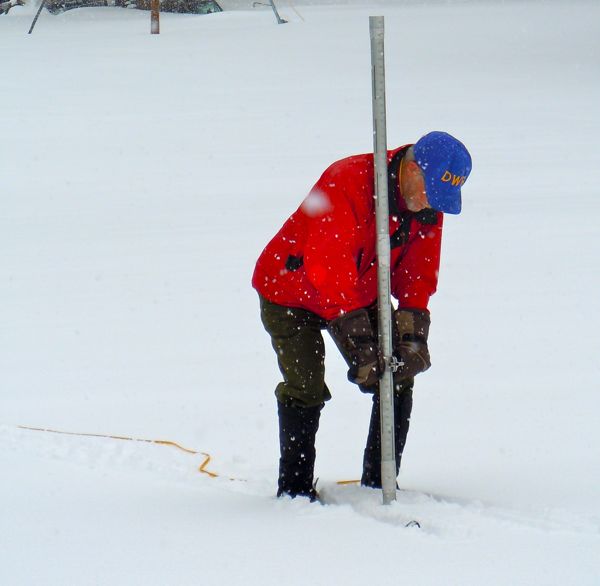
The next snow survey of the season may show reduced water content. Photo/Kathryn Reed

This season's next snow may show reduced water content. Photo/Kathryn Reed

“We’re losing a little, but the bigger concern is just no storms coming,” said Dan Greenlee, snow surveyor with the U.S. Natural Resources Conservation Service.

After a series of heavy December storms layered the mountains in white, January arrived with a snowpack at twice-normal levels. Storms petered out, and temperatures rose, with the Lake Tahoe Basin’s snowpack dropping from 227 percent of average on Jan. 1 to 176 percent on Tuesday.

Read the whole story