Heller a rising star in Congress with GOP in control

By Erin Kelly, Gannett News Service

WASHINGTON — When Republican Rep. Dean Heller came to Congress four years ago, he was all but lost among the wave of jubilant Democrats who had just won control of the House.

Now, as he begins his third term, the 50-year-old Carson City resident has gone from a relatively powerless newcomer to a congressman with real clout.

Not only has his party taken back the House majority, but Heller has a coveted seat on the powerful Ways and Means Committee and counts new House Speaker John Boehner, R-Ohio, among his closest friends in Congress. Boehner said he speaks with Heller often and sees him playing an important role in “getting Americans back to work.”

As his star rises, Heller, who represents Congressional District 2 which includes Reno, acknowledges that he is considering a 2012 bid for the U.S. Senate seat now held by scandal-plagued Nevada Republican John Ensign. A poll released Jan. 11 by Public Policy Polling showed Heller beating Ensign in a GOP primary, 52 percent to 34 percent.

“He has a real opportunity now to step up and be a leader both within the House and in rallying the state Republican party,” said Eric Herzik, chairman of the political science department at the University of Nevada, Reno.

While Heller’s increased clout will boost his political ambitions, the congressman prefers to focus on how it could help his Northern Nevada district.

Heller’s connections to Boehner and other House leaders give him a much stronger chance this session to pass legislation such as the Lake Tahoe Restoration Act, which died in the last Congress. The act, which Heller plans to reintroduce soon, is a $415 million, eight-year bill aimed at restoring the lake by keeping out invasive species, improving water clarity, reducing the threat of devastating fires and protecting wildlife.

The legislation must go before the Natural Resources Committee, where bills from the majority party are passed at a much higher rate than bills from the minority party. Heller also gets along well with the new committee chairman, Rep. Doc Hastings, R-Wash., and is optimistic that Hastings will help expedite the bill.
Read the whole story


LTCC president talks about dollars, future of college

By Kathryn Reed

Money. It was the overriding concern of people asking questions of Lake Tahoe Community College’s president.

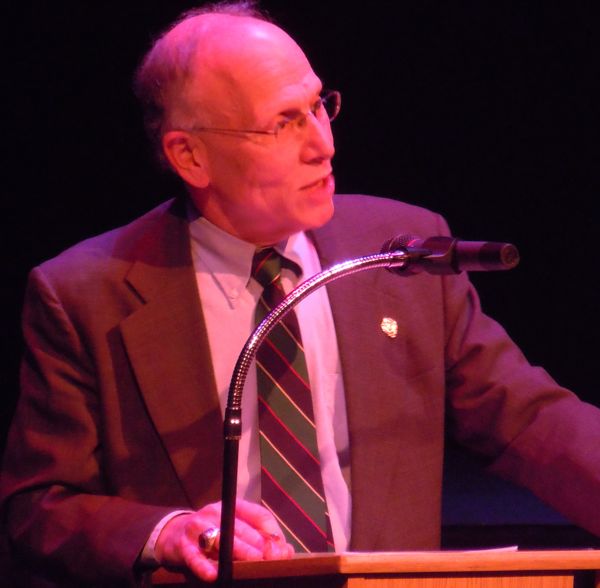
Steve Maradian, interim president of the South Lake Tahoe school, delivered a one-hour talk Friday about the state of the college to about 40 people – students, administrators, trustees, faculty, and staff.

Steve Maradian gives the state of college address at LTCC on Feb. 4. Photo/Kathryn Reed

Steve Maradian gives the state of college address at LTCC on Feb. 4. Photo/Kathryn Reed

Overall, his message was the college is doing well despite the chaos and uncertainly in Sacramento. But those unknowns about what lawmakers will do when it comes to funding higher education is what those in attendance wanted to hear more about.

Gov. Jerry Brown is proposing $400 million in cuts to the community college system. The best-case scenario is a $640,000 hit to LTCC; worst case is $1.7 million. The discrepancy is largely based on a possible June ballot measure Brown wants to bring to voters.

Maradian said because the board has made prudent fiscal decisions in the past, LTCC is able to pay its bills, unlike some colleges which are running a deficit.

LTCC has 7 percent in mandatory reserves or $960,000. Last year a rainy day fund was created which contains $750,000. Another reserve account has about $400,000.

“We’ll identify all the funds we can capture without hurting instruction,” Maradian said in regards to preparing the annual budget for 2011-12.

Maradian said the things the college can count on are tuition costs going up, health care being more expensive, and the state providing less assistance.

Flexibility is another word he used. It’s going to be needed as the state deals with its 11-figure deficit.

In his mostly optimistic speech from a podium on the stage at Duke Theater, Maradian asked the assembled group, “Do we dream big or do we not dream at all?”

“Dream big” was the answer.

But from there Maradian delved into the challenges the college is likely to face.

Providing non-credit fee based instruction is one area Maradian believes LTCC should explore.

He cautioned the governor might one day require a local parcel tax to fund community colleges. Maradian said he looked into property values of the college district and found the total to be $52 billion. If people were taxed $1 on every $100,000 of value for their property, the college could bring in $5 million.

Baccalaureate programs are the trend for community colleges, though not in California.

Maradian said more education opportunities are needed, especially as the population grows. The demand for higher education is outpacing the state’s ability to provide it. Cuts mean fewer classes, which means students aren’t able to get the education they want.

He posed the rhetorical question: What happens if one or two generations slip through because there are not enough seats?

There are 2.7 million students in California’s community colleges, with just 74,000 graduating each year, which includes those receiving certificates.

Maradian touched on the Title 3 project, saying a Datatel consultant was on campus two days this week to assess the situation. When the staff member who was in charge of the project had his job eliminated last month by the board it caused quite a commotion.

When pressed to elaborate more by a member of the audience, Maradian said the start date to use the software is now 2012, with some students and staff piloting the program before it starts.

“Buying time didn’t cost us money. It will make it more manageable to implement,” Maradian said. “It’s a more realistic approach.”

He added that the consultant would provide the college with planning documents to go through the process.


Nevada approves bear hunting, including in Tahoe

By Keith Rogers, Las Vegas Review-Journal

The state Wildlife Commission voted Friday to establish Nevada’s first bear hunting season in an emotional-packed meeting that drew opposition from animal rights activists.

The nine-member commission voted 7-1 with Commissioner Charles Howell casting the dissenting vote.

Chairman Scott Raine did not vote.

Read the whole story


Janitor accused of killing principal was not going to be fired

By Peter Hecht, Sacramento Bee

John Luebbers, the elementary school janitor accused of gunning down his principal, told investigators he shot the boss because he had been fired from his job, Placerville police said Thursday.

But school district officials said later in the day that the lead custodian at Louisiana Schnell School in Placerville wasn’t dismissed at all.

They said Luebbers apparently confronted principal Sam LaCara, his friend and longtime golfing companion, over the fact the school district had assembled a panel to hire a new night janitor, whose job wouldn’t have affected Luebbers’ employment.

“Mr. LaCara told him that he needed to go home and cool off for the day,” Placerville Union School District Superintendent Nancy Lynch said.

Instead, Luebbers went home and retrieved a gun, said Placerville Police Capt. Mike Scott.

Luebbers, who was arrested after he went back to his home after the shooting, confessed to police that he had entered the principal’s office and fired two shots at his friend, Scott said. He is scheduled to be arraigned today in El Dorado Superior Court.

Read the whole story


S. Tahoe roads a jarring ride with no cash to fix them

By Kathryn Reed

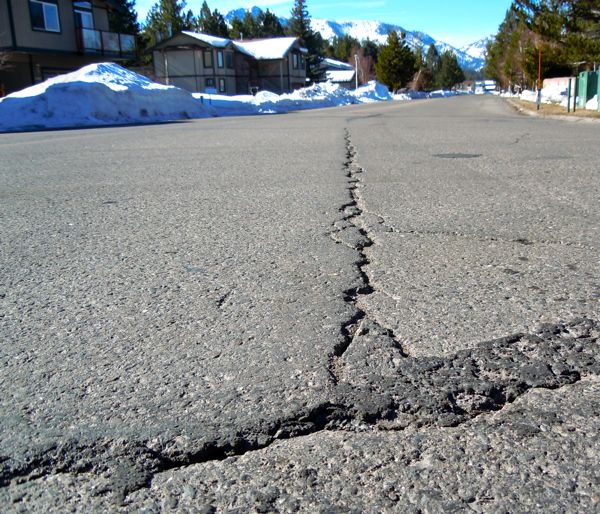
Sitting water is asphalt’s nemesis. Water erodes the road surface, potholes develop, and then the edges start chipping away to make an even bigger hole. It’s a cycle that is repeated each winter in Lake Tahoe.

With an unseasonably warm January and no white stuff in sight for the next week, snow is in a constant state of thaw in the basin.

South Lake Tahoe road crews drive around with bags of all-weather mix to fill in potholes they see or ones that have been reported to them. But this is just a temporary solution.

Venice Drive in South Lake Tahoe practically requires a mountain bike or four-wheel drive. Photo/Kathryn Reed

Venice Drive in South Lake Tahoe practically requires a mountain bike or four-wheel drive. Photo/Kathryn Reed

Summer, when the temperatures allow for it, is when a more permanent fix to the problem can be applied.

John Greenhut, South Lake Tahoe Public Works director, said each winter some of the same areas develop potholes because water accumulates and has nowhere to go.

“We don’t have proper drainage,” Greenhut said of the city’s streets.

The city has a master drainage plan and a master erosion control plan, some of which overlaps, but funding is a constant barrier to make all corrective measures. Plus, snow precludes work from being done on a year-round basis.

City council after city council has heard presentation after presentation regarding the state of disrepair of South Lake Tahoe’s roads. The current council was told last month it would cost about $312 million for the city to have a complete streets infrastructure.

“Complete streets” is a term meaning a street will have drainage, curbs and gutters, bike trails, sidewalks, lights – and a street without potholes or the need for four-wheel drive on dry surfaces.

“Most pavement on city streets, it’s a layer of pavement, maybe an overlay on native soil. Old oils that were used shrink up and you get cracks,” explained Stan Hill, chief engineer with the city. “As we move through projects, we would like to rebuild to a higher standard. Assuming we have the money, they would be better engineered, have a thicker substance and would last longer.”

South Tahoe, like most cities, has three classifications for roads – arterial, collector and local. Examples of arterials are Pioneer Trail, Al Tahoe and Tahoe Keys; collectors are Venice, Lakeview and Blackwood; locals are Kubel, Armstrong and Alameda.

Even though the city knows what needs to be done, the dollars aren’t sufficient to correct the problem.

In the report presented to the council last month the same funding analysis from March 2010 was brought forward.

Primary sources include: grants in aid, increasing the transient occupancy tax, increasing the sales tax, creating an assessment district, and creating a parcel tax. Supplemental sources of money include: inspection and license fees, storm water discharge fees, redevelopment tax increment, gross vehicle weight fees, street cut fees, parking fees, TRPA mitigation funds, and development fees.

Jim Marino, engineer with the city, told the council his department applied for federal stimulus dollars but was denied because the government was looking to fund larger projects.

“There is not much federal or state money to rebuild streets,” Marino said.

Marino recognizes as the city attempts to create complete streets “sidewalks are only as good as when they are dry. Many out there now are not usable.”

He wants the city to get creative with creating a funding source for roads. He mentioned how South Tahoe Refuse does not pay a fee to drive its trucks on the city streets that were not designed to handle that weight. He pointed to Truckee, which has a percentage of sales tax dollars and parking fees going toward its streets.

With grants the city goes after, most come with strings – at least in terms of requiring matching dollars the city may not have.

“We need to hold developers accountable for improvements around their projects,” Marino added.

In 2009, the estimate, according to Marino, was it would take $5.2 million a year for 25 to 30 years to get the streets up to par.

“We need to get a funding source in place,” Marino said.

City Manager Tony O’Rourke has floated the idea of a general obligation bond to repair roads.

At the City Council’s strategic planning session improving infrastructure was one of the goals. In the coming weeks it’s expected the council will begin to set specific goals. The next council meeting is Feb. 8 at 9am at Lake Tahoe Airport.


Kindertown day care wins round 1 in court; stays open

By Kathryn Reed

Kindertown day care in South Lake Tahoe will remain open for at least 120 days based on a judge’s ruling Thursday afternoon.

El Dorado County Superior Court Judge James Dawson had little to say before issuing his decision to grant the stay. He asked Brenda Ray, deputy attorney general representing the Department of Social Services, if any child at Kindertown had been put in harms way since August when a child left the center on his own and was found wandering on Highway 50, a couple blocks from the day care. Ray did not know of any incidents.

It is the August incident that led the state to initiate proceedings to close the three-decade-old facility. This is the second time in 16 months the state has tried to close the center.

Ray said the state is appealing last fall’s decision that allowed Kindertown to keep its doors open.

Attorney Mike McLaughlin and Kindertown owner Maria Barrows-Crist outside the courthouse on Feb. 3. Photo/Kathryn Reed

Attorney Mike McLaughlin and Kindertown owner Maria Barrows-Crist outside the courthouse on Feb. 3. Photo/Kathryn Reed

Kindertown owner Maria Barrows-Crist prevailed the first time with the help of attorney Mike McLaughlin of Feldman-Shaw-McLaughlin LLP.

When asked outside the courthouse Feb. 3 if he believed there would be a different outcome at the end of all of this, McLaughlin told Lake Tahoe News, “no.”

“It’s a continuing pattern of abuse by the state,” McLaughlin said.

He said much of the same during the brief court hearing, which was attended by about 30 supporters of Kindertown.

The state had asked Judge Steve Bailey to be removed from the case, which was granted. Bailey is the one who ruled in Kindertown’s favor last year.

Further hearings regarding Kindertown will be before Judge Warren Stracener in Placerville.

Although officials with the state Department of Education were at Kindertown this week letting parents know where else they could enroll their children, Barrows-Crist said no child has left the center because of the latest turmoil.


Judge: Garrido competent to stand trial

By Sam Stanton, Sacramento Bee

The judge in the Jaycee Lee Dugard kidnap case today ruled that Phillip Garrido is mentally competent to face trial in her 1991 abduction.

El Dorado Superior Court Judge Douglas Phimister said, “The defendant is in fact competent to stand trial.”

He set the next hearing the case for Feb. 28.

Read the whole story


Suspect in principal shooting had been fired that day

By Peter Hecht and Bill Lindelof, Sacramento Bee

Custodian John Luebbers, angry after being fired, has confessed to killing Placerville school principal Sam LaCara, police said today.

Capt. Mike Scott of the Placerville Police department said that Luebbers, 44, confessed that he shot and killed LaCara on Wednesday.

Luebbers allegedly went home to get a gun after he was fired Wednesday morning by the principal.

LaCara was gunned down in his office shortly after 10:30 a.m. Wednesday at Louisiana Schnell School. LaCara, 50, was shot in the chest.

Read the whole story


Garrido’s competency subject of Thursday hearing

By Sam Stanton, Sacramento Bee

His own lawyer has said he may be mentally ill, that he hears the voices of angels who live underground speaking to him.

He has told people he invented a special box to control sound with his mind, and he sought out the FBI before his arrest to discuss mind control.

As crazy as that sounds, it may not mean Phillip Garrido is mentally incompetent to stand trial in the Jaycee Lee Dugard kidnap.

A competency trial on the matter is tentatively set for Feb. 28, but that may not be held. Lawyers on both sides of the case are discussing if the competency trial is necessary and could agree Garrido is competent, a move that would mean his criminal trial can go forward.

A hearing to weigh the matter is set for today in El Dorado Superior Court. Lawyers in the case would not comment Wednesday.

Read the whole story


Principal, gunman were friends; motive in killing unknown

By Peter Hecht, Kim Minugh, Gina Kim and Carlos Alcalá, Sacramento Bee

Only last Sunday, the two golfing buddies spent the day together on the course. But on Wednesday, a janitor at a Placerville elementary school confronted his friend, the principal, with a gun, police said.

In a flash of fire, Principal Sam LaCara of Louisiana Schnell School lay mortally wounded. Within an hour, the married father of three daughters, a respected school administrator known for his sense of humor and love of sports, died at Marshall Medical Center in Placerville.

“It’s a tragedy for Placerville and our entire society,” Police Chief George Nielsen declared at an afternoon news conference, in which he announced that a suspect – the janitor – had been arrested and that all the school’s children were safe.

LaCara was gunned down shortly after 10:30 a.m. in his office on the wooded campus for kindergartners to fifth-graders near nature trails and the scenic drive to Apple Hill.

Worried parents rushed to pick up, hug and reassure their children after authorities had them evacuated in El Dorado Transit buses to the El Dorado County Fairgrounds.

“All the children are safe,” said a recording at the offices of the Placerville Union School District.

Nielsen said at least one student may have witnessed the shooting as LaCara, 50, was struck down by a gunshot to his upper chest.

The alleged gunman, identified by police as janitor John Luebbers, 44, was arrested by sheriff’s deputies without incident at his home in the town of El Dorado.

Read the whole story