Embattled Placerville mayor stripped of his title

By Peter Hecht, Sacramento Bee

Placerville Mayor David Machado, facing a political scandal and criminal charges over an alleged cover-up of his property dealings, was stripped of his title Tuesday night in a unanimous vote of his City Council colleagues.

The embattled Machado was not the Placerville Town Hall as the other four members voted to dismiss him from his mayoral duties and also passed a separate, non-binding resolution urging him to take an extended leave of absence from his seat on the city council.

“Dave Machado has worked hard for this city and has made many contributions – and he has allegedly made some appalling mistakes, which he will answer for in a court of law,” said Wendy Mattson, a council colleague. “Our work is to regroup, pull together and get back to the business of the city.”

Machado, 53, was arrested last week for investigation of felony perjury and conspiracy after the El Dorado County District Attorney’s Office filed a criminal complaint accusing him of 30 “overt acts” of misconduct.

Read the whole story


Erosion issues from Douglas County fire concern officials

By Jeff Delong, Reno Gazette-Journal

As crews mop up smoldering terrain torched by one of this summer’s largest wildfires, experts are readying efforts to prevent erosion and restore a charred landscape.

More than 3,800 acres — roughly six-square miles — were burned by the Ray May Fire in southern Douglas County.

It’s a checkerboard of remote and rugged land owned by the U.S. Bureau of Land Management, Bureau of Indian Affairs and private property owners.

“We’ll determine the severity of the fire and brainstorm what needs to be done,” said Alan Bittner, a supervisory natural resource specialist with the BLM, the largest landowner in the fire area.

An early priority will be controlling erosion in the fire area — much of which is particularly steep — during the coming rainy season. Re-seeding burned areas in the fall will likely be a major focus of that effort.

“I know that’s one of our concerns — erosion,” Bittner said. “If we need to keep soil from hitting ( U.S. highway) 395, that would be more of an immediate thing.”

Crews are still digging fire lines around some isolated parts of the fire. Once it is declared 100 percent contained, the BLM has seven days to submit an emergency erosion control plan. A longer-term restoration strategy is required within 21 days, Bittner said.

“What we’ve got to figure out is where it burned hot. From there we’ll determine treatment,” Bittner said.

The BLM will discuss fire restoration needs with the Bureau of Indian Affairs, the Washoe Tribe, Douglas County and other stakeholders, Bittner said.

Read the whole story


Gaines will have to move to retain state Senate district

By Gus Thomson, Auburn Journal

State Sen. Ted Gaines is planning to pull up stakes in the wake of a redistricting change that places his Roseville home inside fellow Republican Sen. Doug LaMalfa’s District 4.

Gaines said that he’ll have to move at least a quarter mile to remain in District 1 and meet state Senate residency requirements. The part of east Roseville he lives in has been shifted into District 4 as part of remapping by the California Redistricting Commission. The redistricting of electoral boundaries was finalized last week.

Ted Gaines

Ted Gaines

Gaines said that he would have to move from a residence his family has lived in for 18 years and one possibility is to relocate in Granite Bay.

But Gaines added that while he believes the newly reshaped district is a good fit – it’s about a 70 percent overlap with the old District 1 lines – there’s a possibility changes could happen if a possible referendum or court battle materialize.

“It’s a good district – very similar to District 1 now – and it will be adding Siskiyou and Shasta counties,” Gaines said. “I’m looking forward to working hard and campaigning in the district in 2012.”

LaMalfa’s rural Northern California District 4 swaps in the western portion of the city of Roseville and splits off North Auburn, Penryn, Loomis, Lincoln and Rocklin into District 1. Auburn, the eastern part of Roseville and Colfax remain in Senate District 1.

Gaines said his options are to find a home and make a short move to a District 1 location. That would allow him to potentially keep his District 1 seat, which he would run for again in 2012.

Read the whole story


Plastics lobby gets positive message about industry into textbooks

By Susanne Rust, California Watch

Under pressure from the American Chemistry Council, a lobbying group for the plastics industry, schools officials in California edited a new environmental curriculum to include positive messages about plastic shopping bags, interviews and documents show.

The rewritten textbooks and teachers’ guides coincided with a public relations and lobbying effort by the chemistry council to fight proposed plastic bag bans throughout the country. But despite the positive message, activists say there is no debate: Plastic bags kill marine animals, leech toxic chemicals and take an estimated 1,000 years to decompose in landfills.

In 2009, a private consultant hired by California school officials added a new section to the 11th-grade teachers’ edition textbook called “The Advantages of Plastic Shopping Bags.” The title and some of the textbook language were inserted almost verbatim from letters written by the chemistry council.

Although the curriculum includes the environmental hazards of plastic bags, the consultant also added a five-point question to a workbook asking students to list some advantages. According to the teachers’ edition, the correct answer is: “Plastic shopping bags are very convenient to use. They take less energy to manufacture than paper bags, cost less to transport, and can be reused.”

Americans use an estimated 100 billion plastic shopping bags each year – almost all of which are thrown into the garbage. Grocery stores and other retailers spend about $4 billion a year to purchase the bags for customers.

“The American Chemistry Council obviously got engaged to protect their bottom line,” said Sen. Fran Pavley, D-Santa Monica, author of the 2003 legislation requiring that environmental principles and concepts be taught in the state’s public schools. She had been unaware of the lobby’s efforts until contacted by California Watch.

Read the whole story


California looking to curtail protests at military funerals

By Michael Doyle, Sacramento Bee

WASHINGTON – California and other states seeking to curtail funeral protests are following a politically popular but legally disputable path.

Supreme Court, here they come.

Last week, California lawmakers joined their counterparts in Arizona, Illinois and other states in passing new restrictions on protests at funerals. In particular, legislators hope to deter members of a small Kansas church who travel long distances to picket military funerals, where they often proclaim that dead soldiers are God’s punishment for America’s sins.

“I think this will survive constitutional challenge,” Air Force reservist and California state Sen. Ted Lieu, D-Torrance, said of his bill Friday, “but that’s not to say there aren’t legal issues raised.”

Politically, the bills backed by veterans groups are unassailable. The California Assembly approved Lieu’s Senate Bill 888 on a 75-0 vote, sending it back to the Senate for concurrence on amendments. Arizona’s new protest restrictions likewise won unanimous approval.

Judges, however, will have the final say on whether such legislation can survive First Amendment challenges. A review of relevant cases suggests the new restrictions may reach further than courts have been willing to go.

Read the whole story


El Dorado County fugitive back in custody after escaping 36 years ago

By Matt Kawahara, Sacramento Bee

When federal agents finally tracked down William Walter Asher III in Salida last week, the 66-year-old was going by an assumed name, retired after years working for trucking companies, and living with a woman who apparently had no idea he’d been running from the law for 36 years.

Asher, who escaped from Growlersburg Conservation Camp No. 33 in El Dorado County in 1975, was arrested Friday, agents with the Sacramento division of the FBI said Monday.

A pair of calls to a Stanislaus County home in 2005 at the behest of his dying mother, agents said, ultimately led authorities to his doorstep.

Asher escaped from the inmate camp while serving a seven-years-to-life sentence for his involvement in the 1966 robbery of a San Francisco bar, during which a bartender was shot and beaten to death, according to a California Department of Corrections and Rehabilitation news release.

Read the whole story


Mandatory boat inspections to expand to Truckee area

By Katherine E. Hill

TRUCKEE – Truckee-area waterways will implement a regional mandatory boat inspection program in summer 2012, with public meetings being conducted to gather input before the program is crafted by the Tahoe Resource Conservation District.

The next meeting will be Aug. 25 at the Truckee Donner Public Utility District office at 5:30pm. The final meeting will be on Sept. 29.

The first meeting on July 28 drew only about a dozen people, and the majority were local officials already invested in the boat inspection program. Tahoe RCD, which also manages the inspection program on Lake Tahoe and Echo and Fallen Leaf lakes for the Tahoe Regional Planning Agency, is developing the Truckee regional program. The Truckee program will include Donner Lake, and Prosser Creek, Boca and Stampede reservoirs. The Tahoe RCD is conducting voluntary inspections at these waterways, but mandatory inspections are needed to keep invasive species, like the destructive quagga and zebra mussels, out of local lakes and reservoirs, officials say.
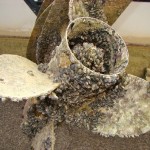
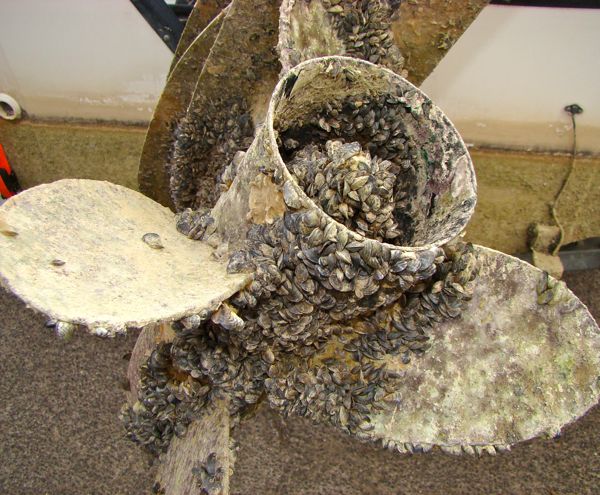
Quagga mussels like these on a boat prop leaving Lake Mead are what officials want to keep out of uncontaminated lakes. Photo/TRPA

Quagga mussels like these on a boat prop leaving Lake Mead are what officials want to keep out of uncontaminated lakes. Photo/TRPA

“The zebra and quagga mussels are the scariest of the invasive species,” said Kimberly Boyd, Tahoe RCD invasive species program manager, at the July 28 forum.

Zebra and quagga mussels would be the priority for the boat inspection program, but the program also would address other aquatic invasive species such as New Zealand mudsnails, Asian clams and Eurasian milfoil. While mussels have not been detected in local waterways, Eurasian milfoil is in Lake Tahoe, Martis Creek Reservoir and the Truckee River, and Asian clams have been found in Lake Tahoe and Donner Lake, said Dave Roberts, Tahoe RCD district manager.

Tahoe RCD officials said during the forum that the need to keep aquatic invasive species out of local waterways is broad reaching. AIS affect the food supply of native species and the health of local waterways, including Lake Tahoe’s famed clarity. For the Truckee region, AIS in local waterways also will affect the water supply for the Reno-Sparks area, which gets 80 percent of its drinking water from the Truckee River. While the river originates in Lake Tahoe, Donner, Boca, Prosser Creek, Stampede, Martis Creek and Independence Lake are all part of the river’s watershed. Any AIS in local waterways will mean infected drinking water supplies.

Locals will be the most affected by the mandatory program, as about 55 percent of boaters using the waters within the Truckee River watershed also live within it, according to a survey conducted by UNR, for the Tahoe RCD. Of those boaters, about 61 percent are anglers and 17 percent are water skiers and wake boarders.

No fees were discussed at the meeting. Fees will depend on how the program is crafted and any outside funding sources that could be used to offset the cost to boaters, Boyd said.
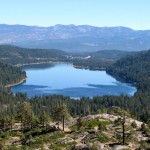
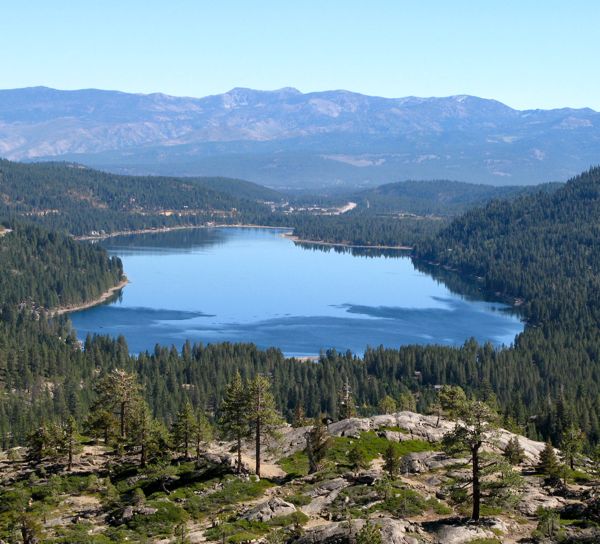
Mandatory boat inspections may be coming to Donner Lake in 2012. Photo/Katherine E. Hill

Mandatory boat inspections are coming to Donner Lake in 2012. Photo/Katherine E. Hill

Boaters can now found inspectors at the Donner Lake boat launch, as well as roving the east side of Boca and Stampede Reservoirs educating boaters about AIS and conducting voluntary inspections through Sept. 30. Free decontaminations also are offered.

The challenge, once a mandatory inspection program is in place, will be where to have them. Unlike Donner Lake, which has only one public boat launch, boaters using local reservoirs can launch from the shore. Officials will be looking at where to conduct the inspections next summer to catch all boaters, with the Hirshdale exit off Interstate 80 cited as one possible location.

“The Truckee area has enormous shoreline launching with uncontrolled launch sites,” Boyd said.

The public forum, which lasted about 1½ hours, focused on educating the audience about AIS, the voluntary inspection program and boating in the Truckee region. What it did not do is outline a mandatory boat inspection program. Instead, officials want the public to tell them what a boat program should include and then the Tahoe RCD will craft a program around those needs.

The Tahoe RCD wants public input on the use of a banding and/or sticker program like the one being used at Lake Tahoe, where boaters receive a sticker after passing an inspection before launching and the boats are banded to the trailer when it comes out of the lake. The seal is required to remain intact before the next launch, or an inspection must be performed again.

Other topics open for discussion include possible locations for inspection stations, fines for non-compliance, restricting access to local waterways, decontamination of infected boats, inspections of fishing equipment, education and outreach, and fees.

Once the forums are finished, Boyd said the Tahoe RCD would form a plan and then seek funding to operate the mandatory inspection program. The district also would have to get approval from myriad public agencies that control the different waterways, like the Nevada County Board of Supervisors, Town of Truckee, California State Parks, U.S. Forest Service and others. This process could take months, she said, noting that it would be next summer before a mandatory program could be implemented.

The Truckee River Fund has been funding the voluntary boat inspection program, as well as efforts to establish a mandatory program. The fund was established by the Truckee Meadows Water Authority, which oversees the drinking water for the Reno-Sparks area.

A look at AIS

Quagga and zebra mussels are at the center of Lake Tahoe’s inspection program.

These mussels, which are hitching rides on boats and trailers and in ballast tanks, bladders and live wells, are spreading across the West. Quagga and zebra mussels will spread rapidly once they are introduced to a lake and will gorge on the food supply, kill fish and pollute the clarity of the lake. They will clog cooling system water intakes, causing motors to overheat. As well, they have been found in pipes in municipal water systems.

The mussels can also be found on kayaks, water toys, wetsuits and any equipment exposed to infected waters.

Young quagga mussels will feel like sandpaper to the touch, while adults usually have dark concentric rings on the shell. The mussels can grow up to 1.6 inches, making the young mussels hard to spot. Full grown mussels are usually smaller than a quarter.

Eurasian milfoil, a fast-growing invasive plant, is believed to have been intentionally introduced in the

Milfoil is throughout the Tahoe Keys. Photo/TRPA

Milfoil is throughout the Tahoe Keys. Photo/TRPA

South Lake Tahoe area, where it has proliferated. The milfoil is commonly found in aquariums and researchers believe that someone dumped out a fish tank into Lake Tahoe, thereby setting off an environmental nightmare. Simply breaking off a plant fragment will cause it to spread and reproduce, and it is choking parts of Lake Tahoe, including the Tahoe Keys, where the milfoil has to be regularly removed to keep the waterway clear. The plants latch onto motor boats, causing it to spread across the lake, where it degrades water quality, decreases oxygen levels in the water, destroys native habitat and creates habitat for non-native species. Researchers are working on methods to eradicate the milfoil in Lake Tahoe.

Asian clams grow to only about 1½ inches, but rapidly reproduce and compete with native species for food. The clams also affect the clarity of Lake Tahoe. The clams likely arrived in Lake Tahoe on boat that came from infected waterways and from aquariums being dumped into Lake Tahoe. Researchers are working on methods to eradicate the clams in Lake Tahoe.

New Zealand mudsnails are about the size of a pencil lead when fully grown and are hard to spot. The mudsnails have been infesting rivers and streams across the Western United States, often found latching onto the gear and boots of fishermen; they can be hard to distinguish from boot laces. The mudsnails reduce the food supply for trout and have no natural predators in the United States.

Next meeting

Tahoe RCD will conduct the Aug. 25 public forum at the Truckee Donner Public Utility District office, 11570 Donner Pass Road, Truckee. For more information, go online or call (530) 587.4911.


Hunters successful in tracking down Nevada bears

By Reno Gazette-Journal

Two female bears have been harvested on the opening weekend of Nevada’s first-ever bear hunts, according to the Nevada Department of Wildlife.

NDOW spokesman Chris Healy said one bear was taken on Saturday in the foothills above Verdi.

A second bear was taken Sunday in the Pine Nut Mountains southeast of Gardnerville.

Healy said the season will be closed as soon as six female bears, or 20 bears total have been harvested.

Since NDOW biologists determined Nevada’s population of bears was stable enough to permit a hunt – and the Nevada Wildlife Commission approved the hunt – it has had vocal opposition.

Forty-one hunters drew tags for the opportunity to harvest a bear. Open areas include the Carson Range near Lake Tahoe, in the Sweetwater Range, the Pine Nut Mountains and similar areas of western Nevada.

Read the whole story


El Dorado County officials ready to replace offensive headstones

By Carlos Alcalá, Sacramento Bee

Officials are vowing to execute plans to replace racist gravestones at the Mormon Island Relocation Cemetery, even though the activist who pushed hardest for their replacement now appears to want to stall it.

“I don’t want to wait any longer,” El Dorado County Supervisor John Knight said Friday. His district includes the El Dorado Hills cemetery.

The offensive headstones have had a convoluted history ever since the U.S. Army Corps of Engineers oversaw their installation in 1954.

The graves were moved from the community of Negro Hill to make way for Folsom Lake. When the graves were moved, new concrete markers bore a racist version of the town’s name, using the so-called N-word.

The epithet was just used for the town, not the deceased, as those buried there are unnamed and of unknown races.

Read the whole story


No bears killed on first day of Nevada hunt

By Geralda Miller, Reno Gazette-Journal

Several hours after the sunrise start of Nevada’s first black bear hunt, a small group gathered near Tahoe Meadows to pray for the hunter and the hunted.

The Blessing of the Bears began with organizer Kat Simmons beating a drum 41 times with a prayer for the 41 hunters that received tags to hunt.

“We pray that hearts and minds can be opened to the sanctity of life instead of the thrill of death,” Simmons told the group standing among the trees. “I don’t want to come from the spirit of anger. I’m not about hating the hunters or being malicious toward them.”

Only six hunters turned out on the opening day of the season, and no bears were killed, state Department of Wildlife spokesman Chris Healy said. He said the low turnout wasn’t surprising because of hot weather, and wildlife officials expect activity to pick up in the fall when temperatures cool down.

Read the whole story