Lukins Bros. customers’ water pressure restored

Updated 9:50am Sept. 4

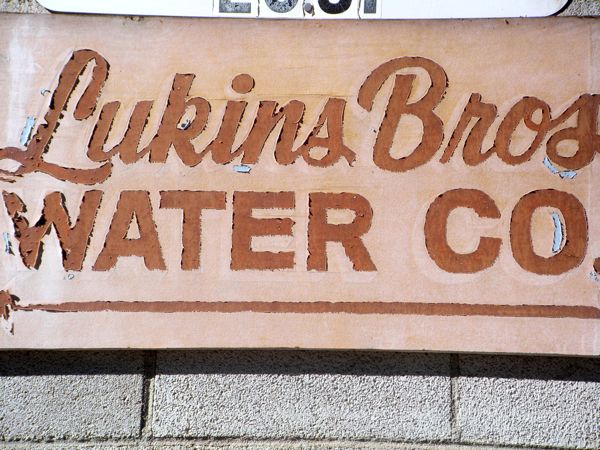
Water pressure has been restored to all Lukins Brothers Water Company customers, according to Danny Lukins. This is because the tie between his company and South Tahoe Public Utility District has been opened.

“We will pull the pump to see what happened,” he said in regards to finding a more permanent solution to the problem.

——————–

About 200 Lukins Brothers Water Company customers are not able to take a shower, run their dishwasher or do laundry because their water pressure has been drastically reduced since Saturday morning.

lukinsDanny Lukins, owner of the company, told Lake Tahoe News he was notified of the problem at 7:45am Sunday.

However, a customer in St. Francis Woods condos on Emerald Bay Road told Lake Tahoe News she has been contending with the water issue since late Saturday morning.

Lukins said the problem is the South Shore company lost its No. 1 pump station.

“I don’t know if it was an electrical surge. It ran for a minute this morning and then quit running,” Lukins said Sept. 4.

The pump is new; having been installed in June.

Besides having electricians come out to resolve the problem, Lukins is working with South Tahoe Public Utility District to have the valve that links the two systems be turned on. This could happen by 11 this morning. That would mean restoring full pressure for the customers along Emerald Bay Road.

— Kathryn Reed


USFS trying to be innovative to fund healthy forest projects

By Kathryn Reed

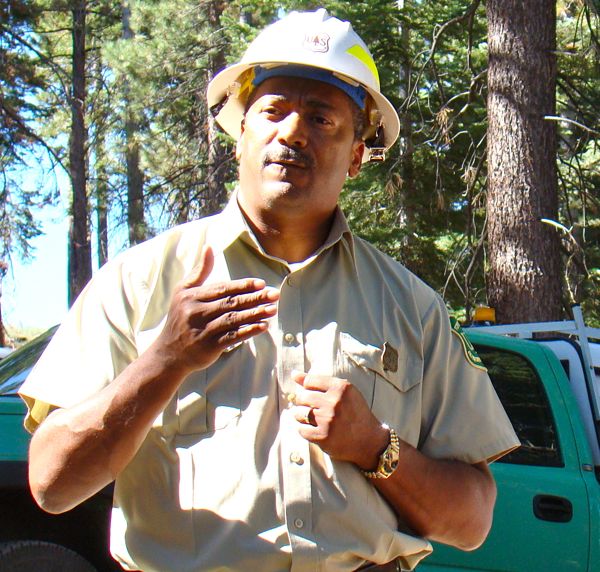
“The biggest threat to forest health is a catastrophic fire,” Randy Moore, U.S. Forest Service Pacific Southwest regional forester, said with remnants of the 2007 Angora Fire as a backdrop.

Moore was on the South Shore last week to promote the Veterans Green Corps program. He spoke with Lake Tahoe News a bit about the scarcity of funding sources for fuels reduction projects as well as the perceived diminishing concern for wildfires in the Lake Tahoe Basin.

Randy Moore

Randy Moore

In August he toured the Angora burn area with Sen. Dianne Feinstein, D-Calif., while both were in the basin for the annual Lake Tahoe Environmental Summit. While Feinstein at the summit mentioned the importance of continuing to keep forests healthy, it no longer resonates like when the 254 houses that were destroyed in June 2007 were still smoldering.

Moore said Feinstein is well aware of the need for money to keep forest projects going. But without reauthorization of the Lake Tahoe Restoration, it could be an uphill battle.

Even the fire chiefs in the Lake Tahoe Basin notice their cause is losing importance among those who control the purse strings.

Part of the problem is the purse is close to being empty and more interests – notably aquatic invasive species – are clamoring for the few dollars that are available.

Moore said he is asking Lake Tahoe Basin Management Unit Forest Supervisor Nancy Gibson to define, “What is life like after SNPLMA?”

SNPLMA – Southern Nevada Public Lands Management Act – has been the funding source for much of the work to create a healthier forest. Those dollars are about to run out.

Without fire coming through to naturally thin the forest, it has left the basin (and other forested areas) overcrowded and susceptible to a catastrophic wildfire. Flames jumping from crown-to-crown are near impossible to fight, whereas if a fire can be kept to the ground, it is easier to suppress.

The Forest Service owns about 80 percent of the land in the Lake Tahoe Basin. But the feds are not coming through with money to maintain it, instead the mantra is private interests need to cough up more dollars.

Still, Moore said his office is working on leveraging dollars and looking at opportunities.

He said $9.5 billion worth of water that is used in California communities comes off National Forest land, with another $16 billion worth of wood harvested from those lands. That is money other entities are making off water and lumber. It takes about $500 million to protect that property.

“When you look at large metropolitan areas, it’s in everyone’s interest to keep that landscape healthy,” Moore said.

What all that means and how the Forest Service may turn those resources into dollars remains to be seen. He doesn’t foresee his agency creating reservoirs to get into the water selling business.


BPA ban passes California state Senate

By Molly Hennessy-Fiske, Los Angeles Times

The California state Senate voted Tuesday to ban the plastic chemical bisphenol A, also known as BPA, from baby bottles and sippy cups sold statewide.

The Toxin-Free Infants and Toddlers Act (AB 1319) heads back to the state Assembly for a vote on Senate amendments later this year.

“(The) action by the Senate is further proof that the interests of California’s children can have a voice in Sacramento,” said Renee Sharp, head of the nonprofit Environmental Working Group’s California office.

Martha Dina Argüello, executive director of Physicians for Social Responsibility-Los Angeles, said Tuesday’s vote “is part of reasserting California’s leadership on environmental health protections.”

She said the measure was particularly important “since babies and children are most vulnerable to endocrine-disrupting chemicals” such as BPA.

Read the whole story


Study: Nevada’s rural roads not the safest place to be driving

By Anne Knowles, Nevada News Bureau

If you’re spending Labor Day weekend in rural Nevada, beware. Drivers are more than twice as likely to die in a car crash on a rural road than on other roads throughout the state.

In 2009, the fatality rate on Nevada’s rural roads was 2.33 deaths per 100 million vehicle miles traveled, compared to 0.98 deaths on other roads in the state, according to a report by TRIP, a Washington, D.C.-based group.

That statistic places Nevada 19th among all states. The state fared better than the nation as a whole, which had about three times as many fatalities on its rural roads.

The report, Rural Connections: Challenges and Opportunities in America’s Heartland, blamed several factors.

“Inadequate roadway safety design, longer emergency vehicle response times and the higher speeds traveled on rural roads compared to urban roads are factors in the higher traffic fatality rate found on rural, non-Interstate routes,” the report says.

Nationwide, head-on collisions occur more often on rural roads – 15 percent of multi-vehicle accidents versus 8 percent on other roads. Also, 34 percent of fatal crashes on rural roads involved cars or trucks leaving the road versus 21 percent on other roads. And vehicles attempting to negotiate curves on rural roads accounted for 23 percent of the accidents while curves were involved in about half that, or 12 percent, on other roads.

The report suggested improvements. Low-cost solutions include better signage and road markings, more lighting and guard rails, skid resistant surfaces and rumble strips along the center line and sides of roads. Moderate-cost improvements include adding turn lanes and median barriers, and higher-cost solutions cited are reducing the angle of curves, adding passing lanes or additional lanes and widening lanes.

According to the Nevada Department of Transportation, most fatal accidents on Nevada’s rural roads involve single vehicles running off the road.

“Problem in Nevada is we have very wide open spaces,” said Scott Magruder, public information officer for NDOT. “A lot of people fall asleep, or are on their cell phone, and they drift off the road.”

To help combat that, NDOT has installed centerline rumble strips – grooving on the road that alerts drivers when they have drifted – on about 2,000 miles of road over the last several years, said Magruder.

Many drivers in fatalities are not wearing seat belts, he says, so it’s also a matter of promoting safe driving rules.

“It’s the three E’s: enforcement, engineering and education,” said Magruder.

Magruder thinks a new law that bars phone texting while driving will help, too.

Nevada fared better in other report categories. Only 2 percent of Nevada’s rural roads were considered in poor condition while 26 percent were rated fair and 72 percent were judged to be good. At least one-fifth of the rural roads in a dozen states were deemed to be in poor condition.

Nevada also had one of the lowest numbers of fatalities with 73 deaths on rural roads and 243 on other roads for a total of 316 in 2009. Only nine other states and the District of Columbia had fewer road fatalities.


Charges in Broc’s Puppies case being reduced based on changes to law

Charges against Dennis Franks, one-time owner of the now closed Broc’s Puppies in South Lake Tahoe, will be reduced.

It was decided in El Dorado County Superior Court this week the new grand theft law affects all pending cases so some of the 65 felony accounts originally leveled against Franks will become petty theft charges.

El Dorado County Assistant District Attorney Hans Uthe told Lake Tahoe News he will be refiling charges next week, but on Friday did not know how many charges will be changed.

The limit for grand theft increased from $400 to $900.

“The number of forgery counts will not change since that is not dependant on the amount of loss,” Uthe said.

Franks faces 27 counts of forgery.

— Lake Tahoe News staff report


Cyclists to get some space on Nevada roads

By Lenita Powers, Reno Gazette-Journal

Heads up, motorists.

If you’re passing someone riding a bicycle, you’d better keep at least 3 feet away or — as of this Saturday — you’ll be breaking the law.

Senate Bill 248 is one of two revisions to state laws the 2011 Legislature approved to make the roadways safer for bicyclists. Under Assembly Bill 328, the second revision known as the Vulnerable Highway Users Bill, motorists found at fault in a collision with a bicyclist or a pedestrian can be charged with reckless driving and face harsher penalties.

Both laws go into effect Saturday.

Sgt. Jim Stegmaier of the Reno Police Department said the law that previously required motorists to pass bicyclists at a safe distance was too vague, but the new 3-feet requirement specifically defines it.

“Everyone pretty much knows that a yardstick is 3 feet, and that’s roughly what we will use to judge,” Stegmaier said. “It’s going to be an eyeballing type of measurement. We won’t get down to inches, but if motorists brush too close, we will cite them.”

He said the fuzzy wording of the original statute would have been harder to enforce, but the 3-feet rule provides a concrete distance.

Read the whole story


El Dorado County controller releases retiree benefit information

El Dorado County Auditor-Controller Joe Harn on Friday announced that the list of county retirees receiving retirement benefits greater than $100,000 per year is available on the county’s website.

The county’s unfunded obligation to its retirees has become a major problem, Harn said.

In 1999 and 2000, the Board of Supervisors changed its contract with CalPERS. The changes provided significant increase in retirement benefits to employees and dramatically increased the county’s unfunded obligation to CalPERS. The county’s unfunded obligation to CalPERS is $264 million, according to the latest actuarial report available.


Heat tape on pine needles cause of S. Tahoe structure fire

By Kathryn Reed

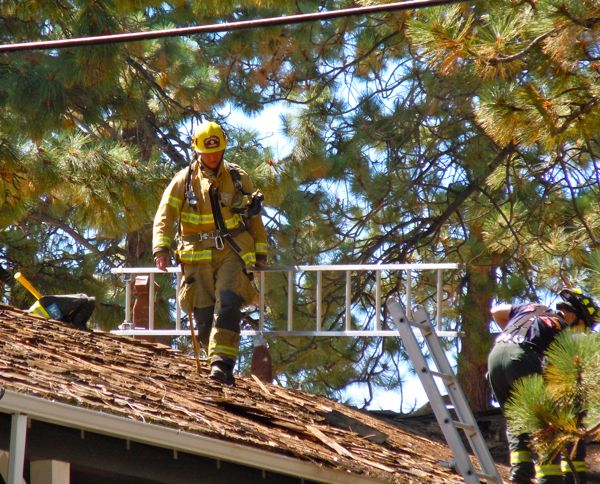
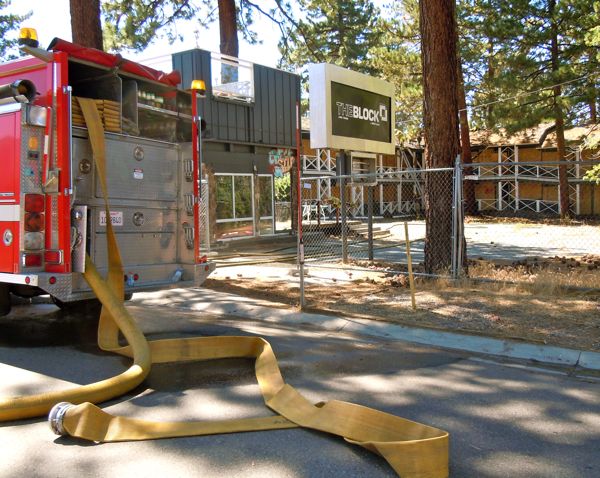
Heat tape combined with brittle pine needles on a shake roof are being blamed for a fire at The Block hotel in South Lake Tahoe this afternoon.

South Lake Tahoe and Tahoe-Douglas firefighters arrived at the boarded up hotel near Stateline about 1pm Friday to find flames and smoke billowing from the back left corner of the roof.

Tahoe-Douglas firefighter Chris Peterson works The Block fire on Sept. 2. Photos/Kathryn Reed

Tahoe-Douglas firefighter Chris Peterson works The Block fire on Sept. 2. Photos/Kathryn Reed

South Tahoe Fire Marshal Ray Zachau told Lake Tahoe News about one-fifth of the roof was damaged.

While little evidence of the fire could be seen an hour after the call, the smell of smoke lingered in the air.

Firefighters from both agencies were knocking out shingles Friday afternoon to make sure no embers were below the roof lining.

The Block has been in the news in recent months with Eneliko “Sean” Smith again ordered to pay the outstanding hotel tax on the property.

The Block and Cedar Lodge, both on Cedar Avenue, were once his. BMR Funding LLC in Pennsylvania owns The Block and First Credit Bank owns the Cedar Lodge in Los Angeles.

Zachau has been trying to reach both owners to discuss the possibility of allowing the city to use them as training tools. The idea would be to light them on fire to give firefighters practical experience as well as rid the area of blight.

“These things are a disaster waiting to happen,” Fire/Police Chief Brian Uhler said standing in front of The Block. “They are a nuisance to the community. We have homeless people routinely here. They climb in behind the plywood.”

He said with the command structure of the fire department changing as well as the few number of structure fires in the city it’s important to get firefighters practical training in terms of being in charge of a multiple engine response and putting out a fire.

Heat tape started pine needles on fire at The Block.

Heat tape started pine needles on fire at The Block.

As for the fire at The Block, the owners will be receiving a bill. For exactly how much has not been determined.

When Zachau was at the property late last year a sign was on the fence that the power was going to be turned off. Obviously it was turned back on. The city has the authority now to make sure Liberty Energy turns it off – primarily for safety reasons.


Millions of dollars from Burning Man pour into Nevada’s economy

By Ben Miller, Reno Gazette-Journal

Every year, a caravan made up of tens of thousands of people swarms the Reno area and heads north to create a small metropolis for a week with the Burning Man festival. But to suddenly create a city, its citizens need supplies — and the acquisition of supplies has a far-reaching and diverse effect on the economies of Reno, Sparks and other cities in Northern Nevada.

Mary Simmons, former chairwoman of the Reno Chamber of Commerce, said burners spend about $10 million in the area in the weeks before, during and after the event.

Brian Kulpin, spokesman for Reno-Tahoe International Airport, said the airport receives about 15,000 people from more than 30 countries for Burning Man.

“You realize how much they need out there in the desert for a week or 10 days, and they buy a lot of that in our community,” Simmons said.

The impact goes beyond the supplies burners purchase before they drive into the desert, she said.

Organizers donate to local entities as well. According to the Burning Man website, the group donated a 90-kilowatt solar array to Gerlach High School in 2007 that saves the school about $20,000 a year.

Another group that benefits from donations is the Reno Bike Project. Every year, Burning Man organizers pick up between 700 and 1,000 bikes off the playa after the event ends, said Noah Silverman, co-founder of the project. This year, they donated 500 of those bikes to the project so they could fix them up and sell them for cheap to burners on a budget.

“It’s basically our biggest fundraiser of the year,” Silverman said. “We expect to raise about $25,000.”

Read the whole story


Firefighters have handle on Yosemite area fire; all roads open

All roads leading to Yosemite National Park are open. Firefighters continue to battle the blaze that was started by a motor home a week ago.

The fire as of Thursday morning was 85 percent contained. It had charred 5,231 acres outside the park.

Full containment is expected this weekend.

— Lake Tahoe News staff report