Modern firefighters tackle more than flames

By NPR

Fires are on the decline nationwide, but that doesn’t make a firefighters job any easier. In fact, it may be harder now. Not only are fires more complicated these days, but the scope of firefighting has changed drastically and now includes fire prevention, public education, safety inspections and more than anything, emergency medical assistance.

“Seventy percent of our calls are medical calls,” probational firefighter Jeff Taylor tells weekends on All Things Considered guest host Laura Sullivan.

Taylor works at Station 4 in Alexandria, Va. The last time he saw a structural fire — one that affects a building or structure — was four months ago. That’s thanks to better building materials and codes, as well as public awareness. According to the National Fire Protection Association, there are half as many fires as there were 30 years ago.

But Taylor and the two dozen other firefighters at Station 4 are still saving lives. They’re just doing it on a gurney. Every one of them is an emergency medical technician.

In the early ’70s, the Alexandria Fire Department incorporated the rescue squad as part of the fire department medical services. It was the first paramedic program in the country.

Capt. Tony Washington, an 18-year firefighter, has seen the profession change and evolve. He acknowledges he may have missed fighting fires five or 10 years ago, but things have changed.

Read the whole story


Newly published audio tapes provide real-time view of 9/11 attacks

By Jim Dwyer, New York Times

For one instant on the morning of Sept. 11, an airliner that had vanished from all the tracking tools of modern aviation suddenly became visible in its final seconds to the people who had been trying to find it.

It was just after 9am, 16 minutes after a plane had hit the north tower of the World Trade Center, when a radio transmission came into the New York air traffic control radar center. “Hey, can you look out your window right now?” the caller said.

“Yeah,” the radar control manager said.

“Can you, can you see a guy at about 4,000 feet, about 5 east of the airport right now, looks like he’s —”

“Yeah, I see him,” the manager said.

“Do you see that guy, look, is he descending into the building also?” the caller asked.

“He’s descending really quick too, yeah,” the manager said. “Forty-five hundred right now, he just dropped 800 feet in like, like one, one sweep.”

“What kind of airplane is that, can you guys tell?”

“I don’t know, I’ll read it out in a minute,” the manager said.

There was no time to read it out.

In the background, people can be heard shouting: “Another one just hit the building. Wow. Another one just hit it hard. Another one just hit the World Trade.”

The manager spoke.

“The whole building just came apart,” he said.

That moment is part of a newly published chronicle of the civil and military aviation responses to the hijackings that originally had been prepared by investigators for the 9/11 Commission, but never completed or released.

Read the whole story


Motive in IHOP shooting remains mystery; families planning funerals

By Martha Bellisle, Reno Gazette-Journal

Eduardo Sencion was on medications for some sort of mental illness. He came from a close-knit family who lived in three houses in the Carson City area, and he went to high school in South Lake Tahoe.

But despite hours of interviews with Sencion’s family and searches of their homes, investigators have not determined why the 32-year-old took an assault weapon into a IHOP restaurant on Tuesday and fired randomly, killing five people, including himself.

“As of today, there was no precipitating factor or circumstance that we’re aware of,” Carson City Sheriff Ken Furlong said. “We’re looking for that precipitating event.”

“We’re not coming up with anything at this point in time.”

Sencion’s family have been cooperating with officials as they try to piece together his final days and hours before the deadly attack, Furlong said.

But they, too, remain baffled.

“They are as confused as everyone else,” Furlong said. “They, too, don’t understand.”

Sencion killed three members of the Nevada National Guard and one 67-year-old civilian during the Tuesday morning shooting rampage. Seven others were injured before Sencion fatally shot himself.

A private memorial service was scheduled for Sunday for Sgt. 1st Class Miranda McElhiney of Reno; Sgt. 1st Class Christian Riege of Carson City and Maj. Heath Kelly of Reno. The Guard said Thursday that Riege was posthumously promoted to master sergeant effective Tuesday.

Florence Donovan-Gunderson of South Lake Tahoe was also killed, while her husband, Wally, remains hospitalized.

Read the whole story


Education association gives most Nevada lawmakers a poor grade

By Anne Knowles, Nevada News Bureau

School just started and every Republican state lawmaker has already received a failing grade from Nevada’s teachers’ union.

The Nevada State Education Association has released its 2011 Legislative Report Card card and the 16 Assembly and 11 Senate Republicans all earned an F.

“Taking away educators’ rights is not education reform, it’s union-busting,” the report said. “You cannot have proper reform unless the proper funding is in accompaniment. In this regard, the 2011 Legislature came up woefully short.”

But the report didn’t spare either political party.

“NSEA believes this unfortunate outcome lies at the feet of the leadership in both parties, along with Governor Sandoval,” the report says.

Only one Democrat, Sen. John Lee, D-North Las Vegas, received a failing mark, while the rest of the members of the Senate Democratic caucus got A or B grades. But more than half the Assembly Democrats fared little better than their Republican colleagues, accumulating eight C and seven D grades.

Assemblywoman Debbie Smith, D-Sparks, for example, the speaker pro tem, who is known for her interest in education issues, received a D.

Smith was chairwoman of Assembly Ways and Means, where two major education bills, Assembly Bill 225 and AB579 originated. AB225 changed teacher probationary rules and supersedes collective bargaining, while AB579 funded K-12 education. Smith was also a primary sponsor on two other key bills: AB222, which created a leadership council to evaluate teacher performance, and AB229, a broad reform bill.

“I’m disappointed, of course,” Smith said. “My whole adult life I’ve worked as an advocate for K-12. I understand the teachers’ union has a job to do, to represent their members on jobs and benefits. But I’m comfortable with the packages we put forth.”

Republicans lawmakers were less concerned with the report.

“I’m not really as bothered by the failing grade for all the Republicans as I am by the failing grades in our schools,” said sate Sen. James Settelmeyer, R-Minden.

Settelmeyer said the Republicans were right to work to reform collective bargaining and get rid of the so-called “last in, first out” way of laying-off teachers that protected seniority regardless of performance.

“I think the report shows how out of touch with reality the association is with both the economic situation and the desires of both parents and students,” said state Sen. Ben Kieckhefer, R-Reno.

Kieckhefer said NSEA’s stand on legislation showed it cared more about protecting its adult members than students.

NSEA disagrees.

“Kids right now are going to school with fewer services and more kids in the classroom,” said Craig Stevens, director of government relations at NSEA. “If they were truly putting kids first, they wouldn’t have done what they did.”

The NSEA says the Legislature gutted the budget, cutting $300 million from the previous budget and forcing a 9 percent pay cut on school employees.

In addition, says Stevens, the Legislature did nothing to address the state’s budget deficit.

“To truly fix the funding problem we must fix the deficit. They’re going to walk into the next session with a billion dollar hole,” Stevens said. “At least the Democrats came out with a plan to try to fund the budget responsibly. The Republicans made no effort and sat there saying ‘no, no, no.'”

Assemblywoman Marilyn Kirkpatrick, D-North Las Vegas, said she thought lawmakers did the best they could on education measures in light of the challenges of balancing the state budget.

“In my mind, we are sent up to Carson City to make hard choices,” Kirkpatrick said. “And it could have been so much worse. If the taxes that were set to sunset had not been extended, I don’t know that I would have supported deeper cuts — but they were, so we found a way. And I think the reforms were fair.”

The Nevada Policy Research Institute, a conservative think tank based in Las Vegas, characterized the report as misleading, especially on funding issues.

Victor Joecks, communications director for NPRI, said the education budget was cut in a 2010 special session by several hundred million dollars so the budget passed in 2011 actually increased funding slightly.

“It’s a false narrative that flies in the face of reform,” Joecks said of the report.

Joecks said per pupil spending will increase from $5,192 last year to $5,263 this fall and $5,374 in 2012-13.

He also said the 9 percent cut in teacher pay cited in the report includes contributions teachers will now be making to their Public Employee Retirement System accounts. Previously, teachers did not contribute to their retirement accounts.



Judge gives developer more time to deal with bankrupt S. Tahoe project

By Kathryn Reed

The bankruptcy judge in the failed South Lake Tahoe convention center debacle has given would-be developer Randy Lane another month to come up with a plan.

Lane, who with partner John Serpa, was to develop the 11-acre site near Stateline under their business name Lake Tahoe Development Company, still wants to be a player in all of this. Rebar and a concrete foundation are as far as they got before funding ran out.

Still no movement on the South Tahoe hole near Stateline. Photo/LTN

Still no movement on the South Tahoe hole near Stateline. Photo/LTN

This week, Lane, using the company name Tahoe Property Consultants, told the court he wants 270 days to market, sell or otherwise dispose of the property as a single development project.

This is no different than what Lane has been trying to do since October 2009 when the project first entered bankruptcy.

Lane was not available for comment.

The judge gave him until Oct. 4 to come up with an amended plan. Those holding title to some of the parcels will then have a chance to weigh-in on whatever Lane proposes.


Budget cuts leave California with fewer hands to fight wildfires

By Peter Hecht, Sacramento Bee

Just north of Highway 180 in Fresno County, a wildfire in mid-June ate through thick grass, burning into oak woodlands and roaring up steep hills.

For firefighters, it appeared to be a routine event. Six engine teams, including five from Cal Fire and one from Fresno County, attacked from two sides. Firefighters carrying heavy, 300-foot hose extensions ascended the rocky terrain. They doubled back for additional hose, stretching their water lines and attempted to circle the fire before it leaped a ridge.

But, under state budget cuts, Cal Fire was battling the blaze with three firefighters per engine instead of the normal four-man crews used in the wildfire season. They couldn’t get water around the fire in time. It jumped the ridge and devoured the next canyon.

The incident on what one fire captain called “a standard wildfire” stoked fear over whether staffing cuts are affecting first-strike capabilities of firefighters to stave off severe wildland events.

“I really thought we could catch it,” Cal Fire Capt. Doug Freeman said. “Basically, with the fatigue factor (of using a three-man crew), we just couldn’t.”

Freeman summoned reinforcements as the blaze that he thought could have been kept to less than 10 acres spread to 133 acres and cost $300,000 to put out.

As California closed a gaping budget deficit this year with sweeping cuts to numerous agencies, it saved $34 million by cutting 750 seasonal Cal Fire firefighters. That means one less person per engine unit to haul thousands of feet of hose lines and share the exhausting physical rigors of battling wildfires.

In the Sacramento region, the cuts mean a total of 29 fewer Cal Fire firefighters in El Dorado and Amador counties and 44 fewer firefighters assigned to the Nevada, Yuba and Placer County region.

Read the whole story


Threat of dry lightning puts fire agencies on heightened alert

By Cathy Locke, Sacramento Bee

CalFire announced that it is increasing staffing in anticipation of dry lightning and strong winds throughout the northeastern part of the state.

Beginning this evening, an upper-level low will approach the California Coast, drawing in monsoonal moisture, which is predicted to trigger dry lightning throughout northeastern California, including Lassen, Modoc, Siskiyou and Shasta counties, according to a CalFire news release. The agency is moving fire engines and resources into areas that are expected to see increased fire danger.

As the low moves into Nevada on Thursday, winds will shift to the northeast, creating breezy and dry conditions Thursday night and into Friday in many parts of Northern California, including areas where dry lightning is predicted to hit, officials said.

Read the whole story


Amazon persuades California lawmakers to delay tax collection

By Kevin Yamamura and Dan Smith, Sacramento Bee

In a deal with state lawmakers and brick-and-mortar stores, Amazon tentatively agreed Wednesday to stop fighting a requirement that Internet retailers collect sales tax on California purchases.

Under the handshake deal, Amazon won a delay until at least September 2012 but will eventually collect state sales taxes.

The arrangement could lay the groundwork for a national online sales tax law. Amazon and major brick-and-mortar retailers like Wal-Mart and Barnes & Noble agreed to lobby Washington over the next 11 months for an Internet sales tax law that applies across 50 states.

“Basically, Amazon will get a safe harbor to lobby Congress and the retailers will go hand in hand with them to adopt a law that will apply to all of the states,” said Assemblyman Charles Calderon, D-Whittier.

If no federal deal emerges by July 31, 2012, Amazon would have to begin collecting California sales taxes starting on Sept. 15, 2012.

Read the whole story


Law enforcement putting together pieces of life of STHS grad who turned killer

By Reno Gazette-Journal

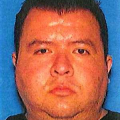
As Nevada’s capital city tries to come to grips with a deadly shooting attack, investigators Thursday turned their attention to the gunman described as quiet and friendly but who had a troubled past with mental health issues that required medication.

“We are concentrating on the details of his life, which will include his medical records,” Carson City Sheriff Kenny Furlong told The Associated Press.

Eduardo Sencion

Eduardo Sencion

Eduardo Sencion, 32, took his own life Tuesday after gunning down 11 people inside an IHOP restaurant, killing four including three uniformed Nevada National Guard members.

“Right now we are building a profile around him. Who is he?” Furlong said.

“Yes, he was on medications. He’s been on medication for a long period of his life. And he was considered to be doing fine.”

“We know that he did not dislike the military and at some point had considered joining,” Furlong said.

Furlong didn’t know if Sencion ever tried to enlist but said his mental health history likely would have precluded his acceptance into the military of his adopted country.

Joe Laub, an attorney who has helped the family with legal concerns in the past, said the Sencions were devastated over the rampage.

“It’s almost as if he was a normal person who had a major psychological defect that was triggered by something,” Laub said.

Sencion, the youngest of four brothers, was born in Mexico but was a legal U.S. resident and had a passport, authorities said.

He had at least one previous encounter with the law. He was taken into protective custody by South Lake Tahoe police during a mental health commitment in April 2000. He fought with officers during the incident but was not charged.

Records show Sencion attended South Tahoe High School, graduating in 1997.

Read the whole story


Barton part of consortium awarded $350,000

Access El Dorado, or ACCEL, a countywide community collaborative, received the Model eHealth Communities’ award from UC Davis Health System and the California Telehealth Network. The $350,000 award is part of more than $5 million in funds supporting 15 community groups across California and is designed to assist communities in becoming best-practice examples in the use and integration of technology to improve healthcare for local residents.

The award will provide funding for eHealth technologies, telehealth equipment, specialized community-based training and management to help El Dorado County healthcare facilities connect to and use a new, off Internet, broadband system now being implemented by CTN.

Barton Health, which has supported the efforts of ACCEL for several years, will be a lead agency partner for El Dorado County in the CTN program. Barton has invested in the information technology infrastructure and started providing telehealth services early through its community clinic.

El Dorado’s ACCEL will be implementing diverse eHealth applications such as remote specialty and critical care consultations between local health providers and specialists affiliated with academic medical centers; health education for consumers and continuing education for health care professionals, as well as healthcare workforce development programs. These initiatives will provide benefits beyond the 15 community groups who were awarded.

ACCEL is a partnership between El Dorado County Health Services Department, Barton Health (with affiliated medical providers and rural clinic), Marshall Medical Center (with affiliated medical providers and rural clinic), El Dorado County Community Health Center, Shingle Springs Tribal Health Program and Western Sierra Medical Center.