Ties that bind Nevada-China continue to grow stronger

By Karoun Demirjian, Las Vegas Sun

In the early 1860s, in the newly named territory of Nevada, settlers had a problem. Gold and silver had just been discovered in the mountains, but there was no easy way to transport it out, or to get workers from the California-based mining industry in. The solution would come from China.

Chinese immigrants made up 90 percent of the workforce that built the Central-Pacific Railroad, which lifted early Nevada from intermountain oblivion by connecting it to the rest of the country. In the 20 years after construction commenced, the state’s population grew tenfold.

Now, 150 years later, Nevada is once again turning to China again to pull its economy out of a protracted recession, which economists predict, absent some prodding, could hobble the state for the next two decades.

This time, it’s going to take more than a railroad (though high-speed rail is one piece of the hoped-for fix). Nevada’s economic situation will require a long-term solution encompassing mines, casinos, a fledgling export market and energy.

Nevada, we keep hearing from lawmakers and lobbyists, has a lot of potential in all those areas. But China has the one thing neither Nevada nor the US government has to develop that potential: Cash.

After years of growth in America’s appetite for Chinese imports, China holds the biggest share of US government debt among foreign entities, about $1.2 trillion. In recent months, the tide has been shifting. Although China still sends out more than it brings in, its demand for imports is surging—as much as 30 percent in one month this summer—and some US states are seeing opportunities in China’s new willingness to spend.

For Nevada, China’s growing consumer culture is helping keep the state afloat in the short term by sustaining gaming and tourism. In the long term, state officials are counting on China’s emerging entrepreneurship to provide investment for Nevada to modernize and diversify its economy.

But just as it was a century and a half ago, the road to a prosperous partnership is paved with potential political pitfalls.

Chinese immigrants who came to Nevada in the 1860s were lured by the promise of steady employment and a territorial charter that was relatively friendly to foreigners, allowing them to own land and mining claims. But they endured discriminatory pay and fierce racism.

Once the railroad-building boom was over, many left. Chinese made up almost nine percent of Nevada’s population in 1880, but by 1950 their numbers dwindled to 241. And although the local Chinese community is enjoying another surge these days, it still less than one percent of the population.

Today, anti-China sentiment is driven more by economic realities than racism, but the attitude still stems from a perceived threat: That cooperation with the Chinese will lead to the economic undoing of the United States. Outsourcing—causing the American economy to hemorrhage more jobs—is the chief fear, and one that politicians of all stripes have stoked.

There are other barriers too. China has not been responsive to American demands to improve its record on human rights, especially in Tibet. Piracy is a huge problem in parts of China, especially for high-tech businesses that rely on patents and respect for intellectual property. China also exploits its trade advantage through currency manipulation to keep Chinese products cheap. Democrats are now advocating tariffs, and Republicans are calling for China to be eliminated from global free trade zones.

It creates a dilemma for the Silver State and its economy: Should we back off until the political dust clears, or grasp a fleeting economic opportunity in an effort to get on the leading edge of Chinese investment. In reality, the state may not have many other options. Nevada’s critical casinos-and-tourism sector has lagged the country in recovering from the Great Recession. Meanwhile, a fiscal crisis in Washington means federal funding for new economic ventures, especially in renewable energy, could dry up in a matter of weeks. That’s incentive to cross the political picket line: The faster Nevada gets ahead of the curve in building an alliance with China, the better the state’s prospects of attracting investment. Nevada, after all, has the advantage of a long-established relationship with China, born in betting rooms more than a decade ago.
Read the whole story


Small group owns 40% of Incline’s lakefront property

By Yun Long, Reno Gazette-Journal

Of the 105 Incline Village lots that border Lake Tahoe, 40, or nearly 40 percent of available property, are controlled by just 15 owners.

Billionaires and millionaires have flocked to Lake Tahoe to build estates for decades. But the recession has presented additional opportunities for those who long to build a private, mega-compound at the lake.

“If you find the location that you love and that you are really drawn to, you might or might not have the opportunity to expand on that land,” said Kerry Donovan, a Chase International broker. “Many want to expand their privacy, and more people want more acreage — not less.”

Most Lake Tahoe parcels already have buildings on them. Some luxury homebuyers tear down existing structures and build an estate that suits their taste.

“It’s a lot easier to start from scratch sometimes,” Donovan said.

Those with the means have long been acquiring Lake Tahoe property to build compounds and dream homes. In 1987, businessman Warren Trepp bought seven homes and then proceeded to razed them to build a 8,000-square foot residence. Junk-bond king Michael Milken, casino mogul Steven Wynn and many from Silicon Valley such as PeopleSoft Inc. chief David Duffield and Oracle CEO Larry Ellison followed.

Even with the housing market going bust in Nevada, Incline-Crystal Bay’s 89451 zip code still made Forbes’ 2010 list of the most expensive ZIP codes in the U.S. At No. 389, it was the only Nevada entry on the list.

Donovan said the high-net worth individuals are drawn to Nevada for its tax advantages, the potential to move or headquarter a company here and because they want to own an enjoyable asset.

“This is where they want to be,” she said.

Incline Village’s lakefront properties now are listed from $2.9 million to $49.9 million and a half-acre can be valued from $7.5 million to $9 million, depending on market conditions, according to Chase. Having private piers and buoys adds to the value.

Read the whole story


CTC acquires land it wants to eventually swap with S. Tahoe

By Kathryn Reed

A long dormant piece of land between Fantasy Inn and IHOP in South Lake Tahoe may have a chance of being developed even though the California Tahoe Conservancy now owns it.

This is one of three parcels the CTC board agreed to purchase for a total of $437,500. The other lots are in Tahoe City and Kings Beach and come under the environmentally sensitive lands designation. The South Tahoe parcel, which is a half-acre, was purchased under the land coverage program.

That parcel alone cost $375,000.

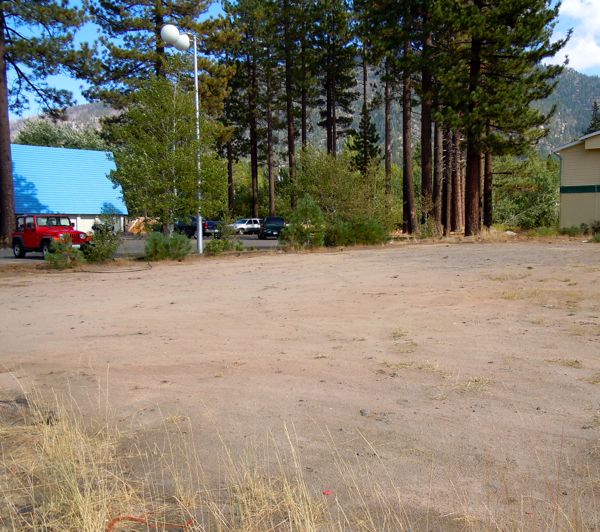
CTC bought this property next to IHOP with the intention of the city of South Lake Tahoe trading for it. Photo/LTN

CTC bought this property next to IHOP with the intention of the city of South Lake Tahoe trading for it. Photo/LTN

CTC Deputy Director Ray Lacey told the board at the meeting last week that the value of the marketable rights exceeds the value of the land. The property comes with 22,450-square-feet of coverage and 1,158-square-feet of commercial floor area.

The owners of the Fantasy Inn lost the dirt lot this summer. A private individual trust acquired it in foreclosure. There was a time when it was valued at $1 million.

While the CTC owns it, the city of South Lake Tahoe is likely to eventually own it in a trade with the state agency.

Lacey said that is why the Conservancy bought what would normally be deemed an unusual parcel for its inventory. The worry was someone else could have purchased the land and sold off the development rights, leaving this parcel vacant and forever a dust bowl.

With it being in the commercial corridor of Highway 50, the thinking is this is where development should go. At one time a Unocal gas station was on the property. The tanks were taken out in 1994.

The CTC staff report says, “The purchase of this property presents an opportunity to further the city’s redevelopment plans through the exchange of the subject property for approximately 8.2 acres owned by the city on Glenwood Way.”

That city property is where the old drive-in was.

Any exchange of property would need to be approved by the CTC board and City Council.


Ice rink operators want Tahoe facility to be a destination

By Kathryn Reed

Saturday marks one full month since South Lake Tahoe turned the ice rink keys over to private operators.

The most noticeable difference walking in is the retail shop on the right is not there. Instead, those goods are being moved to the left of the front doors, with office space being taken out. More of the core offices are by the front counter.

“We want the whole building to flow better and for there to be more things to do while people are here,” explained Van Oleson, who with Chris Cefalu are the owners of the privately held Tahoe Sports Entertainment, the operators of the rink.

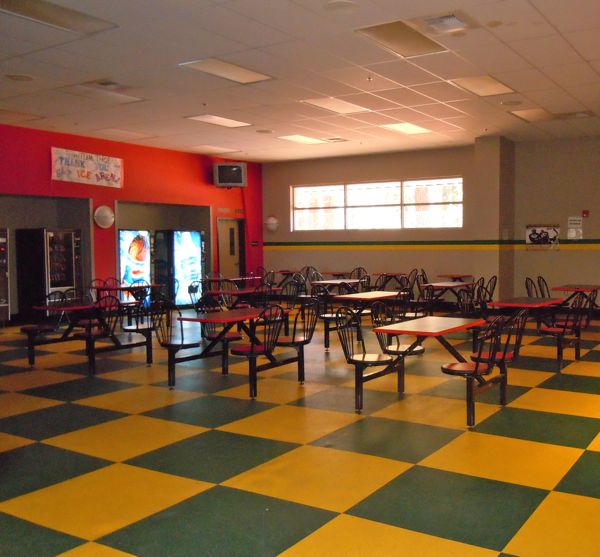
Operators of the South Lake Tahoe ice rink are making changes. Photo/LTN

Operators of the South Lake Tahoe ice rink are making changes. Photo/LTN

They have a range of plans for the sheet of ice – but want to implement them in a strategic manner. While ultimately making money is the goal, providing the right mix of programs with superb customer service top the to-do list.

However, cleaning and organizing things have taken up more time than anticipated.

“This place was just absolutely cluttered,” Oleson said while sitting in his office at the rink.

Working on the feasibility of plans and developing a time line to implement the changes are in the works. More concrete plans should be forthcoming later this year. TSE is still working on its website.

What used to be the retail shop is being turned into a café. The rinks’ operators have made the center an Internet hot spot so people needing to get some work done or just wanting to be online can do so.

Cameras that will be installed in the arena will allow those in the café to see what is going on. Those televisions will also broadcast NHL and other sports programs. Once the license is secure, beer and wine will be sold at the café.

“We hope the effect is a coffee house atmosphere,” Oleson said. He admits, though, that after the men’s leagues, the noise level in the café is bound to escalate.

But the whole goal is with the café upfront it will attract more people.

Vending machines in the back where the “old” café is are likely to be eliminated.

That whole area could be opened up – possibly turning it into an exercise room with free weights, machines or even a Pilates studio.

While changing the look and adding things to the facility are happening, the management team is keenly aware of the need to focus on the ice.

Cefalu said things have been streamlined, with the cost of some leagues being lowered to be more affordable. The goal is to build up the number of people using the arena.

“We want to do more so kids come in. It’s very underused by kids,” Cefalu said.

While the city had a partnership with Lake Tahoe Unified School District for third-graders to learn to skate, Cefalu and Oleson want more than just that age group.

Part of their approach is getting the word out the city has a rink, put a Tahoe identity behind the rink and ultimately make it a destination for people beyond the basin.

Oleson said that while Lake Tahoe is known for winter sports athletes, they are on the slopes, not the ice. He wants to change that.

“We just hosted the founder of the largest international hockey camp to discuss a lot of possibilities with the rink,” Oleson said. “We are working with a former NHL player to create a destination event. We are working with figure skating for events.”

Already the rink has secured the Pee Wee tournament for February. This could fill a couple hundred room nights on the South Shore.

If the Tahoe-Reno area is awarded the 2022 Winter Olympics, as some hope will happen, the ice rink owners want their ice to be used as a training or practice facility.

Cefalu also said discussions have begun with Lake Tahoe Community College to integrate the two entities.

To go forward completely with their plans, Oleson and Cefalu need the recreation JPA board to amend the bond structure of Measure S because private entities cannot make money from tax-exempt bonds. No meeting is on the books to make this happen.

The city chose to seek a private operator of the rink because it had been losing about $100,000 a year for a few years on the 9-year-old facility. Tahoe Sports and Entertainment is paying the city $2,000 a month in rent for the first year; $3,000 month after that. Beginning Oct. 1, 2012, 3 percent of gross revenue above $600,000 will be the city’s; 4 percent the next year; with it capping at 5 percent starting Oct. 1, 2014.


Firefighters quick to tame Carson City blaze

By Reno Gazette-Journal

The 15-acre Goni Fire burning on BLM land in the hills north of Carson City is burning in moderate brush and should be controlled soon, a Carson City Fire Department official said.

Carson City and BLM crews have six brush engines on the fire, said Carson City Fire Battalion Chief Eric Bero. There are also two single-engine air tankers and two helicopters battling the blaze.

“I’ve been watching the smoke decrease significantly and hearing less and less radio traffic over the past hour, so it looks like it will be taken care of today,” Bero said.

No structures are threatened and no injuries have been reported.

The cause of the fire remains under investigation.

Read the whole story


Pilot seriously injured in crash at Truckee airport

By Reno Gazette-Journal

A pilot appears to have serious injuries after a crash this morning at Truckee Tahoee Airport, according to Kevin Bumen, director of aviation at the airport.

It was only the pilot on board the aircraft. The Piper Aztec burst into flames as he was getting out of the aircraft. Bumen said it’s not immediately clear if the pilot suffered any injuries from the flames.

It took crews about 10 minutes to 15 minutes to extinguish the flames, Bumen said.

The pilot filed no flight plan so it’s not immediately clear where the airplane came from or where it was headed.

The Federal Aviation Administration is on their way to investigate the crash.

Read the whole story


Glimmer of optimism in California’s economic situation

By David Siders, Sacramento Bee

Wall Street, which has long frowned on California and its budget grief, cracked a smile Tuesday.

In its first sale of general obligation bonds since the passage of a rare, on-time state spending plan, California will pay tens of millions of dollars less in interest than it did last fall.

The lower rates on the $2.4 billion bond sale, completed Tuesday to restructure existing state debt, reflect general market conditions, but also improving investor confidence in a state where the high cost of borrowing was once a benchmark of its precarious financial condition.

Just two years ago, credit rating agencies were downgrading California’s long-term bond rating, squeamish about political standstill in Sacramento and the state’s use of IOUs to pay bills. The fiscal landscape was so grim that at one point the state couldn’t sell bonds and had to halt projects already under way.

“There’s a sense that this is structurally a sounder budget than we’ve seen over the years,” said Gary Schlossberg, a senior economist at Wells Capital Management. “There’s a lot more discipline there.”

Read the whole story


Seasonal dog ban intact for Upper Truckee Marsh

By Kathryn Reed

Dogs are allowed in the Upper Truckee Marsh area – for now.

Unless the California Tahoe Conservancy board suspends the summer seasonal ban, it will remain in effect indefinitely. For now, that appears to be what will happen.

Blame it on locals.

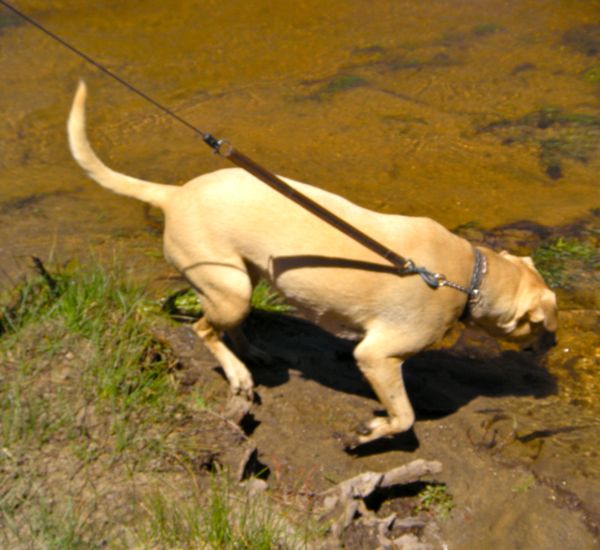
Dogs like AJ are allowed in the Upper Truckee Marsh area if on leash. Photo/LTN file

Dogs like AJ are allowed in the Upper Truckee Marsh area if on leash. Photo/LTN file

“Eighty-five percent of citations and warnings issued by law enforcement were issued to local residents, with local being defined as a resident in the South Lake Tahoe-Stateline area,” Dana Dapolito, associate environmental planner with the CTC, told the board last week.

The Conservancy owns the 311 acres in South Lake Tahoe. Trout Creek, which flows into Lake Tahoe, runs through the property. This is prime habitat for wildlife, mainly birds.

Dogs off-leash are the problem. They ruin habitat, destroy nests, kill birds and stress out the birds. To protect the area, the CTC board in July 2010 approved the temporary dog ban from May 1-July 31.

While this has caused much controversy with people in the Al Tahoe neighborhood and others who access the land, no one from the public spoke at the meeting.

With winter lingering into June this year, about six weeks of data was collected. In that time period, El Dorado County sheriff’s deputies issued 86 warnings or citations and the county’s Animal Control officers handed out 21 citations.

Even though dogs are now allowed to be on the property, all must be on leash. That is not happening, according to Dapolito.

She told the board that in August the agency’s land stewards said 75 percent of dog walkers were complying with the law, with locals accounting for nearly 100 percent of those violating the rule.

The Conservancy wants multiple years of data on avian counts in the marsh and to study shorebirds to know if fewer (ideally no) dogs in the habitat area help the birds. About three years is also the time period law enforcement says it takes to change human behavior – as in following the rules or going elsewhere.

This was an informational item for the board, with no action proposed.


Mixed bag for LTUSD on mandated standardized tests

By Kathryn Reed

Students in Bijou Community School’s Two-Way Immersion Program scored substantially better on standardized tests than their peers. And they were taking it in Spanish.

In grades 2 and 3 the immersion program has 90 percent of the curriculum delivered in Spanish. Half of the 20 students in each class speak Spanish as their primary language, the other half speak English as their primary language. Kids are chosen by lottery, as opposed to hand picked.

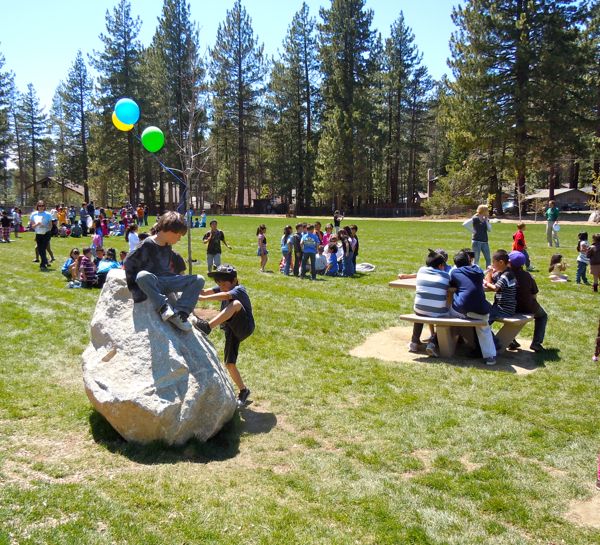
Bijou's TWI students test higher than the rest of the school. Photo/LTN file

Bijou's TWI students test higher than their peers. Photo/LTN file

When it comes to the Academic Performance Index, or API, scores show the TWI kids scoring at a 48 proficiency level in English language arts compared to the other second- and third-grade classes at 19 percent. In math, the scores are 73 and 44 percent, respectively. This chart illustrates those results.

With Bijou having a predominately Hispanic student population, the number of English learners is more pronounced here compared to the other elementary schools. However, even South Tahoe High School has just more than a quarter of its students considered English learners – aka, those who have learned English as a second language.

The statistic that is unknown is how the non-TWI students who speak Spanish as their first language would do on the tests if they were given in Spanish. That might better test comprehension of the subject; while current results may only be showing they lack an understanding of the language.

But state tests don’t dig that deep. Instead, all of this testing – still part of President George W. Bush’s legacy of No Child Left Behind and President Obama’s Race to the Top – calls for all students to be at the proficient or higher level by 2013-14.

It’s a goal most educators say was never nor will ever be attainable. The magic number to hit is 800.

“I like assessments to tell me how a kid learns so I can reinforce and re-teach so they are engaged and excited about learning,” Lake Tahoe Unified School District Superintendent Jim Tarwater said. “This is their one ticket. If they lose this ticket, it is tough finding a job.”

LTUSD, still considered a program improvement district, has implemented policies to follow students so individualized growth or lack of growth is monitored. This contradicts the state and feds which compare one third grade class to the next and so on – making test scores about the grade level and not the particular class or student.

“Some schools, if students do well, they will change your grade. To me that means this test controls everything. I think you should learn more than a test,” Tarwater said.

The latest results compared to the previous year:

• Bijou: 2010 — 718; 2011 – 701 = decrease of 17

• Environmental Magnet: 2010 — 939; 2011 – 935 = decrease of 4

• Tahoe Valley: 2010 – 788; 2011 — 808 = increase of 20

• Sierra House: 2010 – 813; 2011 – 826 = increase of 13

• South Tahoe Middle: 2010 — 792; 2011 – 778 = decrease of 14

• South Tahoe High: 2010 – 758; 2011 – 755 = decrease of 3.

“We want growth, but not everyone is going to be in top 5 percent,” Tarwater said. “Overall, we are teaching the standards and hopefully teaching more than that.”

A report is expected to be made to the school board at the Oct. 11 6pm meeting.


S. Tahoe moves ahead with staffing changes without budget

Even though South Lake Tahoe has not approved a budget for 2011-12, which means jobs have not definitively been axed, officials are going forward with finding replacements for people.

sltOn CareerBuilder.com the listing posted Sept. 19 is for temporary snow removal operators who would make between $15.15 and $21.07 an hour

Temporary snowplow operators are expected to go from seven to 15. City Manger Tony O’Rourke at the Sept. 15 budget meeting said this will provide for an initial savings of $256,000 a year, with long-term benefits of a half million dollars a year.

The next budget meeting is Sept. 27 at 6pm. The document is expect to be approved that night because the fiscal year begins Oct. 1.

— Lake Tahoe News staff report