Carson City IHOP shooter fired 60 rounds from fully automatic rifle

By Martha Bellisle, Reno Gazette-Journal

The mentally ill man who opened fire at a Carson City IHOP restaurant, killing four and then himself, shot 60 rounds from a Norinco Mak 90 assault weapon that had been purchased by a private party in California more than five years ago, officials said today.

The Mak 90, a Chinese-made modified version of the Russian-made AK-47, had been altered to function as an automatic weapon, said Carson City Sheriff Ken Furlong in a statement released early today. The details on the weapon followed a monthlong investigation by the Bureau of Alcohol, Tobacco, Firearms and Explosives.

“The alteration was described by ATF as professionally gunsmithed by an unknown person,” Furlong said in the statement. “The possession of this weapon in its manufactured state (semi-automatic) is not prohibited by Nevada State Law.”

Eduardo Sencion walked into the IHOP on the morning of Sept. 6 and fired apparently randomly at customers, killing three Nevada National Guardsmen and a South Lake Tahoe woman. He had a history of mental illness – his family said he was diagnosed with schizophrenia — and had been taken into custody by the South Lake Tahoe police in 2000 under California’s involuntary commitment law.

Read the whole story


South Lake Tahoe passes sign ordinance on 3-2 vote

By Kathryn Reed

Unable to compromise, Tom Davis and Bruce Grego voted against the latest version of South Lake Tahoe’s sign ordinance.

Still, it passed with a 3-2 vote. This was the first reading, with the second likely to be at the Oct. 18 meeting. Then it becomes the law 30 days later.

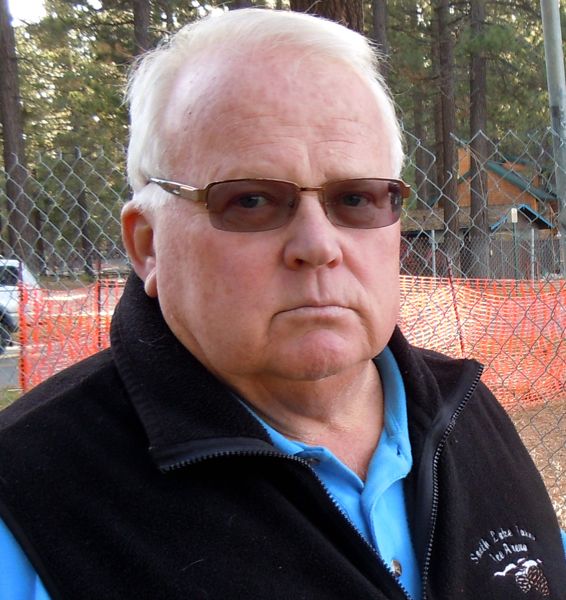
Tom Davis wants a broad sign ordinance -- a change from seven years ago. Photo/LTN

Tom Davis wants a broad sign ordinance -- a change from seven years ago. Photo/LTN

One of Davis’ issues is wanting any color of decorative lights, not just white or blue as had been proposed. To this, his colleagues agreed.

What the majority would not agree to were allowing sandwich board signs to be used anytime and for the council to hear appeals instead of planning commissioners. Those were sticking points for Davis and Grego.

Davis hasn’t always had this free spirit about signs.

In April 2004 when he was on the City Council he said, “I’m trying to strike a balance, but we don’t want it to look like little Tijuana.”

On Oct. 4 he said, “I believe in free enterprise all the way. I want to give businesses as many advantages as possible.”

While much of the discussion this year during the laborious sign discussions has been about how difficult the economy is now and that businesses should be allowed to do what they can to attract customers, this same argument has been made for years.

In April 2004 when the economy was humming on the South Shore, Hal Cole made that same desperate argument. At a meeting seven plus years ago he said, “I want to visually upgrade our corridor. But on the other hand, I know how tough proprietors have it to make a living in this town.”

With the Tahoe Regional Planning Agency having sign regulations on the books since 1998, the city and five counties in the basin must abide by it or create stricter rules. South Tahoe has been going back and forth, with each council coming up with its own version and enforcement never existing.

While staff says enforcement is coming – that’s always been said.

This is not the first time Grego has been on his soapbox about the council needing to have the last word. Councilwomen Claire Fortier and Angela Swanson along with Cole said the planning commissioners are more than capable of ruling on whether a business is complying with the sign ordinance.

Grego tried to do a bit of horse-trading with his colleagues to get what he wanted, but the three stuck by their convictions. Grego said he really wanted a 5-0 vote. The majority said they were good with the motion as presented that eventually passed.

In other action:

• Grego asked for an item to be put on a future agenda to discuss taxing Heavenly Mountain Resort. Cole said he’d agree to a broader discussion about the cost analysis of having Heavenly and other businesses pay for their share of fire costs and wear-and-tear to roads. Eventually, it was decided to have the Fiscal Sustainability Committee, which has yet to be tasked with any homework, to look into the issue. This group next meets in three weeks.


South Tahoe making progress with employee groups

By Kathryn Reed

Instead of having a special budget meeting, the South Lake Tahoe City Council is set to vote on the 2011-12 financial document Oct. 18 at 2pm.

sltThis is the same day as the next regular council meeting that will start at 9am at Lake Tahoe Airport. The budget discussion is time certain.

Negotiations are ongoing with the various employee groups. The council discussed the matter in closed session Oct. 4 with no reportable action.

However, the proposed budget as last made public did not have the three fire division chiefs in it. Their severance, according to Lake Tahoe News sources, is still being negotiated.

The fire union, which is everyone below the rank of division chief, could have a signed deal this week.

One reason the budget hearing was pushed back a week is the General-Public Works group and city staff are having a pre-mediation meeting Thursday. That means mediation could not have happened in time to accommodate the previously scheduled Oct. 11 budget hearing.

The non-represented management and non-represented confidential employees’ agreement was pulled from the Oct. 4 consent agenda by Councilwoman Angela Swanson.

“I’m not comfortable putting something like this on consent,” Swanson said.

This is the first group of employees to pay their full contribution to PERS. Their furlough days have been eliminated, no raises are part of the deal, and the city manager does not get any bonus for this deal or any forthcoming budget agreements.

In other action:

• City Manager Tony O’Rourke’s evaluation was pushed back to November. After Tuesday’s meeting he told Lake Tahoe News because there is no raise forthcoming and there are other pressing matters for the council to deal with, he is fine with the delay. He also said he is content with his original three-year contract and does not want to change it.

• The property on Stateline Avenue that was on closed session was about the possibility of the city acquiring it for a park. The city doesn’t have the $4.1 million to purchase the lakefront land, plus it is already in escrow, according to officials. But the city would like more property for parks if the right opportunity presents itself. This property was at one time owned by Falcon Capital — Randy Lane’s company.


N.Y. lake putting deep freeze on Asian clams

By Scott Rapp, Post-Standard

Cayuga County has a chilling plan to kill the swelling population of Asian clams at the north end of Owasco Lake.

The county is planning to freeze the critters to death by lowering the winter lake level by one more foot than usual to 709 feet above sea level in November.

Dropping the lake level an extra foot is expected to kill an estimated 90 percent of the tiny mollusks, an invasive species that could wreak environmental and recreational havoc on the lake if left unchecked.

Tens of thousands of the clams are living mostly in sandy-bottomed water less than six feet deep in an area that encompasses about 123 acres at the north end of the lake, according to a recent study. Initially, officials estimated the clams, first spotted in the lake a year ago, had invaded about 15 to 25 acres near Emerson Park.

The clams are tiny but can cause big problems, like those being seen in Lake George and Lake Tahoe. Asian clams can trigger toxic blue-green algae blooms, which can ruin boating and swimming, and can make people sick and cause animals to die. Also, the clams can clog water intake pipes and befoul water quality.

Read the whole story


Placer County working on planning documents for Tahoe basin

Placer County will have a town hall meeting in Kings Beach on Oct. 25 to kick off the process for updating its long-range plans for North Lake Tahoe.

The meeting starts at 6pm at the North Tahoe Event Center, 8318 North Lake Blvd., Kings Beach.

Placer County has nine community plans for the Tahoe basin. Most are joint planning documents developed about 20 years ago by the county and the Tahoe Regional Planning Agency.

TRPA is in the process of updating its Regional Plan, and all community plans within the Lake Tahoe Basin must be consistent with that plan.

Placer County intends to consolidate the nine plans into a single policy document with four planning areas. Each planning area will have its own distinct zoning ordinance and community-specific design guideline standards.

The planning areas are:

* North Tahoe east, which covers Kings Beach and the state line community;

* Greater Tahoe City, which includes Tahoe City, Tahoe City Gateway, Lake Forest, and Dollar Hill;

* North Tahoe west, including Carnelian Bay and Tahoe Vista; and

* West Shore, which includes Sunnyside, Homewood and Tahoma.

The county’s update process involves the Placer County Community Development Resource Agency, Placer County Redevelopment Agency and TRPA.

For more information about the town hall meeting and community plan update process, contact Supervising Planner Crystal Jacobsen at (530) 745.3085 or cjacobse@placer.ca.gov.


Fallen Leaf Lake trying hard to keep out AIS

By Kathryn Reed

Not everyone at Fallen Leaf Lake believes enough is being done to keep out aquatic invasive species.

This South Shore lake has no invasive species and residents want to keep it that way. But with Lake Tahoe just a mile away, that could be difficult. The much larger lake is home to unwanted plant life such as milfoil and animals like Asian clams.

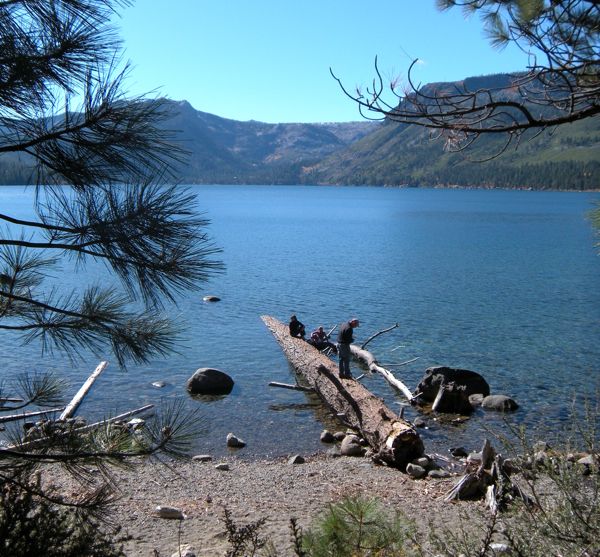
Fallen Leaf Lake wants to remain uncontaminated of aquatic invasive species. Photo/LTN file

Fallen Leaf Lake wants to remain uncontaminated of aquatic invasive species. Photo/LTN file

It’s mandatory to have boats and trailers washed when launched at Fallen Leaf Lake. What some would like is a station at the other end of the lake at the campground.

Residents have set up a website to help educate people about aquatic invasive species, or AIS.

“We are hoping to get support from community members and the visiting public to help convince the USFS to do the right thing and let us help them by installing and operating the boat decontamination station at the campground,” Fallen Leaf Lake resident Mike Kraft told Lake Tahoe News. “If we can do this, we will be able to decontaminate nearly 98 percent of the boats being launched into the lake. This will help preserve the health and beauty of Fallen Leaf Lake for our future generations.”

The Forest Service owns the campground. The policy is to screen people as they come into the campground and explain the clean-drain-dry protocol. It’s kayaks, canoes and rafts that are launched from the campground.

This July 2011 document explains the USFS policy surrounding AIS.

“We follow TRPA’s protocols and rules for boat inspections,” explained Cheva Heck with the USFS.

Kraft, though, believes more needs to be done.

“We have even offered to provide, install, operate, and maintain the system so there is absolutely no cost to the USFS and they still will not help us protect Fallen Leaf Lake,” he said.

The Forest Service believes it is doing what it can.

Tahoe Keepers was launched this summer as an entity to work with the paddling community to become educated about AIS. The issue with paddlers is they launch at places other than marinas and therefore are not subject to the AIS inspections.

Even though the devastating quagga and zebra mussels have been around for decades, those in charge of waterways have been slow to implement policies to keep them out. It won’t be until next year that Truckee area lakes impose mandatory inspections. Quagga mussels have been found at the Lahontan and Rye Patch reservoirs in Northern Nevada.

An idea that has been floated but is not known to be in place anywhere is to decontaminate vessels when they leave a lake known to be contaminated with an aquatic invasive species so they would not be able to be transported elsewhere.


Winter weather about to hit Lake Tahoe

The first winter storm warning of the season has been issued – 12 days into fall.

The National Weather Service in Reno is calling for the severe weather from 11 tonight through 1pm Thursday above 7,000 feet.

The heaviest mountain snow is expected late tonight into Wednesday morning, with snow showers continuing into Wednesday evening. When it’s over, 5 to 10 inches may have fallen above 7,000 feet, with slushy snow expected at lake level.

Expect chain controls this week in the Sierra. Photo/LTN file

Expect chain controls this week in the Sierra. Photo/LTN file

Wind will likely be an issue, which will make for interesting driving conditions. With this being the first moisture of the season, the roads will be particularly slick because of oil accumulation for the past few months.

Winds will be out of the southwest at 15 to 25 mph, with gusts up to 40 mph below the ridges. Ridge gusts could hit 100 mph late Tuesday night and early Wednesday morning.

The snow level will likely drop below 6,000 by late Wednesday morning.

The weather is such that California Emergency Management Agency acting Secretary Mike Dayton is urging residents to be prepared for the unseasonably chilly and powerful storm by having at a minimum an emergency supply kit that includes a three-day supply of drinking water for each person, food, a first aid kit, battery-operated radio, flashlight, extra batteries, cash and manual can opener.

— Lake Tahoe News staff report


Ohio woman named director of tourism in Nevada

By Sean Whaley, Nevada News Bureau

CARSON CITY – Gov. Brian Sandoval has appointed Claudia Vecchio as the first director of the new Department of Tourism and Cultural Affairs. She will begin her job Nov. 14.

The newly constituted department is comprised of the Nevada Commission on Tourism, Division of Museums and History, Nevada Arts Council and the Nevada Indian Commission.

“Claudia is an experienced destination marketer with a solid background in social media and branding,” Sandoval said. “Together with her appreciation for history and culture, her background is ideally suited to taking us to the next level in how we engage with Nevadans and tourists alike.

“I look forward to her leadership in promoting Nevada’s many fine destinations, as well as preserving and enhancing our sense of history, appreciation for the arts, and well-being of our Native American population,” he said. “I am pleased to make this appointment as we kick off Nevada History Month.”

Vecchio previously served as the tourism director in Ohio. In that post, she supervised the overall brand development of state tourism, working closely with the Ohio Historical Society and the Ohio Arts Council to create development programs.

While in Ohio, Vecchio and her team developed a marketing program to assist in the opening of the National Underground Railroad Freedom Center in Cincinnati. She also helped open the Toledo Glass Museum and the Contemporary Arts Center in Cincinnati.

In a telephone interview, Vecchio said she was intrigued by the position because of all the state has to offer, from Las Vegas to Virginia City to Lake Tahoe and the many other gems waiting to be discovered by visitors.

“It has everything from one of the largest tourism destinations in the world to these rich, textured, smaller, rural communities that have so much appeal,” she said.

“I so look forward to working with the governor, and with the lieutenant governor and all of the industry partners to help shape this new role – but when we bring that cultural affairs piece into it then you’re really taking about the heart and soul of the state with that kind of a product,” Vecchio said.

Vecchio said she has experience working on Olympic bids as well, which fits in well with efforts under way by the state to submit a bid for the 2022 Winter Olympics for the Lake Tahoe region.

The new agency was created in part due to the state’s budget difficulties. The former Department of Cultural Affairs was eliminated as part of Sandoval’s budget. The museums and other programs will continue, with several functions operating under the new agency.

Vecchio also has an extensive background in marketing, having worked with the Edelman public relations firm in Chicago and Burson-Marsteller in Dallas. She is currently president of Destination Integration in Dallas, where she provides marketing programs for small and mid-sized communities that integrate tourism and economic development components.

Vecchio has a bachelor’s degree in organizational communications from Brigham Young University. She is the recipient of several Public Relations Society of America and America Marketing Association Awards, including recognition for web marketing. She has also served on the Travel Industry Association of America’s Council of State Tourism Directors.


Federal grant to pay for 8 deputies in Placer County

The Placer County Sheriff’s Office will be able to hire eight deputies to help combat the cultivation and use of illegal drugs throughout the county with a $2.6 million federal grant.

“This is great news for our county and its residents,” county Supervisor Jennifer Montgomery said in a press release. “Placer County’s grant will allow the Sheriff’s Office to add eight front-line deputies and will cover 100 percent of the funding for salaries and benefits over the next three years.”

The grant funds will be used to launch a multi-agency project that will:

* Expand communications with community-resource networks and strengthen working relationships with schools, nonprofit social service agencies, and other law enforcement agencies;

* Equip deputies working in the field with a better drug-related database;

* Conduct public forums to heighten public awareness of drug issues in local communities;

* Strengthen community oriented policing by expanding the Sheriff’s Special Investigations, Special Operations and Air Operations teams;

* Develop stronger partnerships with minority communities; and

* Help prevent youth drug abuse and protect youths from drug-infested environments through a host of strategies, including an expansion of educational programs in schools.

The sheriff’s office is proposing the introduction of an anti-drug program called the Drug Store in local middle schools, which is something the South Shore does now.

Placer County’s grant is part of almost $72 million in grant funds awarded to local governments throughout California by the Office of Community Oriented Policing, a branch of the U.S. Department of Justice.


Nevada toying with changing retirement system

By Sean Whaley, Nevada News Bureau

CARSON CITY – Scott Beaulier is no fan of states borrowing money, but in his new working paper on transitioning public pensions to 401(k) style plans to reduce taxpayer liabilities to pay retirement benefits, the Troy University professor says it is an option worth considering.

In his paper “From Defined Benefit to Defined Contribution” for the Mercatus Center at George Washington University, Beaulier said the benefits of paying the upfront costs of transitioning pension plans from defined benefit, where employees are guaranteed a set amount at retirement, to defined contribution, where employees are responsible for their investment choices, outweigh the disadvantages.

“The borrowing should be one-time, and it should total the present value of all future payments owed to all retirees who do not transition to the 401(k) system,” Beaulier said in his report released last week.

The state of Michigan opted to borrow when it converted to a defined contribution plan in 1997,” he said.

“Thanks to one-time borrowing, the transition was a smooth one, and Michigan covered with debt the billions of dollars in defined benefit liabilities that it was responsible for paying,” Beaulier said. “The move, which involved taking on debt and significant political risk, has proven successful and has saved Michigan taxpayers billions of dollars in unfunded liabilities.”

Beaulier is executive director of the Manuel H. Johnson Center for Political Economy at the Sorrell College of Business at Troy University in Alabama.

Defined benefit plans create long-term liabilities for states and taxpayers, while defined contribution plans carry no such risk. Because of this, and the concern over the health of public pension plans nationwide, there is a growing chorus of groups advocating for the change.

Nevada lawmakers plan to study the PERS defined benefit retirement plan that covers most state and local government employees in the next 16 months before the 2013 legislative session. The legislation authorizing the study allocates $250,000 from the general fund, but requires a $250,000 match from outside sources before the work can begin.

Gov. Brian Sandoval has advocated for a switch for new employees to a defined contribution 401(k)-type retirement plan to address the long-term liability concerns.

Supporters of Nevada’s existing defined benefit plan, including public employee groups and many lawmakers, say it is well managed and will be fully funded over time. They argue no such major changes are needed.

Nevada’s Public Employees’ Retirement System had an analysis performed of the costs of switching to a defined contribution plan for new employees in 2010. The report by the Segal Group Inc., the PERS actuary, said it would cost $1.2 billion in just the first two years to begin making such a transition.

The costs are due to the need to fully fund the existing defined benefit plan for current state employees. One option would be to raise contribution rates paid by public employers and their employees, but the cash-strapped state and local governments would be hard-pressed to come up with the money to pay for it.

In an interview with the Nevada News Bureau, Beaulier said: “Those costs have to be incurred because when you reform usually what you’re doing is offering new retirees the option to go with defined contribution. But by becoming fully funded you’re guaranteeing all of those pensioners who are retiring in the future under the old system that guarantee that their money will be there.

“Borrowing in this case would actually make a lot of sense because it is borrowing to put us on a much more sane fiscal path,” he said. “So one-time borrowing that says we are converting from defined benefit to defined contribution would be a way to deal with this.”

If revenue can be found elsewhere, such as selling off resources, that would be preferable, Beaulier said. Or participants could contribute more to help fully fund the plan as well, he said.

Nevada’s existing public employee retirement plan was 70.5 percent fully funded on June 30, 2010, down from 72.5 percent in the previous year. At its high point in 2000 the plan was 85 percent funded.

A study of state and local government pension funds by the Pew Center on the States released in February 2010 identified Nevada as one of 19 states where “serious concerns” exist about the long-term health of the retirement plan.

Beaulier said the key to ensuring taxpayers don’t end up on the hook for billions in pension payments when the plans run out of money is to make the change to defined contribution.

There are problems with making such a transition, one example being if a state issues bonds to finance the up-front costs, he said. A state would have to find the money needed to repay the bonds.

But making modest changes to the existing plans, as the Nevada Legislature did in 2009, is not enough, he said.

“I think that the fiscal challenges are forcing state administrators to look closely at how to shore up the financing of their defined benefit plans,” Beaulier said. “But my guess is most of them are just going to chip away at the promises that have been made and not engage in the kind of radical reform that is needed.

“Maybe some of them need to be asking: ‘How do we save taxpayers a lot of money long term,'” he said.